


Expanded Metal 1 4
In industrial filtration and structural engineering, the selection of mesh materials is a critical decision that impacts flow dynamics, structural integrity, and the longevity of the filtration system. Among the various specifications available, expanded metal 1 4—typically referring to a 1/4-inch nominal opening or Short Way of Design (SWD)—serves as a versatile component in demanding environments. For engineers and procurement teams, understanding the technical nuances of this material is essential for optimizing performance in chemical processing, water treatment, and hydraulic applications.
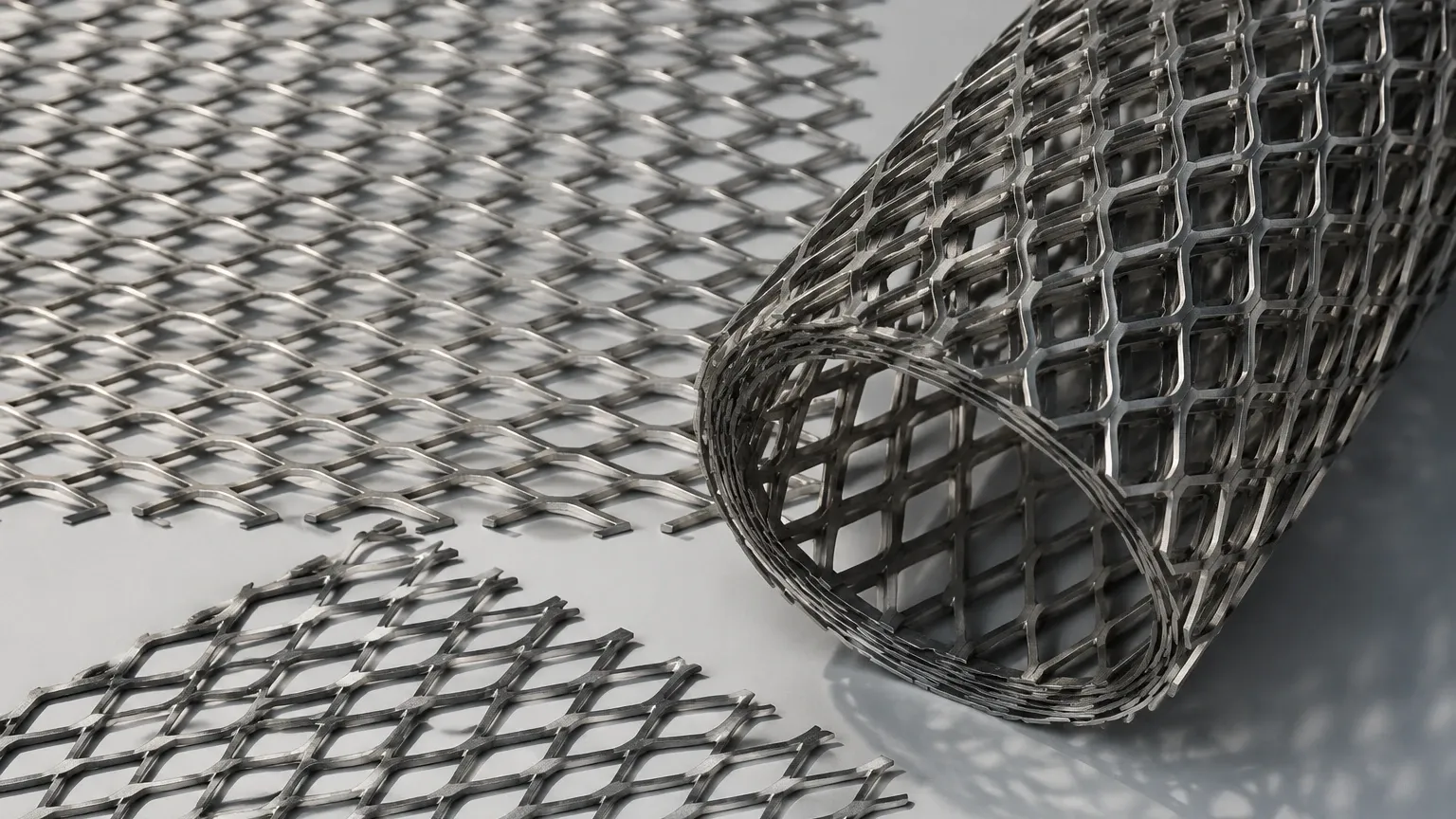
Perforated & Expanded Metal products are manufactured by simultaneously slitting and stretching a solid metal sheet. Unlike woven wire mesh, expanded metal is a single-piece construction without joins or welds, providing a unique strength-to-weight ratio that is particularly beneficial in high-pressure industrial filtration contexts.
Defining Expanded Metal 1 4 in Industrial Filtration
When specifying expanded metal 1 4, it is important to distinguish between the various dimensions that define the mesh geometry. In the industry, "1/4 inch" usually refers to the Short Way of Design (SWD), which is the distance from the center of one bond to the center of the next bond across the short axis of the diamond-shaped opening.
Key terminology for evaluating these components includes:
* SWD (Short Way of Design): The nominal 1/4-inch dimension.
* LWD (Long Way of Design): The distance across the long axis of the diamond, which varies based on the degree of stretching during manufacturing.
* Strand Width and Thickness: These parameters determine the overall open area and the mechanical strength of the mesh.
* Opening Size: The actual clear space through which fluid or gas passes, which is slightly smaller than the nominal SWD/LWD due to the strand width.
At Kaifil, the manufacturing process for these components is calibrated to ensure precise filtration accuracy and structural consistency, meeting the rigorous standards required for OEM integration.
Technical Specifications and Geometry
The geometry of expanded metal is inherently different from perforated metal. While perforated metal involves punching holes out of a sheet (resulting in material waste), expanded metal is expanded from a solid sheet, making it a more cost-effective solution for many B2B applications.
Standard vs. Flattened Expanded Metal
For filtration applications involving expanded metal 1 4, engineers must choose between standard (raised) and flattened profiles:
1. Standard Expanded Metal: This version retains the angular ridges created during the expansion process. The raised strands provide excellent grip and can create turbulence in fluid streams, which is sometimes desirable for specific mixing or aeration processes. However, in filtration, these ridges can sometimes cause abrasion against delicate filter media.
2. Flattened Expanded Metal: After the expansion process, the sheet is passed through a cold-rolling reducing mill. This flattens the strands and bonds into a single plane. Flattened 1/4-inch expanded metal is often preferred as a support layer for fine wire mesh or synthetic filter media, as the smooth surface prevents puncturing and ensures uniform contact.
Material Selection for Demanding Environments
The performance of expanded metal 1 4 is heavily dependent on the alloy used. Kaifil specializes in stainless steel solutions, which are preferred in industrial sectors for their corrosion resistance and thermal stability.
* 304 Stainless Steel: Suitable for general industrial use, providing good resistance to atmospheric corrosion and many organic and inorganic chemicals. It is commonly used in food and beverage filtration where sanitation is a priority.
* 316/316L Stainless Steel: Contains molybdenum, which significantly increases resistance to pitting and crevice corrosion in chloride-rich environments. This is the standard choice for pharmaceutical processing, marine applications, and aggressive chemical filtration.
* High-Nickel Alloys: For extreme temperatures or highly acidic environments, specialized alloys can be used to ensure the filter component does not degrade prematurely.
Engineering Considerations for Filtration
When integrating expanded metal 1 4 into a filtration system, several engineering factors must be evaluated to ensure the component meets the application's requirements.
Open Area and Flow Rates
The percentage of open area determines the pressure drop across the filter. A 1/4-inch expanded metal specification offers a balance between high flow rates and structural rigidity. Engineers must calculate the effective open area to ensure that the filtration system does not suffer from excessive backpressure, which can lead to pump strain and increased energy consumption.
Structural Support
In many high-pressure hydraulic or water treatment systems, the primary filter media (such as a fine wire mesh) lacks the mechanical strength to withstand the differential pressure. Expanded metal 1 4 is frequently used as a "support cage" or inner core. Its rigid diamond structure prevents the collapse of the filter element under heavy loads, extending the replacement cycle and preventing system failure.
Filtration Accuracy
While 1/4-inch openings are relatively large for fine particulate removal, they are ideal for pre-filtration and straining. They effectively remove larger debris, protecting downstream precision filters from premature clogging. This staged filtration approach is a cost-effective method for managing total suspended solids (TSS) in industrial wastewater and process fluids.
Expanded Metal vs. Perforated Metal: Selection Criteria
Choosing between Perforated & Expanded Metal often comes down to the specific mechanical requirements of the project.
* Weight: Expanded metal is generally lighter per square foot than perforated metal of the same thickness because the material is stretched rather than punched.
* Strength: Because the strands of expanded metal are interconnected without welds, the material distributes loads more evenly. However, perforated metal may offer more predictable directional strength in certain orientations.
* Cost: Expanded metal is typically more economical due to the lack of scrap material generated during production.
* Aesthetics and Airflow: In architectural or protective guard applications, expanded metal provides a unique visual profile and excellent airflow, whereas perforated metal offers more variety in hole shapes (round, square, slotted).
Applications of 1/4 Inch Expanded Metal
The versatility of expanded metal 1 4 allows it to be used across diverse industrial sectors:
1. Chemical Processing: Used as support grids for catalyst beds or as protective screens in corrosive fluid lines.
2. Food and Beverage: Employed in straining systems for large particulates and as structural components in industrial dehydrators and ovens.
3. Hydraulic Systems: Acts as the outer protective wrap for hydraulic oil filters, shielding the inner media from mechanical damage during installation and operation.
4. Pharmaceuticals: Used in cleanroom air filtration frameworks where stainless steel 316L is required to maintain sterile conditions.
5. Water Treatment: Serves as a primary screen for intake water, removing leaves, twigs, and large debris before the water reaches finer treatment stages.
Customization and OEM Capabilities
Standard off-the-shelf mesh rarely meets the specific needs of complex industrial equipment. Customization is a core part of the B2B procurement process. When sourcing expanded metal 1 4, technical teams should consider the following customization options:
* Custom Dimensions: Beyond the 1/4-inch SWD, the LWD and strand width can be adjusted to achieve specific open area percentages.
* Edge Treatments: Expanded metal can be supplied with "random sheared" edges or "bond sheared" edges. For filter cartridges, smooth edges are often required to facilitate welding or crimping into end caps.
* Forming and Fabrication: The material can be rolled into cylinders, fabricated into cones, or cut into specific disc shapes to fit existing filter housings.
Kaifil provides comprehensive OEM services, working closely with global customers to develop Perforated & Expanded Metal components that align with specific housing tolerances and performance benchmarks.
Evaluating Total Cost and Performance
When purchasing industrial filtration components, the initial price is only one part of the total cost of ownership (TCO). For expanded metal 1 4, the TCO is influenced by:
* Durability: High-quality stainless steel reduces the frequency of replacement in corrosive environments.
* Maintenance: The ease of cleaning (e.g., backwashing or ultrasonic cleaning) depends on the surface finish and the precision of the mesh openings.
* System Efficiency: A well-engineered mesh with optimized open area reduces energy costs by minimizing pressure drop.
Engineers should confirm the material grade, dimensional tolerances, and load-bearing capacity before finalizing a purchase. Requesting material test reports (MTRs) and ensuring compliance with industry standards (such as ISO or ASTM) are standard steps in the B2B verification process.
Conclusion
Expanded metal 1 4 is a foundational component in industrial filtration, offering a rare combination of structural strength, cost-efficiency, and material versatility. Whether used as a standalone strainer or a support structure for complex filter cartridges, its performance is dictated by precise engineering and material selection. By understanding the differences between standard and flattened profiles, and selecting the appropriate stainless steel alloy, technical teams can ensure their filtration systems operate at peak efficiency. For those seeking tailored solutions, Kaifil offers the manufacturing expertise to deliver high-performance filtration components designed for the most demanding industrial environments.
