


Expanded Metal #13
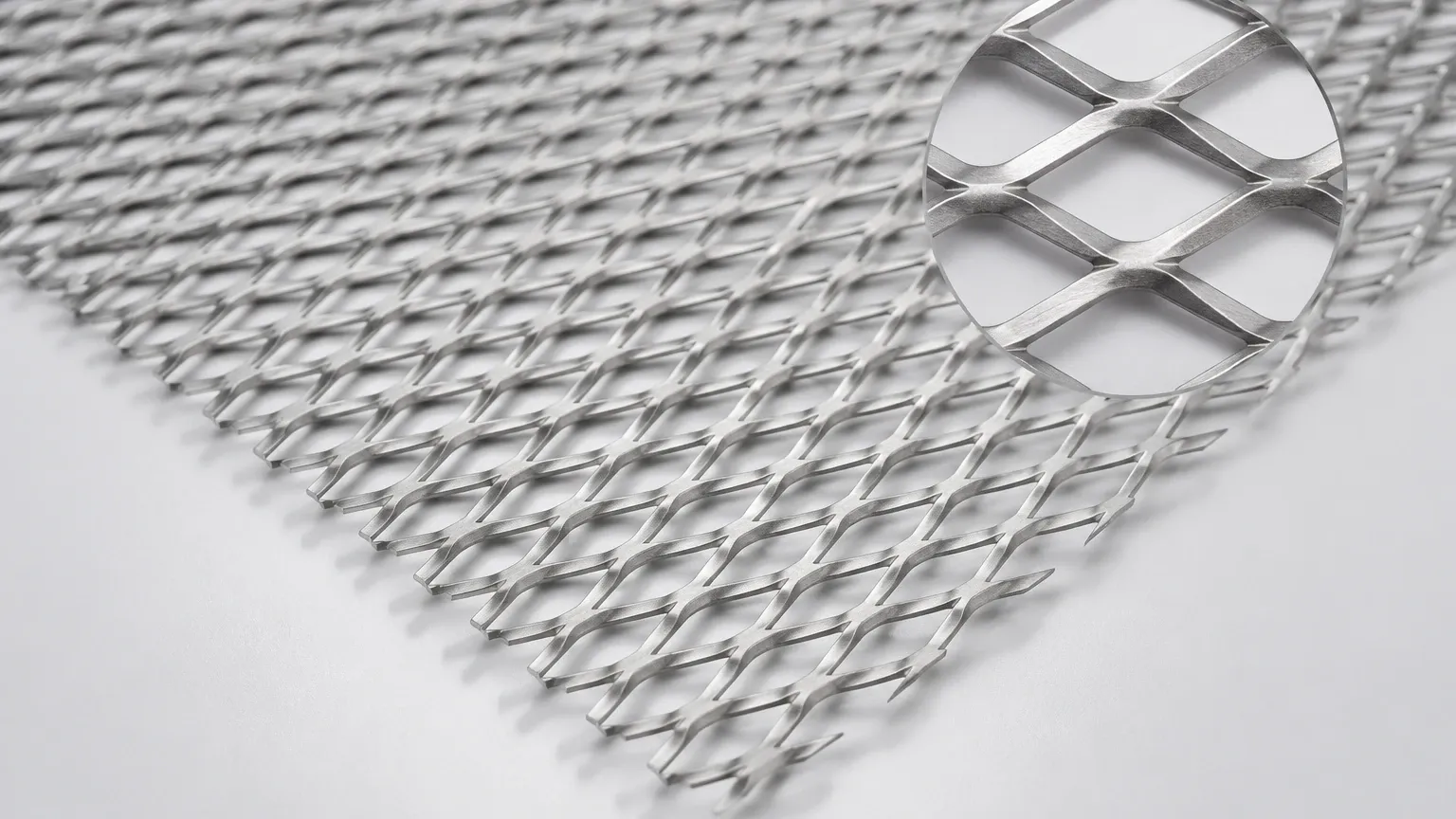
In the landscape of industrial materials, expanded metal #13 represents a specific intersection of structural rigidity and versatile utility. For engineers and procurement specialists, selecting the correct gauge and pattern for filtration or structural support is a decision driven by mechanical requirements, environmental conditions, and long-term durability. Expanded metal is produced by slitting and stretching a single sheet of solid metal—typically stainless steel, carbon steel, or aluminum—to create a continuous mesh with diamond-shaped openings. Unlike woven wire mesh, expanded metal has no joins or welds within the mesh structure, providing inherent strength and integrity.
The designation "#13" refers to the thickness of the base metal used before the expansion process. In the context of industrial filtration and mechanical engineering, Perforated & Expanded Metal solutions utilizing #13 gauge material offer a robust profile suitable for demanding environments where lighter gauges might fail under pressure or mechanical stress.
Understanding Technical Specifications of Expanded Metal #13
To effectively integrate expanded metal #13 into an industrial system, one must understand the nomenclature and dimensional standards that define its performance. The "#13" gauge typically corresponds to a nominal thickness of approximately 0.090 inches (roughly 2.28 mm). However, the final properties of the mesh are determined by the expansion ratio and the style of the finish.
Standard vs. Flattened Expanded Metal
There are two primary forms of expanded metal #13 used in industrial applications:
1. Standard (Raised) Expanded Metal: This is the product as it comes off the expanding machine. The strands and bonds are set at a uniform angle to the plane of the sheet. This creates a three-dimensional surface that provides excellent grip and high rigidity. In filtration, the raised profile can help create turbulence or act as a spacer between layers.
2. Flattened Expanded Metal: This is standard expanded metal that has been cold-rolled through a flattening mill. This process reduces the thickness of the strands and creates a smooth, flat surface. Flattened expanded metal #13 is often preferred when the material must be bonded to other layers, such as fine wire mesh, or when a low-profile component is required to fit within tight tolerances.
Key Dimensional Terms
When specifying expanded metal #13, engineers must define the diamond size using the following metrics:
* SWD (Short Way of Design): The distance from the center of one bond to the center of the next bond measured across the short diamond diagonal.
* LWD (Long Way of Design): The distance from the center of one bond to the center of the next bond measured across the long diamond diagonal.
* Strand Width: The amount of metal fed into the machine to produce one strand.
* Strand Thickness: The gauge of the original base metal (in this case, #13 gauge).
Material Selection for Filtration and Industrial Use
The performance of expanded metal #13 is heavily dependent on the alloy selected. Kaifil specializes in stainless steel solutions, which are frequently required for industrial filtration due to their resistance to corrosion and high temperatures.
Stainless Steel (304 and 316)
For most chemical processing, food and beverage, and pharmaceutical applications, stainless steel is the standard. Grade 304 provides excellent general corrosion resistance, while Grade 316 is specified for environments involving chlorides or high acidity. Expanded metal #13 in 316 stainless steel is a common choice for marine environments or aggressive chemical filtration systems where material degradation could lead to system failure.
Carbon Steel and Galvanized Options
In applications where corrosion is less of a concern, or where the component is protected by a coating, carbon steel expanded metal #13 offers a cost-effective alternative with high tensile strength. Galvanized options provide a middle ground, offering improved atmospheric corrosion resistance for outdoor structural components or coarse water treatment screens.
The Role of Expanded Metal #13 in Filtration Systems
While fine wire mesh performs the actual separation of particles, expanded metal #13 often serves as the "backbone" of the filtration assembly. Its primary roles in a filtration context include:
Structural Support and Pleat Stabilization
In high-pressure hydraulic or gas filtration, fine mesh layers can collapse or deform under the force of the fluid flow. Expanded metal #13 is used as a support tube (core) or an outer guard. Its rigidity ensures that the filter medium maintains its shape and surface area, preventing "blind-offs" and extending the service life of the cartridge.
Pre-Filtration and Debris Shielding
The diamond pattern of expanded metal is ideal for capturing large debris before it reaches more delicate filter stages. In water treatment or intake systems, #13 gauge expanded metal acts as a robust primary screen, protecting downstream pumps and sensitive membranes from mechanical damage caused by stones, wood, or industrial waste.
Flow Distribution
The angled strands of standard expanded metal can be used to influence fluid dynamics. By breaking up laminar flow and inducing controlled turbulence, expanded metal can help distribute the influent more evenly across the face of a secondary filter medium, optimizing the use of the entire filtration surface.
Engineering Considerations: Open Area and Flow Dynamics
One of the most critical factors for engineers is the "Percentage of Open Area." This metric determines the flow capacity and the pressure drop across the metal sheet. For expanded metal #13, the open area can vary significantly depending on the LWD and SWD dimensions.
* High Open Area: Larger diamond patterns allow for higher flow rates and lower initial pressure drops. This is suitable for ventilation guards or low-pressure liquid strainers.
* Low Open Area: Smaller, tighter diamonds provide greater mechanical strength and better protection against smaller debris, but they increase the resistance to flow.
When designing a system, it is vital to balance the need for structural integrity provided by the #13 gauge thickness with the required flow characteristics. A common mistake is over-specifying the thickness, which may lead to unnecessary weight and restricted flow, or under-specifying the diamond size, leading to premature clogging.
Customization and Manufacturing Capabilities
Industrial applications rarely rely on off-the-shelf dimensions. Customization is essential to ensure the expanded metal component integrates seamlessly into the final product. Kaifil’s manufacturing approach focuses on precision and application-specific design.
Precision Cutting and Shearing
Expanded metal #13 can be difficult to cut accurately without distorting the diamond pattern. Advanced shearing techniques are required to ensure that the edges are clean and the dimensions are within tight tolerances, especially when the metal is being rolled into cylinders for filter cores.
Forming and Welding
Rolling expanded metal into a perfectly round tube requires specialized equipment to prevent the "kinking" of the strands. Furthermore, welding #13 gauge stainless steel expanded metal requires expertise to ensure a strong bond without burning through the strands or leaving burrs that could damage the secondary filter media.
Surface Treatments
Depending on the application, the metal may undergo passivating (for stainless steel) to enhance corrosion resistance, or electropolishing to create a smooth, burr-free surface. In food and pharmaceutical applications, a burr-free finish is mandatory to prevent contamination and ensure the equipment can be thoroughly cleaned (CIP/SIP processes).
Procurement and Quality Assurance for Industrial Projects
When sourcing expanded metal #13, purchasing teams and engineers should evaluate suppliers based on several technical criteria to avoid common risks such as material fatigue or inconsistent filtration performance.
Evaluation Criteria
1. Material Certification: Ensure the supplier provides mill test reports (MTRs) to verify the chemical composition of the alloy, particularly for 316L stainless steel.
2. Dimensional Consistency: Check for uniformity in the SWD and LWD across the entire sheet. Inconsistent expansion can lead to weak spots and uneven flow distribution.
3. Edge Finish: For filtration cores, specify whether the edges should be "bonded" (closed diamonds) or "random sheared" (open diamonds). Bonded edges are generally safer to handle and easier to weld.
Common Risks and Mitigation
A significant risk in using lower-quality expanded metal is the presence of sharp burrs or "slivers" created during the slitting process. In a filtration system, these slivers can break off and migrate downstream, potentially damaging sensitive equipment or contaminating the filtrate. Specifying a deburring or flattening process can mitigate this risk.
Another risk is the "camber" or bowing of the sheet. If the expansion process is not carefully controlled, the sheet may not lie flat, making it difficult to use in automated assembly lines. Working with a manufacturer that understands the nuances of Perforated & Expanded Metal production ensures that the material meets the flatness requirements of the project.
Total Cost of Ownership and Replacement Cycles
While the initial cost of expanded metal #13 may be higher than thinner gauges, the total cost of ownership is often lower due to its durability. In high-vibration environments or systems with frequent pressure pulsations, #13 gauge material resists metal fatigue far better than #18 or #20 gauge alternatives. This results in fewer system shutdowns and lower maintenance costs over the life of the equipment.
For engineers designing custom filtration solutions, the selection of expanded metal #13 provides a reliable foundation for high-performance components. By understanding the relationship between gauge thickness, diamond geometry, and material properties, technical professionals can optimize their systems for both efficiency and longevity. Whether used as a protective guard, a structural core, or a primary screen, this material remains a staple in robust industrial design.
