


18 Gauge Expanded Metal
In industrial filtration and structural engineering, selecting the correct material thickness and geometry is critical for ensuring both performance and longevity. 18 gauge expanded metal represents a versatile middle ground in the spectrum of metal mesh products. With a nominal thickness of approximately 0.048 inches (1.2 mm), this specific gauge offers a balance of mechanical strength and flexibility that is highly sought after in the manufacturing of filter cartridges, protective guards, and support structures.
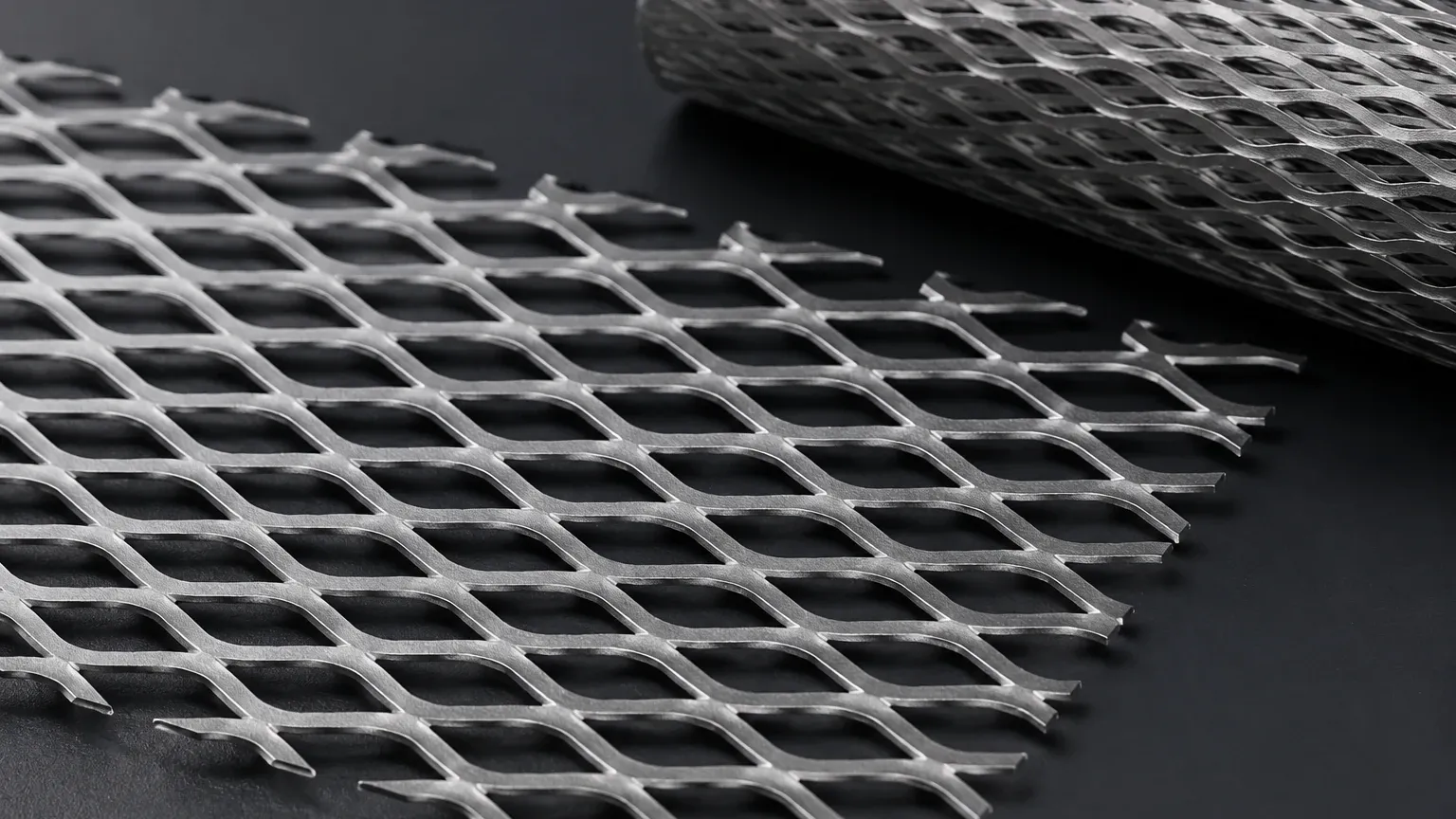
Unlike perforated materials, expanded metal is produced by simultaneously slitting and stretching a solid sheet of metal. This process creates a diamond-shaped pattern without any material waste, making it an economically efficient choice for large-scale industrial applications. For engineers and procurement specialists, understanding the technical nuances of 18 gauge expanded metal is essential for optimizing filtration efficiency and structural integrity.
The Fundamentals of 18 Gauge Expanded Metal
The term "18 gauge" refers to the thickness of the original metal sheet before the expansion process begins. In the context of stainless steel—the preferred material for high-performance filtration—18 gauge typically measures about 0.050 inches, while carbon steel is slightly thinner at 0.0478 inches. When this sheet undergoes expansion, the resulting mesh retains the original thickness in its strands, but the overall depth of the sheet increases unless it is subsequently flattened.
The expansion process creates a continuous piece of metal with no joins or welds. This inherent continuity provides superior strength-to-weight ratios compared to woven wire mesh. In industrial environments where vibration or high-pressure flow is present, the monolithic structure of 18 gauge expanded metal prevents the strands from fraying or unraveling, which is a common failure point in lower-quality filtration components.
Material Grades and Corrosion Resistance
Selecting the appropriate alloy for 18 gauge expanded metal is as important as the gauge itself. The choice of material dictates the component's resistance to chemical attack, thermal cycling, and mechanical wear.
1. Stainless Steel 304/304L: This is the most common grade used for general industrial applications. It provides excellent corrosion resistance in most atmospheric conditions and is widely used in food processing and water treatment.
2. Stainless Steel 316/316L: Containing molybdenum, Grade 316 offers superior resistance to chlorides and marine environments. It is the standard choice for chemical processing and pharmaceutical filtration where aggressive cleaning agents or corrosive process fluids are present.
3. Carbon Steel: Often used in hydraulic oil filtration or air intake systems where corrosion is less of a concern or where the component will be coated or submerged in oil.
4. Aluminum: Lightweight and naturally corrosion-resistant, aluminum expanded metal is frequently used in HVAC filters and architectural applications where weight reduction is a priority.
For specialized industrial requirements, exploring the range of Perforated & Expanded Metal options allows engineers to select the optimal geometry and material grade for their specific filtration or support needs.
Structural Variations: Raised vs. Flattened Mesh
18 gauge expanded metal is available in two primary forms: Standard (Raised) and Flattened. The choice between these two significantly impacts the flow characteristics and mechanical fit of the filter component.
Standard (Raised) Expanded Metal
In its standard form, the strands are set at a slight angle to the plane of the sheet. This creates a three-dimensional surface that provides excellent grip and a high surface area. In filtration, raised 18 gauge expanded metal is often used as a pre-filter or a protective outer cage. The angled strands can help deflect larger particles and provide a "tortuous path" that aids in depth filtration for coarse contaminants.
Flattened Expanded Metal
Flattened expanded metal is produced by passing the standard expanded sheet through a cold-roll reducing mill. This process flattens the strands and bonds back into a single plane, resulting in a smooth, flat surface. Flattened 18 gauge expanded metal is ideal when the mesh must be sandwiched between other layers of media, such as fine wire mesh or non-woven fabrics. It ensures a consistent thickness across the entire sheet, which is vital for maintaining tight tolerances in filter housing assemblies.
Engineering Specifications: SWD, LWD, and Strand Dimensions
To accurately specify 18 gauge expanded metal, engineers must look beyond the gauge and define the diamond dimensions. These are typically expressed as SWD (Short Way of Design) and LWD (Long Way of Design).
* SWD: The distance from the center of a bond to the center of the next bond across the short diamond diagonal.
* LWD: The distance from the center of a bond to the center of the next bond across the long diamond diagonal.
* Strand Width: The amount of metal fed into the expanding machine between the slits.
* Strand Thickness: The thickness of the base metal (in this case, 18 gauge).
By adjusting the SWD and LWD, manufacturers can produce a wide variety of opening sizes using the same 18 gauge base material. A smaller diamond pattern increases the number of strands per square foot, thereby increasing the overall strength and rigidity of the mesh but potentially decreasing the open area percentage.
Filtration Performance: Open Area and Pressure Drop
The most critical performance metric for 18 gauge expanded metal in filtration applications is the percentage of open area. This figure directly influences the flow rate and the pressure drop (delta P) across the filter element.
Calculating the open area involves a ratio of the area of the openings to the total area of the sheet. For 18 gauge expanded metal, the open area can range from as low as 30% to as high as 80%, depending on the diamond size and strand width.
Engineers must balance the need for structural support with the requirement for low flow resistance. If the 18 gauge mesh is acting as a support core for a fine pleated filter, a high open area is preferred to ensure that the support layer does not become a bottleneck for the fluid flow. Conversely, if the mesh is used as a primary strainer for heavy debris, a smaller opening with a lower open area might be necessary to ensure mechanical durability against particle impact.
Perforated & Expanded Metal: A Comparative Analysis
When designing industrial filtration systems, the choice often comes down to perforated metal versus expanded metal. While both fall under the category of Perforated & Expanded Metal, they offer different advantages.
Cost Efficiency: Expanded metal is generally more cost-effective because the manufacturing process involves no scrap. Perforating a sheet to reach 50% open area results in 50% of the material being discarded as waste, which significantly increases the raw material cost, especially with expensive alloys like 316L stainless steel.
Strength: 18 gauge expanded metal provides excellent directional strength. The trusses formed by the diamond pattern distribute loads more effectively than the round or square holes typical of perforated metal. However, perforated metal offers more predictable flow patterns and is easier to clean in "clean-in-place" (CIP) systems due to the lack of crevices at the bond points.
Customization: Perforated metal allows for highly specific hole patterns and margins (solid borders), which can simplify the welding and assembly process. Expanded metal, while customizable in diamond size, usually lacks solid margins unless they are specifically engineered into the production run.
Customization and Procurement Considerations
For B2B procurement and engineering teams, sourcing 18 gauge expanded metal requires clear communication of technical requirements to the manufacturer. Because this material is often a component of a larger system, the following factors should be confirmed before production:
1. Tolerance Requirements: Standard industrial tolerances for expanded metal can be broader than those for machined parts. If the mesh must fit into a precision-machined groove in a filter head, tighter tolerances must be specified.
2. Edge Conditions: Expanded metal naturally has "open" edges where the diamonds are cut. For safety and ease of assembly, these edges may need to be sheared or framed.
3. Surface Finish: In pharmaceutical or food-grade applications, the 18 gauge stainless steel may require electropolishing to remove burrs and improve corrosion resistance by enhancing the chromium oxide layer.
4. Quantity and Form: Specifying whether the material should be delivered in flat sheets, slit-to-width coils, or pre-formed cylinders can significantly reduce downstream labor costs.
18 gauge expanded metal remains a staple in industrial filtration due to its versatility and robust physical properties. Whether serving as the backbone of a high-pressure hydraulic filter or the outer protection for a chemical processing strainer, its role in maintaining system integrity is indispensable. By carefully selecting the material grade, diamond geometry, and finish, engineers can ensure that their filtration solutions meet the rigorous demands of modern industrial environments.
