


1 4 Inch Expanded Metal
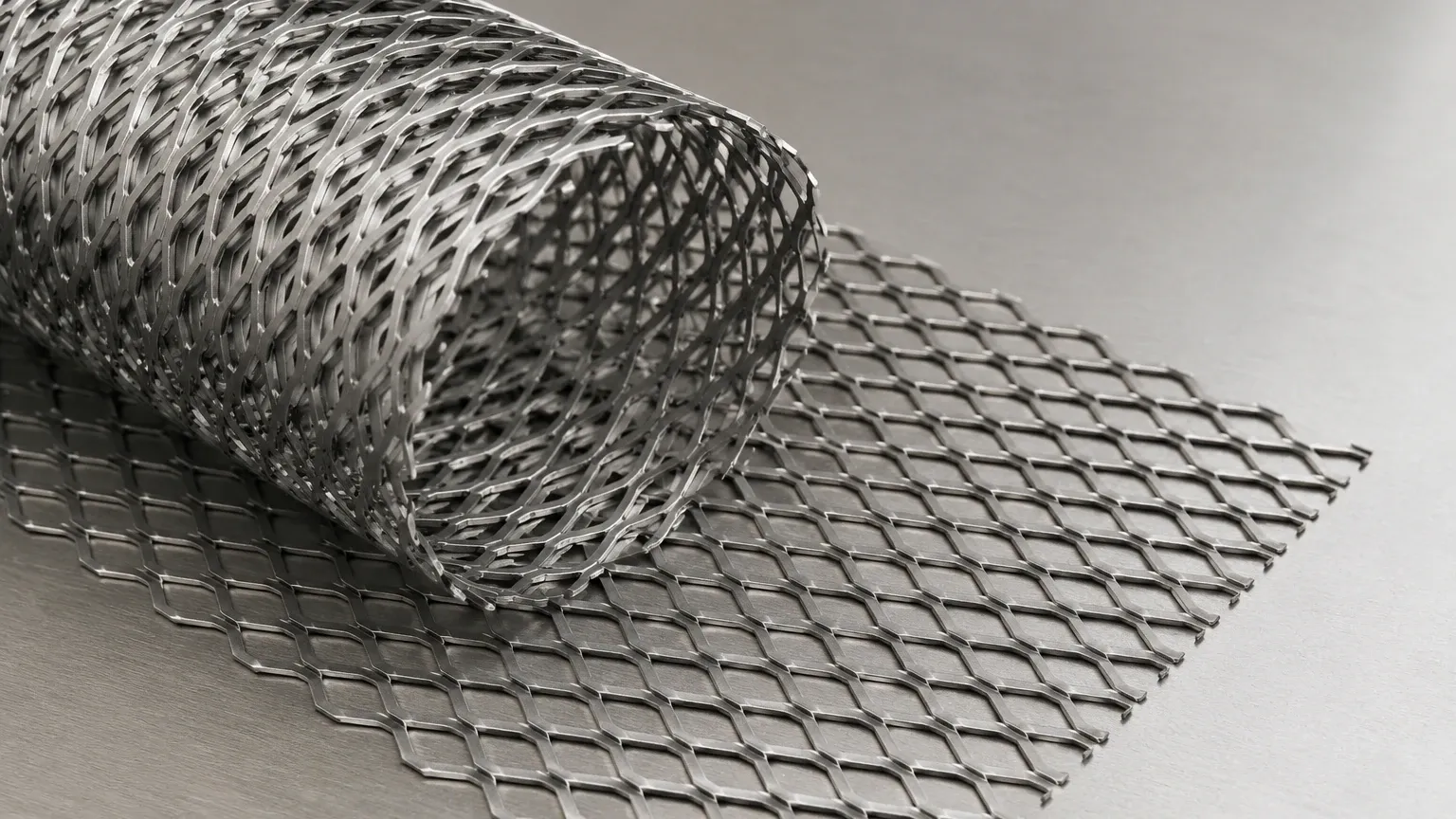
In the realm of industrial filtration and structural engineering, material selection is dictated by the precise balance between mechanical strength and fluid dynamics. Among the various configurations available, 1 4 inch expanded metal stands as a critical specification for engineers designing support structures, filtration media, and protective enclosures. This material is produced by simultaneously slitting and stretching a solid metal sheet, resulting in a diamond-shaped pattern that is integral to the sheet, rather than woven or welded.
For technical professionals, understanding the nuances of the 1/4 inch designation—typically referring to the Short Way of the Diamond (SWD)—is essential for calculating flow rates, pressure drops, and structural load capacities. As a specialized manufacturer of high-performance filtration components, Kaifil provides Perforated & Expanded Metal solutions tailored to the rigorous demands of chemical processing, hydraulic systems, and industrial water treatment.
Technical Specifications and Geometry
When specifying 1 4 inch expanded metal, it is vital to distinguish between the nominal size and the actual geometric dimensions. In the expanded metal industry, the "1/4 inch" measurement generally refers to the Short Way of the Diamond (SWD), which is the distance from the center of one bond to the center of the next bond across the short axis.
Key Dimensional Variables
1. SWD (Short Way of Diamond): The nominal 1/4 inch dimension. This determines the density of the openings across the width of the sheet.
2. LWD (Long Way of Diamond): Usually ranging from 0.5 inches to 1.0 inches depending on the expansion ratio. This affects the longitudinal rigidity of the panel.
3. Strand Width: The amount of metal fed into the precision dies between slits. This directly impacts the open area percentage.
4. Strand Thickness: The gauge of the original base metal. For industrial filtration, gauges typically range from 22ga to 16ga for 1/4 inch patterns.
Unlike perforated metal, where material is punched out and discarded, expanded metal is produced with zero waste. The process creates a "truss-like" structure where the bonds and strands are angled to the plane of the sheet, providing inherent directional strength that exceeds that of a flat sheet of the same weight.
Material Selection for Corrosive Environments
In B2B industrial applications, the choice of alloy is as critical as the diamond dimensions. While carbon steel is suitable for basic structural guards, filtration applications usually demand the corrosion resistance and thermal stability of stainless steel.
Stainless Steel 304 vs. 316
For most food and beverage or general industrial applications, Grade 304 stainless steel provides excellent durability and resistance to oxidation. However, in chemical processing or marine environments where chloride exposure is a concern, Grade 316 is the standard. The addition of molybdenum in 316 stainless steel enhances pitting resistance, ensuring that the 1 4 inch expanded metal maintains its structural integrity over long-term exposure to aggressive media.
Specialty Alloys
In high-temperature or highly acidic environments, engineers may require nickel-based alloys or duplex stainless steels. Kaifil’s manufacturing capabilities allow for the processing of these specialized materials into 1/4 inch patterns, ensuring that the final filtration component can withstand the specific chemical and thermal stresses of the application.
Standard vs. Flattened Expanded Metal
One of the most important decisions an engineer must make when selecting 1 4 inch expanded metal is whether to use the "Standard" (raised) or "Flattened" version.
Standard Expanded Metal
Standard expanded metal is the product as it comes off the expansion press. The strands and bonds are set at a uniform angle to the plane of the sheet.
* Advantages: Higher strength-to-weight ratio, excellent grip/traction, and maximum rigidity.
* Filtration Impact: The angled strands create a complex flow path which can be beneficial for breaking up laminar flow, but it also increases the overall thickness of the sheet.
Flattened Expanded Metal
Flattened expanded metal is produced by passing the standard expanded sheet through a cold-roll reducing mill. This process flattens the strands and bonds into a single plane.
* Advantages: Smooth surface, consistent thickness, and ease of welding or fabrication into cylindrical filter cartridges.
* Filtration Impact: Flattening reduces the overall thickness of the material, making it easier to sandwich between layers of fine wire mesh. It provides a smooth support surface that prevents the delicate mesh from being punctured or deformed under high pressure.
Applications in Industrial Filtration
1 4 inch expanded metal is widely utilized as a structural backbone in complex filtration systems. Its primary role is to provide mechanical support to finer filtration media that cannot withstand high differential pressures on their own.
Filter Cartridge Support Cores
In hydraulic and chemical filter cartridges, a perforated or expanded metal core is essential. The 1/4 inch diamond pattern offers a high percentage of open area (often between 40% and 60%), which minimizes pressure drop while providing the hoop strength necessary to prevent the cartridge from collapsing under vacuum or high-pressure flow.
Outer Protective Cages
For filters used in harsh environments, an outer cage made of 1 4 inch expanded metal protects the internal pleated media from mechanical damage during installation or from large debris in the fluid stream. The 1/4 inch opening is small enough to deflect significant particulate matter while remaining large enough to avoid premature clogging of the outer surface.
Intake Screens and Strainers
In water treatment and industrial cooling systems, expanded metal screens are used as primary strainers. The 1/4 inch opening is ideal for capturing larger contaminants like wood chips, plastic debris, and organic matter before the fluid reaches more sensitive downstream equipment like pumps or fine membrane filters.
Engineering Considerations: Open Area and Flow Dynamics
The performance of a filter is largely defined by its open area. For 1 4 inch expanded metal, the open area is calculated based on the strand width and the SWD.
Calculation Logic:
As the strand width increases, the open area decreases, and the structural strength increases. Conversely, a narrower strand width provides a higher open area, which is critical for reducing energy costs associated with pumping fluids through the system. Engineers must perform a trade-off analysis:
1. Pressure Drop (ΔP): A higher open area results in a lower ΔP. If the 1/4 inch expanded metal is too restrictive, it will cause the system to work harder, increasing operational costs.
2. Structural Integrity: If the open area is too high (strands too thin), the metal may fail under the mechanical load of the fluid or the weight of the accumulated filter cake.
At Kaifil, we assist engineering teams in optimizing these variables, ensuring that the selected Perforated & Expanded Metal profile meets both the hydraulic requirements and the mechanical safety factors of the project.
Customization and OEM Capabilities
Off-the-shelf expanded metal rarely meets the exacting tolerances required for high-precision industrial filtration. Customization is often necessary to ensure seamless integration into existing equipment.
Precision Shearing and Forming
1 4 inch expanded metal can be sheared to precise dimensions with minimal tolerances. For cylindrical applications, the material must be rolled to a specific diameter. Unlike standard sheet metal, rolling expanded metal requires specialized equipment to ensure the diamond pattern does not distort, which would alter the open area and flow characteristics.
Edge Treatments and Welding
In many B2B applications, the sharp edges of expanded metal are a concern. Kaifil provides various edge treatments, including U-edging or solid borders, to facilitate safer handling and easier welding. For OEM components, we offer TIG, MIG, and resistance welding to incorporate the expanded metal into complete assemblies like basket strainers or pleated filter supports.
Coatings and Surface Finishes
While stainless steel is often left in its natural state, certain applications may require electropolishing to remove burrs and improve the hygienic properties of the metal—a common requirement in the pharmaceutical and food industries. Other finishes, such as powder coating or galvanizing (for carbon steel), can be applied to enhance environmental resistance.
Procurement and Quality Assurance
When sourcing 1 4 inch expanded metal for industrial projects, purchasing teams should confirm several key factors to avoid project delays or component failure:
* Material Certification: Ensure the supplier provides Mill Test Reports (MTRs) to verify the chemical composition of the alloy.
* Dimensional Consistency: Verify that the SWD and LWD tolerances are within the required engineering specifications, as variations can affect the fit-up in automated assembly processes.
* Flatness Requirements: For flattened expanded metal, specify the maximum allowable camber or waviness, especially if the material is to be used in high-speed fabrication lines.
Kaifil’s commitment to quality ensures that every shipment of expanded metal meets the rigorous standards expected by our global partners. By controlling the manufacturing process from material selection to final inspection, we provide reliable filtration components that optimize performance and extend the service life of industrial systems.
Conclusion for Engineering Teams
Selecting 1 4 inch expanded metal involves more than just picking a diamond size; it requires a deep understanding of material science, fluid mechanics, and fabrication techniques. Whether used as a support layer for a multi-stage stainless steel filter cartridge or as a robust screen for industrial water intake, the 1/4 inch pattern offers a versatile solution for demanding environments. By partnering with a manufacturer like Kaifil, engineers gain access to technical expertise and customized production capabilities that ensure their filtration systems operate at peak efficiency with minimal total cost of ownership.
