


Expanded Metal 2028
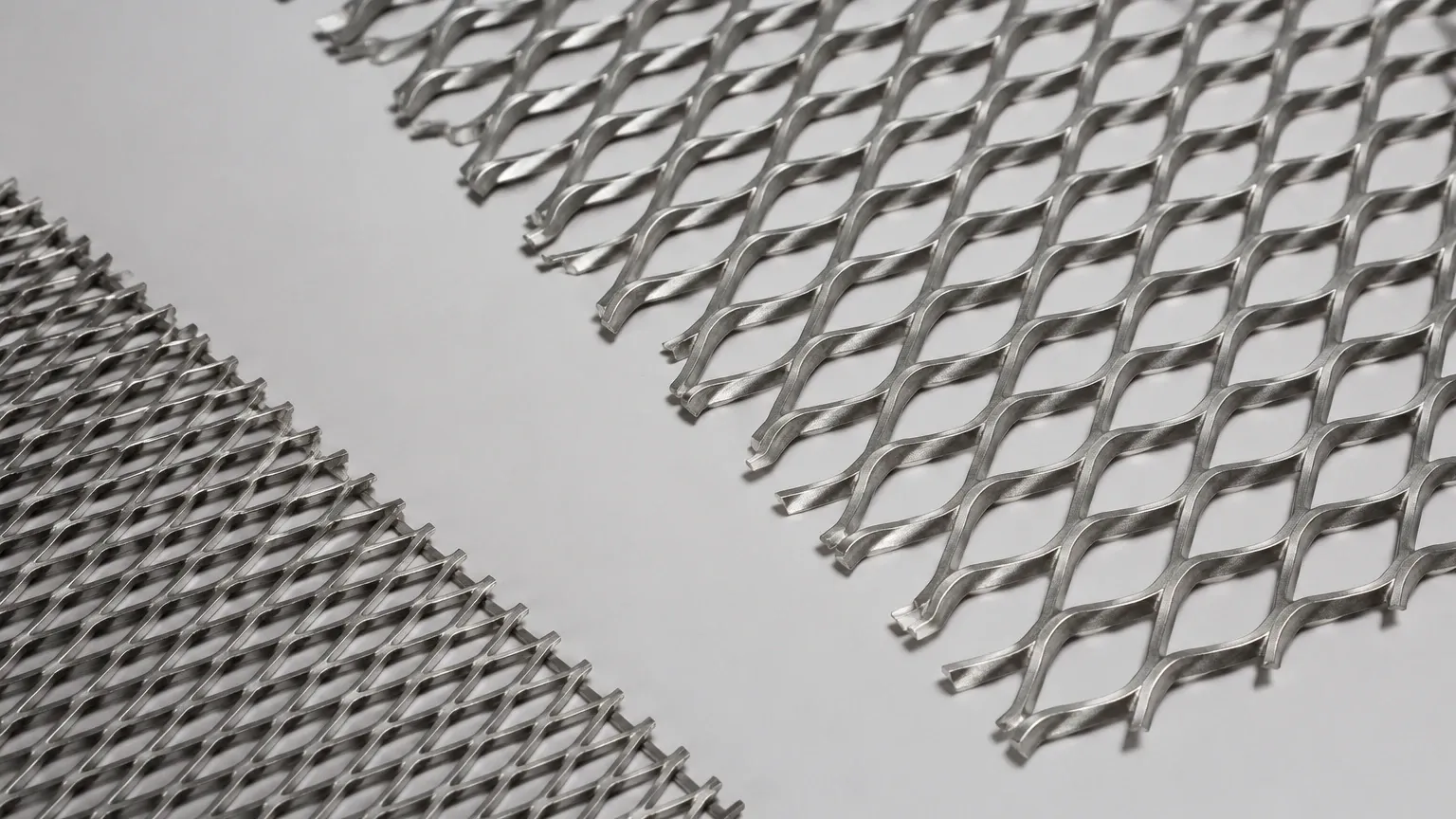
As industrial filtration requirements evolve toward higher precision and greater durability, the role of expanded metal has transitioned from a simple structural component to a high-performance engineering material. Looking toward the operational standards of expanded metal 2028, engineers and procurement teams are increasingly focusing on material efficiency, structural integrity under high pressure, and the integration of advanced alloys. Expanded metal is produced by simultaneously slitting and stretching a solid metal sheet, creating a diamond-shaped pattern that is integral to the sheet’s strength. Unlike perforated metal, the expansion process involves no material waste, making it a sustainable and cost-effective solution for industrial support and filtration applications.
At Kaifil, the focus remains on delivering precision-engineered Perforated & Expanded Metal solutions that meet the rigorous demands of chemical processing, pharmaceutical manufacturing, and hydraulic systems. Understanding the technical trajectory of these materials is essential for designing systems that will remain efficient and compliant through the end of the decade.
The Technical Evolution of Expanded Metal Technology
The roadmap for expanded metal 2028 is defined by advancements in manufacturing precision. Traditional expanded metal often faced challenges with strand uniformity and edge consistency. However, modern CNC expansion presses and high-speed slitting technologies now allow for tolerances that were previously unattainable. These advancements are critical for filtration applications where the expanded metal serves as a support cage or a pleat protector for fine wire mesh.
One of the primary shifts in technology involves the "flattening" process. Expanded metal naturally has a raised surface where the strands meet (bonds). For many filtration assemblies, a secondary cold-rolling process is applied to flatten the sheet. This creates a smooth, two-dimensional surface that prevents abrasion against delicate filter media. By 2028, the industry expects a higher demand for micro-expanded metal—materials with extremely small openings (often less than 0.5mm) produced from thin foils. These components are becoming vital in hydrogen fuel cells and advanced battery technologies, where they act as current collectors and structural supports.
Material Integrity and Corrosion Resistance
Material selection is the most critical factor in ensuring the longevity of filtration components. As industrial processes become more aggressive—utilizing higher temperatures and more corrosive chemicals—the reliance on standard carbon steel is diminishing. The standards for expanded metal 2028 emphasize the use of high-grade stainless steels and specialty alloys.
Stainless Steel Grades (304, 316L, and 904L)
Stainless steel remains the benchmark for industrial filtration. Grade 304 is suitable for general-purpose applications, while 316L is the preferred choice for marine environments and chemical processing due to its molybdenum content, which provides superior resistance to pitting and crevice corrosion. For highly acidic or high-chloride environments, 904L and Duplex stainless steels are increasingly specified to prevent premature failure of the filter housing or support structure.
Advanced Alloys
In sectors such as aerospace and specialized chemical synthesis, materials like Monel, Inconel, and Titanium are becoming more common. These alloys offer exceptional thermal stability and resistance to oxidation at temperatures exceeding 600°C. When selecting expanded metal for long-term projects, engineers must confirm that the raw material source provides full traceability and complies with international standards such as ASTM or ISO to ensure consistent performance over the product's lifecycle.
Engineering Specifications: SWD, LWD, and Strand Geometry
To effectively specify expanded metal, engineers must use precise terminology that defines the geometry of the mesh. These parameters directly influence the mechanical strength, open area, and pressure drop of the filtration system.
1. Short Way of Design (SWD): The distance from the center of one bond to the center of the next bond across the short axis of the diamond.
2. Long Way of Design (LWD): The distance from the center of one bond to the center of the next bond across the long axis of the diamond.
3. Strand Width: The amount of metal fed into the machine between slits. This determines the thickness of the "walls" of the diamond.
4. Strand Thickness: The original thickness of the base metal sheet.
5. Open Area Percentage: This is a critical calculation for filtration. It is the ratio of the area of the openings to the total area of the sheet. A higher open area reduces pressure drop but can decrease the structural rigidity of the component.
By optimizing these five variables, Kaifil can customize expanded metal to provide the exact balance of flow rate and structural support required for a specific application. For instance, in high-pressure hydraulic filters, a thicker strand width and smaller SWD may be necessary to prevent the filter media from collapsing under surge pressures.
Filtration Performance and Structural Support
Expanded metal is rarely used as the primary filtration medium for fine particles; instead, it serves as a robust skeleton for multi-layer filter elements. In a typical stainless steel filter cartridge, the expanded metal acts as the inner core or outer guard.
Structural Rigidity
In high-viscosity fluid filtration, such as in the food and beverage industry (e.g., chocolate or syrup processing), the pressure differential across the filter can be significant. Expanded metal provides the necessary hoop strength to maintain the cylindrical shape of the cartridge. Because the diamonds are interconnected and not woven, the mesh cannot "unravel" if a single strand is damaged, providing a fail-safe mechanism that woven wire mesh lacks.
Flow Dynamics
The angled orientation of the strands in raised expanded metal can actually assist in fluid dynamics by creating micro-turbulence. In certain heat exchange or gas diffusion applications, this turbulence helps in breaking up the boundary layer, improving the efficiency of the process. For 2028, computational fluid dynamics (CFD) modeling is increasingly used to determine the ideal expansion ratio to minimize energy consumption in large-scale industrial filtration plants.
Industry-Specific Requirements and Applications
Different sectors have distinct requirements for expanded metal components. Understanding these nuances is essential for procurement teams when evaluating suppliers.
Pharmaceutical and Food Processing
In these industries, hygiene and cleanability are paramount. Expanded metal used here must have a high-quality surface finish. Electropolishing is often required to remove microscopic burrs and create a passive, chromium-rich surface that resists bacterial growth. The design must avoid "dead zones" where material can accumulate, ensuring that the filter can be effectively cleaned via CIP (Clean-In-Place) systems.
Chemical and Petrochemical
Durability in the face of thermal cycling and chemical attack is the priority. Expanded metal is used in catalyst baskets and flame arrestors. The ability of expanded metal to dissipate heat rapidly makes it an ideal material for safety components in volatile environments.
Water Treatment and Desalination
Large-scale water filtration systems utilize expanded metal as intake screens and as support for membrane filtration. In desalination plants, the high salt concentration necessitates the use of Super Duplex stainless steels to prevent stress corrosion cracking. The expanded metal must be able to withstand constant immersion and high flow velocities without vibrating or fatiguing.
Procurement and Customization: The Path to 2028
As we approach 2028, the procurement process for industrial filters is becoming more data-driven. Engineers are no longer looking for "off-the-shelf" solutions but are seeking OEM partners who can provide customized designs tailored to specific operating conditions.
When sourcing expanded metal, it is vital to confirm several key factors:
* Flatness Tolerances: If the material is to be used in a multi-layer stack, even slight bowing can cause gaps and bypass.
* Edge Treatments: For safety and ease of assembly, edges can be supplied as "random sheared" or "bond sheared" (where the cut happens exactly at the intersection of the diamonds).
* Coating and Finishing: Beyond electropolishing, options like PTFE coating or specialized plating may be required for specific chemical compatibility.
Kaifil’s manufacturing capabilities allow for the production of custom Perforated & Expanded Metal that aligns with these evolving technical standards. By working closely with clients during the design phase, we ensure that the filtration components are optimized for both performance and total cost of ownership.
Conclusion: Strategic Integration of Expanded Metal
The transition toward the standards of expanded metal 2028 represents a commitment to engineering excellence and resource efficiency. By selecting the right material grade, optimizing the diamond geometry, and ensuring precise manufacturing tolerances, industrial facilities can significantly improve the reliability of their filtration systems. Expanded metal remains a versatile and indispensable material, providing the structural foundation upon which modern industrial processes are built. Whether used as a protective guard, a support core, or a specialized diffusion layer, its role in the future of industrial filtration is secure. Engineers who prioritize technical specifications and material quality today will be best positioned to meet the challenges of tomorrow’s industrial landscape.
