


Expanded Metal 24×36
In the landscape of industrial filtration and structural support, the specification of expanded metal components requires a rigorous understanding of material properties, manufacturing tolerances, and application-specific requirements. A common dimensional request in the procurement of these materials is the expanded metal 24×36 panel. This size often serves as a standard module for industrial filter baskets, ventilation grilles, and protective guards across the chemical, pharmaceutical, and food processing sectors.
Selecting the right Perforated & Expanded Metal involves more than just identifying the length and width. Engineers must evaluate the diamond pattern dimensions, the material grade, and the structural finish to ensure the component performs reliably under mechanical stress and environmental exposure. This guide provides a technical overview of expanded metal in the 24×36 format, focusing on the engineering considerations necessary for successful industrial integration.
The Engineering Fundamentals of Expanded Metal
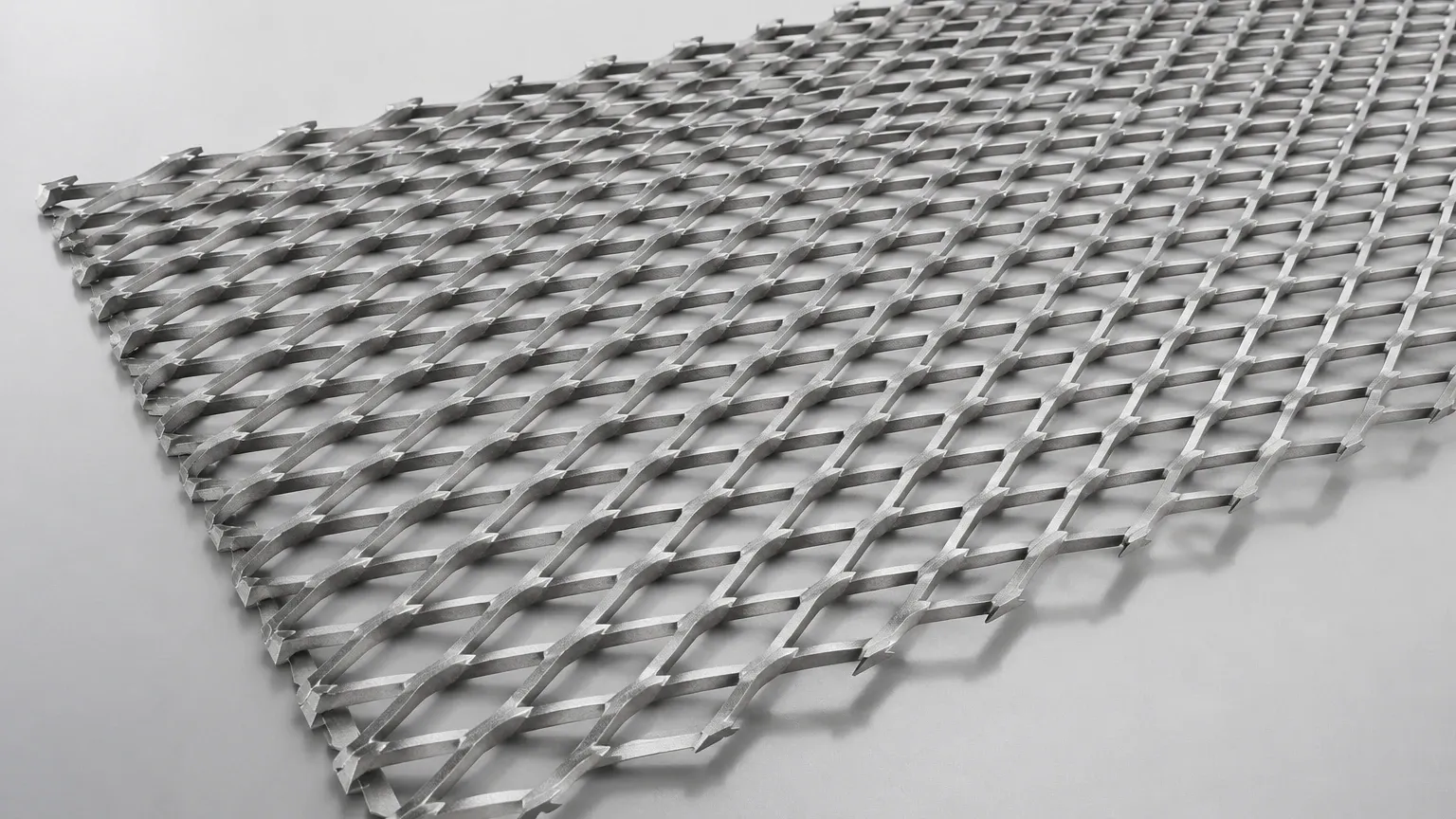
Expanded metal is manufactured through a simultaneous slitting and stretching process. Unlike perforated metal, which involves punching holes and generating scrap material, expanded metal is produced from a solid sheet or coil without any material waste. This process creates a diamond-shaped pattern that is integral to the sheet, providing a high strength-to-weight ratio.
When specifying an expanded metal 24×36 panel, it is essential to distinguish between the two primary forms: standard (raised) and flattened.
Standard (Raised) Expanded Metal
Standard expanded metal features strands that are turned at an angle to the plane of the sheet. This creates a three-dimensional surface that offers excellent grip and high rigidity. In filtration applications, the raised edges can assist in breaking up fluid flow or providing mechanical interlocking for secondary filter media. However, the thickness of a raised sheet is significantly greater than the original base metal, which must be accounted for in housing designs.
Flattened Expanded Metal
Flattened expanded metal undergoes a cold-rolling process after expansion. This flattens the strands and bonds into a single plane, resulting in a smooth, level surface. For engineers designing filtration systems, flattened material is often preferred when the mesh serves as a support structure for fine wire cloth or membranes, as it prevents the sharp edges of raised strands from piercing the delicate secondary media.
Technical Specifications for 24×36 Panels
To ensure a 24×36 panel meets the performance requirements of a specific project, several technical metrics must be defined beyond the outer dimensions. These metrics dictate the flow rate, pressure drop, and mechanical integrity of the component.
SWD and LWD (Short Way of Design and Long Way of Design)
The diamond pattern is defined by the SWD and LWD. The SWD is the distance from the center of a bond to the center of the next bond measured across the short diamond diagonal. The LWD is the same measurement across the long diagonal. For a 24×36 panel, the orientation of these diamonds relative to the 24-inch or 36-inch side is critical. If the LWD runs parallel to the 36-inch side, the panel will exhibit different structural properties than if it runs parallel to the 24-inch side.
Strand Width and Thickness
The strand width refers to the amount of metal between the openings, while the thickness refers to the gauge of the original base material. These two factors combined determine the "opening size" and the overall weight of the panel. In high-pressure hydraulic or chemical filtration, thicker strands are often required to prevent deformation under fluid load.
Percentage of Open Area
For filtration engineers, the percentage of open area is perhaps the most critical metric. It determines the hydraulic capacity of the filter. Expanded metal can offer open areas ranging from 20% to over 80%. Calculating the precise open area for an expanded metal 24×36 sheet ensures that the filter does not become a bottleneck in the system, causing unwanted pressure spikes.
Material Selection: The Role of Stainless Steel
While expanded metal can be produced from carbon steel or aluminum, industrial filtration applications almost exclusively demand stainless steel due to its corrosion resistance and thermal stability. Kaifil specializes in providing high-performance stainless steel solutions tailored for demanding environments.
Grade 304 Stainless Steel
Grade 304 is the most common choice for general industrial applications. It offers excellent resistance to atmospheric corrosion and many organic and inorganic chemicals. It is widely used in food and beverage processing where sanitation is a priority.
Grade 316 Stainless Steel
For more aggressive environments, such as chemical processing plants or marine applications, Grade 316 is the standard. The addition of molybdenum enhances its resistance to pitting and crevice corrosion in chloride-rich environments. When specifying expanded metal 24×36 for pharmaceutical or chemical filtration, Grade 316 ensures a longer service life and reduces the risk of batch contamination from material degradation.
Why 24×36 is a Critical Dimension in Industrial Filtration
The 24" x 36" dimension is a frequent requirement because it aligns with standard industrial equipment footprints. Many rectangular filter housings, ventilation ducts, and safety enclosures are designed around these modular sizes to simplify replacement and maintenance.
Filter Support Structures
In large-scale air or liquid filtration systems, the expanded metal 24×36 panel acts as a "pleat support" or a rigid backing. It prevents the primary filter media—such as fine wire mesh or synthetic fabric—from collapsing under the force of the flow. The rigidity of the expanded metal ensures that the pleats remain open, maximizing the effective filtration area.
Custom OEM Components
For original equipment manufacturers (OEMs), having a reliable source for precision-cut 24×36 panels is vital. Kaifil provides customized filtration solutions that meet exact tolerances, ensuring that every panel fits perfectly into the OEM assembly without the need for on-site trimming or adjustment. This level of precision reduces assembly time and total manufacturing costs.
Evaluation Criteria and Common Risks
When procuring expanded metal 24×36, purchasing teams and engineers should be aware of common quality risks that can impact the performance of the final product.
1. Burrs and Sharp Edges: In the expansion process, the slitting action can leave sharp burrs. For filtration applications, these burrs can trap debris prematurely or damage other components. Specifying a de-burring process is often necessary for high-purity applications.
2. Flatness Tolerances: Especially in flattened expanded metal, the rolling process can sometimes introduce a slight bow or camber. If the 24×36 panel must slide into a tight track or be welded to a flat frame, strict flatness tolerances must be communicated to the manufacturer.
3. Dimensional Accuracy: While 24×36 is the nominal size, the actual cut might vary depending on where the cut falls across the diamond pattern (random cut vs. bond cut). A "bond cut" ensures that the edges of the panel are solid metal, which is much easier to weld and safer to handle than a "random cut" that leaves sharp points.
4. Material Certification: In industries like pharmaceuticals or food processing, material traceability is non-negotiable. Engineers should confirm that the manufacturer can provide Mill Test Reports (MTRs) to verify the chemical composition of the stainless steel.
Maintenance and Total Cost of Ownership
The total cost of an expanded metal 24×36 component is not merely the purchase price, but the cost over its entire service life. Stainless steel expanded metal, while having a higher initial cost than carbon steel, offers a significantly lower total cost of ownership due to reduced replacement frequency.
Cleaning and Reusability
One of the primary advantages of stainless steel expanded metal in filtration is its cleanability. Unlike disposable filters, expanded metal components can often be cleaned via ultrasonic baths, backwashing, or chemical cleaning, depending on the contaminant. This reusability is a key factor in reducing the environmental footprint and operational expenses of industrial facilities.
Durability in Harsh Conditions
In hydraulic systems or high-temperature chemical reactors, components are subjected to vibration and thermal cycling. The monolithic structure of expanded metal—where the joints are part of the continuous metal sheet rather than welds or weaves—means there are no parts to work loose over time. This inherent structural integrity makes it an ideal choice for long-term industrial use.
Conclusion: Selecting a Partner for Custom Filtration
Specifying the correct expanded metal 24×36 panel requires a balance of mechanical engineering, material science, and practical application knowledge. Whether the goal is to support a delicate filter membrane, provide a safety barrier in a chemical plant, or act as a primary strainer in a food processing line, the quality of the expanded metal is paramount.
Kaifil provides the technical expertise and manufacturing precision required to deliver high-quality Perforated & Expanded Metal solutions. By focusing on material integrity, dimensional accuracy, and application-specific customization, Kaifil helps engineers and purchasing teams achieve optimized filtration performance and durable industrial outcomes. When planning your next filtration project, confirming the specific diamond orientation, material grade, and edge finish will ensure that your 24×36 panels meet the rigorous demands of your industrial environment.
