


Expanded Metal 2×4
In industrial filtration and structural engineering, the specification of materials requires a balance between mechanical integrity, flow dynamics, and material efficiency. Among the various configurations available to engineers, expanded metal 2×4 stands out as a versatile standard, typically referring to sheet dimensions of 2 feet by 4 feet or, in specific contexts, diamond pattern measurements. This guide examines the technical nuances of expanded metal in these dimensions, focusing on its application in high-performance filtration systems and industrial components.
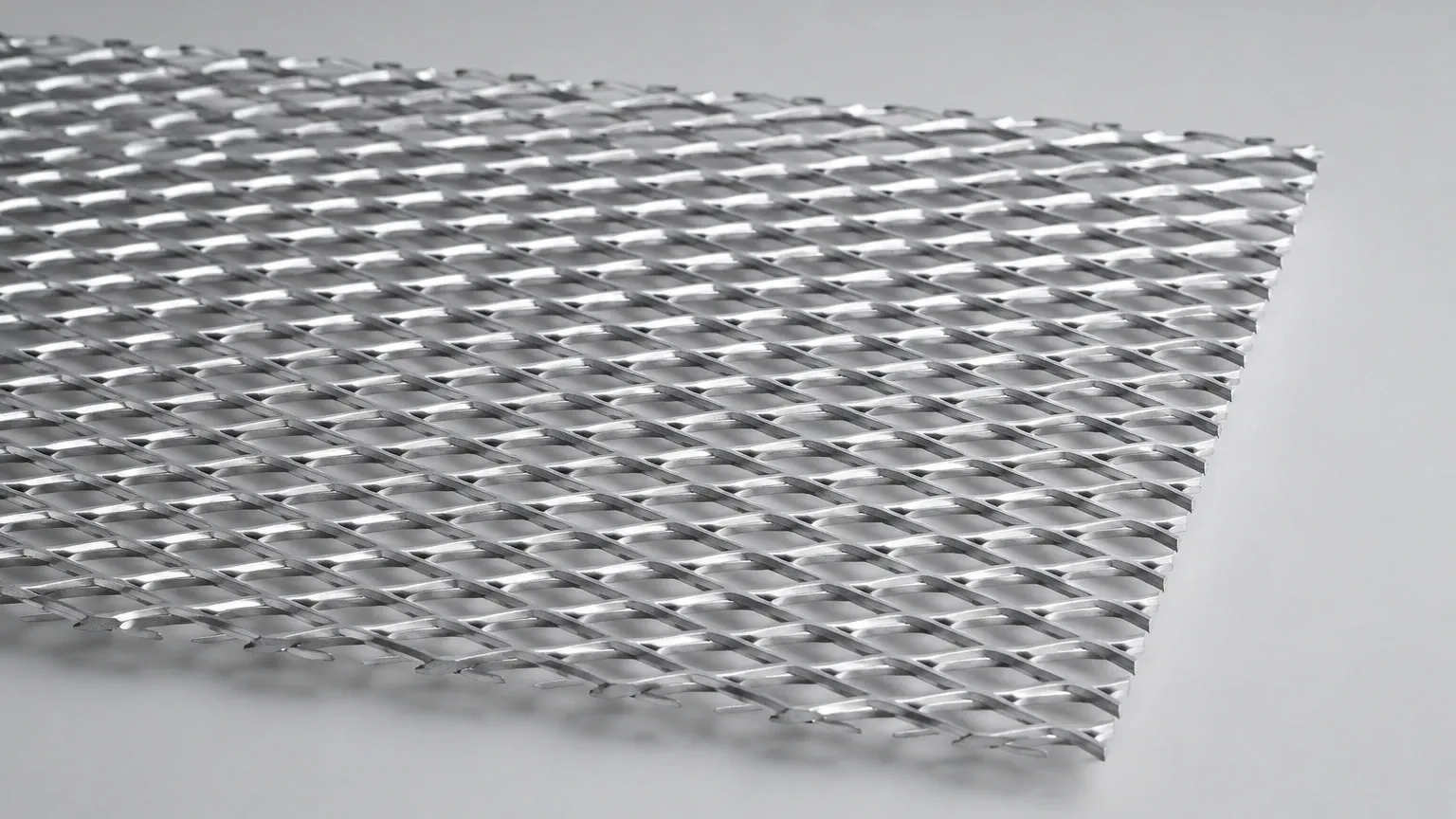
Expanded metal is manufactured through a process of simultaneous slitting and stretching. Unlike perforated metal, which involves punching holes and generating scrap material, expanded metal production is nearly waste-free. This process creates a network of interconnected strands that provide a high strength-to-weight ratio, making it an ideal candidate for support structures in stainless steel filter cartridges and industrial strainers.
Technical Specifications and Geometry
To properly evaluate expanded metal 2×4 for an industrial project, engineers must look beyond the basic dimensions and understand the geometry of the mesh. The performance of the material is dictated by several key metrics: the Short Way of Design (SWD), the Long Way of Design (LWD), strand thickness, and strand width.
SWD and LWD Orientation
In a standard 2×4 sheet, the orientation of the diamond pattern relative to the sheet edges is a critical engineering consideration. The LWD typically runs parallel to the length of the sheet. For a 2×4 sheet, this means the diamonds are usually oriented so that their long axis follows the 4-foot dimension. This orientation affects the rigidity of the sheet; expanded metal is significantly more resistant to bending along the LWD than the SWD. If the sheet is being used as a cylindrical support core for a filter, the orientation will determine the ease of rolling and the final collapse strength of the component.
Raised vs. Flattened Expanded Metal
Expanded metal is available in two primary forms: raised (standard) and flattened.
- Raised Expanded Metal: The strands are set at an angle to the plane of the sheet. This creates a three-dimensional surface that can enhance turbulence in filtration applications, which may be desirable in certain chemical processing stages to prevent laminar flow dead zones.
- Flattened Expanded Metal: The raised mesh is passed through a cold-rolling reducing mill, resulting in a smooth, flat surface. Flattened expanded metal is often preferred when the mesh serves as a substrate for finer wire cloth or membrane media, as it prevents the strands from piercing the delicate filtration layers.
Material Selection for Demanding Environments
The choice of material for expanded metal 2×4 components is dictated by the chemical and thermal requirements of the application. While carbon steel and aluminum are common in general construction, industrial filtration often demands the corrosion resistance of stainless steel.
Stainless Steel 304 and 316L
Stainless steel is the primary material for high-performance Perforated & Expanded Metal solutions. Grade 304 provides excellent durability for water treatment and general industrial use. However, for pharmaceutical, food and beverage, and marine applications, Grade 316L is the standard. The addition of molybdenum in 316L provides superior resistance to chlorides and pitting corrosion. Furthermore, the "L" (low carbon) designation is essential for components that require welding, as it minimizes carbide precipitation that can lead to intergranular corrosion at the weld joints.
Specialized Alloys
In extreme environments, such as high-temperature chemical reactors or highly acidic processing, specialized alloys like Monel, Inconel, or Hastelloy may be required. These materials maintain their structural integrity and oxidation resistance at temperatures where standard stainless steels would fail. When specifying expanded metal 2×4 in these alloys, engineers must account for the different expansion ratios and mechanical properties compared to standard steel.
Perforated vs. Expanded Metal in Filtration
When designing a filtration system, a common question is whether to use perforated or expanded metal. Both fall under the category of Perforated & Expanded Metal, but they offer different performance characteristics.
Open Area and Flow Rates
Expanded metal generally offers a higher percentage of open area than perforated metal of similar strength. This is because the expansion process creates openings without removing material. In a 2×4 sheet of expanded metal, the open area can range from 30% to over 80%, depending on the strand width and opening size. A higher open area results in a lower pressure drop (delta P) across the filter, which reduces energy consumption in pumping systems.
Structural Integrity
Because expanded metal is made from a single piece of material, the "bonds" (where the strands intersect) are not welded or joined; they are part of the original metal. This makes the material exceptionally strong. In contrast, perforated metal relies on the remaining "bridges" between holes. For high-pressure hydraulic applications, expanded metal cores can often provide the necessary burst strength with less total weight than a perforated equivalent.
Applications of Expanded Metal 2×4 in Industrial Sectors
The 2×4 sheet size is a standard unit for many OEM fabrication processes, allowing for efficient nesting and cutting of smaller components with minimal waste.
Filter Cartridge Support
In the production of stainless steel filter cartridges, expanded metal is often rolled into cylinders to serve as the inner core or outer guard. The 2×4 dimension is particularly useful for producing standard-height cartridges (such as 10-inch, 20-inch, or 40-inch units) used in water treatment and chemical processing.
Industrial Strainers and Baskets
Large-scale strainers used in the food and beverage industry often utilize expanded metal 2×4 sheets as the primary structural element for the strainer basket. The mesh allows for high-volume flow while capturing large particulates or protecting downstream pumps from debris. In these applications, the mesh must be deburred and often electropolished to ensure a hygienic surface that meets food-grade standards.
Machine Guarding and Safety
Beyond filtration, expanded metal 2×4 sheets are frequently used for machine guards in industrial plants. The diamond pattern allows for excellent visibility and airflow while preventing personnel from coming into contact with moving parts. The rigid nature of the 2×4 sheet makes it easy to frame and install in existing equipment layouts.
Engineering Evaluation: Load and Flow Considerations
When integrating expanded metal 2×4 into a technical design, engineers must perform several calculations to ensure the material will withstand the operational stresses.
Load-Bearing Capacity
If the expanded metal is used as a floor grate or a support shelf within a pressure vessel, its load-bearing capacity must be verified. This capacity is influenced by the strand thickness and the orientation of the LWD. Manufacturers provide load tables that specify the maximum allowable uniform load and concentrated load for specific mesh types. It is critical to note that these values change significantly if the material is flattened.
Pressure Drop (Delta P)
For filtration applications, the pressure drop is the most critical variable. Engineers must calculate the effective open area and consider the "tortuosity" of the flow path. Because the strands in raised expanded metal are angled, they do not present a straight path for the fluid. This can lead to higher initial pressure drops compared to perforated metal with the same open area, but it can also assist in capturing certain types of fibrous contaminants that might otherwise pass through a flat hole.
Customization and OEM Requirements
While expanded metal 2×4 is a common stock size, most industrial applications require a degree of customization to meet specific performance targets. Working with a manufacturer that understands the nuances of Perforated & Expanded Metal is essential for successful OEM integration.
Edge Conditions
One often overlooked detail is the edge condition of the cut sheet. When a 2×4 sheet is cut from a larger coil, the edges can be "random" (leaving sharp, open diamonds) or "bonded" (cutting through the intersections to leave a closed, safer edge). For filtration components that will be handled frequently or integrated into manual cleaning systems, bonded edges or specialized U-edging are often required to prevent injury and ensure structural stability.
Precision Fabrication
For high-precision industries like pharmaceuticals, the tolerances on the 2×4 sheet must be strictly controlled. This includes not only the outer dimensions but also the consistency of the diamond openings. Variations in the expansion process can lead to "camber" or slight bowing in the sheet, which must be corrected if the material is to be used in automated assembly lines.
Maintenance and Replacement Cycles
The longevity of expanded metal 2×4 components depends on the operating environment and the cleaning protocols in place. In many industrial filtration systems, these components are designed to be permanent or semi-permanent, supporting disposable or cleanable fine-mesh inserts.
Cleaning Protocols
In the food and chemical sectors, expanded metal components are often subjected to Clean-in-Place (CIP) or Steam-in-Place (SIP) cycles. Stainless steel expanded metal is well-suited for these processes, as it can withstand high-pressure washes and thermal shock. However, engineers must ensure that the mesh geometry does not create "dead zones" where bacteria or chemical residues can accumulate.
Monitoring for Wear
Over time, high-velocity flow containing abrasive particles can lead to strand thinning, particularly at the bonds. Regular inspection of the mesh for signs of erosion or stress cracking is necessary, especially in high-vibration environments like hydraulic systems. A significant increase in pressure drop that cannot be resolved through standard cleaning often indicates that the mesh has become fouled or that the structural strands have deformed, necessitating replacement of the component.
Conclusion
Expanded metal 2×4 remains a fundamental component in the toolkit of industrial engineers. Whether used as a robust support for filtration media or as a standalone screen for heavy-duty straining, its unique combination of strength, high open area, and material efficiency provides clear advantages over other metal forms. By carefully selecting the appropriate material grade, mesh geometry, and surface finish, purchasing teams and engineers can ensure that their Perforated & Expanded Metal components deliver reliable, long-term performance in even the most demanding industrial environments.
