


2 Inch Expanded Metal
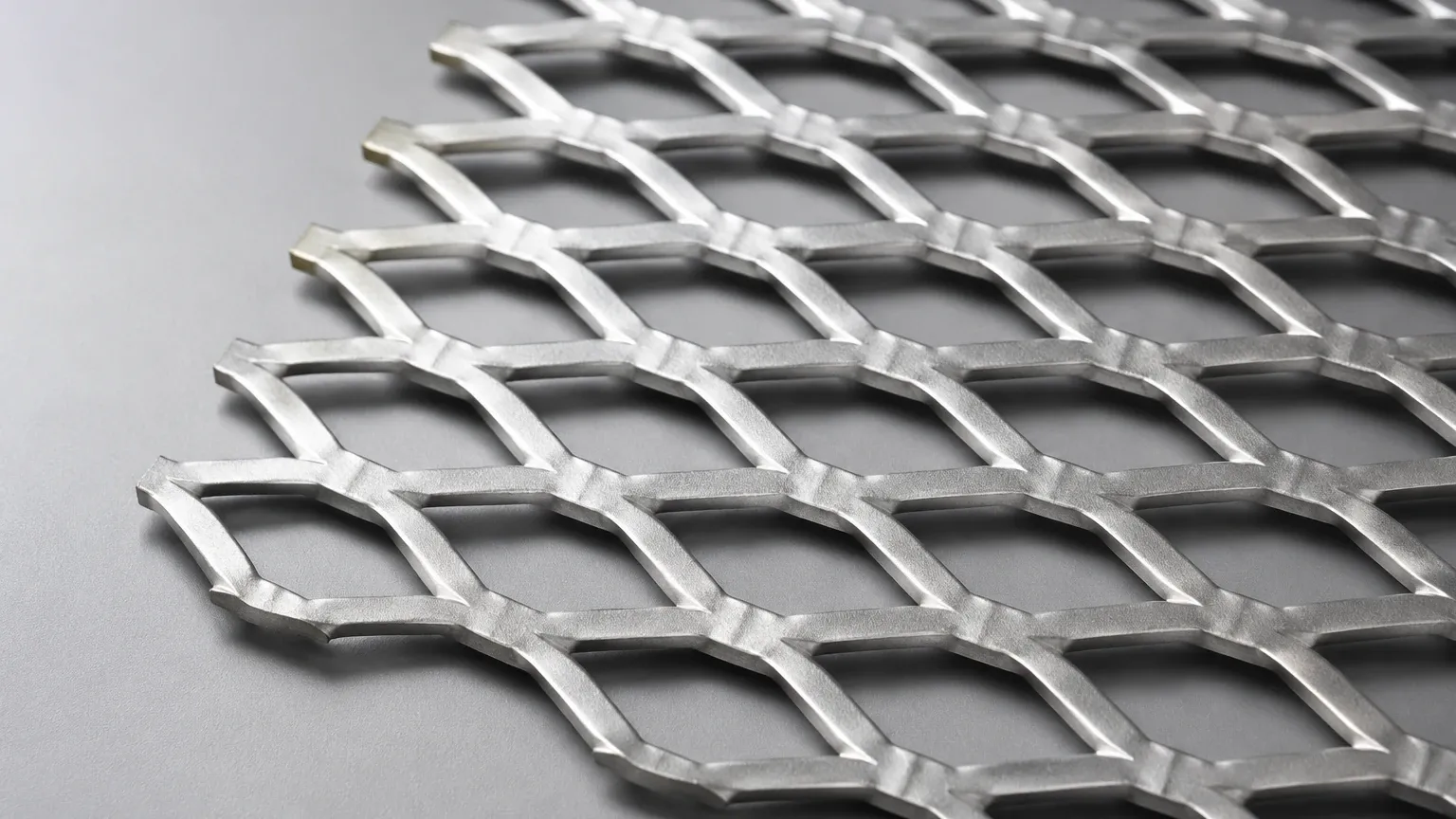
In industrial filtration and structural engineering, 2 inch expanded metal refers to a versatile material characterized by diamond-shaped openings where the long way of the diamond (LWD) typically measures approximately two inches. Unlike perforated metal, which is created by punching holes and removing material, expanded metal is produced by simultaneously slitting and stretching a solid metal sheet. This process creates a continuous, jointless mesh that offers an exceptional strength-to-weight ratio, making it a critical component for support structures, protective guards, and coarse filtration stages.
For engineers and procurement specialists, selecting the correct Perforated & Expanded Metal requires a deep understanding of geometric specifications, material properties, and mechanical performance. When specifying 2 inch expanded metal, the focus often shifts from fine particle retention to structural integrity, flow optimization, and durability in demanding environments such as chemical processing or hydraulic systems.
Understanding 2 Inch Expanded Metal Specifications
To accurately specify 2 inch expanded metal, one must look beyond the nominal size and understand the four primary dimensions that define its geometry: the Long Way of the Diamond (LWD), the Short Way of the Diamond (SWD), the strand width, and the strand thickness.
LWD and SWD Measurements
In a "2 inch" specification, the 2 inches usually refers to the LWD—the distance from the center of one joint to the center of the next joint across the long axis of the diamond. The SWD is the corresponding distance across the short axis. For industrial filtration applications, these dimensions determine the size of the largest particles that can pass through the mesh and the overall open area of the component.
Strand Geometry
The "strand" is the single metal strip that forms the border of the diamond opening.
- Strand Thickness: This is the thickness of the original base metal sheet.
- Strand Width: This is the amount of metal fed into the machine between slits.
By adjusting the strand width and thickness, manufacturers can significantly alter the weight and rigidity of the mesh without changing the 2-inch opening size. This flexibility allows engineers to optimize the material for specific pressure requirements or weight constraints.
Material Selection for Industrial Environments
The performance of 2 inch expanded metal is heavily dependent on the alloy used. While carbon steel and aluminum are common in general construction, industrial filtration and chemical processing usually demand high-performance alloys to ensure longevity and prevent contamination.
Stainless Steel (304 and 316)
Stainless steel is the industry standard for expanded metal used in filtration.
- Grade 304: Offers excellent corrosion resistance and strength for most industrial applications, including food and beverage processing.
- Grade 316: Contains molybdenum, providing superior resistance to chlorides and pitting. This is the preferred choice for marine environments, pharmaceutical manufacturing, and aggressive chemical filtration.
Specialty Alloys
In high-temperature or highly corrosive environments, specialty alloys like Monel, Inconel, or Hastelloy may be required. These materials maintain their structural integrity and chemical resistance where standard stainless steels might fail, ensuring that the filter support or guard does not become a point of failure in the system.
Raised vs. Flattened Expanded Metal: Mechanical Differences
One of the most critical decisions during the design phase is whether to use "raised" (standard) or "flattened" expanded metal. Each type offers distinct advantages depending on the intended application.
Raised Expanded Metal
Raised expanded metal is the product as it comes off the machine. The strands and bonds are set at a uniform angle to the plane of the sheet. This creates a three-dimensional surface that provides:
- Enhanced Rigidity: The angled strands act like structural beams, increasing the stiffness of the sheet.
- Directional Flow: The angled openings can be used to deflect or direct flow in specific patterns.
- Superior Grip: In non-filtration applications, the raised surface provides excellent traction.
Flattened Expanded Metal
Flattened expanded metal is produced by passing the raised sheet through a cold-rolling reducing mill. This process flattens the strands and bonds into the same plane, resulting in a smooth, flat surface.
- Surface Smoothness: Essential for applications where the mesh comes into direct contact with delicate filter media, preventing abrasion or puncturing.
- Uniform Thickness: Flattening ensures a consistent thickness across the entire sheet, which is vital for precision fitting within filter housings or frames.
- Reduced Profile: Occupies less space, allowing for more compact designs in multi-layered filtration systems.
Applications in Industrial Filtration and Support
While 2 inch expanded metal is often too coarse for primary fine-particle filtration, it plays an indispensable role as a secondary or auxiliary component in complex filtration systems.
Support Cages and Cores
In high-pressure hydraulic or liquid filtration, fine wire mesh or pleated media lack the structural strength to withstand significant differential pressure. 2 inch expanded metal is frequently used to fabricate internal support cores or external protective cages. These structures hold the primary filter media in place, preventing collapse or bursting during pressure surges.
Pre-Filtration and Debris Catchers
In water treatment or large-scale chemical intake systems, 2 inch expanded metal serves as a robust pre-filter. It is designed to capture large debris, such as stones, wood, or plastic waste, before they can reach and damage more sensitive downstream equipment like pumps, valves, or fine-mesh filters.
Protective Guards and Enclosures
Beyond the fluid stream, expanded metal is used to create ventilated guards for industrial machinery. The 2-inch opening allows for maximum airflow and visibility while providing a physical barrier that protects personnel and prevents large objects from entering mechanical systems.
Engineering Performance: Flow Rates and Pressure Drop
For engineers, the most critical data points for 2 inch expanded metal are the percentage of open area and the resulting pressure drop. Because expanded metal is a continuous piece of material, it provides a predictable and stable open area that does not shift or unravel under stress.
Calculating Open Area
The open area is determined by the relationship between the strand width and the SWD. A 2 inch expanded metal sheet with narrow strands will have a very high open area (often exceeding 70-80%), which minimizes resistance to flow. Conversely, wider strands increase the structural strength but reduce the open area, leading to a higher pressure drop across the component.
Flow Dynamics
The geometry of the diamond openings can induce turbulence, which may be desirable in some mixing applications but detrimental in others. When designing a system, engineers must account for the "effective" open area, especially with raised expanded metal, where the angle of the strands can influence the flow path more significantly than a simple flat perforated sheet.
Customization and Manufacturing Standards
Standard off-the-shelf expanded metal rarely meets the exacting requirements of specialized industrial filtration. Customization is often necessary to ensure the component integrates perfectly with the existing hardware.
Precision Shearing and Forming
2 inch expanded metal can be sheared to exact dimensions, but care must be taken regarding the "bond" (the point where diamonds intersect). Professional manufacturers can provide "random sheared" or "bond sheared" edges depending on whether the edge needs to be smooth or if the full diamond pattern must be preserved for welding.
Welding and Fabrication
Stainless steel expanded metal is highly weldable. It can be rolled into cylinders for filter cores or welded into frames for flat panel filters. At Kaifil, we specialize in ensuring that the welds are as corrosion-resistant as the base material, preventing the joints from becoming weak points in the assembly.
Procurement Checklist for Engineers
Before finalizing a purchase order for 2 inch expanded metal, technical teams should confirm the following parameters to ensure the material is fit for purpose:
1. Exact Material Grade: Is 304 sufficient, or does the environment require 316L for carbon precipitation resistance during welding?
2. Raised vs. Flattened: Does the application require the structural rigidity of raised metal or the smooth surface of flattened metal?
3. LWD and SWD Orientation: In many applications, the direction of the diamond (long way parallel to the length or width) affects how the material bends and how it supports loads.
4. Strand Dimensions: Confirm both strand width and thickness to ensure the calculated open area and weight meet the design specifications.
5. Edge Requirements: Specify if the edges should be deburred or if specific shearing tolerances are required for assembly.
6. Quantity and Form: Should the material be delivered in flat sheets, coils, or as finished fabricated components like cylinders or cones?
By addressing these technical details early in the procurement process, engineers can avoid costly delays and ensure that the Perforated & Expanded Metal components provide reliable, long-term performance in their industrial applications. Whether used as a rugged support structure or a coarse pre-filter, 2 inch expanded metal remains a cornerstone of durable industrial design.
