


24×36 Expanded Metal
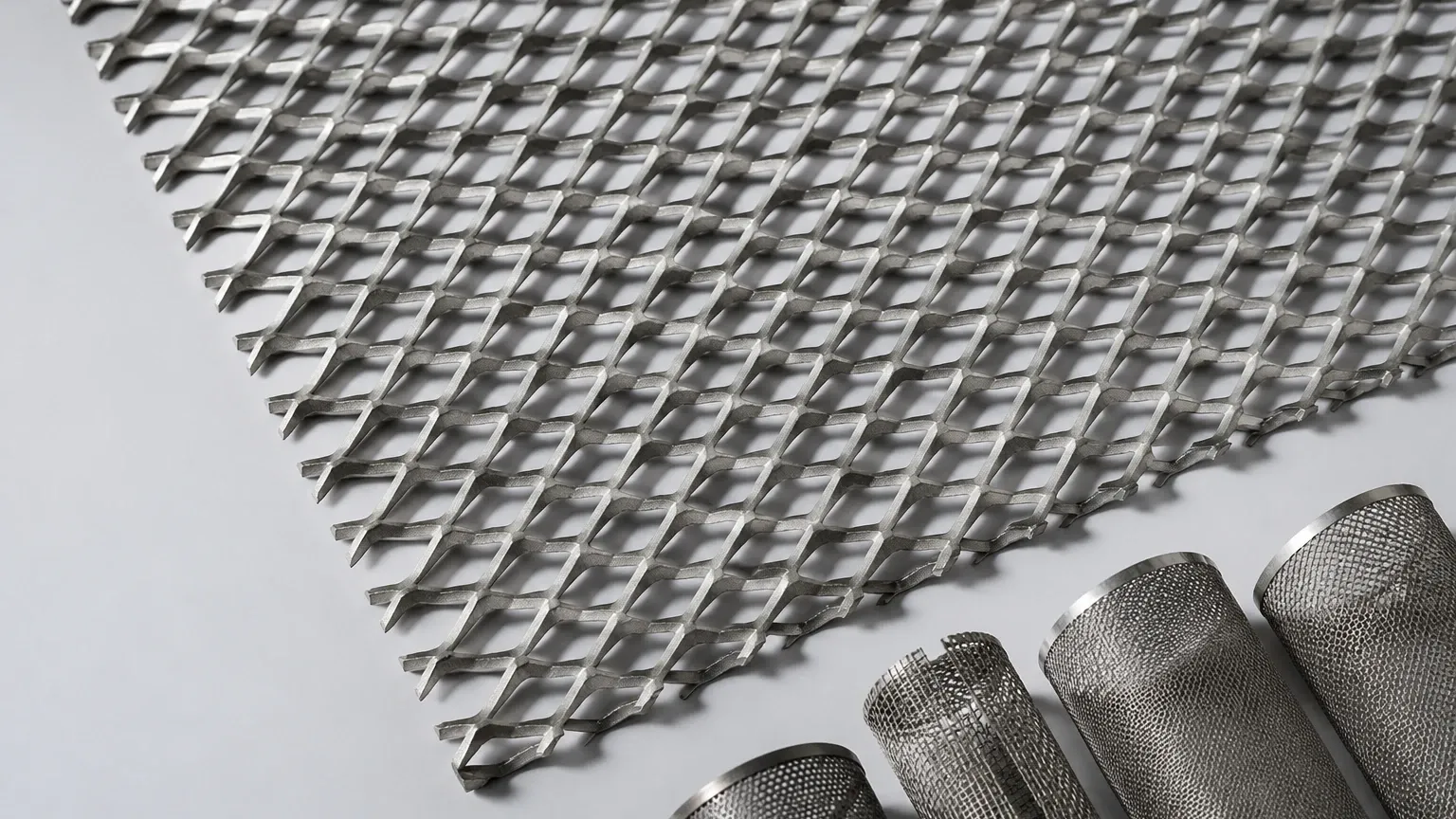
In industrial engineering and manufacturing, the selection of structural and filtration components depends heavily on the balance between material strength, weight, and permeability. Expanded metal is a versatile material produced by simultaneously slitting and stretching a solid sheet of metal, creating a continuous web of diamond-shaped openings. The 24×36 expanded metal format—referring to sheets measuring 24 inches by 36 inches—is a standard modular size frequently utilized in filtration support, machine guarding, and industrial enclosures.
Understanding the technical nuances of this material, from its geometric properties to its metallurgical composition, is essential for engineers and procurement teams seeking to optimize performance in demanding environments such as chemical processing, water treatment, and food production.
Understanding the Fundamentals of Expanded Metal Manufacturing
Unlike Perforated & Expanded Metal, which involves punching holes out of a sheet and creating scrap, expanded metal is manufactured through a process that involves no material waste. A metal plate or sheet is fed through a machine where a reciprocating knife slits and expands the material in a single motion.
This process creates a series of "bonds" (where the strands intersect) and "strands" (the individual metal strips forming the diamond). Because the material is stretched rather than cut, the resulting mesh maintains the structural integrity of the original metal while offering a significantly higher strength-to-weight ratio. For a 24×36 expanded metal sheet, this means a lightweight component that can withstand substantial mechanical stress, making it an ideal choice for internal supports in large-scale industrial filters.
Technical Specifications and Geometric Parameters
When specifying a 24×36 expanded metal panel, engineers must look beyond the overall dimensions and evaluate the internal geometry of the diamonds. These parameters dictate the flow characteristics, particle retention capabilities, and structural rigidity of the sheet.
SWD and LWD (Short Way and Long Way of Design)
The diamond pattern is defined by two primary measurements: the Short Way of Design (SWD) and the Long Way of Design (LWD). The SWD is the distance from the center of one bond to the center of the next bond across the short axis of the diamond. The LWD is the corresponding measurement across the long axis.
In a standard 24×36 expanded metal sheet, the orientation of these diamonds relative to the 24" and 36" edges is critical. Typically, the LWD runs parallel to the width of the sheet, but custom orientations can be engineered to enhance load-bearing capacity in specific directions. For filtration applications, the SWD and LWD determine the effective pore size, which influences the initial pressure drop across the filter medium.
Strand Width and Thickness
The strand width refers to the amount of metal between the openings, while the thickness (or gauge) refers to the thickness of the original base metal. These two factors combined determine the "open area" percentage. In industrial filtration, a higher open area is often preferred to minimize flow resistance, but this must be balanced against the need for the mesh to support heavy filter media or resist high-pressure differentials.
Flattened vs. Raised Expanded Metal
One of the most important distinctions for engineers to make when selecting 24×36 expanded metal is whether the application requires a "raised" or "flattened" finish.
Raised Expanded Metal (Standard)
Raised expanded metal is the product as it comes directly off the expansion press. The strands and bonds are set at a sharp angle to the plane of the sheet. This creates a three-dimensional surface that provides excellent grip and high rigidity. In filtration, raised expanded metal is often used as a primary structural cage for heavy-duty cartridges, where the angled strands can help break up flow turbulence or provide extra mechanical locking for secondary filter layers.
Flattened Expanded Metal
Flattened expanded metal is produced by passing the raised sheet through a cold-roll reducing mill. This process flattens the strands and bonds into the same plane, resulting in a smooth, two-dimensional surface. Flattened 24×36 expanded metal is approximately 5% to 10% thinner than the original base metal due to the rolling process.
For precision filtration, flattened expanded metal is often the superior choice. Its smooth surface prevents the abrasion of delicate wire mesh or synthetic filter membranes that may be layered against it. It also ensures a more uniform thickness across the entire 24×36 area, which is vital for maintaining tight tolerances in automated assembly processes.
Material Selection for Corrosive and High-Temperature Environments
The performance of a 24×36 expanded metal sheet is fundamentally tied to its metallurgy. Kaifil specializes in stainless steel solutions, which are preferred in industrial sectors where corrosion resistance and hygiene are paramount.
1. Stainless Steel 304: The most common grade, offering excellent formability and resistance to atmospheric corrosion. It is widely used in food and beverage filtration where regular cleaning with mild chemicals is required.
2. Stainless Steel 316/316L: Containing molybdenum, this grade provides superior resistance to chlorides and pitting. It is the industry standard for marine environments, pharmaceutical manufacturing, and aggressive chemical processing.
3. Carbon Steel: Often used for machine guards or structural supports in non-corrosive environments. It is cost-effective but usually requires a secondary finish, such as galvanizing or powder coating, to prevent oxidation.
4. Aluminum: Selected for its high strength-to-weight ratio and natural resistance to atmospheric corrosion. It is frequently used in HVAC filtration and aerospace applications where weight reduction is a primary engineering goal.
Industrial Applications of 24×36 Expanded Metal
The 24×36 expanded metal sheet serves as a versatile building block across various technical sectors. Its modular size allows it to be easily integrated into existing equipment frames or used as a standalone component.
Filtration Support and Reinforcement
In the production of industrial filter cartridges, expanded metal acts as the structural "skeleton." A 24×36 sheet can be rolled into a cylinder to form the inner core or outer guard of a filter. It provides the necessary mechanical strength to prevent the filter media from collapsing under high pressure while allowing the fluid (liquid or gas) to pass through with minimal obstruction.
Machine Guarding and Safety Enclosures
Safety is a critical concern in manufacturing facilities. 24×36 expanded metal panels are used to create guards for rotating machinery, belts, and fans. The diamond pattern allows for visual inspection of the equipment and maintains airflow for cooling, while the rigid metal structure prevents personnel from coming into contact with hazardous moving parts.
Industrial Strainers and Baskets
For coarse filtration and dewatering applications, expanded metal is fabricated into baskets and strainers. The 24×36 format is particularly useful for creating medium-sized batch processing baskets used in parts washing, heat treating, or chemical dipping. The open area allows for rapid drainage of fluids, while the stainless steel construction ensures longevity in harsh chemical baths.
Engineering Considerations for Customization
While standard 24×36 expanded metal sheets meet many needs, specific industrial applications often require customization to ensure optimal performance and cost-efficiency. When partnering with a manufacturer like Kaifil, engineers should confirm the following technical details:
* Edge Finishing: Expanded metal can be supplied with "random sheared" edges, where the diamonds are cut through, or "bonded" edges, where the cut is made through the bonds to leave a finished, safer edge. For filtration components that require welding, edge consistency is vital for achieving a high-quality seam.
* Dimensional Tolerances: Standard industrial tolerances for expanded metal can vary. If the 24×36 sheet must fit into a precision-machined slot or frame, specifying tighter tolerances on the length, width, and flatness is necessary.
* Surface Treatments: Beyond the choice of base material, secondary treatments such as electropolishing (for stainless steel) or passivation can enhance corrosion resistance and remove surface impurities, which is essential for pharmaceutical and high-purity water applications.
* Open Area Calculations: Engineers must accurately calculate the open area to predict the flow velocity and pressure drop. For example, a sheet with a 1/2" LWD and a 0.050" strand width will have a different performance profile than a sheet with a 3/4" LWD, even if both are 24×36 inches.
Evaluating Quality and Total Cost of Ownership
When procuring 24×36 expanded metal, it is tempting to focus solely on the initial purchase price. However, for industrial applications, the total cost of ownership (TCO) is a more accurate metric. A low-quality expanded metal sheet may suffer from inconsistent diamond shapes, burrs that can damage other filter components, or poor flatness that complicates the fabrication process.
High-quality manufacturing ensures that the expansion process is uniform across the entire sheet. This consistency leads to predictable mechanical behavior and easier integration into complex assemblies. Furthermore, choosing the correct material grade—such as opting for SS316 over SS304 in a mildly acidic environment—can significantly extend the replacement cycle of the filter or guard, reducing downtime and maintenance labor costs over the long term.
Conclusion
The 24×36 expanded metal sheet is a fundamental component in the toolkit of modern industrial engineering. Whether it is providing the structural backbone for a high-pressure filter cartridge or ensuring the safety of a manufacturing line, its unique combination of strength, permeability, and efficiency makes it indispensable. By understanding the geometric variables, material options, and finishing processes, technical professionals can select the exact specification required for their demanding applications.
For those involved in the design and procurement of specialized filtration systems, working with a manufacturer that understands the intersection of metal fabrication and filtration science is critical. To explore the full range of possibilities and technical specifications for your next project, Review product options and application support to ensure you achieve the most durable and cost-effective filtration performance.
