


Expanded Metal 3mm
In the landscape of industrial filtration and structural support, expanded metal 3mm components represent a critical intersection of durability and permeability. Whether the dimension refers to the material thickness or the short way of the diamond (SWD) aperture, precise specifications are paramount for engineers designing filtration systems, protective guards, or reinforcement layers. As a specialized manufacturer, Kaifil provides these solutions with a focus on high-performance materials, particularly stainless steel, to meet the rigorous demands of chemical, pharmaceutical, and food processing industries.
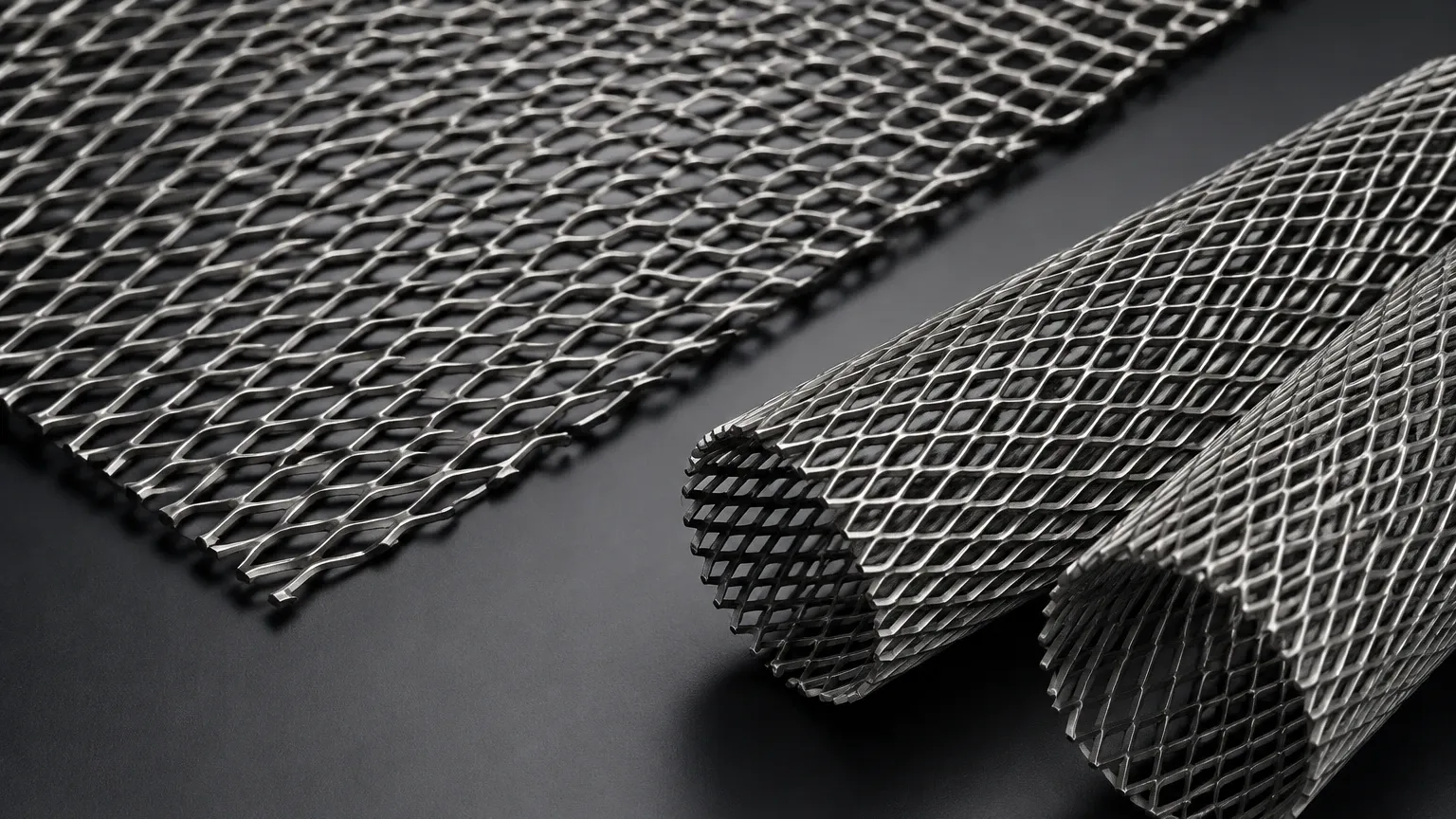
Selecting the right Perforated & Expanded Metal requires an understanding of how the expansion process alters the base material's properties. Unlike perforated metal, which involves punching holes and creating scrap, expanded metal is produced by slitting and stretching the sheet simultaneously. This creates a continuous piece of mesh with no joins or welds, offering a unique strength-to-weight ratio that is essential for industrial applications.
Understanding Expanded Metal Specifications
When discussing expanded metal 3mm, technical clarity is required to distinguish between sheet thickness and mesh opening size. In most industrial B2B contexts, "3mm" may refer to one of several critical dimensions:
1. Material Thickness: A 3mm thick sheet provides significant structural rigidity. This is often used for heavy-duty filtration support or walkways where mechanical stress is high.
2. Strand Width: This is the amount of metal between the openings. A 3mm strand width combined with a 3mm thickness results in a robust, heavy-duty profile.
3. Short Way of Diamond (SWD): If 3mm refers to the SWD, the resulting mesh is quite fine, suitable for primary filtration stages or as a protective barrier against small debris.
Geometric Terminology
To ensure accurate procurement, engineers must specify the Long Way of the Diamond (LWD) and the Short Way of the Diamond (SWD). The LWD is the distance from the center of a joint to the center of the next joint across the long axis, while the SWD follows the short axis. For an expanded metal 3mm specification, the relationship between these dimensions determines the open area percentage, which directly impacts flow rates and pressure drops in filtration cycles.
The Role of Perforated & Expanded Metal in Industrial Filtration
Filtration systems often require a balance between fine particle retention and structural integrity. Perforated & Expanded Metal components serve several roles in these environments:
* Support Media: In high-pressure hydraulic or chemical processing systems, fine wire mesh filters lack the rigidity to withstand the flow. A 3mm expanded metal layer acts as a "skeleton," supporting the finer mesh and preventing deformation or pleat collapse.
* Pre-Filtration: In water treatment or food processing, expanded metal with a 3mm aperture can serve as a primary screen to remove large particulates before the fluid reaches more sensitive secondary filters.
* Diffusers: The angled strands of expanded metal can help break up fluid flow, ensuring even distribution across the surface of a filter cartridge, which extends the service life of the media.
Material Selection for 3mm Expanded Metal Components
Material choice is perhaps the most significant factor in the longevity of a filtration component. At Kaifil, we emphasize the use of high-grade alloys to combat corrosion and thermal degradation.
Stainless Steel (304 and 316L)
Stainless steel is the standard for the pharmaceutical and food industries. Grade 304 offers excellent corrosion resistance for general applications, while 316L (low carbon) is preferred for environments involving chlorides or high acidity, such as marine or chemical processing. The 3mm thickness in stainless steel provides exceptional resistance to mechanical impact and high-pressure cleaning cycles.
Specialty Alloys
For extreme environments, such as those found in petrochemical refining, expanded metal can be produced from Monel, Inconel, or Titanium. These materials maintain their structural integrity at temperatures and corrosive levels that would cause standard carbon steel or even basic stainless steel to fail.
Engineering Considerations: Strength vs. Open Area
One of the primary challenges for engineers is calculating the optimal open area. The open area of expanded metal 3mm is determined by the strand width and the diamond dimensions.
Flow Rate and Pressure Drop
In filtration, a higher open area typically results in a lower pressure drop (ΔP), which reduces energy costs for pumps and compressors. However, increasing the open area usually means decreasing the strand width or increasing the diamond size, which can compromise the structural strength. For a 3mm thick material, the strands are inherently strong, allowing for a relatively high open area without sacrificing the ability to support heavy filter cakes or withstand high-pressure surges.
Structural Integrity
Unlike woven wire mesh, expanded metal is a single piece of material. There are no wires to unravel or welds to crack. This makes it ideal for applications subject to vibration or thermal cycling. When using 3mm expanded metal as a support cage for a filter cartridge, the rigidity ensures that the filter maintains its cylindrical or flat shape even under the weight of accumulated contaminants.
Applications in Demanding Industrial Environments
The versatility of expanded metal 3mm allows it to be utilized across various sectors, each with specific performance expectations.
Chemical and Petrochemical Processing
In these industries, filters must withstand aggressive solvents and high temperatures. Expanded metal is used to create internal support structures for large-scale basket filters and strainers. The 3mm thickness ensures that the basket does not warp under the weight of heavy chemical sludge.
Food and Beverage Production
Hygiene is the priority here. Stainless steel expanded metal is easy to clean and resistant to the caustic chemicals used in Clean-in-Place (CIP) processes. It is frequently used in centrifugal liners and as protective screens in milling and grinding equipment.
Water Treatment and Desalination
Large-scale water intake screens utilize expanded metal to prevent aquatic life and large debris from entering the system. The durability of 3mm material is necessary to resist the constant force of moving water and the potential for impact from floating objects.
Customization and OEM Manufacturing Capabilities
Standard off-the-shelf expanded metal rarely meets the exact needs of specialized industrial equipment. Customization is often required in terms of dimensions, material grade, and post-processing. Kaifil specializes in providing tailored Perforated & Expanded Metal solutions that integrate seamlessly into existing OEM designs.
Flattened vs. Raised Expanded Metal
During the expansion process, the strands are naturally set at an angle. This is known as "raised" expanded metal. For filtration applications where a smooth surface is required—such as when the expanded metal is in direct contact with a delicate filter membrane—the material can be "flattened." This involves passing the raised sheet through a cold-roll reducing mill, which levels the strands and creates a smooth, flat surface while maintaining the integrity of the 3mm thickness.
Surface Treatments
To further enhance performance, expanded metal can undergo various treatments:
* Electropolishing: Removes surface impurities and creates a mirror-like finish, essential for food-grade and pharmaceutical applications to prevent bacterial growth.
* Passivation: Enhances the natural oxide layer of stainless steel, providing superior corrosion resistance.
* Annealing: Relieves internal stresses caused by the expansion process, which is beneficial if the metal needs to be formed into complex shapes or cylinders.
Technical Checklist for Procurement
Before finalizing a purchase order for expanded metal 3mm, engineers and purchasing teams should confirm the following technical parameters to ensure the product is fit for purpose:
1. Dimension Clarification: Is the 3mm referring to the sheet thickness, the strand width, or the SWD? Providing a technical drawing is the best way to avoid ambiguity.
2. Material Grade: Does the application involve corrosive chemicals? If so, is 316L required, or is 304 sufficient?
3. Form and Finish: Is the application better served by raised or flattened expanded metal? Does the surface require electropolishing for hygiene standards?
4. Load Requirements: What is the expected pressure or mechanical load? This will determine if a 3mm thickness provides a sufficient safety margin.
5. Tolerances: What are the acceptable deviations in diamond size and overall sheet dimensions? Precision is key when the metal must fit into a pre-machined filter housing.
Total Cost of Ownership and Maintenance
While the initial cost of 3mm stainless steel expanded metal may be higher than thinner or lower-grade alternatives, the total cost of ownership is often lower. The durability of the 3mm profile reduces the frequency of replacements and minimizes downtime caused by structural failure. In filtration applications, a robust support layer protects more expensive filter media, further extending the overall system life.
Maintenance requirements for expanded metal are generally low. Regular inspections for signs of erosion or chemical pitting are recommended, especially in high-velocity flow environments. Because expanded metal is a single-piece construction, cleaning is straightforward, with no crevices for particles to become permanently trapped, unlike in some woven wire configurations.
Conclusion
Expanded metal 3mm is a versatile and indispensable component in modern industrial filtration and engineering. By providing a unique combination of structural strength and controlled permeability, it allows for the design of efficient, durable, and reliable filtration systems. Whether used as a primary screen or a secondary support structure, the quality of the material and the precision of the manufacturing process are the foundations of its performance.
For engineers seeking high-performance Perforated & Expanded Metal solutions, partnering with a manufacturer like Kaifil ensures access to technical expertise and customized production capabilities. By focusing on the specific needs of the application—from material compatibility to flow dynamics—companies can achieve optimized filtration results and long-term operational stability.
