


Expanded Metal 3030
In industrial filtration and structural engineering, the selection of mesh materials requires a precise balance between mechanical strength, open area, and chemical compatibility. Expanded metal 3030 represents a specific configuration within the broader category of Perforated & Expanded Metal that is frequently utilized for its structural rigidity and medium-coarse filtration capabilities. Unlike woven wire mesh, expanded metal is produced from a single solid sheet of material, ensuring that the strands remain interconnected without the risk of fraying or shifting under high-pressure conditions.
For engineers and procurement professionals, understanding the technical nuances of the 3030 pattern—including its diamond dimensions, strand thickness, and material properties—is essential for optimizing the performance of filtration systems, support cages, and industrial partitions.
Understanding the Geometry of Expanded Metal 3030
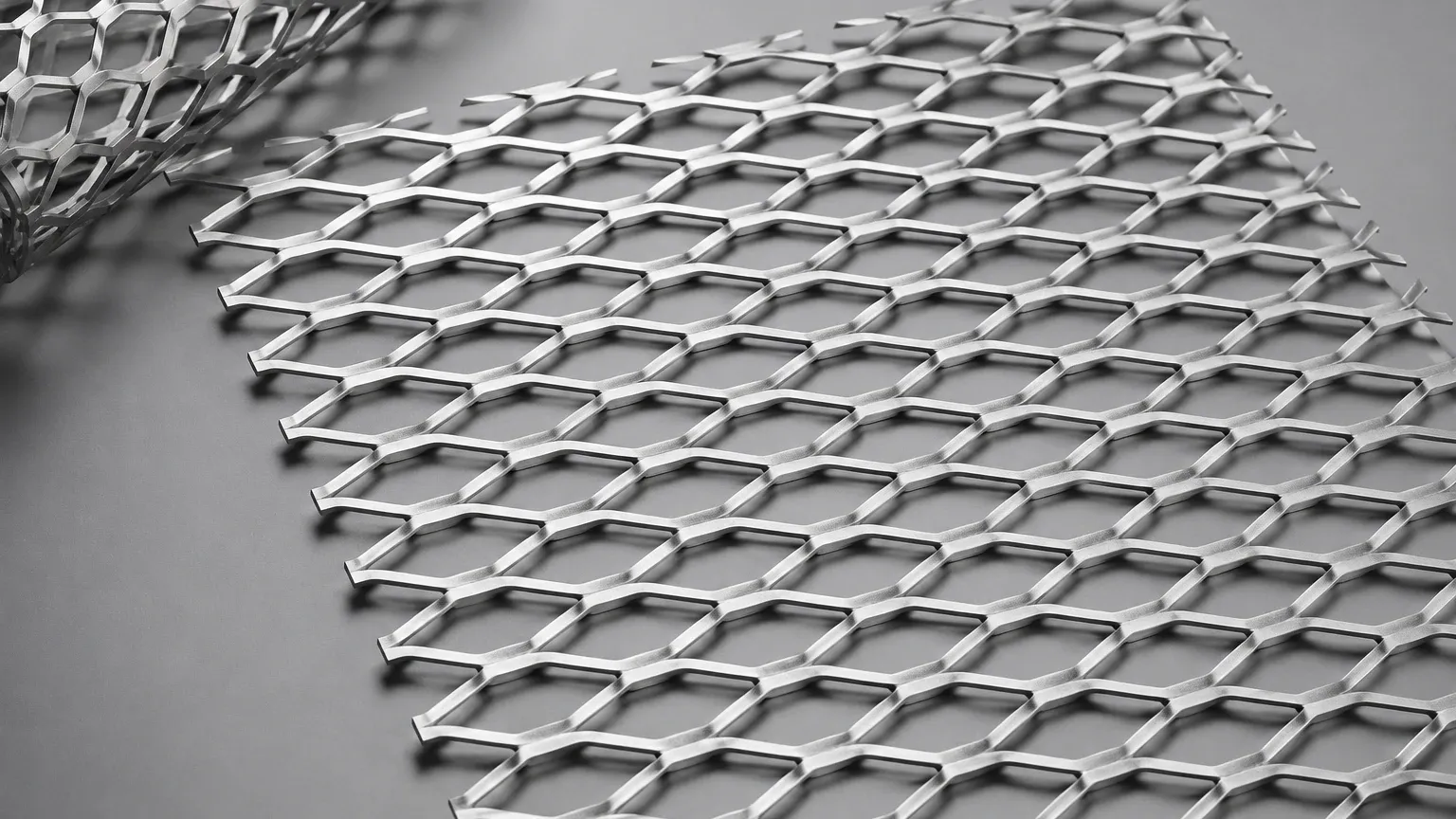
The designation "3030" in expanded metal typically refers to the nominal dimensions of the diamond-shaped openings, specifically the Long Way of Diamond (LWD) and the Short Way of Diamond (SWD). In a standard industrial context, this often signifies a pattern where both the LWD and SWD are approximately 30mm, or it may refer to a specific manufacturer’s code for a gauge and opening ratio designed for heavy-duty support.
The manufacturing process involves simultaneously slitting and stretching a metal sheet. This process creates a diamond pattern that is integral to the sheet, meaning there are no welds or joins that can fail. The resulting geometry provides a high strength-to-weight ratio. When evaluating expanded metal 3030, engineers must consider three primary geometric factors:
1. LWD (Long Way of Diamond): The distance from a point on a diamond to the corresponding point on the next diamond measured across the long axis.
2. SWD (Short Way of Diamond): The distance measured across the short axis.
3. Strand Width and Thickness: These dimensions determine the overall weight of the mesh and its resistance to mechanical deformation.
Because the metal is expanded rather than punched (as in perforated metal), there is zero material waste during production. This makes expanded metal a cost-effective alternative for large-scale industrial applications where structural integrity is paramount.
Material Selection and Corrosion Resistance
The performance of expanded metal 3030 is heavily dependent on the alloy selected. In the filtration industry, stainless steel is the standard due to its longevity in harsh environments. Kaifil specializes in manufacturing these components using high-grade alloys to meet specific chemical and thermal requirements.
* Stainless Steel 304: This is the most common choice for general industrial applications. It offers excellent corrosion resistance and is suitable for most water treatment and food processing environments.
* Stainless Steel 316L: For more demanding applications, such as chemical processing or marine environments, 316L is preferred. The addition of molybdenum provides superior resistance to pitting and crevice corrosion, especially in chloride-rich environments.
* Specialty Alloys: In high-temperature or highly acidic environments, alloys such as Monel, Inconel, or Duplex stainless steel may be required. These materials ensure that the expanded metal 3030 maintains its structural properties even when exposed to aggressive media.
When selecting a material, it is critical to consider the "Total Cost of Ownership." While carbon steel may have a lower initial purchase price, the longevity and reduced maintenance requirements of stainless steel often result in lower long-term costs in industrial filtration cycles.
Engineering Considerations: Flow Dynamics and Pressure Drop
One of the primary functions of expanded metal 3030 in a filtration assembly is to act as a support structure for finer mesh layers or as a coarse pre-filter. In both roles, the open area of the mesh is a critical engineering metric. The open area determines the flow velocity and the initial pressure drop across the filter element.
If the open area is too low, the system will experience a high pressure drop, forcing the pumps to work harder and increasing energy consumption. Conversely, if the mesh is too open, it may not provide sufficient support for the primary filter media (such as a fine wire mesh or a pleated synthetic fabric), leading to media migration or mechanical failure under high differential pressure.
In hydraulic and high-viscosity fluid applications, the 3030 pattern provides a robust framework that can withstand significant turbulent flow. Engineers should request a flow-versus-pressure-drop chart for the specific 3030 configuration being considered to ensure it aligns with the system's operational parameters.
Applications in Industrial Filtration Systems
Expanded metal 3030 is versatile and finds its way into various stages of industrial processes. Its primary applications include:
1. Filter Support Cages
In large-scale liquid filtration, fine wire mesh or filter cloth is often wrapped around a rigid core. Expanded metal 3030 serves as an excellent outer or inner cage. Its rigid diamond structure prevents the finer media from collapsing under the weight of the filtered cake or the pressure of the fluid stream.
2. Coarse Pre-Filtration
In water intake systems or chemical processing lines, expanded metal 3030 acts as a primary barrier to remove large debris, such as stones, plastic fragments, or large organic matter. This protects downstream equipment, such as pumps and high-precision Perforated & Expanded Metal components, from damage.
3. Flame Arrestors and Heat Shields
The thermal conductivity and surface area of expanded metal make it useful in specialized filtration applications involving gas or high-temperature vapors. The 3030 pattern allows for efficient heat dissipation while maintaining a barrier against particulate matter.
4. Diffusion and Dispersion
In some reactor designs, expanded metal is used to disperse flow evenly across a catalyst bed. The angled strands of the expanded metal 3030 pattern create a slight turbulence that helps in achieving a more uniform distribution of the fluid or gas.
Customization and Manufacturing Precision
Standard off-the-shelf expanded metal often fails to meet the stringent tolerances required in B2B industrial applications. Customization is where manufacturers like Kaifil provide the most value. When specifying expanded metal 3030, several customization options should be discussed:
* Flattened vs. Raised: In its natural state, expanded metal has "raised" strands that are angled. This provides maximum rigidity and a non-slip surface. However, for filtration support, "flattened" expanded metal is often preferred. Flattening involves passing the sheet through a cold-rolling mill, which levels the strands and creates a smooth, flat surface that won't abrade the finer filter media placed against it.
* Dimensional Tolerances: Precision cutting is essential for ensuring that the mesh fits perfectly into filter housings or frames. Laser cutting or high-precision shearing ensures that the LWD and SWD remain consistent across the entire sheet.
* Surface Finishes: Depending on the application, the metal may require electropolishing to remove burrs and improve corrosion resistance, or pickling and passivation to ensure a clean, oxide-free surface for pharmaceutical or food-grade use.
Risk Mitigation and Quality Assurance
Selecting a supplier for expanded metal 3030 involves more than just comparing price per square foot. Low-quality expanded metal can introduce several risks into an industrial process:
1. Burrs and Sharp Edges: Poorly maintained tooling during the slitting process can leave sharp burrs. In a filtration system, these burrs can puncture the primary filter media or shed metal particles into the clean fluid stream.
2. Material Fatigue: If the expansion process is not controlled, the metal at the "bonds" (where the diamonds meet) can become overly stressed, leading to premature cracking under vibration or pressure cycling.
3. Inconsistent Open Area: Variations in the stretching process can lead to uneven diamond sizes, resulting in unpredictable flow characteristics and localized high-pressure zones.
To mitigate these risks, engineers should confirm that the manufacturer follows ISO-certified quality management systems and provides material mill certificates (MTRs) to verify the chemical composition of the alloy.
Procurement Checklist for Engineers
Before finalizing a purchase order for expanded metal 3030, technical teams should confirm the following details with their supplier:
* Exact Dimensions: Confirm the LWD, SWD, strand width, and strand thickness.
* Form Factor: Specify whether the material should be delivered in flat sheets, rolls, or pre-formed cylinders.
* State of the Metal: Clearly define if the application requires "raised" or "flattened" mesh.
* Material Grade: Ensure the alloy (e.g., SS304 vs. SS316L) matches the chemical compatibility requirements of the fluid.
* Edge Treatment: Determine if the edges should be "bonded" (closed diamonds) or "random sheared" (open diamonds).
By addressing these technical details early in the design or procurement phase, industrial operators can ensure that their filtration systems operate at peak efficiency with minimal downtime. For those seeking specialized configurations or high-performance alloys, it is advisable to Review product options and application support to find a solution tailored to specific mechanical and environmental demands.
