


Expanded Metal 3d Warehouse
In the realm of industrial design and mechanical engineering, the ability to visualize components before they reach the factory floor is indispensable. For engineers designing filtration systems, support structures, or protective enclosures, searching for an expanded metal 3d warehouse provides a starting point for spatial planning and aesthetic evaluation. However, moving from a digital representation to a functional industrial component requires a deep understanding of material properties, manufacturing tolerances, and application-specific requirements.
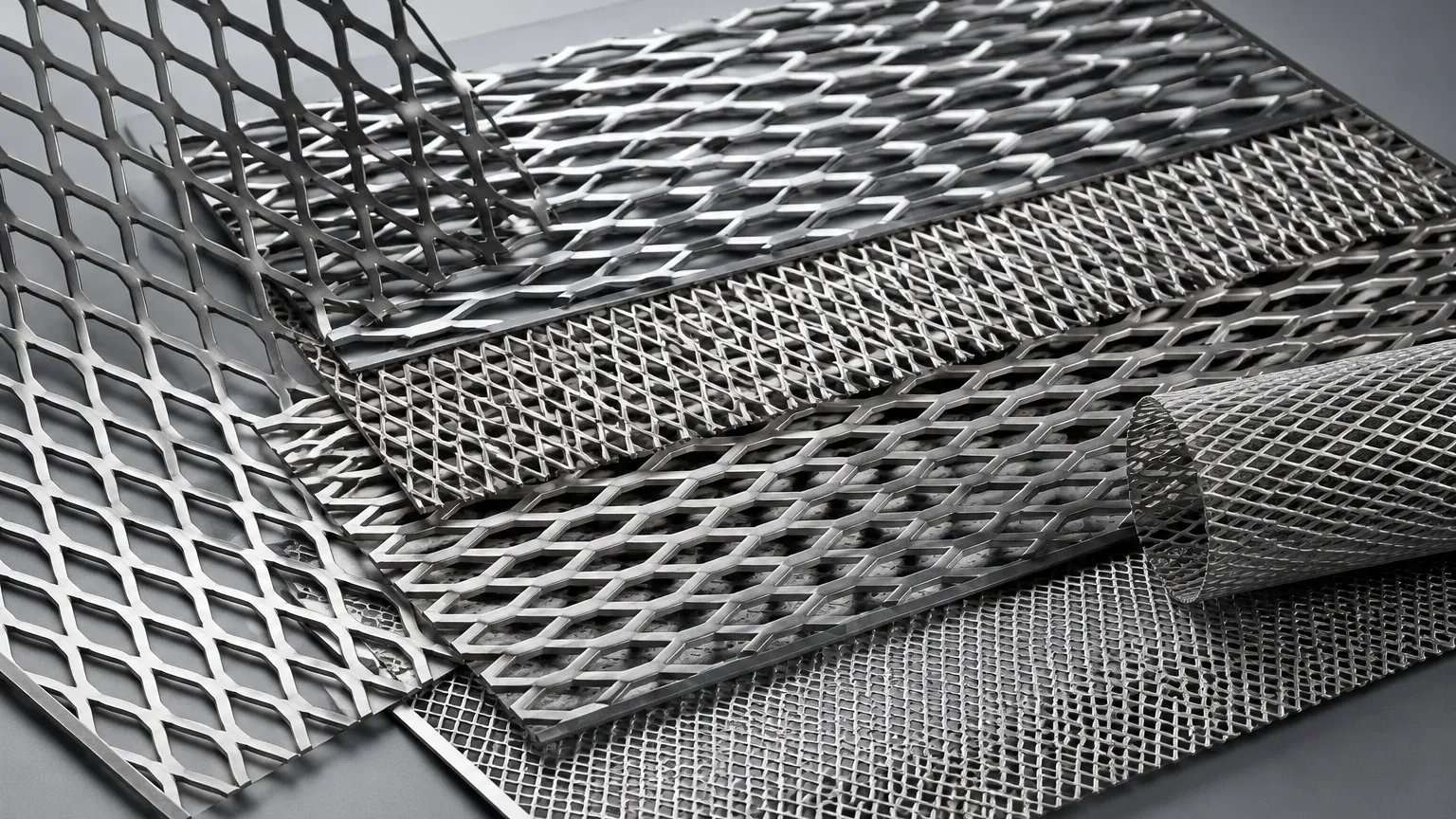
Expanded metal is a versatile material created by simultaneously slitting and stretching a solid metal sheet. This process results in a diamond-shaped pattern of openings, providing a high strength-to-weight ratio and excellent structural integrity. Unlike perforated metal, which involves punching holes and creating scrap, expanded metal is produced with virtually no waste, making it an efficient choice for large-scale industrial projects. When specifying Perforated & Expanded Metal for critical applications, engineers must bridge the gap between generic 3D models and precise manufacturing specifications.
Understanding Expanded Metal in Industrial Applications
Expanded metal is categorized into two primary forms: raised (or standard) and flattened. Each serves distinct purposes in an industrial context, and their representation in a 3D warehouse model should reflect these differences to ensure accurate assembly fitment.
Raised Expanded Metal
Standard expanded metal comes off the machine with the strands and bonds set at a uniform angle to the plane of the sheet. This creates a three-dimensional texture that provides additional strength and rigidity. In filtration, the angular strands can influence flow dynamics, often aiding in the pre-separation of larger particles before they reach a finer secondary mesh layer. When using an expanded metal 3d warehouse resource for raised metal, it is vital to account for the overall thickness of the sheet, which is significantly greater than the original base metal thickness.
Flattened Expanded Metal
Flattened expanded metal is produced by passing the standard expanded sheet through a cold-roll reducing mill. This process smooths the strands and bonds into a single plane, resulting in a flat, smooth surface. Flattened metal is often preferred when the component needs to be flush against another surface or when a specific thickness tolerance is required for a filter housing. While it offers a cleaner look in a 3D model, the flattening process slightly increases the overall dimensions of the diamond pattern (LWD and SWD) and reduces the mechanical strength compared to the raised version.
The Utility of 3D Modeling and the Expanded Metal 3D Warehouse
For many designers, a 3D warehouse serves as a repository for pre-built CAD components. These models allow for rapid prototyping and visualization within software environments like SketchUp, AutoCAD, or SolidWorks. When an engineer downloads a model from an expanded metal 3d warehouse, they are typically looking for a representation of the mesh density and the visual impact of the open area.
However, generic models often lack the technical metadata required for industrial procurement. A model might look correct in a rendering, but it may not account for the specific "Long Way of Diamond" (LWD) or "Short Way of Diamond" (SWD) measurements required for a particular filtration efficiency. For B2B procurement, the 3D model should be treated as a conceptual guide, while the actual production must adhere to rigorous engineering drawings and material data sheets.
Technical Parameters for Specifying Perforated & Expanded Metal
To move beyond the visualization stage, engineers must define the specific geometry of the mesh. The performance of Perforated & Expanded Metal in a filtration system is dictated by several key metrics:
1. LWD (Long Way of Diamond): The distance from a point on a bond to a corresponding point on the next bond across the long axis.
2. SWD (Short Way of Diamond): The distance across the short axis of the diamond.
3. Strand Width: The amount of metal fed into the machine between slits.
4. Strand Thickness: The thickness of the original base metal.
5. Open Area Percentage: This is perhaps the most critical value for filtration. It determines the flow rate and pressure drop across the filter. A 3D model can help estimate this, but precise calculation is necessary to ensure the system meets its hydraulic or pneumatic requirements.
In many industrial filtration scenarios, expanded metal acts as a support cage for finer wire mesh. In these cases, the LWD and SWD must be sized to provide maximum support without obstructing the flow or creating excessive turbulence.
Material Selection for Corrosive and High-Temperature Environments
While a 3D warehouse model may appear the same regardless of material, the physical reality of the application demands careful selection. Kaifil specializes in stainless steel solutions, which are preferred in demanding industrial sectors due to their durability and resistance to chemical degradation.
* Grade 304 Stainless Steel: The most common grade, offering excellent corrosion resistance in standard industrial environments. It is widely used in food and beverage processing where hygiene is paramount.
* Grade 316/316L Stainless Steel: Contains molybdenum, which provides superior resistance to chlorides and marine environments. This is the standard choice for chemical processing and pharmaceutical applications where the filter is exposed to aggressive solvents or acids.
* Specialty Alloys: For high-temperature applications, such as exhaust filtration or steam processing, specialty alloys may be required to prevent oxidation and maintain structural integrity.
When specifying these materials, engineers should confirm that the manufacturing process (slitting and stretching) does not introduce micro-cracks or stress points that could lead to premature failure in a high-pressure system.
Integrating Expanded Metal into Filtration Systems
In industrial filtration, expanded metal is rarely a standalone component. It is often integrated into complex assemblies such as basket strainers, pleated filter cartridges, or vibrating screens. The role of the expanded metal is typically to provide a rigid skeleton that can withstand the differential pressure across the filter media.
Pressure Drop and Flow Efficiency
One of the primary concerns for engineers is the pressure drop ($ \Delta P $). If the expanded metal support is too restrictive, it increases energy consumption for pumps and reduces the overall efficiency of the system. Conversely, if the open area is too large, the support may fail under the weight of the captured contaminants. A 3D model can assist in simulating flow paths, but empirical data from the manufacturer is necessary to validate these simulations.
Cleaning and Maintenance Cycles
Industrial filters must be cleaned or replaced periodically. The geometry of the expanded metal influences how easily debris can be removed during backwashing or manual cleaning. Smooth, flattened expanded metal is generally easier to clean than raised metal, which can trap particles in the angular bonds. Engineers should consider the "cleanability" of the mesh pattern during the design phase.
From Digital Model to Physical Component: The Kaifil Advantage
While an expanded metal 3d warehouse provides a convenient starting point for design, it cannot replace the expertise of a specialized manufacturer. At Kaifil, we understand that every industrial application has unique challenges. Our approach to Perforated & Expanded Metal focuses on precision, durability, and customization.
OEM and Customization Capabilities
We work closely with engineering teams to move from their CAD designs to finished products. This involves more than just matching a diamond pattern; it includes:
* Precision Cutting: Ensuring the mesh fits perfectly within the filter housing with minimal edge gaps.
* Edge Treatment: Providing bonded edges or U-edging to ensure safety and structural integrity.
* Forming and Welding: Rolling expanded metal into cylinders or cones for use in filter cartridges, ensuring high-strength longitudinal or spiral welds.
* Surface Finishing: Offering passivation, electropolishing, or specialized coatings to enhance corrosion resistance and meet industry-specific standards (such as FDA compliance for food contact).
Common Engineering Challenges and Selection Risks
Choosing the wrong expanded metal specification can lead to several operational risks. Engineers should be aware of the following pitfalls when relying solely on generic models:
1. Inaccurate Open Area Calculations: Many 3D models simplify the diamond geometry, leading to errors in calculating the effective open area. This can result in a filter that either restricts flow too much or fails to provide adequate support.
2. Ignoring Directionality: Expanded metal has a distinct orientation. The strength and flow characteristics differ depending on whether the LWD or SWD is aligned with the primary stress or flow direction. A 3D warehouse model may not clearly indicate this orientation.
3. Tolerance Mismatches: Standard commercial tolerances for expanded metal can be broader than those required for precision filtration. It is essential to confirm the manufacturer's ability to hold tighter tolerances for SWD, LWD, and overall thickness.
4. Material Substitution: In some cases, low-quality stainless steel may be substituted for high-grade 316L. This is particularly dangerous in chemical and pharmaceutical applications where material purity is critical. Kaifil ensures material traceability to prevent such risks.
Total Cost of Ownership Considerations
When evaluating expanded metal solutions, purchasing teams should look beyond the initial unit price. The total cost of ownership (TCO) includes the lifespan of the filter, the frequency of maintenance, and the potential cost of system downtime. High-quality stainless steel expanded metal from a reliable manufacturer may have a higher upfront cost but significantly lower TCO due to its durability and reduced need for replacement.
By selecting a partner like Kaifil, engineers gain access to technical support that helps optimize the design for both performance and manufacturability. Whether you are starting with a model from an expanded metal 3d warehouse or a blank sheet of paper, our team provides the engineering insight necessary to ensure your filtration system operates at peak efficiency.
Conclusion
Digital tools and 3D warehouses are excellent for the preliminary stages of industrial design, allowing for rapid visualization and spatial coordination. However, the transition to a functional, high-performance filtration component requires a rigorous focus on technical specifications, material science, and manufacturing precision. By understanding the nuances of Perforated & Expanded Metal, engineers can design systems that are not only aesthetically sound in a 3D environment but also robust and reliable in the most demanding industrial applications. For those seeking custom solutions tailored to specific filtration needs, Kaifil offers the manufacturing expertise and quality assurance required to turn digital concepts into industrial reality.
