


Expanded Metal 4.5 Mm
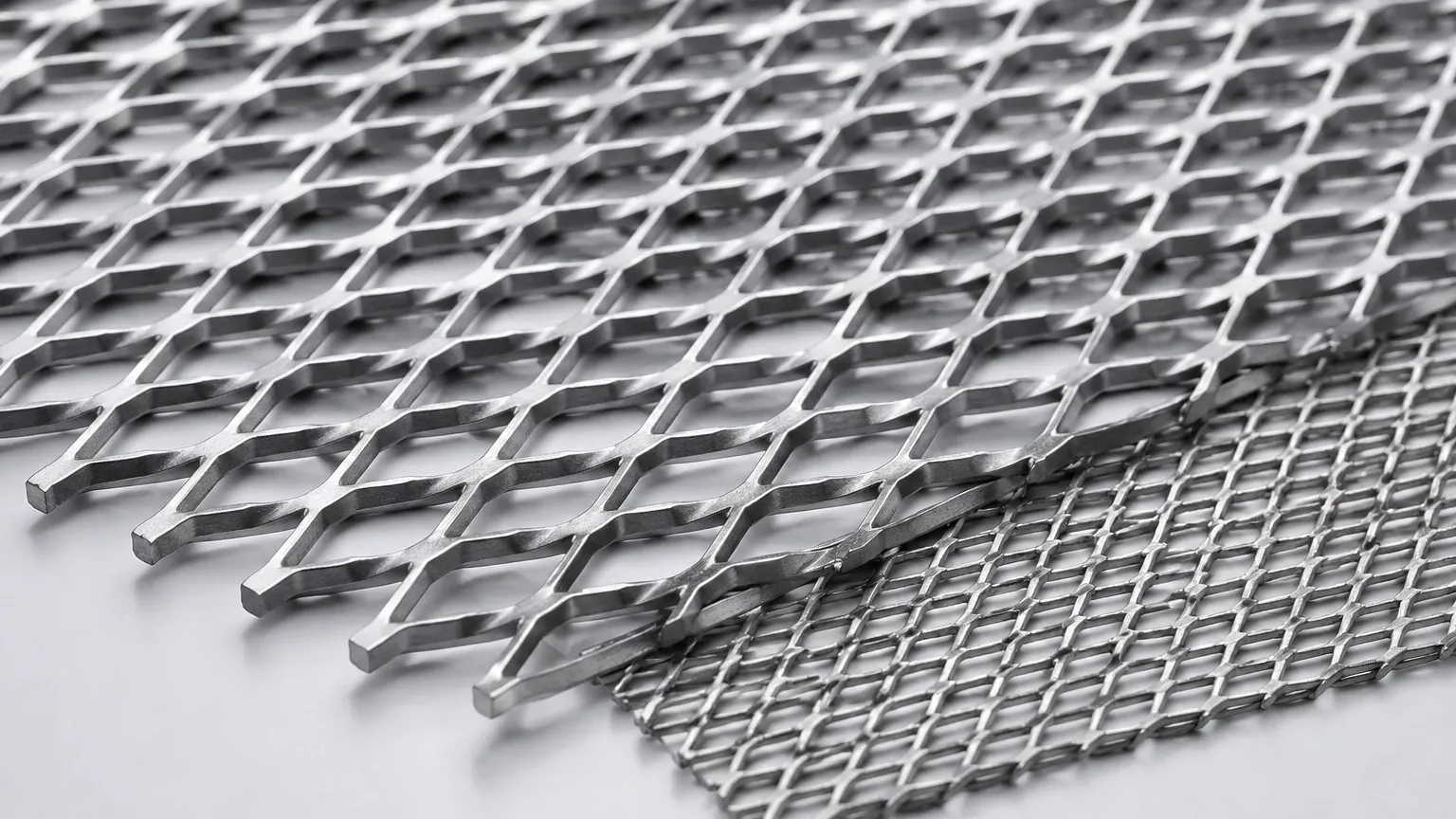
In industrial filtration and structural engineering, the selection of mesh materials is a critical decision that impacts flow dynamics, structural integrity, and the longevity of the filtration system. Expanded metal, particularly specifications involving an expanded metal 4.5 mm dimension—whether referring to the short way of the diamond (SWD), strand width, or material thickness—serves as a versatile solution for demanding environments. Unlike traditional woven wire mesh or perforated sheets, expanded metal offers a unique three-dimensional structure that provides a high strength-to-weight ratio and specific hydraulic characteristics.
For engineers and procurement specialists, understanding the technical nuances of expanded metal is essential for optimizing filtration performance. This guide examines the manufacturing principles, material considerations, and application-specific benefits of using expanded metal in industrial contexts, focusing on how these components integrate into broader filtration and support systems.
The Engineering Principles of Expanded Metal
Expanded metal is produced through a simultaneous slitting and stretching process. A solid metal sheet is fed through a machine where a series of knives cut and expand the material into a diamond-shaped pattern. This process is distinct from perforation because it involves no material waste; the surface area of the final product is significantly larger than the original sheet, yet the structural continuity of the metal remains intact.
When specifying expanded metal 4.5 mm, it is vital to define which dimension this measurement represents. In most industrial filtration catalogs, this may refer to:
1. Short Way of Diamond (SWD): The distance from the center of one bond to the center of the next bond across the short axis.
2. Strand Width: The amount of metal between the openings.
3. Opening Size: The clear space available for fluid or gas passage.
Because the strands are set at an angle to the plane of the sheet, the material possesses inherent rigidity. This 3D geometry allows the mesh to deflect stress more effectively than flat perforated sheets, making it an ideal substrate for high-pressure hydraulic filters or heavy-duty intake screens.
Material Selection: The Role of Stainless Steel
In B2B industrial applications, material compatibility is the primary factor in determining the service life of a filter component. While expanded metal can be produced from aluminum or carbon steel, stainless steel remains the gold standard for chemical processing, pharmaceutical manufacturing, and water treatment.
Grade 304 vs. Grade 316L
Stainless steel 304 provides excellent corrosion resistance for general industrial use. However, for applications involving chlorides or high-temperature acidic environments, Grade 316L is preferred due to the addition of molybdenum. In filtration systems, the use of 316L expanded metal ensures that the support structure does not succumb to pitting corrosion, which could lead to bypass or system failure.
Durability and Thermal Stability
Expanded metal manufactured from high-grade stainless steel retains its mechanical properties at elevated temperatures. This is particularly important in petrochemical filtration, where the expanded metal 4.5 mm structure may serve as a catalyst support or a flame arrestor. The lack of joins or welds within the mesh pattern (as the bonds are part of the original metal) means there are no weak points that could fail under thermal cycling.
Comparing Perforated & Expanded Metal for Filtration
Engineers often face a choice between different types of rigid media. When evaluating Perforated & Expanded Metal, several performance metrics must be weighed to determine the best fit for a specific application.
Structural Integrity and Weight
Expanded metal is generally lighter than perforated metal of the same thickness because the stretching process creates larger open areas from a smaller volume of raw material. However, the "raised" nature of expanded metal provides a truss-like reinforcement. If a flat surface is required, the material can be "flattened" through a secondary cold-rolling process, though this slightly reduces its structural rigidity.
Flow Dynamics and Turbulence
The angled strands of expanded metal 4.5 mm create a different flow profile compared to the straight-through holes of perforated metal. In liquid filtration, these angles can induce controlled turbulence, which may help in preventing the rapid buildup of a filter cake on the primary mesh surface. Conversely, in air filtration, the 3D structure can act as a directional louver, assisting in debris deflection.
Cost-Efficiency
Because the expansion process produces no scrap, it is often more cost-effective than perforation, especially when using expensive alloys like titanium or high-nickel stainless steels. For B2B buyers looking to optimize the total cost of ownership, expanded metal offers a high-performance solution that maximizes material utilization.
Applications of 4.5 mm Expanded Metal in Industry
The 4.5 mm specification is frequently utilized in medium-to-coarse filtration stages. Its applications span across various sectors where durability and precise aperture control are required.
* Hydraulic Filtration: Used as an outer support tube or inner core for pleated filter elements. The expanded metal protects the delicate fine wire mesh from collapsing under high differential pressure.
* Food and Beverage Processing: Employed in large-scale strainers and centrifugal baskets. The smooth, deburred edges of high-quality expanded metal are essential for maintaining sanitary standards and preventing bacterial growth.
* Water Treatment: Serves as a primary screen for removing large particulates or as a support structure for resin beds in ion exchange columns.
* Acoustic and HVAC: In industrial ventilation, expanded metal 4.5 mm acts as both a protective guard and a medium for sound attenuation in silencers.
Customization and Engineering Considerations
Standard off-the-shelf expanded metal rarely meets the exacting requirements of specialized industrial machinery. Customization is often necessary to ensure the component fits perfectly within a filter housing or assembly.
Defining the Open Area
The percentage of open area is a critical calculation for any filtration engineer. It determines the pressure drop (delta P) across the filter. With expanded metal 4.5 mm, the open area can be adjusted by varying the strand width and the degree of expansion. A larger opening increases flow but reduces structural strength, necessitating a balanced approach during the design phase.
Edge Finishing and Fabrication
One of the challenges with expanded metal is the sharp edges created at the bond points. For components that will be handled frequently or integrated into complex assemblies, edge treatments such as U-edging, welding into a frame, or specialized deburring are required. In OEM manufacturing, providing the expanded metal in pre-cut circles, cylinders, or custom shapes can significantly reduce assembly time for the end-user.
Tolerances and Quality Control
Industrial-grade expanded metal must adhere to strict tolerances. Variations in strand thickness or diamond uniformity can lead to uneven flow distribution. Technical professionals should confirm that their supplier uses precision tooling and rigorous inspection protocols to ensure that every sheet or component meets the specified expanded metal 4.5 mm parameters.
Selection Guide: Questions for Engineers
Before finalizing a purchase order for expanded metal components, engineering teams should evaluate the following factors to ensure the product is fit for purpose:
1. What is the primary function? Is the metal acting as the primary filter medium, a support for a finer mesh, or a protective guard?
2. What are the environmental conditions? Consider the pH of the fluid, the operating temperature, and the presence of abrasive particles.
3. Is a flattened or raised profile required? Raised mesh provides better grip and rigidity, while flattened mesh offers a smooth surface for laminating with other materials.
4. What is the maximum allowable pressure drop? This will dictate the required open area and the specific diamond dimensions.
5. Are there specific regulatory requirements? For food or pharmaceutical applications, ensure the material is certified and the manufacturing process avoids contaminants.
Conclusion
Expanded metal 4.5 mm represents a highly efficient and durable solution for a wide range of B2B industrial filtration needs. By leveraging the unique physical properties of the expanded diamond pattern, manufacturers can create components that offer superior strength, optimized flow, and significant cost savings over traditional perforated materials. Whether used as a robust support core in a hydraulic system or a protective screen in a chemical reactor, the technical advantages of stainless steel expanded metal are clear. When precision and reliability are paramount, selecting the right material grade and specification is the first step toward achieving long-term operational efficiency.
