


Expanded Metal 48 X 96
In the industrial manufacturing and filtration sectors, the 48 x 96-inch sheet—commonly referred to as a 4'x8' sheet—represents the most widely utilized standard dimension for metal substrates. When specifying expanded metal for industrial applications, understanding the nuances of the manufacturing process, material properties, and mechanical configurations is essential for ensuring long-term performance and cost-efficiency.
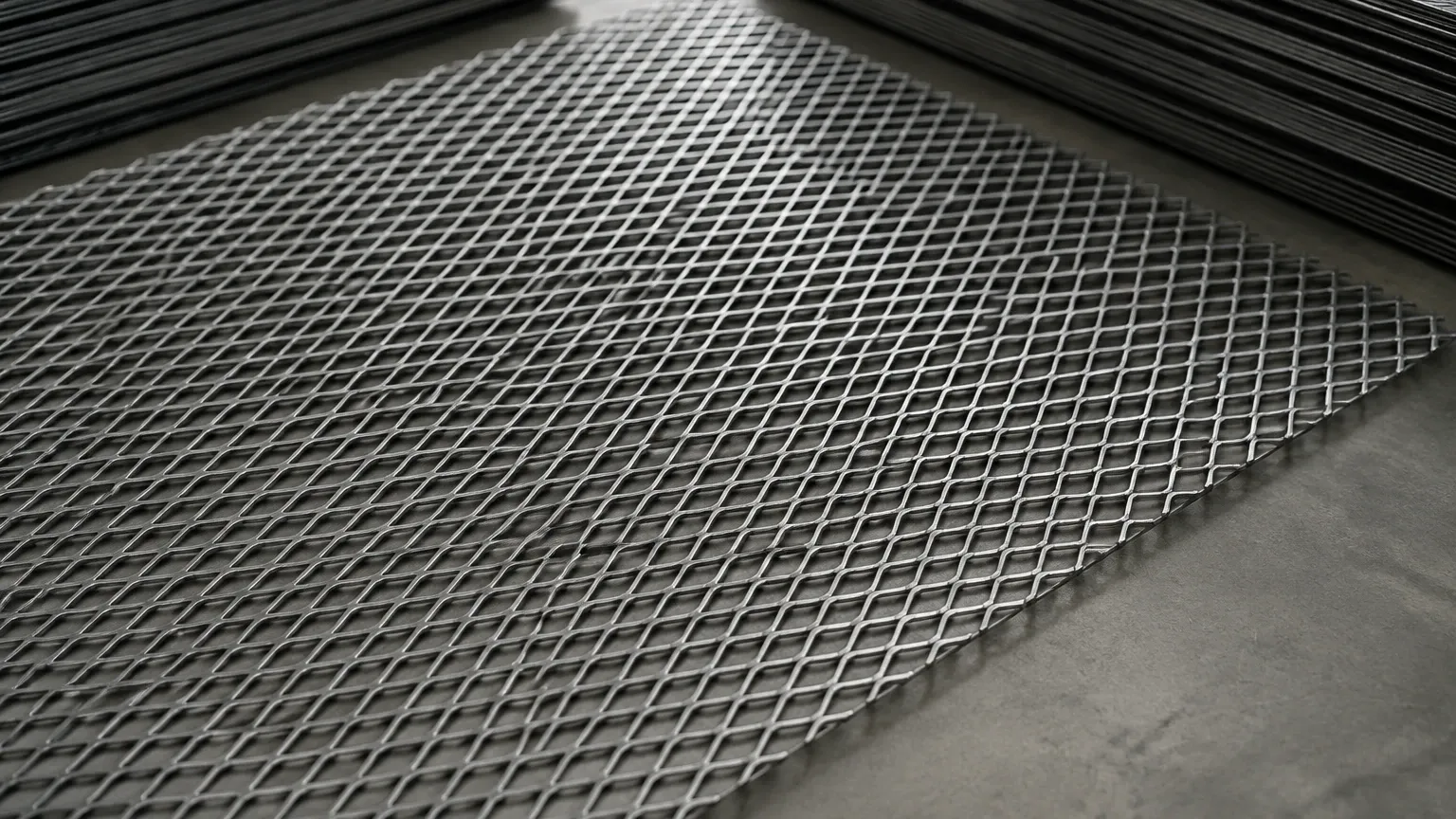
Expanded metal is a versatile material produced by simultaneously slitting and stretching a solid metal sheet. Unlike perforated metal, which involves punching holes and generating scrap material, the expansion process is nearly waste-free, making it a highly sustainable and cost-effective choice for structural and filtration support components. For engineers and procurement teams, selecting the right expanded metal 48 x 96 configuration requires a deep dive into technical specifications such as diamond orientation, opening sizes, and surface finishes.
Understanding Expanded Metal Manufacturing and Specifications
The production of expanded metal begins with a solid sheet of metal, typically stainless steel, carbon steel, or aluminum. This sheet is fed through a machine equipped with specialized knives that create a series of staggered slits. As the knives descend, they simultaneously stretch the metal, creating a pattern of diamond-shaped openings. This process increases the overall area of the material while maintaining structural integrity, as the resulting "bonds" (the intersections of the strands) remain part of the original solid metal.
Key Technical Terminology
To accurately specify expanded metal, engineers must be familiar with the following industry-standard terms:
* SWD (Short Way of Diamond): The distance from the center of one bond to the center of the next bond measured across the short diamond diagonal.
* LWD (Long Way of Diamond): The distance from the center of one bond to the center of the next bond measured across the long diamond diagonal.
* SWO (Short Way of Opening): The actual width of the opening, measured from the inside of the strands.
* LWO (Long Way of Opening): The actual length of the opening, measured from the inside of the strands.
* Strand Thickness: The thickness of the base metal used to produce the sheet.
* Strand Width: The amount of metal fed into the knives for each stroke, which determines the width of the individual "ribs" of the diamond.
In a standard expanded metal 48 x 96 sheet, the LWD usually runs parallel to the 96-inch dimension, while the SWD runs parallel to the 48-inch dimension. However, custom orientations can be requested depending on the load-bearing requirements or the direction of fluid flow in filtration systems.
Structural Variations: Raised vs. Flattened Expanded Metal
One of the most critical decisions in the selection process is whether to utilize "raised" (standard) or "flattened" expanded metal. Each configuration offers distinct mechanical advantages.
Raised Expanded Metal
Raised expanded metal is the immediate product of the expansion process. The strands and bonds are set at a uniform angle to the plane of the sheet. This creates a three-dimensional surface that provides excellent grip and high rigidity. In filtration applications, the raised profile is often preferred for its ability to create turbulence in fluid streams, which can be beneficial in certain mixing or separation processes. Furthermore, the raised structure offers a higher strength-to-weight ratio compared to flattened versions.
Flattened Expanded Metal
Flattened expanded metal is produced by passing the raised sheet through a cold-roll reducing mill. This process flattens the strands and bonds into a single plane, resulting in a smooth, level surface. Flattening slightly increases the LWD and SWD while reducing the overall thickness of the sheet. For industrial filtration, flattened Perforated & Expanded Metal is frequently used as a support substrate for fine wire mesh. The smooth surface prevents the delicate mesh layers from being punctured or abraded during high-pressure cycles or cleaning procedures.
Material Selection for Industrial Environments
The environment in which the expanded metal will operate dictates the material choice. While carbon steel is suitable for dry, non-corrosive environments, most B2B industrial applications—particularly in chemical processing, food and beverage, and pharmaceutical sectors—require the durability of stainless steel.
Stainless Steel 304 and 316L
Stainless steel is the preferred material for high-performance filtration components due to its resistance to oxidation and chemical attack.
* Type 304: Offers excellent corrosion resistance and weldability. It is the standard choice for most industrial applications where exposure to harsh chemicals is moderate.
* Type 316L: Contains molybdenum, which provides superior resistance to chlorides and pitting. In desalination, marine environments, or highly acidic chemical processing, 316L is the necessary choice to prevent premature component failure.
For engineers, selecting the correct alloy ensures that the expanded metal 48 x 96 sheet maintains its structural integrity over thousands of operational hours, reducing the total cost of ownership by extending replacement cycles.
Engineering Considerations for Filtration and Support
In the context of industrial filtration, expanded metal is rarely a standalone filter medium for fine particles. Instead, it serves as a rigid skeleton or support structure for other media, such as sintered metal felt or multi-layered wire mesh.
Open Area and Flow Dynamics
The "open area" percentage is a critical calculation for any filtration system. It determines the potential flow rate and the pressure drop across the filter. Expanded metal offers a wide range of open area percentages, typically ranging from 30% to 80%. A higher open area reduces resistance to flow but may compromise the structural support of the filter media. Engineers must balance these factors based on the viscosity of the fluid and the expected pressure differentials.
Mechanical Rigidity and Pleat Support
In pleated filter cartridges, expanded metal is often used as the inner core or the outer cage. The 48 x 96 sheet format allows for the fabrication of large-scale industrial filters with minimal seams. The rigidity of the expanded metal prevents the pleated media from collapsing under high differential pressure (ΔP). Because the diamond pattern distributes stress evenly across the sheet, it is less prone to deformation than traditional perforated sheets of the same weight.
Application-Specific Use Cases for 48 x 96 Sheets
The 48 x 96 dimension is highly efficient for large-scale industrial projects, minimizing the need for complex welding and joining of smaller pieces.
1. Chemical Processing: Used as support trays in distillation columns and as protective guards for high-temperature piping. The corrosion resistance of stainless steel expanded metal ensures safety and longevity.
2. Water Treatment: Large 48 x 96 sheets are fabricated into intake screens to prevent debris from entering pump systems. The diamond mesh effectively captures solids while allowing high-volume water passage.
3. Food and Beverage Processing: Flattened expanded metal is used in drying racks and conveyor systems where airflow is required, but a smooth surface is necessary to prevent damage to the product.
4. Hydraulic Filtration: As an outer protective wrap for hydraulic fluid filters, expanded metal protects the internal elements from mechanical damage during handling and operation.
Purchasing and Customization: What Engineers Should Confirm
When sourcing expanded metal 48 x 96 sheets, procurement teams should move beyond basic dimensions and confirm specific technical details with the manufacturer to avoid integration issues.
Edge Configurations
Expanded metal can be supplied with "random" or "bond" edges.
* Random Edges: The sheet is cut through the diamonds, leaving sharp, jagged points. This is usually acceptable if the sheet will be framed or welded into a housing.
* Bond Edges: The cut is made exactly at the intersection of the diamonds, providing a safer, cleaner edge. This is often required for components that will be handled frequently or require precise fitment in a slot.
Tolerances and Flatness
Standard industrial tolerances for expanded metal can vary. For high-precision filtration assemblies, it is vital to specify the required flatness. Sheets that are not properly leveled after the expansion process may have a "bow" or "camber," which can complicate automated welding or assembly processes.
Finishing and Cleaning
For applications in the pharmaceutical or food industries, the expanded metal must be free of manufacturing oils and burrs. Ultrasonic cleaning or electropolishing may be necessary to ensure the material meets hygiene standards. Specifying these requirements during the RFQ (Request for Quote) phase prevents delays during the quality control stage.
Conclusion
The selection of expanded metal 48 x 96 is a foundational decision in many industrial engineering projects. By understanding the mechanical differences between raised and flattened structures, the importance of material science in corrosion resistance, and the specific requirements of filtration support, technical professionals can optimize their systems for performance and durability. Whether used as a robust outer cage for a filter cartridge or a high-flow support tray in a chemical reactor, expanded metal remains a critical component in modern industrial infrastructure. For those seeking specialized configurations, exploring the technical capabilities of Perforated & Expanded Metal solutions is the best path toward achieving precise filtration and structural goals.
