


Expanded Metal 5×8
In the landscape of industrial filtration and structural reinforcement, the selection of the correct mesh geometry is critical to the performance and longevity of the equipment. Expanded metal 5×8 refers to a specific diamond-patterned mesh characterized by its opening dimensions, typically measured as 5mm by 8mm. This configuration is widely utilized in the manufacturing of filter cartridges, protective guards, and support structures within demanding industrial environments.
As a specialized manufacturer of stainless steel filtration solutions, Kaifil provides precision-engineered Perforated & Expanded Metal components designed to meet the rigorous standards of chemical processing, food and beverage production, and hydraulic systems. Understanding the technical nuances of expanded metal 5×8—from its geometric properties to its mechanical behavior—is essential for engineers tasked with optimizing filtration efficiency and structural integrity.
Understanding the Geometry of Expanded Metal 5×8
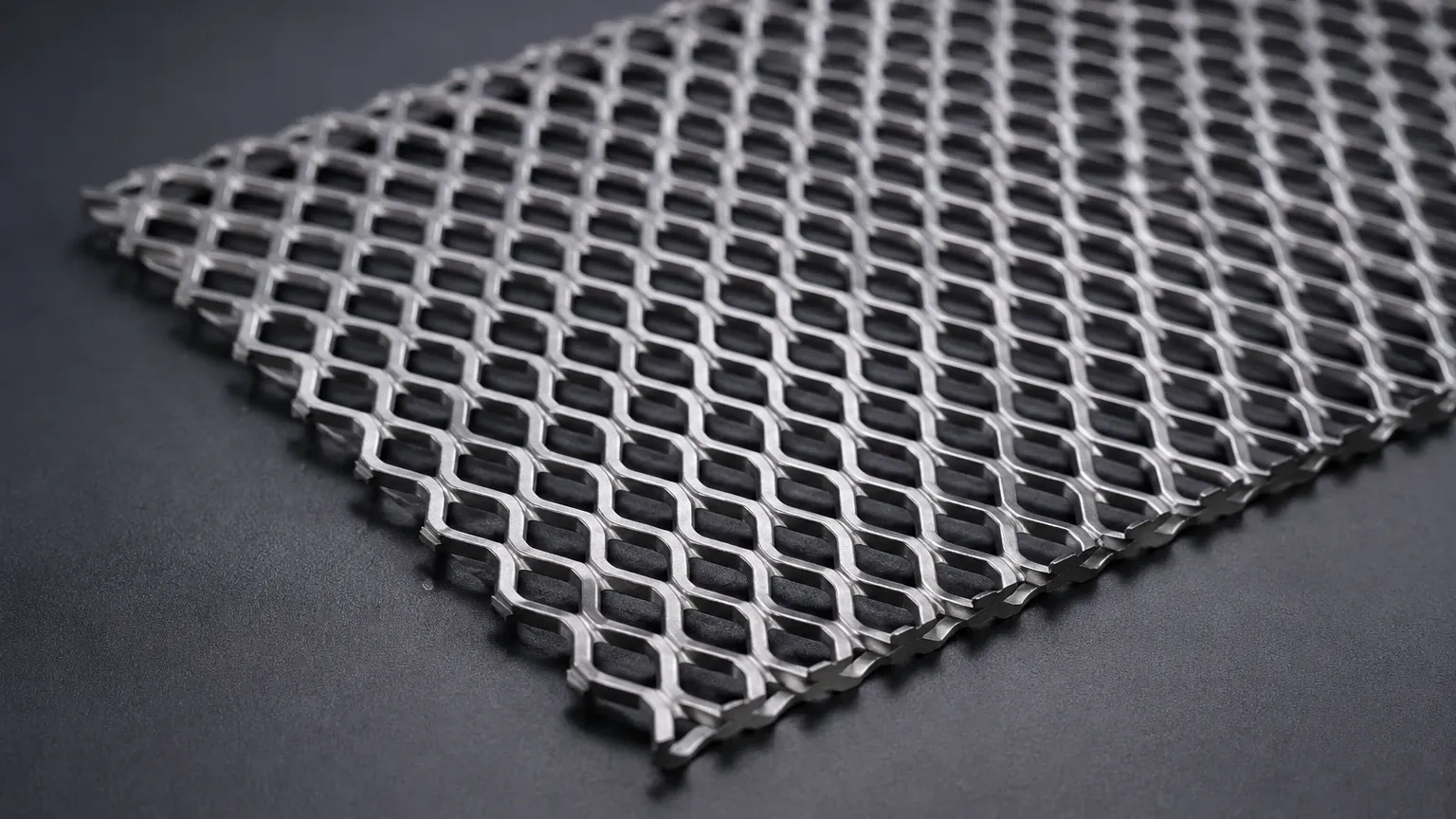
Expanded metal is produced through a process of simultaneous shearing and stretching of a solid metal sheet. Unlike woven wire mesh, expanded metal is a single-piece construction with no joins or welds, which provides inherent structural stability. The "5×8" designation typically refers to the Long Way of the Diamond (LWD) and the Short Way of the Diamond (SWD).
LWD and SWD Definitions
In technical specifications, the SWD (Short Way of the Diamond) is the distance from the center of a bond to the center of the next bond across the short axis. The LWD (Long Way of the Diamond) is the corresponding distance across the long axis. For expanded metal 5×8, these dimensions dictate the aperture size, which directly influences the flow rate and the size of particulates that can pass through the mesh or be supported by it.
Strand Width and Thickness
Beyond the opening size, the performance of expanded metal 5×8 is defined by the strand width and the material thickness. The strand width is the amount of metal between the openings, while the thickness refers to the gauge of the original sheet. These two factors determine the "open area" percentage. In filtration applications, a higher open area reduces pressure drop, while thicker strands increase the mechanical strength and resistance to high-pressure differentials.
Material Selection for Industrial Environments
The utility of expanded metal 5×8 is heavily dependent on the alloy from which it is manufactured. In B2B industrial contexts, material selection is driven by chemical compatibility, temperature resistance, and mechanical requirements.
Stainless Steel 304 and 316L
For most industrial filtration applications, stainless steel is the preferred material.
- Type 304: Offers excellent strength and basic corrosion resistance, suitable for general industrial use and food processing where high acidity is not a factor.
- Type 316L: Contains molybdenum, providing superior resistance to chlorides and pitting. This is the standard for marine environments, pharmaceutical processing, and aggressive chemical filtration.
Specialized Alloys
In extreme environments, such as high-temperature petrochemical processing, expanded metal 5×8 may be produced from Duplex stainless steel or nickel-based alloys. These materials ensure that the mesh maintains its structural profile even under thermal expansion and corrosive stress, preventing the collapse of the filter element.
Applications in Industrial Filtration Systems
Expanded metal 5×8 serves multiple roles within a filtration assembly. It is rarely the primary filtration media but acts as a critical component in the overall system architecture.
Support Cores for Filter Cartridges
In high-pressure hydraulic or liquid filtration, the primary media (such as fine wire mesh or fiber felt) lacks the rigidity to withstand the force of the fluid flow. Expanded metal 5×8 is rolled into a cylindrical core to provide internal support. Its rigid diamond structure prevents the media from collapsing inward under vacuum or high differential pressure.
Outer Protective Guards
Conversely, expanded metal can be used as an outer cage for filter elements. This protects the delicate inner media from mechanical damage during installation, maintenance, or from large debris in the process stream. The 5×8 pattern is particularly effective here, offering a balance between robust protection and minimal interference with the fluid dynamics.
Pre-Filtration and Debris Removal
In water treatment or intake systems, expanded metal 5×8 can serve as a coarse pre-filter. It captures large particulates, such as scale, stones, or organic matter, before they reach the finer filtration stages. This extends the service life of expensive secondary filters and reduces the frequency of system shutdowns.
Manufacturing Variations: Raised vs. Flattened
When specifying expanded metal 5×8, engineers must choose between "raised" (standard) and "flattened" finishes. This choice significantly impacts the fit and function of the component.
Raised Expanded Metal
In its standard form, the strands of expanded metal are set at an angle to the plane of the sheet. This creates a three-dimensional surface that provides excellent grip and a larger surface area. In filtration, raised expanded metal can create turbulence, which may be desirable in certain mixing applications but can also increase pressure drop.
Flattened Expanded Metal
Flattened expanded metal is produced by passing the raised sheet through a cold-rolling reducing mill. This process flattens the strands and bonds into a single plane. For filtration, flattened expanded metal 5×8 is often preferred because it provides a smooth surface that will not abrade or puncture adjacent layers of fine filter cloth or synthetic media. It also ensures a more consistent thickness, which is vital for maintaining tight tolerances in cartridge end-cap assembly.
Performance Evaluation and Engineering Considerations
To ensure that expanded metal 5×8 meets the requirements of a specific application, several performance metrics must be evaluated during the design phase.
Open Area and Flow Resistance
The open area of expanded metal 5×8 typically ranges from 40% to 70%, depending on the strand width. A lower open area increases the structural strength but also increases the resistance to flow (pressure drop). Engineers must calculate the required flow velocity and ensure that the mesh does not become a bottleneck in the system.
Mechanical Integrity
Under high-flow conditions, mesh components are subject to vibration and mechanical stress. The monolithic structure of expanded metal 5×8 eliminates the risk of "mesh migration" or strand displacement, which can occur in woven meshes under high shear stress. This makes it an ideal choice for high-velocity gas or liquid streams.
Customization and OEM Capabilities
Industrial applications often require non-standard dimensions or specialized edge treatments. Kaifil specializes in providing customized solutions where the expanded metal 5×8 can be cut to precise tolerances, annealed for better formability, or supplied in specific sheet sizes to minimize waste in the customer’s production line. Customization also extends to the selection of strand widths to achieve a specific strength-to-weight ratio.
Procurement and Quality Assurance
For purchasing teams and engineers, sourcing expanded metal 5×8 involves more than just selecting a part number. Quality assurance is paramount to ensure the longevity of the industrial process.
Material Certification
Always confirm that the supplier provides Mill Test Reports (MTRs). This ensures that the stainless steel used in the expanded metal 5×8 meets the chemical and physical properties required for the application, particularly in regulated industries like food, beverage, and pharmaceuticals.
Dimensional Tolerances
In precision filtration, even a small deviation in the LWD or SWD can affect the assembly of the filter cartridge. Confirming the manufacturer's tolerance standards—specifically regarding flatness, camber, and out-of-squareness—is essential before placing a large-scale order.
Total Cost Considerations
While the initial cost of expanded metal 5×8 is a factor, the total cost of ownership (TCO) should be the primary focus. High-quality stainless steel expanded metal reduces the frequency of replacement and prevents catastrophic system failures. By choosing a manufacturer with deep technical expertise in Perforated & Expanded Metal, companies can ensure they receive a component that is optimized for both performance and durability.
Conclusion
Expanded metal 5×8 is a versatile and robust component essential for modern industrial filtration. Its unique geometric properties, combined with the durability of stainless steel, make it an ideal choice for support structures, protective guards, and pre-filtration layers. By understanding the technical specifications—such as LWD/SWD ratios, strand thickness, and the benefits of flattened versus raised finishes—engineers can specify the most effective mesh for their specific application requirements.
Kaifil continues to support global industries by manufacturing high-precision expanded metal components that meet the most demanding technical standards. Whether for chemical processing or hydraulic systems, selecting the right expanded metal 5×8 is a foundational step toward achieving efficient and reliable filtration performance.
