


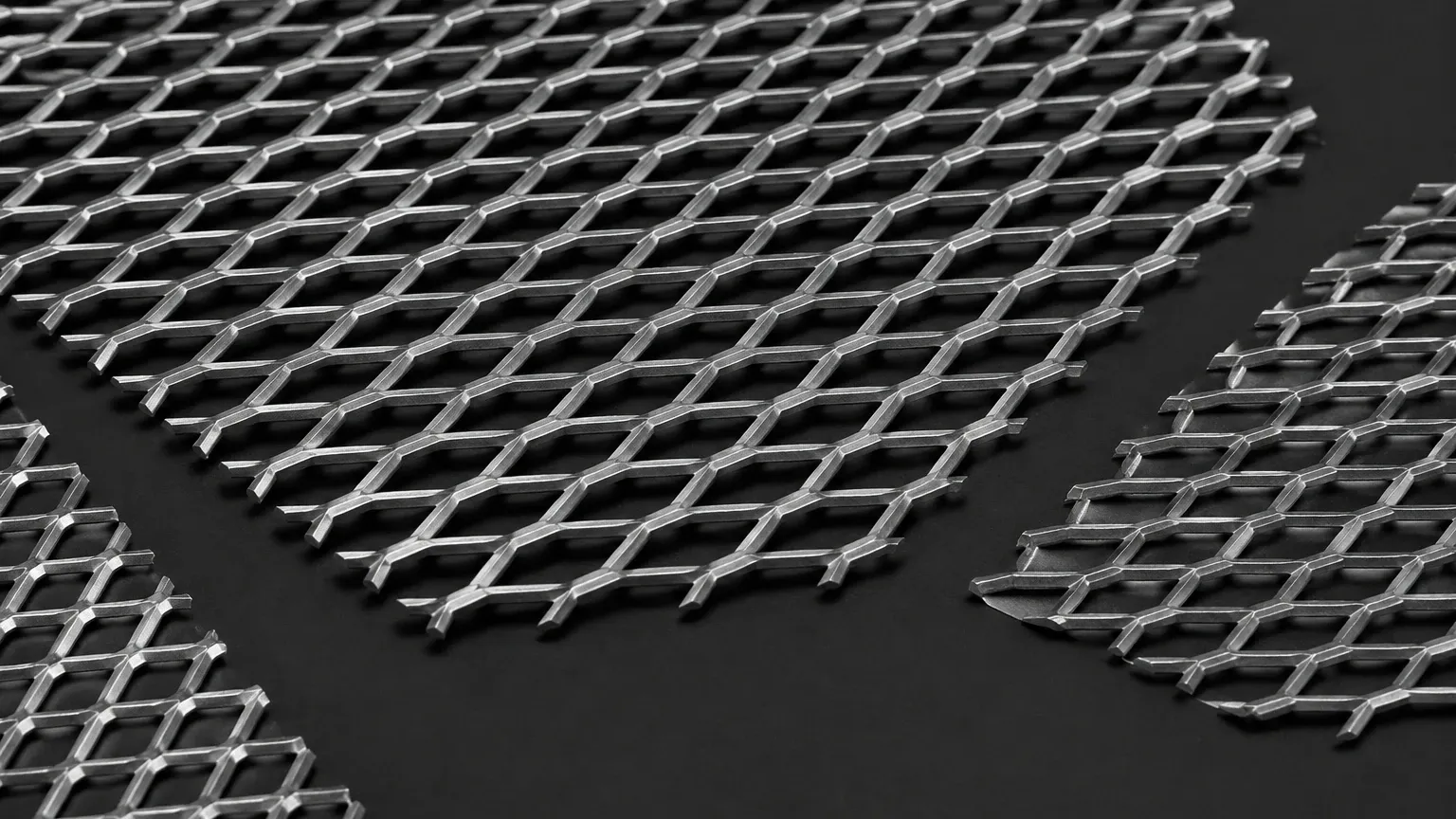
Expanded Metal 5mm
In industrial engineering and filtration design, the selection of support structures and primary screening media requires a precise balance between structural integrity and fluid dynamics. Expanded metal 5mm—referring typically to the Long Way of Opening (LWO) or the pitch of the diamond-shaped aperture—represents a versatile specification used extensively across chemical, pharmaceutical, and food processing industries. Unlike perforated metal, which is created by punching holes and generating scrap, expanded metal is produced by slitting and stretching a single sheet of metal, resulting in a continuous, jointless mesh that offers superior strength-to-weight ratios.
For engineers and procurement teams, understanding the nuances of expanded metal 5mm is essential for ensuring system longevity and filtration efficiency. This guide examines the technical specifications, material considerations, and application-specific advantages of this particular mesh size within the context of high-performance industrial filtration.
Technical Specifications: Defining the 5mm Geometry
When specifying "expanded metal 5mm," it is critical to define which dimension the 5mm refers to. In the expanded metal industry, dimensions are categorized by the diamond's orientation and the physical properties of the strands.
LWO and SWO Dimensions
The most common interpretation of 5mm in this context is the Long Way of Opening (LWO), which is the distance from the center of the bond on one side to the center of the bond on the opposite side, or the clear opening length. The Short Way of Opening (SWO) is the transverse dimension. A 5mm LWO typically results in a fine to medium mesh density that is ideal for supporting secondary filter layers, such as fine wire mesh or non-woven membranes.
Strand Width and Thickness
The performance of the mesh is further dictated by the strand width (the amount of metal between the openings) and the material thickness. For a 5mm opening, strand widths often range from 0.5mm to 1.5mm. The combination of these factors determines the "open area" percentage, which directly impacts pressure drop and flow rates in hydraulic and pneumatic systems.
Raised vs. Flattened Expanded Metal
Expanded metal is naturally produced in a "raised" or "standard" format, where the strands are canted at an angle to the plane of the sheet. This creates a three-dimensional surface that can enhance turbulence (useful in certain mixing applications) but may increase flow resistance. For filtration applications where a smooth surface is required to prevent damage to delicate filter media or to facilitate easier cleaning, the mesh is passed through a cold-rolling mill to create "flattened" expanded metal. Flattened expanded metal 5mm provides a consistent thickness and a smooth finish, making it an excellent internal support core for stainless steel filter cartridges.
Material Selection and Corrosion Resistance
Kaifil specializes in stainless steel filtration solutions, and the choice of alloy for expanded metal 5mm is a primary factor in the component's service life, especially in demanding B2B environments.
1. Stainless Steel 304: The standard choice for general industrial applications. It offers excellent formability and good corrosion resistance for water treatment and basic chemical processing.
2. Stainless Steel 316/316L: Preferred for pharmaceutical and marine environments. The addition of molybdenum provides superior resistance to pitting and crevice corrosion in chloride-rich environments. For welded filter assemblies, the low-carbon 316L variant is often specified to prevent carbide precipitation during the welding process.
3. Specialty Alloys: In highly aggressive chemical processing or high-temperature environments, alloys such as Monel, Inconel, or Titanium may be utilized, though stainless steel remains the industry benchmark for the majority of Perforated & Expanded Metal applications.
Applications in Industrial Filtration and Support
Expanded metal 5mm serves several critical roles in industrial systems. Its primary advantage is its structural rigidity, which prevents the deformation of finer filtration layers under high differential pressure.
Filter Element Support Cores
In high-pressure hydraulic systems or heavy-duty liquid filtration, fine wire mesh lacks the structural strength to withstand the force of the flow. Expanded metal 5mm is often rolled into cylinders to act as the inner support core or outer protection wrap for filter cartridges. The diamond pattern provides multi-directional strength, ensuring the cartridge maintains its cylindrical geometry even as the filter cake builds up and pressure increases.
Primary Screening in Water Treatment
For coarse filtration or intake screens, expanded metal 5mm acts as a primary barrier against larger debris. Its jointless construction means there are no welds to fail or wires to unravel, which is a common failure point in traditional woven wire mesh when subjected to high-velocity debris impact.
Centrifuge Baskets and Trays
In the food and beverage industry, particularly in sugar processing or vegetable dewatering, expanded metal is used in centrifuge baskets. The 5mm aperture allows for rapid liquid drainage while retaining the solid product. The smooth surface of flattened expanded metal is particularly valued here to prevent food particles from becoming trapped in the mesh junctions.
Performance Evaluation: Open Area and Flow Dynamics
For engineers, the most critical calculation when selecting expanded metal 5mm is the percentage of open area. This figure determines the face velocity of the fluid and the resulting pressure drop across the screen.
Unlike perforated metal, where the open area is a simple calculation of hole area vs. total area, expanded metal's open area is influenced by the strand angle. In its raised state, the "effective" open area changes depending on the angle of approach of the fluid. In its flattened state, the open area is fixed. A typical expanded metal 5mm specification might offer an open area ranging from 40% to 60%.
When designing a system, it is vital to ensure that the open area of the support mesh is significantly higher than the open area of the primary filter media. This ensures that the support structure does not contribute unnecessarily to the total system pressure drop, which would otherwise lead to increased energy consumption and more frequent pump maintenance.
Customization and Engineering Considerations
Standard off-the-shelf mesh rarely meets the exact requirements of specialized industrial equipment. Customization is often necessary to optimize performance and simplify integration into existing housings.
Precision Cutting and Forming
Expanded metal 5mm can be supplied in sheets, but for B2B applications, it is more commonly provided as semi-finished components. This includes precision-cut circles for disc filters, or pre-rolled and tack-welded cylinders for cartridge assembly. Engineers should confirm the tolerances required for these components, as the expansion process can introduce slight dimensional variances compared to laser-cut perforated sheets.
Edge Treatments
One of the primary risks with expanded metal is the presence of "sharp" edges where the diamonds are cut. In filtration applications, these edges can puncture outer filter bags or scratch the interior of filter housings. Custom fabrication allows for the inclusion of solid borders (random or symmetrical) or the application of U-edging and frames to encapsulate the sharp points, ensuring safe handling and equipment protection.
Surface Finishes
Depending on the industry, additional surface treatments may be required. For pharmaceutical and food-grade applications, electropolishing is often employed to remove microscopic burrs and enhance the chromium oxide layer of the stainless steel, providing a mirror-like finish that is highly resistant to bacterial growth and easy to sanitize.
Quality Control and Procurement Best Practices
When sourcing expanded metal 5mm, purchasing teams must look beyond the basic dimensions to ensure the product meets industrial standards.
* Material Certification: Always request Mill Test Reports (MTRs) to verify the chemical composition of the stainless steel. This is especially critical in regulated industries like pharmaceutical manufacturing.
* Flatness Tolerances: If specifying flattened mesh, confirm the maximum allowable thickness variation across the sheet. Excessive variation can interfere with automated welding processes used in cartridge assembly.
* Visual Inspection for Fractures: The expansion process involves significant stress on the metal. High-quality manufacturing ensures that the "bonds" (the intersections of the diamonds) are free from micro-cracks that could lead to premature failure under vibration or pressure cycling.
Why Choose Expanded Metal Over Perforated Options?
While both perforated and expanded metals are used in similar fields, expanded metal 5mm offers specific advantages for the industrial sector:
1. Cost-Efficiency: Because there is no material waste during production, expanded metal is often more cost-effective than perforated metal of the same thickness and material, particularly when using expensive alloys.
2. Strength: The interconnected strands distribute loads more effectively than a perforated sheet with a similar open area.
3. Grip and Turbulence: In applications involving heat exchange or specialized air filtration, the raised strands of expanded metal can promote beneficial turbulence, improving heat transfer or particle impingement.
Conclusion
Expanded metal 5mm is a foundational component in the world of industrial filtration. Whether serving as a robust support core for a high-pressure hydraulic filter or acting as a primary screen in a chemical reactor, its performance is a result of precise engineering and material selection. By understanding the technical distinctions between raised and flattened profiles, and by selecting the appropriate stainless steel grade, engineers can significantly optimize the reliability and efficiency of their filtration systems.
For those developing custom filtration solutions, collaborating with a manufacturer that understands the intersection of material science and fluid dynamics is essential. Proper specification of the LWO, SWO, and strand geometry ensures that the expanded metal component will withstand the rigors of industrial operation while maintaining the required flow characteristics.
To explore specific configurations and technical data for your application, you can Review product options and application support to determine the optimal mesh specification for your project requirements.
