


Expanded Metal 6320c
In industrial filtration and structural engineering, the selection of support media is as critical as the selection of the primary filter element. Expanded metal 6320c represents a specific technical specification within the broader category of expanded metal products, often utilized for its unique balance of structural rigidity and open area. For engineers and procurement specialists, understanding the nuances of this specification—ranging from its geometric properties to its performance in corrosive environments—is essential for ensuring the longevity and efficiency of industrial systems.
As a specialized manufacturer of stainless steel filtration solutions, Kaifil integrates high-precision Perforated & Expanded Metal into complex filtration assemblies. This article provides a technical overview of the expanded metal 6320c specification, its engineering considerations, and its application within demanding industrial sectors.
Understanding the Specifications of Expanded Metal 6320c
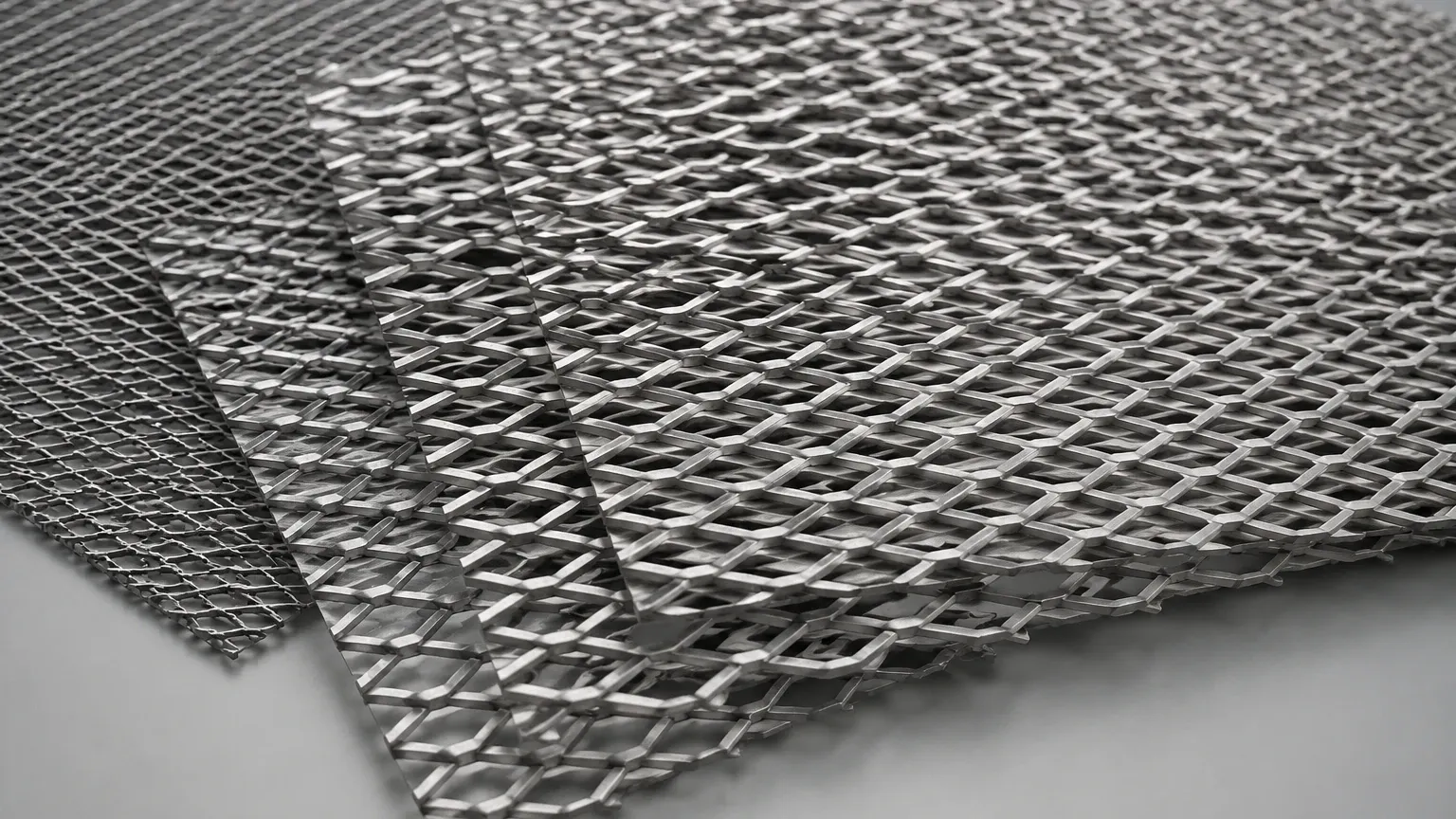
Expanded metal is manufactured by simultaneously slitting and stretching a solid metal sheet, creating a diamond-shaped pattern without the material loss associated with perforation. The designation "6320c" typically refers to a specific set of dimensions regarding the diamond size, strand width, and material thickness. In the context of industrial standards, these codes help engineers identify the physical characteristics required for specific load-bearing or filtration support roles.
Geometric Parameters
The performance of expanded metal 6320c is defined by four primary measurements:
1. Long Way of Diamond (LWD): The distance from the center of one joint to the center of the next joint across the long axis of the diamond.
2. Short Way of Diamond (SWD): The distance across the short axis, which dictates the density of the mesh.
3. Strand Width: The amount of metal fed into the expanding machine between each stroke.
4. Strand Thickness: The gauge of the original metal sheet.
For the 6320c variant, the "c" often denotes a specific configuration or a flattened finish, depending on the regional manufacturing standard. Flattened expanded metal undergoes an additional cold-rolling process, resulting in a smooth, level surface that is safer for handling and easier to integrate with delicate filter media, such as fine wire mesh.
Material Integrity and Corrosion Resistance
When specifying expanded metal 6320c for industrial filtration, material selection is the most significant factor in determining the component's service life. Kaifil specializes in stainless steel alloys, which are preferred for their resistance to oxidation and chemical degradation.
Stainless Steel 304 vs. 316
* Grade 304: This is the standard industrial grade, offering excellent durability and resistance to atmospheric corrosion. It is suitable for water treatment, food processing, and general industrial applications where high-concentration chlorides are not present.
* Grade 316: For chemical processing, pharmaceutical manufacturing, or marine environments, Grade 316 is the preferred choice. The addition of molybdenum provides enhanced resistance to pitting and crevice corrosion in chloride-rich environments.
In high-temperature applications, such as exhaust filtration or hot gas recovery, engineers must also consider the thermal expansion coefficients of the expanded metal 6320c. Using high-grade stainless steel ensures that the mesh maintains its structural integrity and diamond geometry even under significant thermal cycling.
Structural Role in Industrial Filtration Systems
Expanded metal 6320c is rarely used as a standalone fine filter. Instead, its primary function is to serve as a robust support structure for multi-layered filtration systems. Its high strength-to-weight ratio makes it an ideal candidate for several critical roles:
Support for Pleated Media
In pleated filter cartridges, the expanded metal acts as an inner or outer support cage. It prevents the pleats from collapsing under high differential pressure (ΔP). The 6320c pattern provides enough open area to ensure low flow resistance while offering sufficient surface contact to protect the primary filter media from mechanical stress.
Pre-Filtration and Debris Shielding
In heavy-duty hydraulic or water intake systems, expanded metal 6320c serves as a primary barrier against large particulates. By capturing coarse debris before it reaches the fine wire mesh or fiber media, the expanded metal extends the replacement cycle of the more expensive internal components.
Flow Distribution
The diamond geometry of expanded metal 6320c can also assist in breaking up laminar flow, creating a degree of turbulence that ensures more uniform fluid distribution across the entire surface of the filter. This prevents "channeling," where fluid passes through only a small portion of the filter media, leading to premature localized clogging.
Engineering Calculations: Open Area and Flow Dynamics
For engineers, the most critical performance metric for expanded metal 6320c is the percentage of open area. This calculation determines the flow rate and the pressure drop across the component.
Calculating Open Area
The open area of expanded metal is calculated based on the relationship between the strand width and the SWD. A higher percentage of open area results in lower pressure drop but reduced structural rigidity. Conversely, a lower open area provides a more robust support structure but may restrict flow in high-velocity systems.
When integrating expanded metal 6320c into a system, engineers must account for the "blindness" caused by the strands. Unlike perforated metal, where holes are punched out, expanded metal strands are angled. This three-dimensional profile can influence the effective open area depending on the angle of fluid approach. For applications requiring a flat profile, flattened expanded metal is often specified to ensure predictable flow dynamics.
Customization and OEM Capabilities
Industrial applications often require more than off-the-shelf specifications. Kaifil provides extensive customization for Perforated & Expanded Metal to meet specific OEM requirements. When ordering expanded metal 6320c, several customization factors should be considered:
1. Edge Treatments: Expanded metal naturally has sharp "bonds" or edges where the diamonds are cut. For filtration cartridges, these edges must be deburred or hemmed to prevent damage to the filter media or injury to maintenance personnel.
2. Cylindrical Forming: For use in filter cartridges, the expanded metal must be rolled into a cylinder. Precision in the rolling process is vital to ensure that the seam can be welded accurately without distorting the diamond pattern.
3. Surface Finishing: Beyond flattening, expanded metal can be electropolished or passivated. Electropolishing is particularly important in the food, beverage, and pharmaceutical industries, as it removes surface impurities and creates a microscopically smooth surface that is easy to sanitize.
4. Dimensional Tolerances: In automated assembly lines, even minor deviations in the LWD or SWD can cause issues. Kaifil utilizes advanced manufacturing controls to ensure that every sheet or coil of expanded metal 6320c meets tight dimensional tolerances.
Procurement and Engineering Checklist
Before finalizing a purchase order for expanded metal 6320c, purchasing teams and engineers should confirm several key details to avoid compatibility issues and ensure total cost efficiency.
Technical Verification
* Material Certification: Ensure the supplier provides mill test reports (MTRs) to verify the chemical composition of the stainless steel.
* Direction of Expansion: Confirm whether the LWD should run parallel or perpendicular to the length of the sheet, as this affects the bending properties and structural strength.
* Flattened vs. Raised: Specify if the application requires a flat surface (flattened) or if the standard raised profile is acceptable for better grip or turbulence.
Performance Expectations
* Differential Pressure Limits: What is the maximum pressure the expanded metal must withstand before deformation occurs?
* Chemical Compatibility: Has the material been tested against the specific solvents, acids, or bases present in the process stream?
* Replacement Cycles: While expanded metal is durable, it is subject to erosion over time in high-velocity abrasive flows. Establishing a predictable maintenance schedule based on material thickness is recommended.
Conclusion
Expanded metal 6320c is a versatile and essential component in the landscape of industrial filtration and structural support. Its unique diamond-mesh design provides the mechanical strength required to support delicate filter media while maintaining the open area necessary for efficient fluid processing. By selecting the appropriate material grade, finishing options, and dimensional specifications, engineers can significantly optimize the performance and reliability of their filtration systems.
Kaifil remains committed to providing high-performance, customized filtration components. Whether you require expanded metal 6320c for a new OEM project or as a replacement part for existing industrial equipment, focusing on technical precision and material quality is the key to long-term operational success.
