


Expanded Metal 6320
In the realm of industrial filtration and structural engineering, the selection of support materials is as critical as the selection of the primary filtration media itself. Expanded metal 6320 represents a specific class of heavy-duty industrial mesh designed to provide high structural integrity, optimized flow characteristics, and long-term durability in demanding environments. For engineers and procurement specialists, understanding the technical nuances of this material is essential for ensuring the efficiency of filtration systems, protective enclosures, and architectural components.
As a specialized manufacturer of custom stainless steel filtration solutions, Kaifil integrates high-performance materials like expanded metal 6320 into complex filtration assemblies. This article provides a technical deep dive into the specifications, engineering considerations, and industrial applications of this specific expanded metal configuration.
Technical Specifications and Geometry
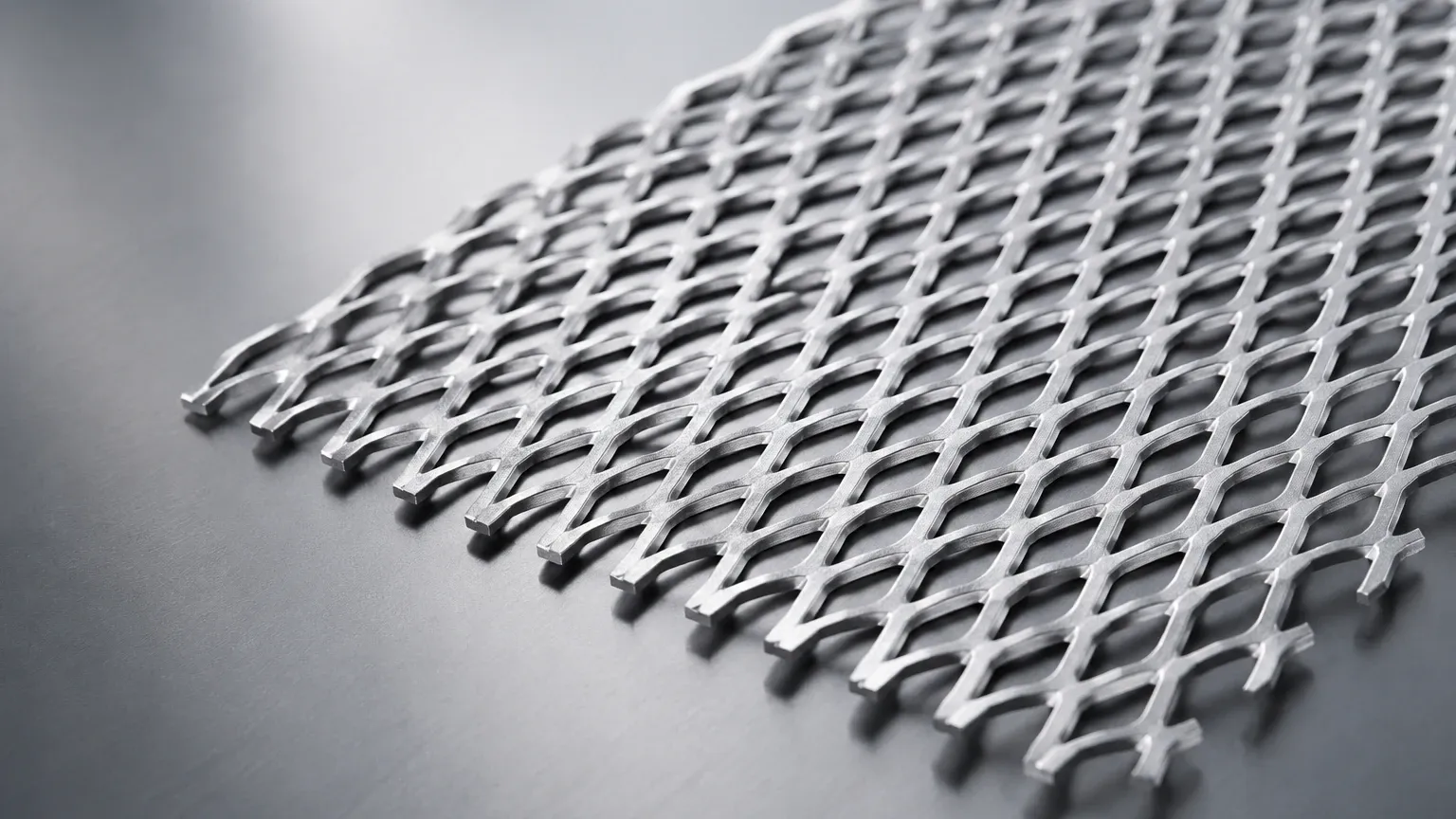
Expanded metal is manufactured through a process of simultaneously slitting and stretching a solid metal sheet. Unlike perforated metal, which involves punching holes and creating scrap material, the expansion process creates a diamond-shaped pattern without any material waste. The designation "6320" typically refers to a specific set of dimensional parameters that define the mesh's performance.
Dimensional Parameters
To evaluate expanded metal 6320, engineers must focus on four primary measurements:
1. Long Way of Design (LWD): The distance from a point on one diamond to the corresponding point on the next diamond across the long axis. In industrial specifications, this determines the overall scale of the mesh.
2. Short Way of Design (SWD): The distance across the short axis of the diamond. This measurement is critical for determining the particle size that the mesh can physically block or support.
3. Strand Width: The amount of metal between the openings. In the 6320 specification, the strand width is engineered to balance open area with mechanical strength.
4. Strand Thickness: The thickness of the original base metal. For stainless steel applications, this typically ranges from light-gauge foils to heavy-duty plates.
Raised vs. Flattened Profiles
Expanded metal 6320 is available in two primary forms: raised (standard) and flattened.
* Raised Expanded Metal: The strands and bonds are set at a uniform angle to the plane of the sheet. This creates a three-dimensional surface that offers excellent grip, high rigidity, and unique fluid dynamic properties. In filtration, the raised profile can help break up laminar flow, although it may increase pressure drop.
* Flattened Expanded Metal: The raised mesh is passed through a cold-rolling reducing mill. This results in a smooth, flat surface. Flattened 6320 is often preferred when the mesh serves as a support substrate for delicate wire mesh or filter paper, as it prevents the primary media from being punctured or abraded by sharp edges.
Material Selection for Industrial Environments
While expanded metal can be produced from various alloys, stainless steel is the industry standard for high-performance filtration and chemical processing. Kaifil specializes in utilizing premium alloys to ensure the longevity of the Perforated & Expanded Metal components.
Stainless Steel 304 vs. 316L
* Grade 304: This is the most common stainless steel used for expanded metal 6320. It provides excellent corrosion resistance in standard industrial environments and is highly cost-effective for general-purpose filtration and structural support.
* Grade 316L: For applications involving saltwater, high acidity, or pharmaceutical processing, 316L is required. The addition of molybdenum enhances resistance to pitting and crevice corrosion. In the context of expanded metal 6320, 316L ensures that the structural skeleton of a filter cartridge does not fail prematurely due to chemical attack.
Specialized Alloys
In extreme environments, such as high-temperature petrochemical processing or highly caustic chemical baths, exotic alloys like Monel, Inconel, or Hastelloy may be used. The expansion process for these materials requires specialized tooling and precise tension control to maintain the integrity of the 6320 pattern.
Engineering Advantages in Filtration Systems
Expanded metal 6320 is frequently selected over perforated metal or woven wire mesh for specific engineering reasons. Its unique structure provides several advantages in industrial filtration assemblies.
Structural Rigidity and Weight Efficiency
One of the primary benefits of expanded metal is its strength-to-weight ratio. Because the material is composed of a single continuous piece of metal—without welds or joints—it distributes loads more effectively than woven mesh. In high-pressure hydraulic or gas filtration, expanded metal 6320 acts as a rigid cage that prevents the filter media from collapsing under differential pressure.
Continuity of Material
Unlike woven wire mesh, where individual wires can shift or fray, expanded metal is a monolithic structure. This eliminates the risk of "media migration," where small fragments of the support structure break off and contaminate the downstream fluid. For pharmaceutical and food-grade applications, this structural integrity is a critical safety feature.
Optimized Open Area
The 6320 specification is designed to provide a specific percentage of open area, usually ranging between 40% and 60% depending on the strand width. This balance is crucial: too much open area reduces the support for the filter media, while too little open area increases the pressure drop across the system, leading to higher energy costs and reduced flow rates.
Applications of Expanded Metal 6320
The versatility of expanded metal 6320 allows it to be used across a broad spectrum of industries, from heavy manufacturing to precision laboratory equipment.
1. Filter Cartridge Support Cores
In industrial liquid filtration, expanded metal 6320 is often rolled into cylinders to serve as the inner core or outer guard of a filter cartridge. It provides the necessary mechanical strength to withstand backwashing cycles and high flow velocities. Its diamond pattern allows for a more uniform distribution of fluid across the entire surface of the filter media compared to standard perforated tubes.
2. Pre-Filtration and Debris Screens
In water treatment and HVAC systems, expanded metal 6320 serves as a primary screen to remove large debris before the fluid reaches finer filtration stages. Its rigid structure allows it to be easily cleaned through mechanical scraping or high-pressure hosing without deforming the mesh.
3. Catalyst Support in Chemical Reactors
In the petrochemical industry, expanded metal sheets are used to support catalyst beds. The 6320 pattern provides a stable platform that can withstand high temperatures and thermal expansion while maintaining a consistent flow path for the reactants.
4. Acoustic and Protective Enclosures
Beyond filtration, expanded metal 6320 is used in the construction of acoustic panels and machinery guards. The geometry of the mesh helps dissipate sound waves and provides a physical barrier that allows for ventilation and visibility while protecting personnel from moving parts.
Customization and Manufacturing Considerations
When sourcing expanded metal 6320, off-the-shelf solutions may not always meet the precise requirements of a custom engineering project. Kaifil provides extensive OEM and customization capabilities to tailor the material to specific application needs.
Precision Cutting and Forming
Expanded metal can be difficult to cut without leaving jagged edges or compromising the diamond pattern. Advanced manufacturing techniques, such as laser cutting or precision shearing, are used to ensure that the 6320 sheets fit perfectly into the final assembly. Furthermore, the material can be formed into cones, cylinders, or multi-layered discs to suit complex filter designs.
Surface Finishing and Deburring
For many industrial applications, the "as-expanded" surface is too rough. Kaifil offers various finishing options:
* Electropolishing: This process removes a thin layer of material, smoothing the surface at a microscopic level. It is essential for food and pharmaceutical applications to prevent bacterial growth in the crevices of the mesh.
* Pickling and Passivation: These chemical treatments remove surface contaminants and enhance the protective oxide layer of stainless steel, ensuring maximum corrosion resistance.
* Deburring: Mechanical deburring removes sharp edges from the strands, which is critical if the expanded metal is to be handled by operators or paired with delicate synthetic filter fabrics.
Procurement Guidance: What Engineers Should Confirm
To ensure the successful integration of expanded metal 6320 into a project, purchasing teams and engineers should verify several key factors before finalizing an order:
1. Tolerance Requirements: Specify the allowable variance in LWD, SWD, and overall sheet thickness. In high-precision filtration, even minor deviations can affect the fit-up of components.
2. Load-Bearing Requirements: If the mesh is supporting a heavy catalyst bed or operating under high pressure, structural calculations should be performed to ensure the strand thickness and width are sufficient.
3. Flow Rate and Pressure Drop: Request data on the effective open area. Engineers should model the fluid dynamics to ensure the 6320 pattern does not create excessive turbulence or resistance.
4. Environmental Compatibility: Confirm that the chosen alloy (e.g., 304 vs. 316L) is appropriate for the chemical composition and temperature of the process fluid.
5. Edge Treatment: Determine if the mesh requires a solid border (bond shearing) or if random shearing is acceptable. A solid border can simplify welding and installation.
Conclusion
Expanded metal 6320 is a foundational component in modern industrial filtration and structural design. Its unique combination of strength, continuity, and optimized open area makes it an ideal choice for supporting delicate filter media and providing durable protection in harsh environments. By understanding the technical specifications and material options available, engineers can significantly improve the performance and lifespan of their filtration systems.
Kaifil continues to lead the industry in providing high-performance, customized filtration solutions. Whether you require standard sheets or complex, fabricated components, our engineering team is ready to assist in selecting the right material for your specific needs. For more information on our capabilities and to explore our full range of products, please Review product options and application support.
