


6.25 Expanded Metal Grating
In industrial engineering and facility management, the selection of flooring and structural support materials is dictated by a balance of weight, strength, and environmental resistance. Among the various options available, 6.25 expanded metal grating stands out as a heavy-duty solution designed for high-traffic and high-load applications. Unlike standard expanded metal meshes used for decorative or light-duty screening, the 6.25 specification refers to a specific weight class—6.25 pounds per square foot—that provides the structural rigidity necessary for industrial walkways, platforms, and heavy-duty filtration support.
Understanding the technical nuances of this material is essential for engineers and procurement teams who must ensure safety compliance while optimizing for long-term durability. This guide examines the engineering properties, material considerations, and application-specific benefits of 6.25 expanded metal grating within industrial environments.
Understanding the Technical Profile of 6.25 Expanded Metal Grating
Expanded metal is manufactured through a process of simultaneous slitting and stretching. A solid sheet of metal is fed through a machine that creates precise incisions and then pulls the material apart, forming a diamond-shaped pattern. Because the material is stretched rather than punched, there is zero waste in the manufacturing process, making it a highly efficient alternative to perforated metal in many structural contexts.
The designation "6.25" is a standardized measure of the material's weight. In the United States and international industrial standards, this usually indicates that the finished grating weighs approximately 6.25 pounds per square foot. This weight is typically associated with a specific strand thickness and opening size, often categorized under "heavy-duty" or "grating-style" expanded metal.
Key dimensional attributes for this specification include:
* SWD (Short Way of Design): The distance from the center of one bond to the center of the next bond across the short axis of the diamond.
* LWD (Long Way of Design): The distance across the long axis of the diamond.
* Strand Thickness: The gauge of the original metal sheet.
* Strand Width: The amount of metal fed into the dies to create the strand.
For a 6.25 grating, the strands are significantly thicker and wider than those found in standard expanded metal, providing the necessary cross-sectional area to support pedestrian and equipment loads without excessive deflection.
Material Selection and Engineering Properties
While 6.25 expanded metal grating can be produced from various alloys, the choice of material is the primary factor in determining the product's lifespan and suitability for specific chemical or thermal environments.
Carbon Steel
Carbon steel is the most common material for 6.25 grating due to its high strength-to-weight ratio and cost-effectiveness. In indoor industrial settings or dry environments, carbon steel provides excellent structural support. To prevent oxidation, it is frequently hot-dip galvanized or powder-coated. Galvanization is particularly critical for outdoor walkways or facilities where humidity is high, as it provides a sacrificial zinc layer that protects the underlying steel from rust.
Stainless Steel (304 and 316)
For industries such as chemical processing, pharmaceuticals, and food production, stainless steel is the preferred choice. Stainless steel 6.25 grating offers inherent corrosion resistance without the need for additional coatings.
* Grade 304: Suitable for most general industrial applications where moisture and mild chemicals are present.
* Grade 316: Contains molybdenum, providing superior resistance to chlorides and pitting. This is essential for marine environments or chemical plants handling aggressive acids.
Aluminum
Aluminum grating is utilized when weight reduction is a priority or in environments where non-sparking properties are required. While aluminum is lighter, engineers must account for its lower modulus of elasticity compared to steel, which may require shorter spans between supports to maintain the same load-bearing capacity.
Load-Bearing Performance and Structural Integrity
One of the most critical engineering considerations for 6.25 expanded metal grating is its load-bearing orientation. Expanded metal is an anisotropic material, meaning its strength properties differ depending on the direction of the load.
To achieve maximum structural integrity, the LWD (Long Way of Design) must run perpendicular to the support beams. If the grating is installed with the LWD parallel to the supports, the material will lack the necessary tension to span the gap, leading to significant sagging or structural failure under load.
When evaluating 6.25 grating for a project, engineers should consult load tables that specify:
1. Clear Span: The distance between structural supports.
2. Uniform Load: The maximum weight per square foot the grating can support over the entire span.
3. Concentrated Load: The maximum weight a single point (such as a person's foot or a piece of equipment) can apply at the center of the span.
4. Deflection: The amount the grating bends under a specific load. Standard safety protocols typically limit deflection to 1/4 inch or L/120 (whichever is less) to ensure worker comfort and safety.
Comparing Perforated & Expanded Metal for Industrial Use
In the context of industrial design, the choice between Perforated & Expanded Metal often comes down to the specific requirements of the application. While both materials offer open areas for light, air, and fluid passage, their structural characteristics differ.
Perforated metal is created by punching holes into a solid sheet. This allows for highly precise hole geometries and patterns, which is often preferred for fine filtration or aesthetic architectural panels. However, the punching process removes material, which can reduce the overall strength of the sheet relative to its original weight and creates scrap waste.
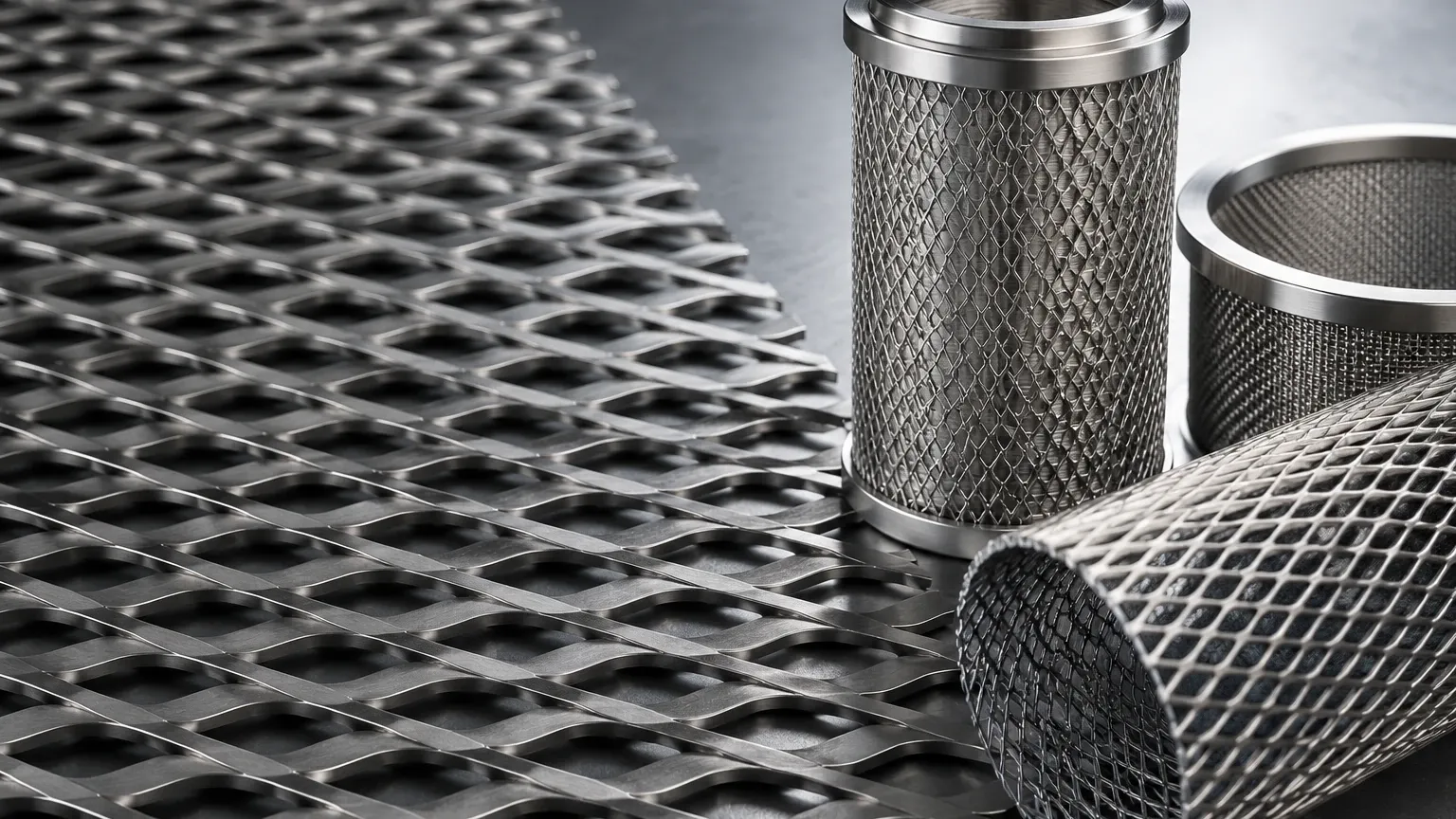
Expanded metal, including the 6.25 grating variety, retains the structural continuity of the original sheet. The bonds (where the diamonds meet) act as structural nodes that distribute stress throughout the panel. For heavy-duty flooring and high-impact guards, expanded metal grating generally offers a higher strength-to-weight ratio and better slip resistance due to the natural angularity of the expanded strands.
Applications in Filtration and Industrial Environments
While 6.25 expanded metal grating is widely recognized as a flooring material, its utility extends into specialized industrial equipment and filtration systems.
Filtration Support Structures
In large-scale industrial filtration, such as water treatment or chemical processing, filter media (like fine wire mesh or felt) often lacks the structural strength to withstand high differential pressures. 6.25 grating serves as an ideal support substrate. It provides a rigid, high-open-area foundation that prevents the filter media from collapsing or deforming under the force of the fluid flow. Its durability ensures that the support structure does not need frequent replacement, even in demanding hydraulic environments.
Safety Guarding and Enclosures
In heavy machinery environments, 6.25 grating is used to create robust safety guards. The diamond pattern allows for clear visibility of the equipment while providing a physical barrier that is difficult to penetrate. The weight and thickness of the 6.25 specification make it resistant to impacts from falling debris or accidental contact with moving parts.
Industrial Walkways and Drainage
The most common application remains industrial flooring. The open diamond pattern of 6.25 grating allows liquids, grease, and small debris to fall through, keeping the walking surface clear. This is particularly valuable in food processing plants or oil and gas facilities where spillages are common. The raised edges of the strands provide natural slip resistance, which can be further enhanced by selecting a "raised" (unflattened) expansion style.
Installation and Maintenance Best Practices
Proper installation is paramount to the performance of 6.25 expanded metal grating. Beyond the orientation of the LWD, several factors must be addressed during the installation phase:
* Fastening: Grating should be securely fastened to the supporting structure using saddle clips, weld studs, or direct welding. In environments with high vibration, mechanical fasteners with locking nuts are preferred to prevent loosening over time.
* Edge Support: All edges of the grating panels should be supported by the sub-structure. If panels are butt-jointed between supports, they must be welded or clipped together to ensure load continuity.
* Clearances: Engineers must account for thermal expansion and contraction, especially in outdoor or high-temperature industrial settings. Providing adequate gaps between panels prevents buckling.
Maintenance requirements for 6.25 grating are relatively low, particularly when stainless steel or galvanized carbon steel is used. Periodic inspections should focus on:
* Corrosion: Checking for signs of rust at weld points or where coatings have been abraded.
* Deformation: Identifying any permanent sagging that might indicate the grating has been subjected to loads exceeding its design capacity.
* Fastener Integrity: Ensuring all clips and bolts remain tight and functional.
Customization and Procurement Considerations
When sourcing 6.25 expanded metal grating, a "one size fits all" approach rarely suffices for complex industrial projects. Customization options allow engineers to tailor the material to the specific demands of their application.
Kaifil specializes in providing customized filtration and structural solutions, including precision-cut expanded metal components. When working with a manufacturer, purchasing teams should confirm the following details:
1. Flattened vs. Raised: Raised expanded metal provides maximum slip resistance and rigidity. Flattened expanded metal is passed through a cold-rolling mill to create a smooth, level surface, which may be required if the grating needs to interface flush with other components or if a smoother walking surface is desired for wheeled carts.
2. Edge Trimming: Grating can be supplied with "random sheared" edges (where the diamonds are cut mid-pattern) or "bond sheared" edges (where the cut follows the line of the bonds). Bond shearing provides a cleaner edge and is safer for handling.
3. Surface Treatment: Beyond standard galvanization, options like pickling and passivation for stainless steel ensure maximum corrosion resistance by removing surface contaminants and restoring the protective oxide layer.
By focusing on these technical specifications and working with an experienced manufacturer, industrial facilities can implement 6.25 expanded metal grating solutions that provide safety, reliability, and a low total cost of ownership. Whether used as a heavy-duty walkway or a critical support component in a filtration system, the 6.25 specification remains a benchmark for industrial durability.
