


6×8 Expanded Metal
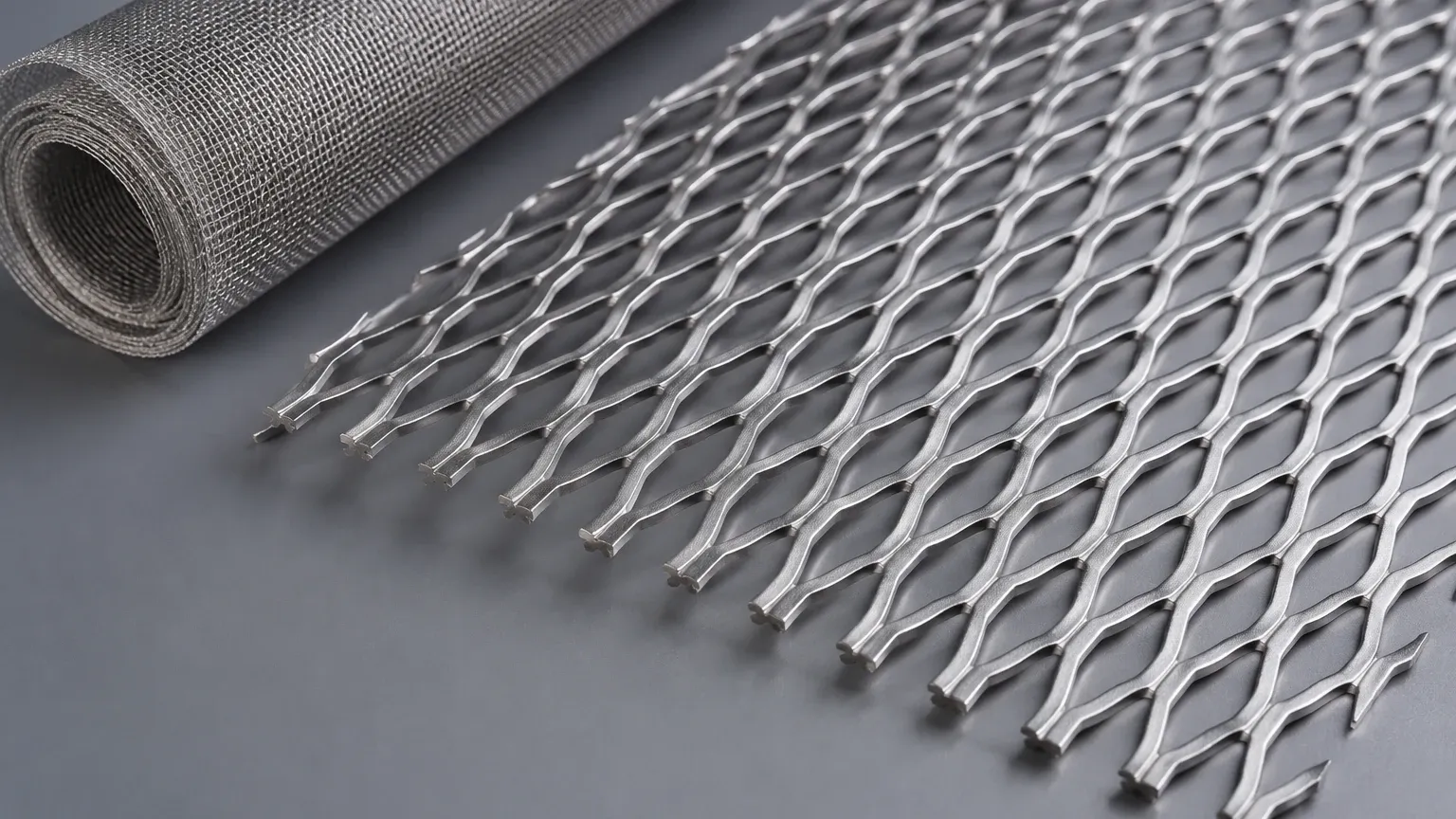
In the landscape of industrial filtration and structural support, expanded metal serves as a versatile and high-strength material. Specifically, 6×8 expanded metal—characterized by its diamond-shaped openings—is frequently specified by engineers for applications requiring a precise balance between structural rigidity and open area. Unlike perforated metal, which is created by punching holes and removing material, expanded metal is manufactured through a process of simultaneous slitting and stretching. This results in a continuous piece of metal with no joins or welds, offering unique mechanical properties for demanding industrial environments.
For technical professionals and procurement teams, understanding the nuances of 6×8 expanded metal specifications is critical for ensuring the longevity and efficiency of filtration systems. This guide examines the technical parameters, material considerations, and engineering advantages of utilizing this specific mesh size in industrial contexts.
Understanding the Geometry of 6×8 Expanded Metal
The designation "6×8" typically refers to the dimensions of the diamond-shaped openings, measured by the Short Way of Diamond (SWD) and the Long Way of Diamond (LWD). In most industrial standards, the first number represents the SWD (the distance from the center of a bond to the center of the next bond across the short axis), while the second represents the LWD (the distance across the long axis).
SWD and LWD Specifications
For a 6×8 specification, the nominal dimensions are 6mm by 8mm. However, engineers must distinguish between the "nominal" size and the "opening" size. The actual clear opening is slightly smaller than the center-to-center measurement because of the strand width. When designing a filter support or a protective cage, the precise internal clearance must be verified to ensure it does not interfere with the flow of the medium or the placement of internal filter elements.
Raised vs. Flattened Expanded Metal
6×8 expanded metal is available in two primary forms:
1. Raised (Standard): The strands and bonds are set at a uniform angle to the plane of the sheet. This creates a three-dimensional surface that provides excellent mechanical grip and high strength-to-weight ratios. In filtration, the raised profile can help create turbulence, which may be desirable in certain mixing or pre-filtration stages.
2. Flattened: The raised mesh is passed through a cold-rolling reducing mill, which flattens the strands and bonds into the same plane as the original sheet. Flattened 6×8 expanded metal is often preferred when a smooth surface is required to prevent abrasion against delicate filter media or when the total thickness of the component must be minimized.
Material Selection for Industrial Filtration
The performance of 6×8 expanded metal is heavily dependent on the alloy from which it is manufactured. In industrial filtration, stainless steel is the gold standard due to its resistance to corrosion, oxidation, and thermal stress.
Type 304 Stainless Steel
Type 304 is the most common material for general industrial applications. It provides excellent durability and resistance to most atmospheric conditions and many organic and inorganic chemicals. For food and beverage applications, 304 stainless steel is often the baseline requirement for hygiene and cleanliness.
Type 316 and 316L Stainless Steel
For more aggressive environments, such as chemical processing or marine applications, Type 316 stainless steel is recommended. The addition of molybdenum enhances resistance to pitting and crevice corrosion in chloride-rich environments. The "L" variant (316L) is preferred for components that require extensive welding, as the lower carbon content minimizes the risk of carbide precipitation, ensuring the integrity of the Perforated & Expanded Metal structure during fabrication.
Engineering Advantages in Filter Support
One of the primary roles of 6×8 expanded metal in a filtration assembly is to provide a rigid skeleton for finer filter media, such as wire mesh or synthetic fabrics. Without adequate support, high-pressure differentials can cause fine mesh to deform or rupture.
Structural Integrity
Because expanded metal is made from a single sheet without welds, it distributes loads more evenly than woven wire or welded mesh. The interlocking diamond pattern provides inherent resistance to shearing and bending. In high-pressure hydraulic systems or deep-bed chemical filters, a 6×8 expanded metal cage ensures that the filter cartridge maintains its shape under fluctuating flow rates.
Cost-Effectiveness and Sustainability
The manufacturing process of expanded metal is inherently "zero-waste." Since the metal is slit and stretched rather than punched, there are no scrap slugs produced. This makes 6×8 expanded metal a more cost-effective alternative to perforated metal in many applications, particularly when using expensive alloys like 316L stainless steel.
Key Performance Metrics: Open Area and Pressure Drop
For any filtration engineer, the "open area" percentage is a vital metric. It determines the flow capacity of the filter and the resulting pressure drop across the system.
Calculating Open Area
The open area of 6×8 expanded metal is determined by the relationship between the strand width and the diamond dimensions. A narrower strand width increases the open area but reduces the structural strength. Conversely, a wider strand provides more support but increases the resistance to flow. Typically, 6×8 expanded metal offers an open area ranging from 40% to 70%, depending on the gauge of the material used.
Impact on Filtration Efficiency
A high open area is essential for minimizing energy consumption in pumping systems. If the support structure (the expanded metal) has too little open area, it creates a bottleneck, forcing the pump to work harder and potentially leading to premature clogging of the primary filter media. When selecting 6×8 expanded metal, engineers must balance the need for mechanical support against the requirement for low-impedance flow.
Manufacturing and Customization
While standard 6×8 expanded metal is widely available, industrial applications often require specific modifications to meet engineering tolerances. Customization options provided by manufacturers like Kaifil allow for optimized performance in niche sectors.
Precision Shearing and Forming
Expanded metal can be difficult to cut accurately without the right equipment because the diamond pattern tends to shift. Professional manufacturers use precision shearing to ensure that the edges are clean and that the mesh remains square. Furthermore, 6×8 expanded metal can be rolled into cylinders or formed into cones to serve as the core or outer guard of a filter cartridge.
Surface Treatments
Depending on the application, additional surface treatments may be necessary. Electropolishing is common for pharmaceutical and food-grade filters to remove surface burrs and improve corrosion resistance. For heavy-duty industrial use, pickling and passivation ensure that the stainless steel surface is free of iron contamination, preventing localized rust.
Common Risks and Evaluation Criteria
When sourcing 6×8 expanded metal, there are several technical risks that purchasing teams should evaluate to avoid system failure.
1. Burrs and Sharp Edges: Standard expanded metal can have sharp edges at the bonds. In filtration, these burrs can puncture fine filter cloth or cause injury during maintenance. Specifying "deburred" or "flattened" material is essential for safety and media protection.
2. Dimensional Consistency: Inconsistent stretching during the manufacturing process can lead to variations in the SWD and LWD. This is problematic when the mesh must fit into a precision-machined housing. Engineers should confirm the manufacturer's tolerance standards.
3. Material Traceability: In industries like oil and gas or pharmaceuticals, material certificates (MTRs) are mandatory. Ensure the supplier can provide documentation verifying the alloy composition to prevent the accidental use of lower-grade materials in corrosive environments.
Integration with Perforated & Expanded Metal Solutions
In many complex filtration systems, a single material type is insufficient. Engineers often combine different forms of Perforated & Expanded Metal to achieve multi-stage filtration. For example, a coarse perforated plate might serve as the outermost protection against large debris, while a 6×8 expanded metal layer provides the intermediate support for a high-precision wire mesh inner layer. This layered approach optimizes the total cost of ownership by protecting expensive fine-filtration components from mechanical damage.
Maintenance and Replacement Cycles
While expanded metal is highly durable, it is not indestructible. In high-vibration environments or systems with high particulate loads, the mesh may eventually suffer from metal fatigue or erosion.
Inspection Protocols
Regular inspection of the 6×8 expanded metal support is recommended during filter element changes. Technicians should look for:
* Signs of Bowing: Indicates that the pressure differential has exceeded the material's yield strength.
* Corrosion Pitting: A sign that the material grade is insufficient for the chemical environment.
* Bond Cracking: Often caused by vibration or thermal cycling.
Replacement Considerations
Because expanded metal is relatively inexpensive compared to the overall cost of a filtration system, it is often more economical to replace the support structure during major overhauls rather than risking a catastrophic failure of the entire filter assembly.
Conclusion
6×8 expanded metal is a foundational component in industrial filtration, offering a unique combination of strength, flow efficiency, and cost-effectiveness. By carefully selecting the material grade, understanding the geometric constraints of LWD and SWD, and considering the impact of open area on system pressure, engineers can design more reliable and efficient filtration solutions. Whether used as a primary screen or a secondary support structure, the technical integrity of the expanded metal is paramount to the success of the industrial process.
