


Expanded Metal 9 Gauge
In the landscape of industrial materials, expanded metal stands out as a versatile, cost-effective, and structurally sound solution for a wide range of applications. Among the various specifications available, expanded metal 9 gauge is frequently specified by engineers and procurement professionals for its high strength-to-weight ratio and durability. This heavy-duty material is a staple in sectors ranging from chemical processing and water treatment to architectural security and industrial filtration.
Understanding the technical nuances of 9-gauge expanded metal is essential for ensuring that the selected material meets the mechanical and environmental demands of a specific project. As a professional manufacturer, Kaifil specializes in providing high-performance Perforated & Expanded Metal solutions tailored to the rigorous requirements of global industrial applications.
Understanding the Specifications of 9 Gauge Expanded Metal
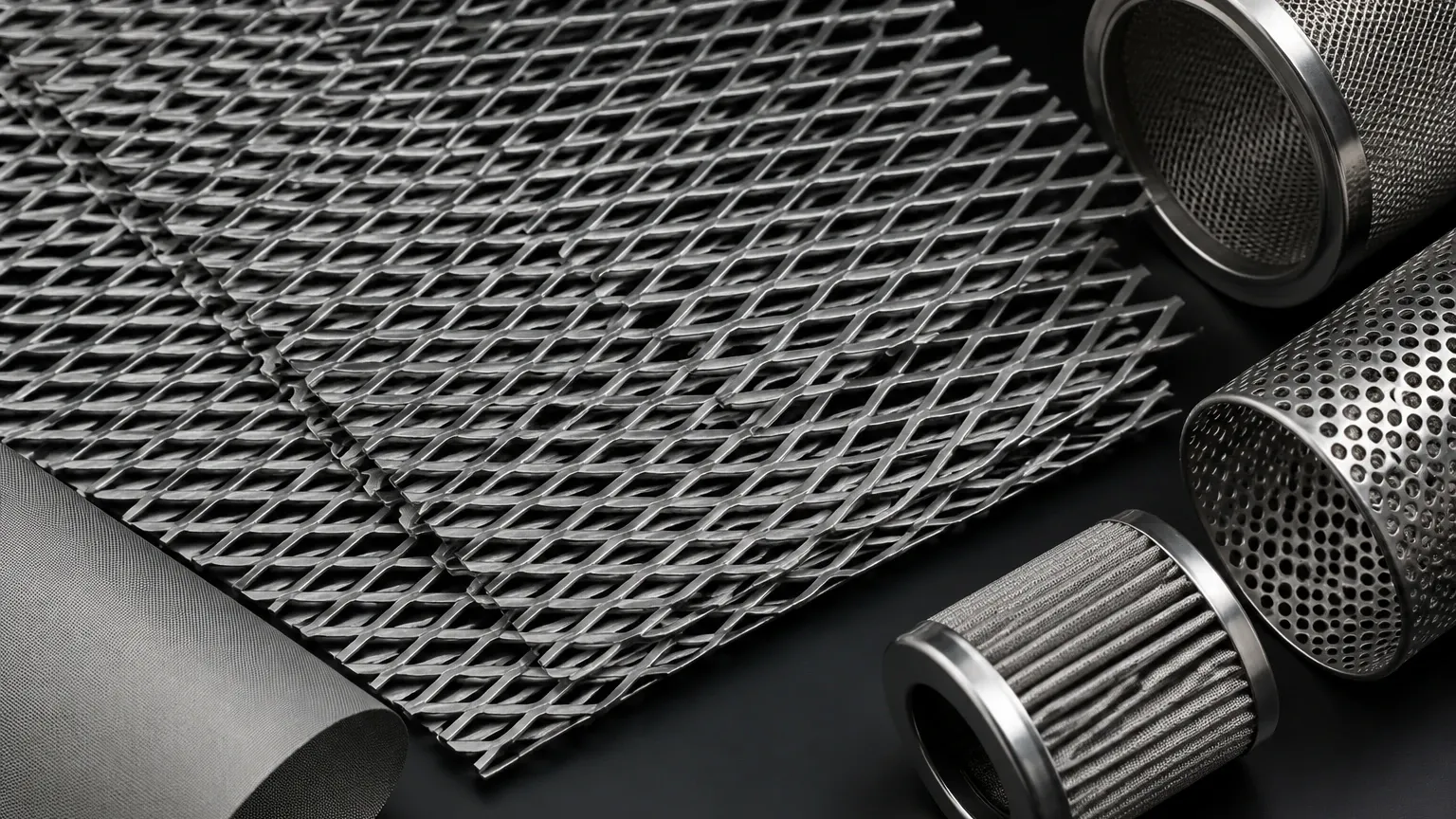
Expanded metal is produced by simultaneously slitting and stretching a solid sheet of metal. This process creates a diamond-shaped pattern of openings, characterized by strands and bonds. Unlike perforated metal, which involves punching holes and generating scrap, the expansion process is virtually waste-free, making it an economically efficient choice for large-scale industrial use.
Gauge and Thickness
The term "9 gauge" refers to the thickness of the metal sheet from which the expanded product is manufactured. In the context of carbon steel, 9 gauge is approximately 0.1495 inches (3.8 mm), while in stainless steel, it is typically around 0.150 inches. However, in the expanded metal industry, "9#" or "9 gauge" often designates a specific style that balances rigidity with open area.
Engineers must distinguish between the "nominal" thickness and the "actual" thickness of the strands after the expansion process. Depending on whether the metal is "raised" or "flattened," the final profile of the material will vary significantly:
* Standard (Raised) Expanded Metal: The strands and bonds are set at a uniform angle to the plane of the sheet. This provides maximum rigidity and a slip-resistant surface, making it ideal for walkways or heavy-duty filtration supports.
* Flattened Expanded Metal: The raised sheet is passed through a cold-roll reducing mill, which flattens the strands and bonds into a single plane. This results in a smoother surface and a slightly thinner profile, which is often preferred for decorative applications or when a flush surface is required for secondary mesh attachment.
Key Dimensional Metrics
When specifying expanded metal 9 gauge, technical teams must define the following dimensions:
1. SWD (Short Way of Diamond): The distance from the center of a bond to the center of the next bond across the short axis.
2. LWD (Long Way of Diamond): The distance from the center of a bond to the center of the next bond across the long axis.
3. Strand Width: The amount of metal fed into the expanding machine for each stroke.
4. Strand Thickness: The original thickness of the base metal (in this case, 9 gauge).
Material Properties and Selection for Industrial Environments
The performance of 9-gauge expanded metal is heavily influenced by the base material. While carbon steel is common for general structural use, industrial environments—particularly those involving chemicals, food, or moisture—require more robust alloys.
Stainless Steel (304 and 316)
At Kaifil, we emphasize the use of stainless steel for 9-gauge expanded metal due to its superior corrosion resistance and longevity.
* Type 304: The most common grade, offering excellent resistance to atmospheric corrosion and many organic and inorganic chemicals. It is widely used in food processing and general industrial filtration.
* Type 316: Contains molybdenum, which provides enhanced resistance to pitting and crevice corrosion, particularly in chloride-rich environments like marine applications or chemical processing plants.
Aluminum and Specialized Alloys
For applications where weight is a primary concern, 9-gauge aluminum expanded metal offers a lightweight alternative with natural corrosion resistance. In highly specialized sectors, such as aerospace or high-temperature chemical synthesis, exotic alloys may be used, though 9 gauge is most typically found in steel and stainless steel variants due to its structural nature.
The Role of 9 Gauge Expanded Metal in Industrial Filtration
In the field of industrial filtration, 9-gauge expanded metal serves as a critical component, often acting as the structural backbone for complex filter assemblies. Its primary function is to provide mechanical support to finer filtration media that would otherwise collapse under high differential pressure.
Support Cages and Outer Protectors
For large-scale filter cartridges used in hydraulic systems, water treatment, or gas processing, a 9-gauge expanded metal cylinder often serves as the outer protector or inner core. The diamond pattern allows for high flow rates while maintaining the circularity and structural integrity of the cartridge. This is particularly important in backwashing cycles, where the filter media is subjected to reverse pressure pulses.
Pre-Filtration and Coarse Screening
In applications involving high-solids loading, 9-gauge expanded metal can function as a primary pre-filter. It captures large debris—such as stones, wood chips, or large scale—before the fluid reaches more delicate secondary filters. Its durability ensures that it can withstand the impact of heavy particles without deforming.
Customization for Filtration Efficiency
Engineers can optimize filtration performance by selecting specific diamond sizes. A smaller SWD/LWD ratio provides a denser mesh for finer coarse screening, while a larger opening maximizes flow and minimizes pressure drop. Kaifil works closely with engineering teams to determine the optimal balance of open area and structural strength for custom filtration solutions.
Engineering Advantages: Strength-to-Weight Ratio and Open Area
One of the most compelling reasons to specify expanded metal 9 gauge is its unique structural profile. Because the metal is stretched rather than punched, the strands are physically connected at the bonds, creating a continuous piece of material that distributes loads efficiently.
Structural Integrity
The 9-gauge thickness provides significant resistance to bending and torsion. This makes it suitable for load-bearing applications such as industrial shelving, machine guards, and security partitions. In filtration, this rigidity prevents the "media migration" that can occur when thinner supports flex under pressure.
Percentage of Open Area
The open area of 9-gauge expanded metal can range from 30% to over 70%, depending on the diamond size and strand width. This high percentage of open area is vital for:
* Flow Dynamics: Ensuring minimal resistance to fluid or air flow in cooling and filtration systems.
* Visibility and Ventilation: Allowing for light and air passage in machine guards and architectural enclosures.
* Heat Dissipation: Facilitating rapid cooling in industrial equipment housings.
Comparing Perforated & Expanded Metal for Heavy-Duty Applications
When deciding between perforated and expanded metal for a 9-gauge application, engineers must weigh several factors. Both materials offer distinct advantages depending on the project goals.
| Feature | 9 Gauge Expanded Metal | 9 Gauge Perforated Metal |
| :— | :— | :— |
| Material Efficiency | High (no waste during production) | Lower (scrap generated from holes) |
| Strength | High (interconnected strands) | High (solid sheet integrity) |
| Weight | Lighter per square foot | Heavier per square foot |
| Surface Profile | Raised or Flattened | Always Flat |
| Cost | Generally lower for large areas | Higher due to material waste |
| Customization | Diamond size and strand width | Hole shape, size, and pitch |
For heavy-duty industrial filtration and structural support, expanded metal is often favored for its cost-efficiency and lighter weight without sacrificing the necessary 9-gauge strength. However, perforated metal may be preferred when precise hole geometries or specific margin requirements are necessary.
Selection Criteria for Engineers and Purchasing Teams
Selecting the right expanded metal 9 gauge involves more than just picking a thickness. To ensure the material performs as expected, the following criteria should be confirmed before procurement:
1. Application Environment: Will the material be exposed to corrosive chemicals, high temperatures, or mechanical impact? This dictates the choice between 304/316 stainless steel or carbon steel.
2. Load Requirements: What is the maximum pressure or weight the material must support? This determines whether a standard (raised) or flattened profile is appropriate.
3. Tolerances: Industrial applications often require tight tolerances on sheet size and diamond consistency. Ensure the manufacturer can meet these specifications.
4. Finish Requirements: Does the material need to be galvanized, powder-coated, or electropolished? For stainless steel filtration components, electropolishing is often used to enhance corrosion resistance and ease of cleaning.
5. Direction of Expansion: The orientation of the diamonds (LWD vs. SWD) relative to the sheet dimensions can affect how the material handles stress and how it fits into a frame.
Installation and Maintenance Best Practices
To maximize the lifecycle of 9-gauge expanded metal components, proper installation and maintenance are required.
Welding and Fabrication
9-gauge material is thick enough to be easily welded using TIG, MIG, or spot-welding techniques. When fabricating filter cages or guards, it is essential to ensure that the bonds are securely joined to the frame to prevent vibration-induced fatigue. For stainless steel, using compatible filler metals is crucial to maintain corrosion resistance at the weld joints.
Cleaning and Maintenance
In filtration applications, the diamond pattern can sometimes trap debris at the bonds. Regular cleaning—either through ultrasonic baths, high-pressure washing, or chemical CIP (Clean-In-Place) systems—is recommended. The inherent strength of 9-gauge stainless steel allows it to withstand aggressive cleaning cycles that would damage thinner materials.
Why Choose Kaifil for Custom Filtration Solutions?
Kaifil is a professional manufacturer specializing in custom stainless steel filtration solutions. We understand that every industrial application has unique challenges, which is why we provide more than just raw materials. Our expertise in Perforated & Expanded Metal allows us to design and manufacture filtration components that meet the exact specifications of our global clients.
From material selection and filtration accuracy to customized designs and production, Kaifil delivers dependable filtration components for demanding industrial environments. Whether you require 9-gauge expanded metal for a hydraulic filter support or a custom-designed chemical strainer, our team provides the technical support and manufacturing precision necessary to optimize your filtration performance.
Conclusion
Expanded metal 9 gauge is a powerhouse material in the industrial sector, offering an unparalleled combination of strength, efficiency, and versatility. By understanding the technical specifications, material options, and engineering considerations outlined in this guide, technical professionals can make informed decisions that enhance the reliability and performance of their systems. For those seeking specialized filtration components, partnering with a manufacturer like Kaifil ensures that these materials are integrated into a solution that meets the highest standards of quality and durability.
