


Expanded Metal 3 4 9f
In industrial engineering and filtration design, the specification "expanded metal 3 4 9f" represents one of the most versatile and widely utilized configurations of expanded metal. This specific designation refers to a flattened expanded metal with a nominal diamond size of 3/4 inch and a #9 gauge thickness. For procurement teams and design engineers, understanding the mechanical properties, flow characteristics, and material compatibility of this specific mesh is essential for ensuring the structural integrity and efficiency of filtration systems and industrial enclosures.
As a specialist in precision metal filtration, Kaifil provides technical insights into how this material functions within demanding environments. Whether used as a support substrate for fine wire mesh or as a standalone primary screen, Perforated & Expanded Metal solutions must be selected based on rigorous engineering data rather than generic estimates.
Decoding the Specification: What is Expanded Metal 3 4 9f?
The nomenclature "3 4 9f" is a shorthand used across the metal industry to define four critical physical characteristics. Each component of this code dictates how the material will behave under pressure, its total weight, and its suitability for specific filtration tasks.
1. The 3/4 Dimension (Short Way of Design)
The "3/4" refers to the nominal dimension of the Short Way of Design (SWD). In expanded metal terminology, the SWD is the distance from the center of one bond to the center of the next bond across the short axis of the diamond opening. For a 3/4 #9 specification, the actual opening size is typically slightly smaller than 0.75 inches due to the width of the metal strands.
2. The #9 Gauge
The "#9" indicates the thickness of the starting sheet metal before the expansion process. For carbon steel, a #9 gauge is approximately 0.134 inches thick, while in stainless steel applications—where Kaifil focuses—this thickness may vary slightly depending on the specific ASTM standards applied. It is important to note that the "9 gauge" refers to the thickness of the strand, which provides the primary structural strength of the mesh.
3. The "f" Designation: Flattened vs. Raised
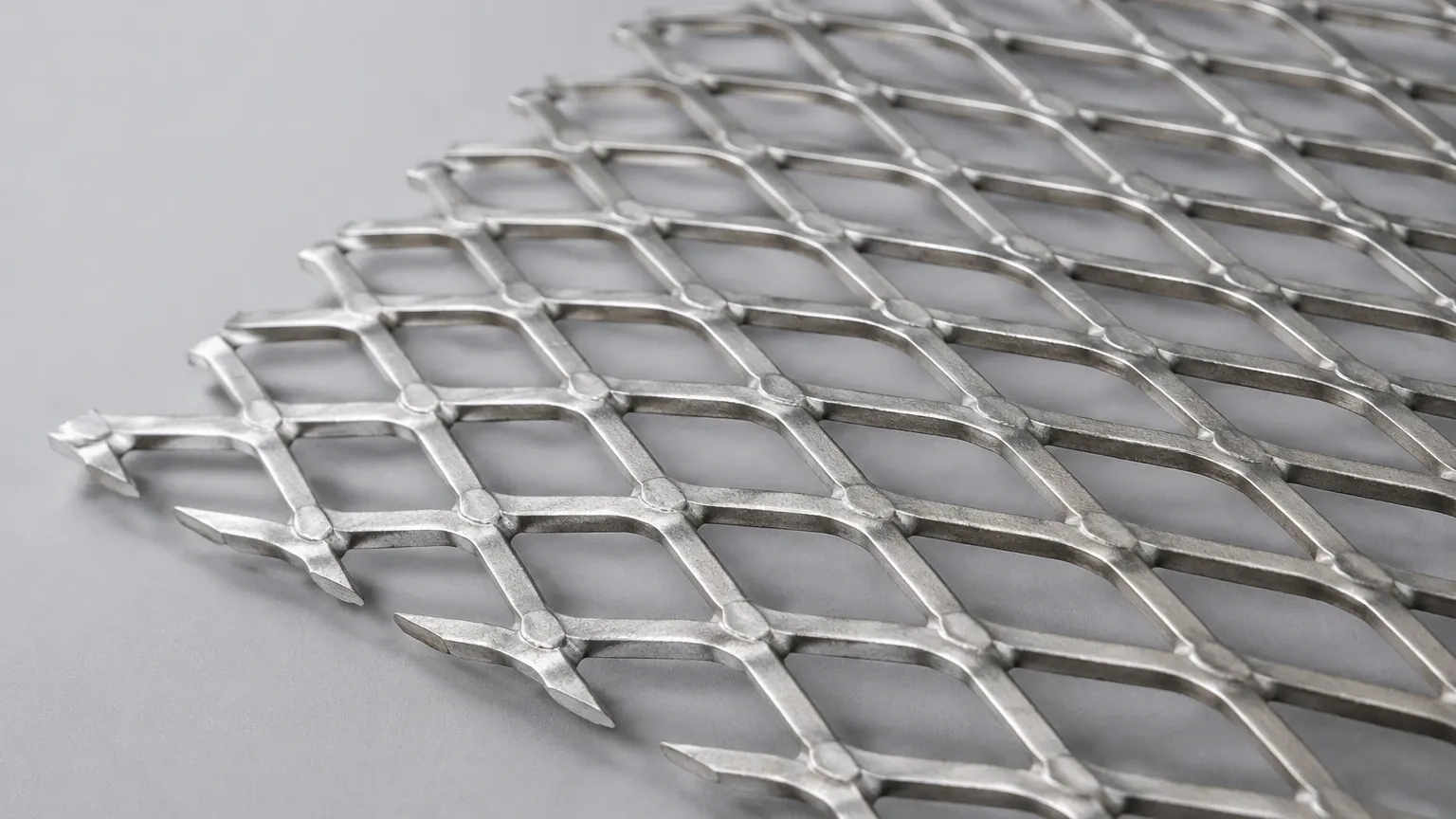
The "f" stands for "flattened." Expanded metal is originally produced in a "raised" or "standard" state, where the strands are canted at an angle to the plane of the sheet. Flattened expanded metal undergoes a secondary cold-rolling process. This process reduces the thickness of the strands and levels them into a single horizontal plane. The result is a smooth, flat surface that is safer to handle, easier to weld, and provides a consistent thickness for sandwich-style filtration assemblies.
Technical Characteristics and Engineering Data
When integrating expanded metal 3 4 9f into an industrial system, engineers must account for the specific geometry created by the expansion and flattening process. Unlike perforated metal, which is created by punching holes and removing material, expanded metal is slit and stretched, resulting in zero material waste and a unique structural orientation.
Open Area and Flow Rates
One of the most critical factors for filtration applications is the percentage of open area. For standard 3/4 #9 flattened expanded metal, the open area typically ranges between 63% and 68%. This high transparency allows for high flow rates with minimal pressure drop, making it an ideal choice for high-volume liquid or air filtration systems where structural support is required without significantly obstructing the media flow.
Weight and Structural Integrity
Despite its high open area, the #9 gauge thickness ensures significant rigidity. Flattening the material slightly increases the overall dimensions of the sheet but maintains a high strength-to-weight ratio. In a flattened state, the 3/4 #9 spec typically weighs approximately 1.7 to 1.8 pounds per square foot (for carbon steel). Stainless steel variants will have a slightly higher density, which must be factored into the total weight of large-scale filtration vessels.
Material Selection for Corrosive and Industrial Environments
While expanded metal 3 4 9f can be manufactured from carbon steel or aluminum, industrial filtration applications usually demand the corrosion resistance of stainless steel. Kaifil specializes in providing these components in alloys that can withstand the chemical stresses of the pharmaceutical, food and beverage, and petrochemical industries.
304 Stainless Steel
Grade 304 is the standard for most general industrial applications. It provides excellent resistance to atmospheric corrosion and many organic and inorganic chemicals. It is frequently used in water treatment and food processing where sanitation is required but extreme chemical exposure is limited.
316L Stainless Steel
For applications involving chlorides, acids, or high-temperature environments, 316L stainless steel is the preferred choice. The addition of molybdenum enhances the material's resistance to pitting and crevice corrosion. In the chemical processing industry, using expanded metal 3 4 9f in 316L ensures a longer service life and reduces the risk of metallic contamination in the filtered product.
Applications of 3/4 #9 Flattened Expanded Metal in Filtration
In the context of industrial filtration, expanded metal is rarely a standalone component. Instead, it serves as a critical structural element within a multi-layered filter cartridge or panel.
Support Grids for Fine Mesh
Fine wire mesh, while excellent for precision filtration, lacks the structural strength to withstand high differential pressures. Expanded metal 3 4 9f is often used as a "backup" or support layer. The flattened surface prevents the fine mesh from being cut or abraded by the sharp edges that would be present in raised expanded metal. This configuration allows the filter to maintain its shape under the force of the fluid stream.
Pre-Filtration and Coarse Screening
In systems where large debris must be removed before the fluid reaches more sensitive components, the 3/4-inch diamond opening acts as an effective coarse screen. It is commonly found in intake structures, pump strainers, and heavy-duty HVAC pre-filters.
Catalyst Support and Baskets
In chemical reactors, expanded metal 3 4 9f is used to create baskets or trays that hold catalyst pellets. The flattened profile ensures that the pellets are distributed evenly and that the basket can be easily cleaned and reused without snagging material in the mesh joints.
Engineering Considerations: Avoiding Common Pitfalls
Selecting expanded metal 3 4 9f requires more than just matching the code. Engineers should consider the following factors to avoid performance failures or procurement delays:
1. Direction of the Diamond
Expanded metal has a distinct orientation: the Long Way of the Diamond (LWD) and the Short Way of the Diamond (SWD). The mechanical strength of the sheet is significantly higher when the load is applied across the LWD. When designing cylindrical filter cartridges, the orientation of the diamond can affect the ease of rolling and the final burst strength of the cartridge.
2. Edge Conditions
When expanded metal is cut to size, the edges can be "random" or "bonded." Random shears leave sharp, jagged points (prongs) where the diamonds were cut. Bonded shears occur at the intersection of the diamonds, providing a smoother edge. For filtration components that require manual handling or frequent replacement, specifying bonded edges or adding a U-channel frame is a necessary safety and functional consideration.
3. Flattening Tolerances
The cold-rolling process used to create the "f" (flattened) state can introduce slight variations in thickness across the sheet. If the expanded metal is being inserted into a precision-machined slot or a tight-fitting filter housing, it is vital to confirm the maximum thickness tolerance with the manufacturer.
Customization and OEM Solutions from Kaifil
As a manufacturer focused on custom stainless steel filtration, Kaifil understands that standard off-the-shelf expanded metal does not always meet the specific needs of specialized industrial equipment. Customization options for expanded metal 3 4 9f include:
* Precision Slitting: Cutting the mesh into narrow coils for automated filter production lines.
* Annealing: Heat treating the stainless steel to improve ductility, which is essential for components that require deep drawing or complex forming.
* Surface Finishing: Electropolishing or passivating the 3/4 #9 mesh to enhance corrosion resistance and ensure a burr-free surface for pharmaceutical or food-grade applications.
* Integration: Welding the expanded metal into custom frames or cylinders as part of a complete OEM filtration assembly.
Total Cost of Ownership and Replacement Cycles
When evaluating expanded metal 3 4 9f, purchasing teams should look beyond the initial price per square foot. The total cost of ownership is influenced by the material's durability and the frequency of replacement.
In high-vibration environments or systems with high pressure cycles, a lower-quality expanded metal may suffer from "bond failure," where the points of expansion begin to crack. By selecting high-quality stainless steel and ensuring the expansion process is handled with precision, the service life of the filter component can be extended significantly. Furthermore, the flattened profile of the "f" spec makes cleaning (via backwashing or ultrasonic baths) more effective compared to raised mesh, as there are fewer recessed areas where debris can become permanently trapped.
Conclusion: Making Informed Procurement Decisions
The expanded metal 3 4 9f specification is a foundational material in the industrial filtration world, providing a rare balance of high flow capacity and robust structural support. Whether you are designing a new chemical processing unit or replacing support grids in an existing hydraulic system, the technical details of the SWD, gauge, and flattening process are paramount.
For engineers and purchasing professionals, the key to a successful application lies in material integrity and manufacturing precision. By focusing on stainless steel alloys and customized configurations, you can ensure that your filtration systems operate at peak efficiency with minimal downtime. For more information on available specifications and custom metal components, you may Review product options and application support to find the exact configuration required for your project.
