


Perforated Metal Texture
In industrial engineering and filtration design, the term "perforated metal texture" refers to more than just the visual appearance of a material. It encompasses the physical topography, surface finish, and geometric configuration of a metal sheet that has been mechanically altered to include a pattern of openings. For engineers and procurement specialists, understanding the nuances of this texture is critical for optimizing fluid dynamics, ensuring structural integrity, and achieving precise filtration performance.
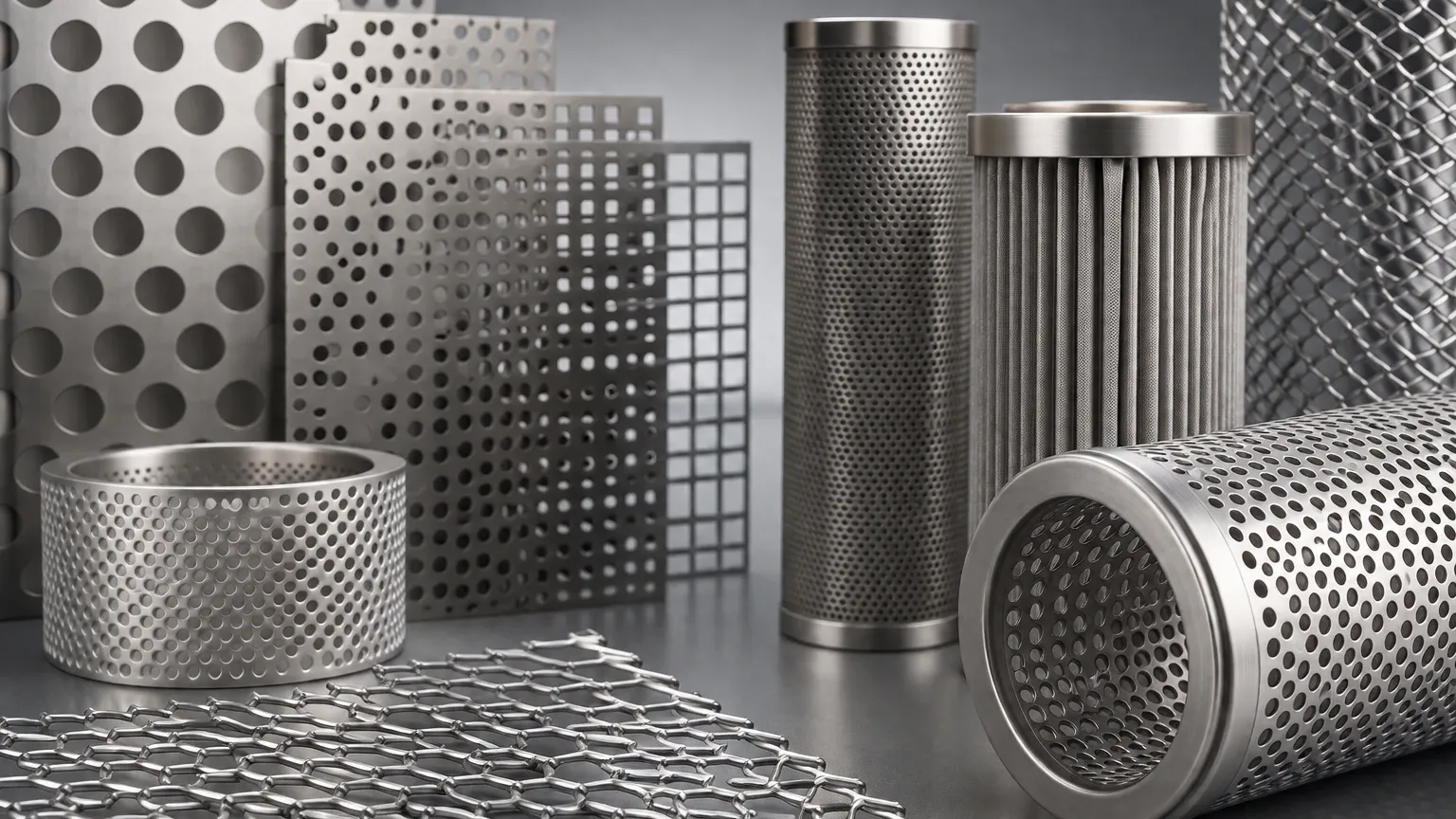
Perforated & Expanded Metal components serve as the backbone for various industrial applications, ranging from heavy-duty strainers in chemical processing to support cages for fine wire mesh in high-pressure hydraulic systems. The specific texture—defined by the hole shape, pitch, open area, and surface treatment—directly dictates how the material interacts with its environment.
The Technical Definition of Perforated Metal Texture
From a manufacturing perspective, the texture of a perforated or expanded metal sheet is a result of the interaction between the base material and the tooling used. While a standard cold-rolled stainless steel sheet has a relatively smooth, uniform texture (often a 2B or No. 4 finish), the introduction of perforations creates a complex surface profile.
This profile is characterized by three primary factors:
1. The Perforation Geometry: The shape and depth of the holes (round, square, slotted, or hexagonal).
2. The Bridge and Margin: The solid metal remaining between the holes (the bridge) and the unperforated edges of the sheet (the margins).
3. The Shear Edge: The microscopic texture created at the point where the punch breaks through the metal, which can result in burrs or slight deformations depending on the material thickness and tool sharpness.
In expanded metal, the texture is even more pronounced. Unlike perforated metal, which is produced by punching holes out of a sheet, expanded metal is slit and stretched simultaneously. This creates a three-dimensional, diamond-shaped texture where the strands are set at an angle to the original plane of the sheet. This "raised" texture provides inherent slip resistance and unique flow characteristics that are distinct from the flat profile of standard perforated sheets.
Geometric Patterns and Functional Texture
The choice of pattern is the most significant contributor to the functional perforated metal texture. Each geometry offers different advantages in industrial settings:
Round Hole Patterns
Round holes are the most common industrial choice due to their versatility and structural stability. A staggered 60-degree round hole pattern provides the most uniform distribution of strength across the sheet. The resulting texture is predictable and minimizes stress concentration points, making it ideal for high-pressure filtration housings and centrifugal baskets.
Square and Slotted Patterns
Square holes offer a higher open area percentage compared to round holes of the same diameter, which reduces the overall weight and increases flow rates. However, the sharp corners of the square texture can become points of mechanical stress. Slotted patterns are frequently used in sifting and sorting applications where the direction of flow or the orientation of the particles is critical. The elongated texture of a slotted sheet allows for the passage of specific shapes while retaining others, a common requirement in food processing and grain handling.
Hexagonal (Honeycomb) Patterns
Hexagonal patterns provide a maximum open area (often exceeding 80%) while maintaining a high strength-to-weight ratio. The texture created by a honeycomb pattern is particularly effective in air filtration and EMI/RFI shielding, where high airflow must be balanced with structural rigidity.
The Impact of Manufacturing Processes on Texture
The method used to create the perforated metal texture significantly influences the final product's performance and longevity.
Punching vs. Laser Cutting
Most industrial perforated metal is produced via high-speed punching presses. This process is cost-effective for large volumes but introduces a "shear and break" texture on the hole walls. The top half of the hole is typically smooth (the shear zone), while the bottom half is slightly rougher (the break zone). For applications requiring high purity, such as pharmaceutical filtration, these edges may need to be electropolished to ensure no contaminants are trapped in the micro-crevices.
Laser cutting, while slower and more expensive, produces a cleaner, more vertical edge texture with minimal mechanical stress. This is often preferred for thick-gauge materials or when complex, non-standard textures are required for custom filtration components.
Expanded Metal Production
Expanded metal is manufactured through a process of slitting and stretching. This results in a "raised" texture where the metal strands are angled. For applications where a flat surface is required, the expanded metal can be run through a cold-rolling mill (flattened expanded metal). Flattening the material reduces the thickness and creates a smoother, more two-dimensional texture, though it slightly reduces the overall structural strength compared to the raised version.
Surface Finishes and Post-Processing
In B2B industrial contexts, the "texture" of the metal is often modified after the primary perforation or expansion process to meet specific environmental requirements.
1. Deburring: The punching process naturally creates burrs on the exit side of the hole. For filtration media, deburring is essential to prevent these small metal fragments from breaking off and entering the process stream. It also smooths the texture to facilitate easier cleaning.
2. Leveling: Perforating a sheet introduces internal stresses that can cause the material to bow or curl. Precision leveling restores the flat texture of the sheet, ensuring it can be accurately welded or fitted into a filter housing.
3. Pickling and Passivation: For stainless steel components, pickling removes scale and impurities, while passivation restores the protective chromium oxide layer. This does not significantly change the macro-texture but ensures the micro-texture is chemically stable and corrosion-resistant.
4. Electropolishing: This electrochemical process removes a fine layer of material, rounding off microscopic peaks and creating a mirror-like, ultra-smooth texture. This is critical in food and beverage applications to prevent bacterial growth in surface irregularities.
Engineering Considerations for Texture Selection
When specifying a perforated metal texture for a project, engineers must balance several competing factors:
Open Area and Pressure Drop
The open area is the ratio of the area of the holes to the total area of the sheet. A texture with a high open area (e.g., large holes with thin bridges) allows for high flow rates and low pressure drops. However, it also reduces the mechanical strength of the component. Engineers must calculate the minimum required open area to satisfy flow requirements without compromising the structural integrity of the filter cartridge or support screen.
Particle Retention and Clogging
The texture of the hole itself—specifically the ratio of the hole diameter to the material thickness—affects how easily particles can pass through or become lodged. A "tapered" hole texture, where the exit diameter is slightly larger than the entry diameter, can help reduce clogging in backwashing applications. Conversely, a rougher shear edge can trap fibers or sticky particles, leading to more frequent maintenance cycles.
Total Cost of Ownership (TCO)
While a standard round-hole perforated texture may have a lower initial purchase price, a custom-engineered texture (such as a specific slotted pattern or a particular expanded metal grade) might offer a longer service life, easier cleaning, and better protection for downstream equipment. When evaluating Perforated & Expanded Metal options, it is vital to consider the total cost, including replacement frequency and downtime for maintenance.
Applications in Demanding Industries
The functional utility of perforated metal texture is best demonstrated in specialized industrial sectors:
* Chemical Processing: In harsh chemical environments, the texture must resist both mechanical erosion and chemical corrosion. Heavy-gauge stainless steel with a deburred, passivated texture is often used for catalyst support grids.
* Food & Beverage: Here, the texture must be "sanitary." This means no sharp edges, no burrs, and a surface finish that supports Clean-in-Place (CIP) protocols. Perforated tubes used in juice extraction or dairy processing often undergo extensive polishing.
* Hydraulics: Perforated metal serves as the outer support for pleated wire mesh filters. The texture must be perfectly cylindrical and free of protrusions that could puncture the delicate inner mesh layers.
* Water Treatment: Large-scale intake screens utilize specific perforated textures to prevent debris and aquatic life from entering the system while maintaining high-volume water flow.
Confirming Specifications with Manufacturers
Before finalizing a purchase order for perforated or expanded metal components, technical teams should confirm several key details with their manufacturer to ensure the resulting texture meets the application's needs:
* Material Grade: Confirm if 304, 316, or 316L stainless steel is required for the specific chemical environment.
* Dimensional Tolerances: Specify the acceptable variance in hole diameter, pitch, and sheet flatness.
* Margin Requirements: Define the width of the solid metal edges needed for welding or mounting.
* Surface Treatment: Clearly state if deburring, degreasing, or electropolishing is necessary for the final application.
* Load Requirements: If the metal will be under significant pressure, provide the manufacturer with the expected load to ensure the bridge width and material thickness are sufficient.
Conclusion
Perforated metal texture is a fundamental engineering property that influences the efficiency, safety, and durability of industrial systems. Whether it is the 3D grip of expanded metal or the precision-punched holes of a stainless steel filter cartridge, the surface characteristics of these materials are designed to solve specific technical challenges. By understanding the relationship between pattern geometry, manufacturing methods, and post-processing finishes, engineers can select the optimal filtration and structural solutions for their most demanding environments.
For those seeking reliable, high-performance components, focusing on the technical specifications of the Perforated & Expanded Metal ensures that the chosen texture delivers the required performance throughout its service life.
