


Perforated Metal Art
In the realm of industrial manufacturing and architectural design, perforated metal art represents the synergy between high-precision engineering and aesthetic versatility. While often associated with decorative facades or interior design elements, the creation of complex patterns in metal sheets is rooted in the same technical principles used to produce high-performance industrial filtration components. For engineers and procurement professionals, understanding the capabilities of Perforated & Expanded Metal is essential when balancing structural integrity with visual requirements.
At Kaifil, the manufacturing of perforated metal involves sophisticated CNC punching and laser-cutting technologies. These processes allow for the transformation of standard stainless steel or alloy sheets into intricate designs that serve dual purposes: managing airflow, light, or sound, while providing a unique visual identity to industrial equipment or architectural structures. This guide explores the technical considerations, material science, and manufacturing boundaries of perforated metal art from an industrial perspective.
The Technical Foundation of Perforated Metal Art
Perforated metal art is not merely about aesthetics; it is an exercise in precision geometry. The "art" lies in the ability to manipulate hole size, shape, and spacing (pitch) to create images, gradients, or geometric patterns without compromising the mechanical properties of the base material.
Hole Geometry and Arrangement
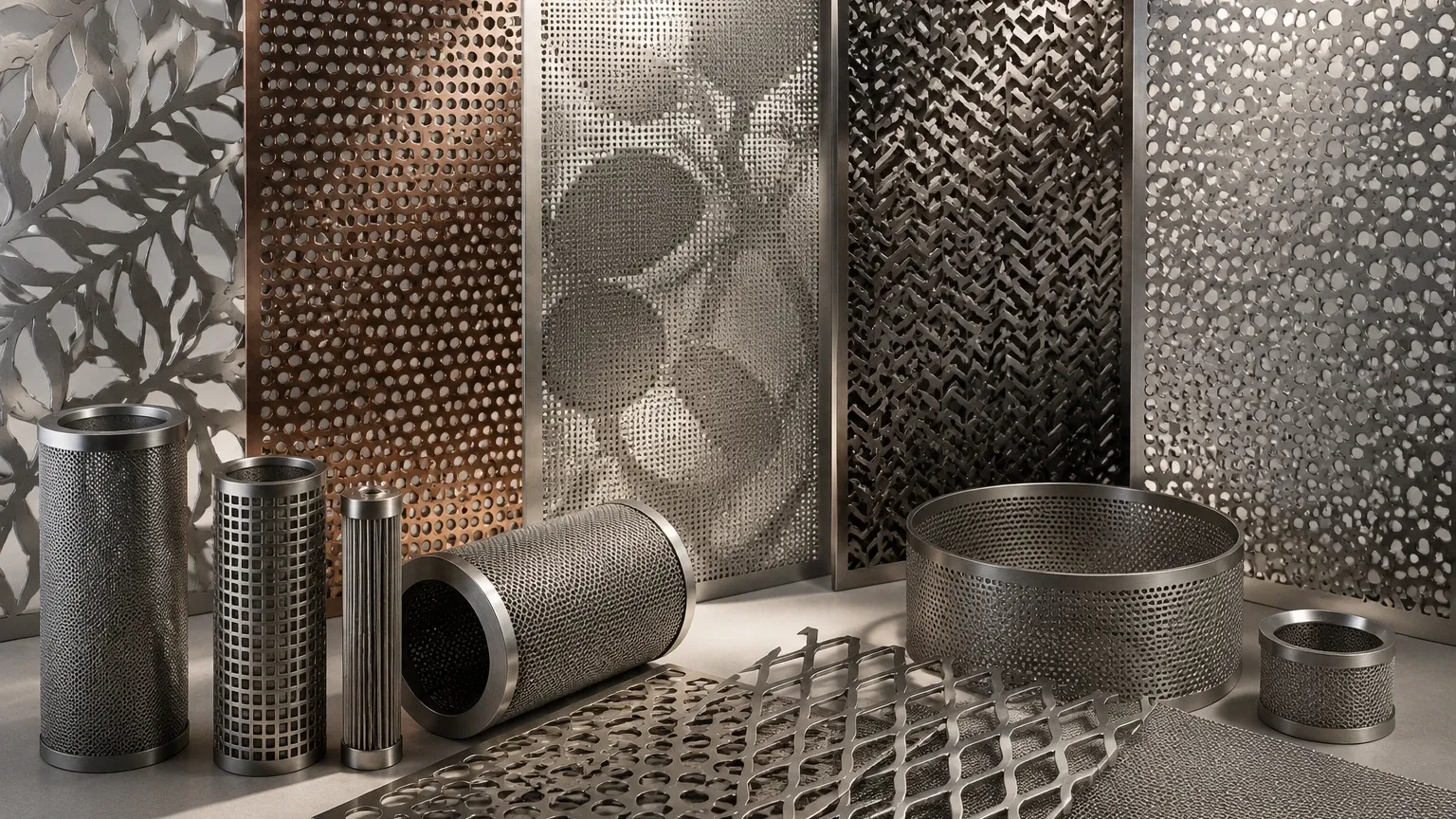
In industrial applications, the arrangement of perforations is typically categorized into straight lines or staggered patterns. Staggered patterns (usually at 60 degrees) are preferred for their superior strength and uniform open area. When creating artistic or custom patterns, engineers must calculate the "bridge"—the distance between holes—to ensure the sheet does not warp or lose its structural load-bearing capacity. Custom patterns may involve varying hole diameters across a single sheet to create a "halftone" effect, where the density of the perforations mimics a shaded image.
Open Area Calculations
The open area is the percentage of the sheet that is occupied by holes. This is a critical metric for both filtration and architectural art. In filtration, it dictates flow rate and pressure drop; in art, it dictates transparency and light transmission. Calculating the open area for complex, non-standard patterns requires advanced CAD software to ensure that the design remains functional within the intended environment.
Material Selection for Durability and Performance
The choice of material is the most significant factor in the longevity and performance of perforated metal art, especially in demanding industrial or outdoor environments. Kaifil specializes in stainless steel solutions, which offer distinct advantages over carbon steel or aluminum in specific contexts.
Stainless Steel Grades
* Grade 304: The most common choice for general industrial and decorative use. It provides excellent corrosion resistance and is highly formable, making it ideal for complex perforated patterns.
* Grade 316: For applications in marine environments, chemical processing plants, or areas with high salt exposure, Grade 316 is the standard. The addition of molybdenum enhances resistance to pitting and crevice corrosion, ensuring the artistic pattern remains intact over decades.
Alternative Alloys
While stainless steel is the benchmark for durability, other materials like aluminum are chosen for their weight-to-strength ratio, particularly in large-scale architectural facades. However, for industrial filtration components that require an "artistic" or custom-patterned outer cage, stainless steel remains the preferred medium due to its ability to withstand high pressures and thermal cycling.
Manufacturing Processes: From CAD to Finished Component
Creating perforated metal art requires a transition from digital design to physical fabrication. This process involves several critical stages where technical expertise is paramount.
CNC Punching vs. Laser Cutting
For high-volume production of standard or semi-custom patterns, CNC punching is the most cost-effective method. It is fast and produces consistent results. However, for highly intricate perforated metal art that features non-repeating patterns or extremely fine details, laser cutting offers greater flexibility. Laser cutting allows for sharp corners and complex geometries that traditional punch dies cannot achieve.
Leveling and Degreasing
The perforation process, particularly punching, introduces internal stresses into the metal sheet, which can lead to "oil canning" or warping. To ensure the final product is perfectly flat—a requirement for both aesthetic panels and precision filter housings—the sheets must undergo a leveling process. Additionally, industrial lubricants used during punching must be removed through thorough degreasing to prepare the surface for finishing or to meet cleanroom standards in pharmaceutical and food applications.
Secondary Operations
To transform a perforated sheet into a finished piece of art or a functional component, secondary operations such as bending, rolling, and welding are often necessary. In the context of Perforated & Expanded Metal, these operations must be performed with care to avoid distorting the pattern. Precision TIG or laser welding is typically used to join perforated sections in high-end industrial filters or decorative cylinders.
Industrial Applications of Custom Perforated Patterns
While the term "art" suggests a purely decorative role, custom perforated patterns are frequently utilized in industrial sectors for their functional benefits.
Architectural and Acoustic Control
In large industrial facilities, perforated metal panels are used to manage acoustics. By varying the hole size and pattern, engineers can tune the panels to absorb specific sound frequencies. When these patterns are designed artistically, they serve to improve the work environment visually while performing a vital safety function by reducing noise pollution.
Specialized Filtration and Separation
In the chemical and food processing industries, filtration components sometimes require non-standard perforation patterns to optimize the flow of specific media or to provide structural support to finer wire mesh layers. Here, perforated metal art meets filtration science; the pattern is designed to prevent "dead zones" in the fluid flow, ensuring that the entire surface area of the filter is utilized efficiently.
Machine Guarding and Ventilation
Custom perforated screens provide ventilation for heavy machinery while ensuring operator safety. Artistic patterns can be used to integrate branding or specific safety indicators directly into the metalwork, providing a professional finish to industrial equipment.
Engineering Considerations: Avoiding Common Risks
When specifying perforated metal art for an industrial project, several risks must be managed to ensure the final product meets performance expectations.
1. Burr Management: The punching process can leave sharp edges (burrs) on the exit side of the hole. In filtration, these can trap contaminants or damage filter media. In decorative art, they pose a safety risk and interfere with coating adhesion. Specifying deburring or electropolishing is essential for a high-quality finish.
2. Margin Requirements: Sheets typically require "unperforated margins" along the edges for welding or mounting. Engineers must specify these margins clearly, as they affect the overall visual balance of the pattern and the structural integrity of the frame.
3. Tolerances: Standard industry tolerances for perforation are often wider than those required for precision engineering. When the perforated metal is part of a complex assembly, tighter tolerances must be negotiated with the manufacturer to ensure proper fitment.
4. Corrosion at the Edges: When metal is perforated, the internal surface of the holes is exposed. If the sheet is coated after perforation, the coating must be applied uniformly to these internal edges to prevent oxidation. For stainless steel, ensuring the material is properly passivated after fabrication is a critical step in maintaining its corrosion-resistant properties.
Evaluating Suppliers for Custom Perforation Projects
Choosing a partner for perforated metal art requires an assessment of both their manufacturing capacity and their engineering depth. A reliable supplier should provide more than just a fabrication service; they should act as a technical consultant.
Key questions for procurement teams to confirm include:
* Design Support: Can the manufacturer translate a complex vector file into a punch-ready or laser-ready format while maintaining the required open area?
* Material Traceability: Does the supplier provide MTRs (Material Test Reports) to verify the grade and origin of the stainless steel?
* Finishing Capabilities: Does the facility offer in-house leveling, deburring, and specialized finishing such as electropolishing or powder coating?
* Quality Standards: Is the manufacturer ISO certified, and do they have a robust inspection process for hole diameter accuracy and sheet flatness?
Conclusion
Perforated metal art represents a sophisticated intersection of form and function. Whether used to enhance the aesthetics of an industrial facility or to provide a custom solution for a complex filtration challenge, the success of the project depends on a deep understanding of material behavior and precision manufacturing. By leveraging the technical expertise of specialists in Perforated & Expanded Metal, engineers can achieve designs that are as durable and efficient as they are visually striking.
For those looking to integrate custom perforated solutions into their next project, focusing on material grade, open area precision, and post-fabrication finishing will ensure a result that meets the rigorous demands of the industrial sector.
