


Perforated Metal Angle
In the landscape of industrial filtration and structural engineering, the perforated metal angle serves as a critical component that bridges the gap between structural rigidity and functional permeability. Unlike standard solid metal angles used purely for load-bearing purposes, a perforated metal angle is engineered to provide support while allowing for the passage of air, light, or fluids. For engineers and procurement teams, understanding the technical nuances of these components—ranging from material selection to the mechanical impact of hole patterns—is essential for ensuring the longevity and efficiency of industrial systems.
As a specialized manufacturer, Kaifil focuses on delivering high-precision Perforated & Expanded Metal solutions that meet the rigorous demands of chemical processing, water treatment, and pharmaceutical manufacturing. This guide explores the engineering considerations, application-specific benefits, and selection criteria for perforated metal angles in professional B2B environments.
The Engineering Logic of Perforated Metal Angles
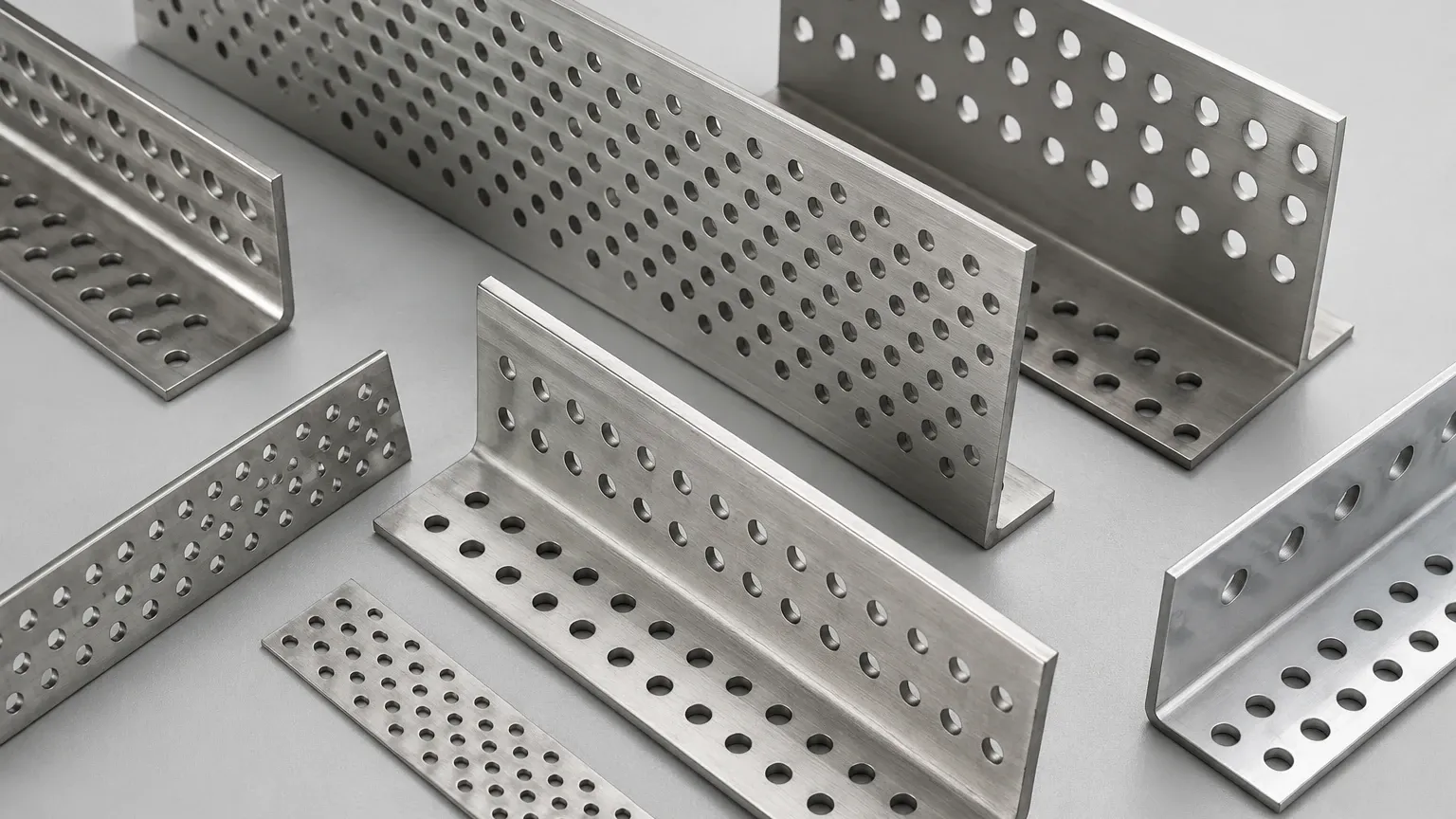
A perforated metal angle is essentially an L-shaped structural profile—typically formed at a 90-degree angle—that features a series of punched or laser-cut holes. The primary engineering challenge when designing a perforated metal angle is balancing the structural integrity of the profile with the required open area for the specific application.
Structural Reinforcement
The L-shape (or "angle") provides a high moment of inertia, which allows the component to resist bending and torsional forces much more effectively than a flat perforated sheet. In industrial filtration, these angles are often used as the primary skeletal frame for large-scale filter housings or as edge reinforcements for wire mesh panels. By utilizing an angle profile, engineers can reduce the overall weight of the assembly without sacrificing the necessary stiffness required to withstand high-pressure differentials.
Flow Dynamics and Open Area
The "open area" refers to the percentage of the metal surface that is occupied by holes. While a higher open area facilitates better flow and lower pressure drops, it simultaneously reduces the cross-sectional area of the metal, thereby lowering its load-bearing capacity. Calculating the precise ratio between hole diameter, pitch (the distance between the centers of adjacent holes), and the thickness of the metal is a fundamental step in the design process. For most industrial support applications, a staggered hole pattern is preferred as it provides a more uniform distribution of stress across the profile compared to straight-line patterns.
Material Selection for Demanding Environments
The performance of a perforated metal angle is heavily dependent on the alloy from which it is fabricated. Kaifil specializes in stainless steel filtration solutions because of the material's inherent resistance to corrosion and high temperatures.
1. Stainless Steel 304: This is the standard grade for most general-purpose industrial applications. It offers excellent formability and weldability, making it ideal for creating custom angle profiles. It is widely used in food and beverage processing where hygiene is paramount but chemical exposure is moderate.
2. Stainless Steel 316/316L: For more aggressive environments, such as marine applications, chemical processing plants, or pharmaceutical manufacturing, SS316 is the preferred choice. The addition of molybdenum enhances its resistance to pitting and crevice corrosion, particularly in chloride-rich environments. The "L" variant (low carbon) is often specified when the perforated metal angle must be welded, as it prevents carbide precipitation that can lead to intergranular corrosion.
3. Specialty Alloys: In high-heat or highly acidic environments, alloys such as Duplex stainless steel or Hastelloy may be required to ensure the structural frame does not fail prematurely due to stress corrosion cracking.
Manufacturing Processes and Precision Bending
Producing a high-quality perforated metal angle involves more than just punching holes in a pre-formed angle. The sequence of manufacturing significantly impacts the final product's tolerances and structural reliability.
Perforating Before Bending
In most high-volume OEM scenarios, the metal sheet is perforated while it is still flat. This allows for high-speed CNC punching or laser cutting, ensuring extreme accuracy in hole placement. Once perforated, the sheet is moved to a hydraulic press brake where it is bent into the required angle. The critical technical consideration here is the "bend allowance." Because the metal stretches at the outer radius of the bend, the hole pattern must be designed to avoid placing holes directly on the bend line, which could lead to cracking or uneven deformation of the holes.
Burr Removal and Surface Finishing
In filtration applications, the presence of burrs (sharp edges left by the punching process) can be detrimental. Burrs can trap contaminants, cause turbulence in fluid flow, or even damage delicate filter media like fine wire mesh. Kaifil employs advanced deburring processes, such as vibratory finishing or electropolishing, to ensure that the perforated metal angle is smooth and safe for use in precision environments. Electropolishing is particularly valued in the pharmaceutical industry as it creates a mirror-like, passive surface that is easy to sterilize.
Key Applications in Industrial Filtration
While perforated metal angles are used in architecture and safety guarding, their role in industrial filtration is where their technical properties are most rigorously tested.
Support Cages and Frames
In large dust collection systems or liquid filtration housings, perforated angles are used to construct the internal support cages. These cages prevent the filter bags or pleated media from collapsing under the pressure of the flow. The angle profile provides the vertical strength needed to support the weight of the media when it becomes loaded with particulates.
Edge Protection for Filter Screens
Fine wire mesh screens are often susceptible to fraying or tearing at the edges. By encasing the edges in a perforated metal angle, manufacturers can provide a robust mounting point that simplifies installation while maintaining the flow through the perimeter of the screen. This is common in vibrating sifters and large-scale water intake screens.
Tray Supports in Chemical Towers
In distillation or absorption towers, perforated angles serve as the support ledges for the internal trays. These angles must be perfectly level and resistant to the corrosive vapors rising through the tower. The perforations in the support angle prevent the accumulation of liquids at the junction of the tray and the tower wall, reducing the risk of localized corrosion.
Selection Criteria for Engineers and Purchasing Teams
When specifying a perforated metal angle for a project, several technical factors must be confirmed to ensure the component is fit for purpose. Engineers should provide the following data points to the manufacturer:
* Gauge/Thickness: The thickness of the metal determines the structural capacity. Common thicknesses range from 1mm for light-duty guards to 5mm or more for heavy-duty industrial frames.
* Hole Geometry: Round holes are the most common due to their structural stability and ease of manufacturing. However, square or slotted holes may be specified if a higher open area is required for specific airflow characteristics.
* Pitch and Orientation: A 60-degree staggered pattern is the industry standard for maximizing open area while maintaining strength.
* Leg Lengths: The two sides of the "L" do not have to be equal. Custom leg lengths allow the angle to fit into specific spatial constraints within a machine or housing.
* Tolerances: For precision filtration components, tight tolerances on the bend angle (usually +/- 0.5 to 1 degree) are necessary to ensure the part fits correctly into the final assembly.
Mitigating Risks in Procurement
One of the most common risks when sourcing perforated metal angles is the failure to account for the "margin" or the unperforated area. If the perforations run too close to the edge of the angle leg, the material may warp during the bending process. It is generally recommended to leave a solid margin of at least 2-3 times the material thickness along the edges and the bend line.
Furthermore, total cost considerations should include the lifespan of the component. While a galvanized steel angle may be cheaper initially, the cost of replacement due to corrosion in a chemical environment far outweighs the initial investment in a high-grade stainless steel solution from a dedicated manufacturer like Kaifil.
Conclusion
The perforated metal angle is a versatile and indispensable component in modern industrial design. By combining the structural advantages of an L-profile with the functional benefits of perforated surfaces, it provides a solution for support, protection, and flow management. Whether used as a frame for a custom filter cartridge or as a structural element in a chemical processing plant, the quality of the material and the precision of the manufacturing process are paramount.
For those seeking reliable, high-performance filtration components, Kaifil offers extensive expertise in customizing Perforated & Expanded Metal to meet specific engineering requirements. By focusing on material integrity, precise hole patterns, and accurate forming, we help our global partners achieve optimized filtration performance and long-term durability in their most demanding applications.
