


Perforated Metal Angle Iron
In industrial engineering and filtration system design, structural integrity must often coexist with functional permeability. Perforated metal angle iron represents a specialized structural component that addresses this dual requirement. By combining the rigid, load-bearing geometry of a traditional 90-degree angle iron with the precision-punched patterns of perforated sheet metal, these components provide essential support frameworks for filtration media, ventilation systems, and heavy-duty industrial enclosures.
For engineers and procurement professionals, selecting the right perforated metal angle iron involves more than choosing a size. It requires a deep understanding of material science, mechanical stress, and the specific environmental conditions of the application, particularly in sectors like chemical processing, food and beverage, and pharmaceutical manufacturing.
Understanding the Role of Perforated Metal Angle Iron in Industrial Systems
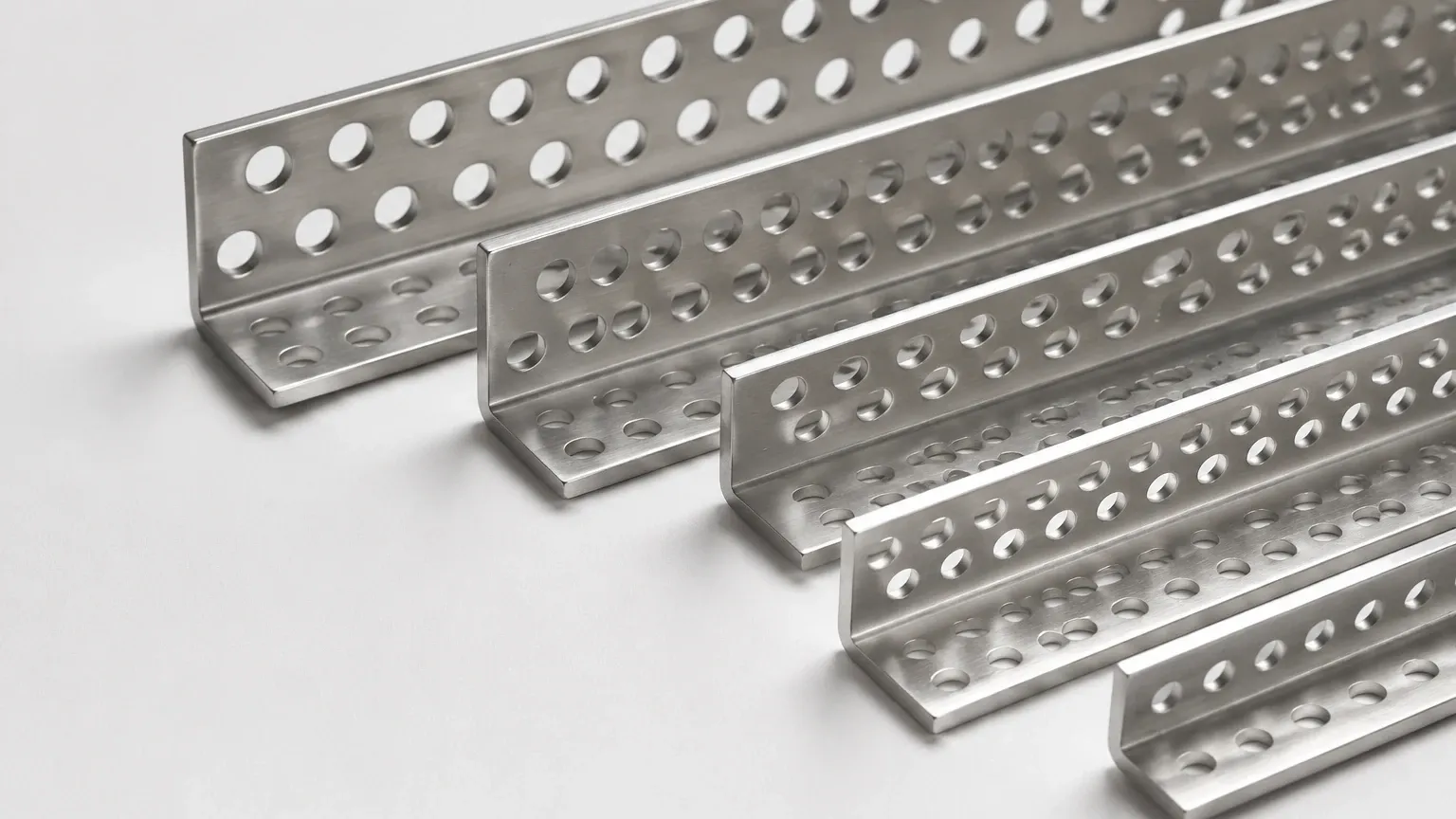
Perforated metal angle iron is an L-shaped structural member characterized by a series of holes punched or drilled into its flanges. Unlike solid angle iron, which is used strictly for structural bracing, the perforated variant offers several functional advantages:
1. Weight Reduction: By removing material through perforation, the overall weight of the framework is reduced without a proportional loss in structural rigidity, provided the hole pattern is engineered correctly.
2. Fluid and Air Dynamics: In filtration and drying applications, perforated angles allow for the passage of air or liquids, preventing the formation of stagnant zones or pressure pockets behind structural supports.
3. Versatile Attachment Points: The hole patterns serve as ready-made mounting points for wire mesh, filter cartridges, or secondary panels, eliminating the need for on-site drilling and reducing installation time.
4. Heat Dissipation: In high-temperature industrial environments, the increased surface area and airflow through the perforations assist in thermal management.
At Kaifil, we recognize that these components often serve as the "backbone" of complex filtration assemblies, where they must support the weight of Perforated & Expanded Metal layers while resisting the mechanical stresses of high-pressure fluid flow.
Material Science and Grade Selection for Corrosive Environments
The performance of perforated metal angle iron is fundamentally tied to its material composition. In the B2B industrial sector, stainless steel is the standard due to its superior corrosion resistance and mechanical properties.
304/304L Stainless Steel
This is the most common grade used for general industrial applications. It offers excellent weldability and good resistance to atmospheric corrosion. It is frequently used in food processing and architectural applications where exposure to harsh chemicals is limited.
316/316L Stainless Steel
For more demanding environments, such as chemical processing plants or marine applications, 316L stainless steel is the preferred choice. The addition of molybdenum provides enhanced resistance to pitting and crevice corrosion, particularly in chloride-rich environments. In pharmaceutical and high-purity filtration, 316L is often mandated to ensure no metallic contamination occurs during the process.
Specialty Alloys
In extreme cases involving high temperatures or highly acidic/alkaline solutions, engineers may specify alloys like Monel, Inconel, or Duplex stainless steel. These materials maintain their structural integrity and oxidation resistance under conditions that would cause standard stainless steel to fail.
Engineering Design: Hole Patterns, Pitch, and Structural Integrity
The geometry of the perforations significantly impacts the load-bearing capacity of the angle iron. Engineers must balance the "open area" percentage required for the application with the mechanical strength needed for the frame.
Hole Shapes and Orientations
* Round Holes: The most common and cost-effective pattern. Round holes provide the best balance of strength and open area. They are typically arranged in a 60-degree staggered pattern, which maximizes the number of holes while maintaining structural bridges between them.
* Square Holes: Often used when a higher open area is required or for specific aesthetic requirements. However, square holes can create stress concentrations at the corners, which may lead to cracking under heavy cyclic loads.
* Slotted Holes: Ideal for applications requiring directional flow or adjustable mounting points. Slotted patterns are common in drainage systems and sorting equipment.
Calculating Open Area
The open area is the ratio of the total area of the holes to the total area of the flange. For structural angle iron, the open area typically ranges from 20% to 50%. Exceeding 50% open area can significantly compromise the bending moment and tensile strength of the angle, requiring thicker gauges to compensate.
Pitch and Bridge Size
The "pitch" is the distance from the center of one hole to the center of the adjacent hole. The "bridge" is the solid material remaining between the holes. A wider bridge increases the structural strength but reduces the permeability. Precision manufacturing ensures that the bridge size is consistent, preventing weak points that could lead to structural failure under pressure.
Integration with Perforated & Expanded Metal Systems
Perforated metal angle iron rarely functions in isolation. It is usually part of a larger assembly involving various filtration media. One of its primary roles is to act as a perimeter frame or internal reinforcement for Perforated & Expanded Metal sheets.
In large-scale industrial strainers or custom filter housings, the expanded metal provides the primary filtration or guard surface, while the perforated angle iron provides the rigid structure required to hold the mesh in place against high differential pressures. Because the angle iron itself is perforated, it does not create a "blind spot" in the filtration surface, ensuring that the entire surface area of the filter is utilized efficiently.
When designing these integrated systems, engineers must consider the compatibility of the hole patterns. Aligning the perforations of the angle iron with the openings of the mesh can optimize flow rates and simplify cleaning protocols, such as backwashing or ultrasonic cleaning.
Manufacturing Processes: Precision Bending and Punching
Manufacturing perforated metal angle iron requires a high degree of precision to ensure that the holes remain undistorted during the forming process. At Kaifil, our production workflow typically follows these steps:
1. Perforating: The flat metal strip is first punched with the specified hole pattern using CNC-controlled high-speed presses. This ensures tight tolerances on hole diameter and pitch.
2. Shearing: The perforated strips are cut to the required length. It is critical to manage the "margins" (the solid area at the edges) to ensure that holes are not cut in half, which can create sharp edges and structural weaknesses.
3. Bending/Forming: The flat strip is bent to a 90-degree angle. This is the most critical stage, as the presence of holes can cause the metal to deform unevenly. Advanced press brakes and custom tooling are used to maintain a consistent radius and ensure the flanges remain perpendicular.
4. Finishing: Depending on the application, the angle iron may undergo deburring, pickling and passivation (to restore corrosion resistance after welding or machining), or electropolishing for pharmaceutical-grade finishes.
Selection Guide: Information Required for Technical Procurement
To ensure the successful procurement of perforated metal angle iron, purchasing teams and engineers should confirm the following technical specifications before placing an order:
* Leg Lengths: Specify the dimensions of both flanges (e.g., 2" x 2" or 1.5" x 2.5").
* Material Thickness (Gauge): The thickness of the metal, which dictates the load capacity.
* Hole Diameter and Pattern: The size of the holes and whether they are staggered or straight-row.
* Center-to-Center Distance: The pitch of the holes.
* Margin Requirements: The width of the solid metal borders along the edges and the bend line.
* Material Grade: The specific stainless steel or alloy required for the chemical environment.
* Quantity and Lengths: Standard stock lengths or custom-cut sizes to minimize waste.
Maintenance and Total Cost of Ownership (TCO) Considerations
While the initial cost of perforated metal angle iron is higher than that of solid carbon steel, the Total Cost of Ownership is often lower in industrial settings. Stainless steel components require significantly less maintenance, do not need protective coatings like paint or galvanization (which can flake off and contaminate the process), and have a much longer service life in corrosive environments.
In filtration applications, the ability to thoroughly clean the support structure is vital. The smooth, passivated surfaces of stainless steel perforated angles resist bacterial growth and can withstand aggressive CIP (Clean-in-Place) chemicals. This reliability reduces downtime and replacement frequency, providing a better long-term return on investment.
Conclusion
Perforated metal angle iron is a critical component for modern industrial infrastructure, offering a unique combination of structural strength and functional permeability. Whether used as a frame for Perforated & Expanded Metal in a chemical reactor or as a support bracket in a food processing line, its performance depends on precise engineering and high-quality manufacturing. By focusing on material grade, hole geometry, and structural tolerances, engineers can ensure that their filtration systems and industrial frameworks operate reliably under the most demanding conditions.
