


Acoustic Perforated Metal Panels
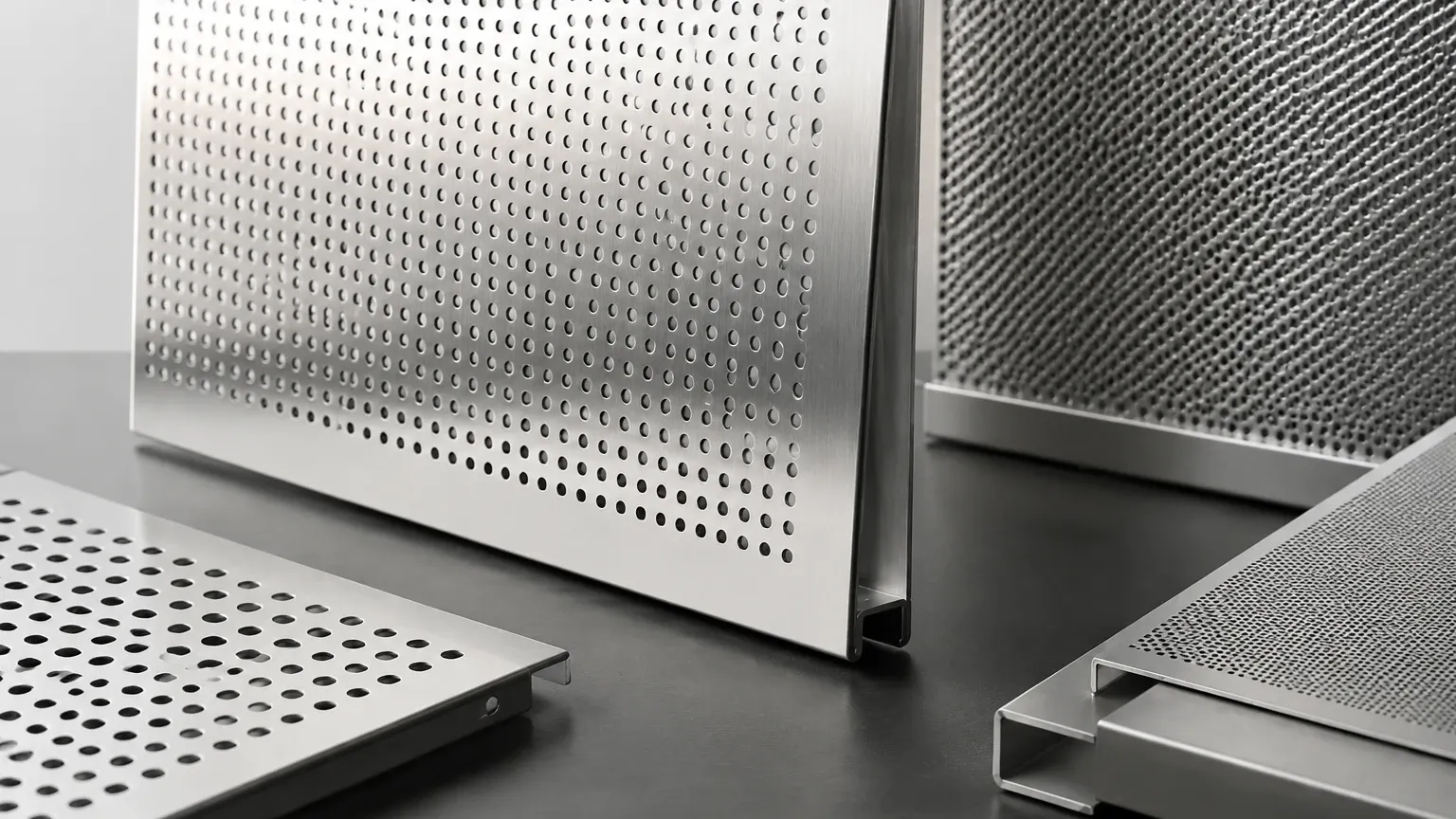
In industrial environments, noise control is not merely a matter of comfort but a critical requirement for regulatory compliance, worker safety, and equipment longevity. Acoustic perforated metal panels serve as a primary solution for managing sound energy in demanding settings such as chemical processing plants, food and beverage facilities, and hydraulic power units. These panels are engineered to allow sound waves to pass through a durable metal face into an absorbent material, or to act as a resonant absorber themselves, depending on the configuration.
Selecting the correct Perforated & Expanded Metal for acoustic applications requires a deep understanding of the relationship between hole patterns, material thickness, and sound frequency. As a manufacturer specializing in precision metal components, Kaifil provides the technical expertise necessary to bridge the gap between structural requirements and acoustic performance.
Understanding the Fundamentals of Acoustic Perforated Metal
The primary function of acoustic perforated metal panels in an industrial context is to provide a protective, durable exterior for sound-absorbing media. While the metal itself is reflective, the perforations allow sound waves to reach an inner core—typically mineral wool, fiberglass, or specialized acoustic foam—where the kinetic energy of the sound is converted into low-grade heat.
There are two main ways these panels interact with sound:
1. Acoustic Transparency: The panel is designed with a high open-area percentage so that it does not reflect sound waves back into the environment. Instead, it acts as a "transparent" shield that protects the delicate absorbent material from mechanical damage, moisture, or chemical exposure.
2. Tuned Resonant Absorption: By carefully calculating the hole diameter, the thickness of the metal, and the depth of the air space behind it, engineers can create a Helmholtz resonator. This allows the panel to target specific, often low-frequency, noise peaks that are difficult to manage with standard absorbent materials alone.
For engineers, the challenge lies in balancing this acoustic performance with the mechanical integrity required for industrial use. A panel with too much open area may become structurally unstable, while one with too little may reflect sound and fail to meet noise reduction targets.
Engineering the Perforation Pattern for Sound Control
The geometry of the perforations is the most significant factor in determining how the panel will perform. When specifying acoustic perforated metal panels, three variables must be meticulously defined: hole diameter, pitch (the distance between hole centers), and the arrangement (staggered or straight).
Open Area Percentage
For most acoustic transparency applications, an open area of 20% to 50% is standard. If the open area is too low (below 10%), the panel begins to act as a solid reflector for high-frequency sounds. Conversely, exceeding 60% open area may compromise the panel’s ability to protect the internal insulation or withstand the vibrations of heavy machinery.
Hole Diameter and Pitch
Small, closely spaced holes generally provide better acoustic transparency than large, widely spaced holes, even if the total open area is the same. This is because smaller holes distribute the sound energy more evenly across the surface of the absorbent material. In industrial filtration and acoustic design, a 60-degree staggered pattern is often preferred because it maximizes open area while maintaining the highest possible structural rigidity across the sheet.
Material Thickness
The thickness of the metal affects the "acoustic mass" of the panel. In resonant applications, a thicker plate will shift the absorption peak toward lower frequencies. In standard protective applications, the thickness is usually dictated by the span of the panel and the risk of physical impact in the facility.
Material Considerations for Industrial Environments
While acoustic panels can be made from various materials, industrial applications often demand the specific properties of stainless steel. Kaifil’s focus on stainless steel filtration and metal components highlights the importance of material selection in harsh environments.
Stainless Steel (304 and 316L)
In chemical processing or pharmaceutical environments, corrosion resistance is paramount. Type 304 stainless steel offers excellent durability for most indoor applications. However, for facilities dealing with chlorides, high humidity, or aggressive cleaning agents (common in food and beverage production), Type 316L is the industry standard. Its resistance to pitting and crevice corrosion ensures that the perforations do not clog with oxidation products over time, which would otherwise degrade acoustic performance.
Aluminum and Galvanized Steel
Aluminum is often selected for its lightweight properties and natural resistance to atmospheric corrosion, making it suitable for HVAC systems. Galvanized steel provides a cost-effective solution for dry, indoor industrial warehouses. However, neither offers the long-term chemical resistance or high-temperature stability of stainless steel, which is often required in heavy industrial filtration and noise-dampening housings.
Integration with Acoustic Absorbent Materials
An acoustic perforated metal panel is rarely used in isolation. Its performance is inextricably linked to the "backing" material. In B2B procurement, engineers must ensure compatibility between the metal face and the internal core.
* Mineral Wool and Fiberglass: These are the most common industrial absorbents due to their high-temperature resistance and excellent Noise Reduction Coefficient (NRC) ratings. When paired with perforated metal, a thin non-woven fabric or "scrim" is often placed between the metal and the wool to prevent fibers from migrating through the holes.
* Acoustic Foams: Used in lighter-duty applications or where fiber shedding must be strictly avoided. These are often used in hydraulic power unit enclosures.
* Air Gaps: The distance between the perforated panel and the wall (or the next layer of material) significantly influences low-frequency absorption. A larger air gap generally improves the panel's ability to dampen deep, rumbling industrial noises.
Performance Evaluation: NRC and Mechanical Integrity
When evaluating acoustic perforated metal panels for a project, engineers typically look at the Noise Reduction Coefficient (NRC). The NRC is a scalar representation of the amount of sound energy absorbed by a surface, ranging from 0 (total reflection) to 1.0 (total absorption).
However, in industrial settings, mechanical integrity is just as important as the NRC. A panel that meets acoustic targets but vibrates excessively due to thin-gauge material will create its own secondary noise, defeating the purpose of the installation. Therefore, the specification process must include:
1. Vibration Analysis: Ensuring the panel’s natural frequency does not align with the operating frequency of nearby motors or pumps.
2. Pressure Drop: In applications where the acoustic panel also serves as a vent or airflow path (such as in engine rooms), the perforated pattern must allow for sufficient airflow to prevent overheating.
3. Load Bearing: If the panels are to be used in flooring or walkways (expanded metal is often used here), the gauge and bond width must be calculated to support the required weight.
Common Challenges and Risk Mitigation in Selection
One of the most common risks in purchasing acoustic panels is the "blind" selection of hole patterns without considering the environmental conditions. For example, in a food processing plant, panels must be designed for "wash-down" capability. If the holes are too small, surface tension may trap water and cleaning chemicals, leading to biological growth or hidden corrosion behind the panel.
Another risk is the failure to account for the installation method. How the panels are framed and attached to the substrate can create "flanking paths" where sound leaks around the edges of the treatment. Using precision-manufactured components ensures that tolerances are tight, minimizing these leaks and ensuring that the Perforated & Expanded Metal integrates seamlessly with the overall enclosure design.
Customization and Technical Specification Requirements
Standard off-the-shelf perforated sheets rarely meet the specific needs of complex industrial projects. Customization is often required to optimize the balance between filtration, protection, and acoustics. When approaching a manufacturer like Kaifil, purchasing teams and engineers should be prepared to confirm the following technical details:
* Exact Alloy: (e.g., SS304, SS316, SS316L) based on the chemical exposure of the site.
* Dimensional Tolerances: Particularly for panels that must fit into pre-existing frames or complex machinery housings.
* Hole Pattern Specifications: Diameter, pitch, and orientation (staggered vs. straight).
* Edge Requirements: Specify if the panels require solid margins (unperforated borders) for welding or bolting.
* Surface Finish: Options such as pickling, passivating, or electropolishing, which are critical for maintaining hygiene in pharmaceutical and food-grade applications.
By focusing on these factual engineering boundaries, facilities can implement acoustic solutions that are not only effective at reducing noise but are also durable enough to survive the rigors of industrial operations. Whether the goal is to protect workers from the high-decibel output of a hydraulic system or to provide a sterile, sound-dampened environment in a pharmaceutical lab, the precision of the perforated metal remains the foundational element of success.
