


Anti Slip Perforated Metal Sheet
In industrial environments, the selection of flooring and surfacing materials is a critical engineering decision that impacts both operational safety and structural longevity. An anti slip perforated metal sheet is a specialized component within the broader category of Perforated & Expanded Metal designed to provide high-traction surfaces while maintaining the benefits of airflow, light passage, and liquid drainage. For engineers and facility managers in sectors such as chemical processing, food and beverage, and pharmaceutical manufacturing, understanding the technical nuances of these materials is essential for ensuring compliance with safety standards and optimizing the total cost of ownership.
Unlike standard perforated sheets, which are often used for filtration or aesthetic cladding, anti-slip variants undergo specific manufacturing processes to create raised edges or textured protrusions. These features significantly increase the coefficient of friction, even when the surface is compromised by water, oil, or industrial chemicals.
Engineering Principles of Anti-Slip Metal Surfaces
The primary function of an anti slip perforated metal sheet is to mitigate the risk of slips and falls in hazardous work areas. This is achieved through a combination of mechanical grip and efficient drainage. From an engineering perspective, the performance of these sheets is determined by the geometry of the perforations and the displacement of the metal during the punching process.
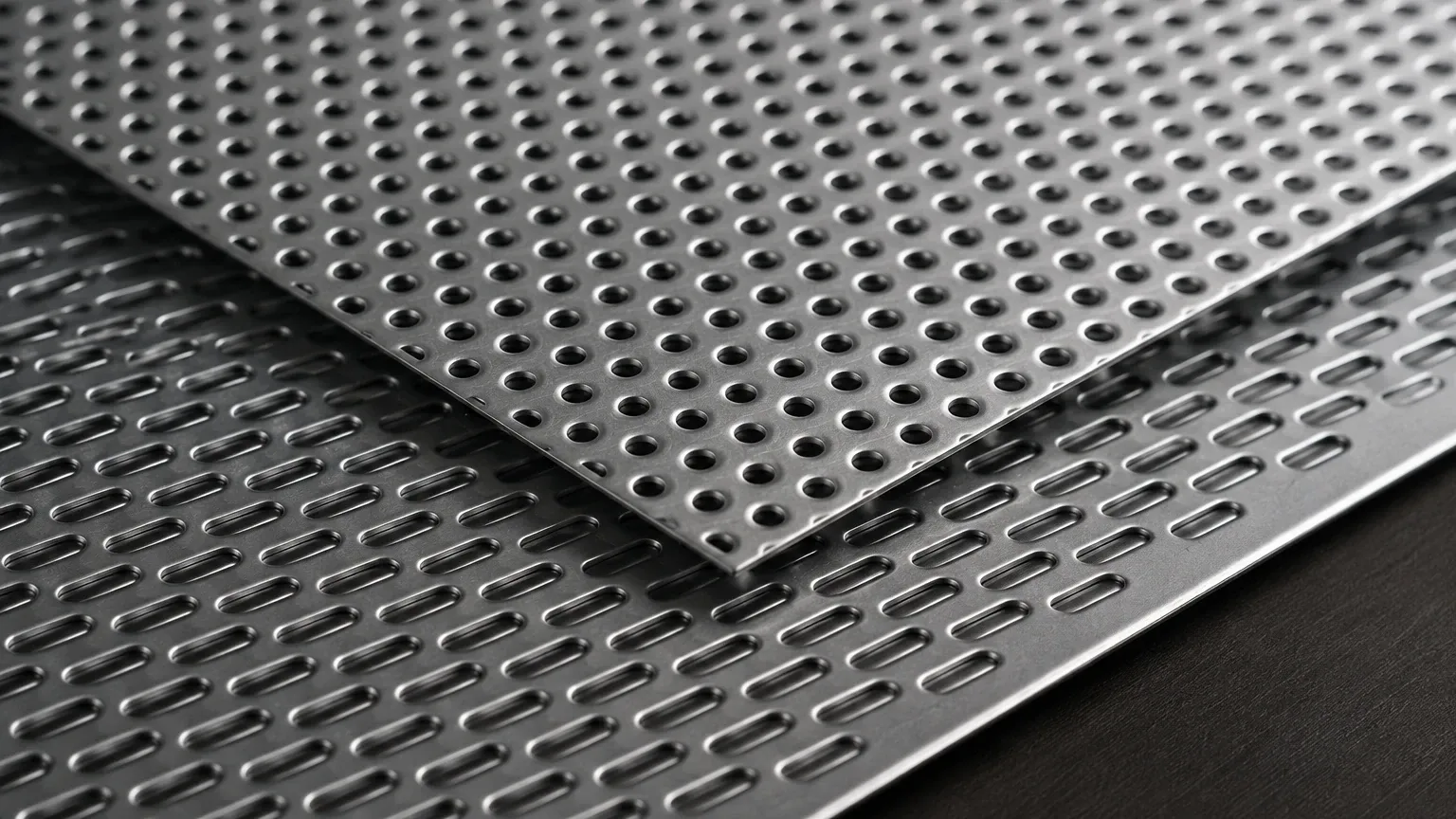
In many designs, the metal is not just removed to create a hole; instead, the edges of the hole are "upset" or flanged upward. This creates a sharp, raised perimeter that bites into footwear soles. Common patterns include the "Perf-O-Grip" style, which features large debossed holes for drainage and smaller embossed buttons for traction, or the "Traction Tread" style, which utilizes a dense pattern of small, raised perforated stars.
When evaluating these surfaces, engineers must consider the displacement of fluids. In environments where lubricants or washdown liquids are present, the open area of the Perforated & Expanded Metal allows these substances to pass through the surface rather than pooling on top. This maintains contact between the shoe and the metal, effectively preventing hydroplaning at a micro-level.
Material Selection for Industrial Environments
The choice of material for an anti slip perforated metal sheet is dictated by the chemical and physical demands of the application. While carbon steel is often used for general industrial walkways due to its cost-effectiveness, high-performance environments require more resilient alloys.
Stainless Steel (304 and 316 Grades)
Stainless steel is the standard for the pharmaceutical, chemical, and food processing industries. Grade 304 offers excellent corrosion resistance for most indoor and outdoor applications. However, in environments exposed to chlorides or high-salinity conditions, Grade 316 is preferred due to its molybdenum content, which provides superior resistance to pitting and crevice corrosion. Stainless steel also maintains its structural integrity across a wide temperature range, making it suitable for cryogenic or high-heat industrial processes.
Aluminum Alloys
Aluminum is selected when weight reduction is a primary concern, such as in mobile industrial equipment or offshore platforms. While aluminum offers natural corrosion resistance through its oxide layer, it has a lower modulus of elasticity than steel, which must be accounted for in load-bearing calculations. Often, aluminum anti-slip sheets are anodized to increase surface hardness and wear resistance.
Carbon Steel and Galvanized Options
For heavy-duty manufacturing and warehousing, hot-rolled or cold-rolled carbon steel provides the necessary tensile strength. To prevent oxidation, these sheets are typically hot-dip galvanized after perforation. This ensures that the interior edges of the perforated holes—the areas most susceptible to corrosion—are fully coated with a protective zinc layer.
Structural Design and Load-Bearing Capacity
Integrating an anti slip perforated metal sheet into an industrial structure requires a thorough analysis of load-bearing requirements. Because the perforation process removes material, the effective cross-sectional area of the sheet is reduced, which impacts its strength and stiffness.
Engineers must calculate the allowable span for the metal sheet based on the expected live loads (personnel and equipment) and dead loads. The orientation of the pattern also matters; many perforated patterns have a "directionality" where the sheet is stronger along one axis than the other. For example, in rectangular or slotted patterns, the bridge between the holes (the "bar") acts as a miniature beam.
Key factors to confirm before procurement include:
* Yield Strength: The stress level at which the metal begins to deform plastically.
* Deflection Limits: Most industrial standards (such as those from NAAMM) suggest a maximum deflection of L/240 of the span, or 1/4 inch, whichever is less, to ensure user confidence and structural stability.
* Open Area Percentage: While a higher open area improves drainage, it reduces the overall strength of the sheet. Finding the balance between these two factors is a core part of the selection process for Perforated & Expanded Metal.
Surface Geometry and Friction Coefficients
The effectiveness of an anti slip perforated metal sheet is quantified by its Coefficient of Friction (COF). In the United States, OSHA and ADA guidelines provide benchmarks for slip resistance, often citing a COF of 0.50 or higher as a standard for safety.
Different geometries offer varying levels of COF:
1. Dimpled Surfaces: These provide moderate traction and are comfortable for walking but may not be sufficient in heavy oil environments.
2. Serrated Edges: Often found in expanded metal or specifically punched perforated sheets, these offer maximum grip but can be more difficult to clean in hygienic applications.
3. Raised Perforations: These offer a middle ground, providing excellent multi-directional slip resistance while allowing for easy washdown.
For engineers, it is important to request test data that specifies the COF in both dry and wet conditions. In the food and beverage industry, where fats and proteins can create extremely slippery surfaces, the geometry must be aggressive enough to break the surface tension of the contaminant.
Industry-Specific Applications and Compliance
Customized filtration and safety solutions often overlap. In many industrial systems, the anti slip perforated metal sheet serves as a primary safety floor that also acts as a coarse filter or debris screen.
Chemical Processing
In facilities handling corrosive reagents, the primary concern is material degradation. A compromised anti-slip surface is a significant safety hazard. Utilizing high-grade Perforated & Expanded Metal ensures that the traction-enhancing features do not erode over time due to chemical exposure.
Food and Beverage
Hygiene is paramount in food production. Anti-slip sheets in these areas must be designed without "dead zones" where organic matter can accumulate and breed bacteria. Stainless steel sheets with radiused hole edges or specific open-area ratios allow for high-pressure cleaning and drainage, meeting stringent sanitary standards.
Water Treatment and Hydraulic Systems
Walkways over tanks and filtration units require materials that can withstand constant moisture. Perforated metal allows for the escape of gasses and prevents the buildup of moisture on the walking surface, reducing the rate of biological growth (like algae) that can further decrease slip resistance.
Customization and Procurement Considerations
When sourcing an anti slip perforated metal sheet, a "one-size-fits-all" approach rarely suffices for complex industrial requirements. Professional manufacturers like Kaifil offer OEM and customized solutions that allow engineers to specify exact parameters.
Before placing an order, purchasing teams should confirm the following technical details:
* Custom Dimensions: Standard sheet sizes may lead to excessive waste. Ordering custom-cut sizes or specific shapes (such as circular cutouts for piping) can reduce installation time and material costs.
* Edge Margins: Specifying "safe margins" (unperforated areas around the perimeter) is crucial for welding or mechanical fastening. Without proper margins, the structural integrity of the attachment point may be compromised.
* Surface Finishes: Beyond the base material, additional treatments such as electropolishing (for stainless steel) or specialized powder coatings can enhance both the slip resistance and the longevity of the component.
* Total Cost of Ownership: While a galvanized carbon steel sheet may have a lower initial price, a stainless steel Perforated & Expanded Metal solution often provides a lower total cost due to reduced maintenance, longer replacement cycles, and superior safety performance.
By focusing on these technical specifications and working closely with a manufacturer that understands the rigors of industrial filtration and safety, engineers can implement anti-slip solutions that are both durable and effective. Whether the application involves a complex chemical processing plant or a high-volume food production line, the right perforated metal sheet is a foundational element of a safe and efficient workspace.
