


Perforated Metal Bar
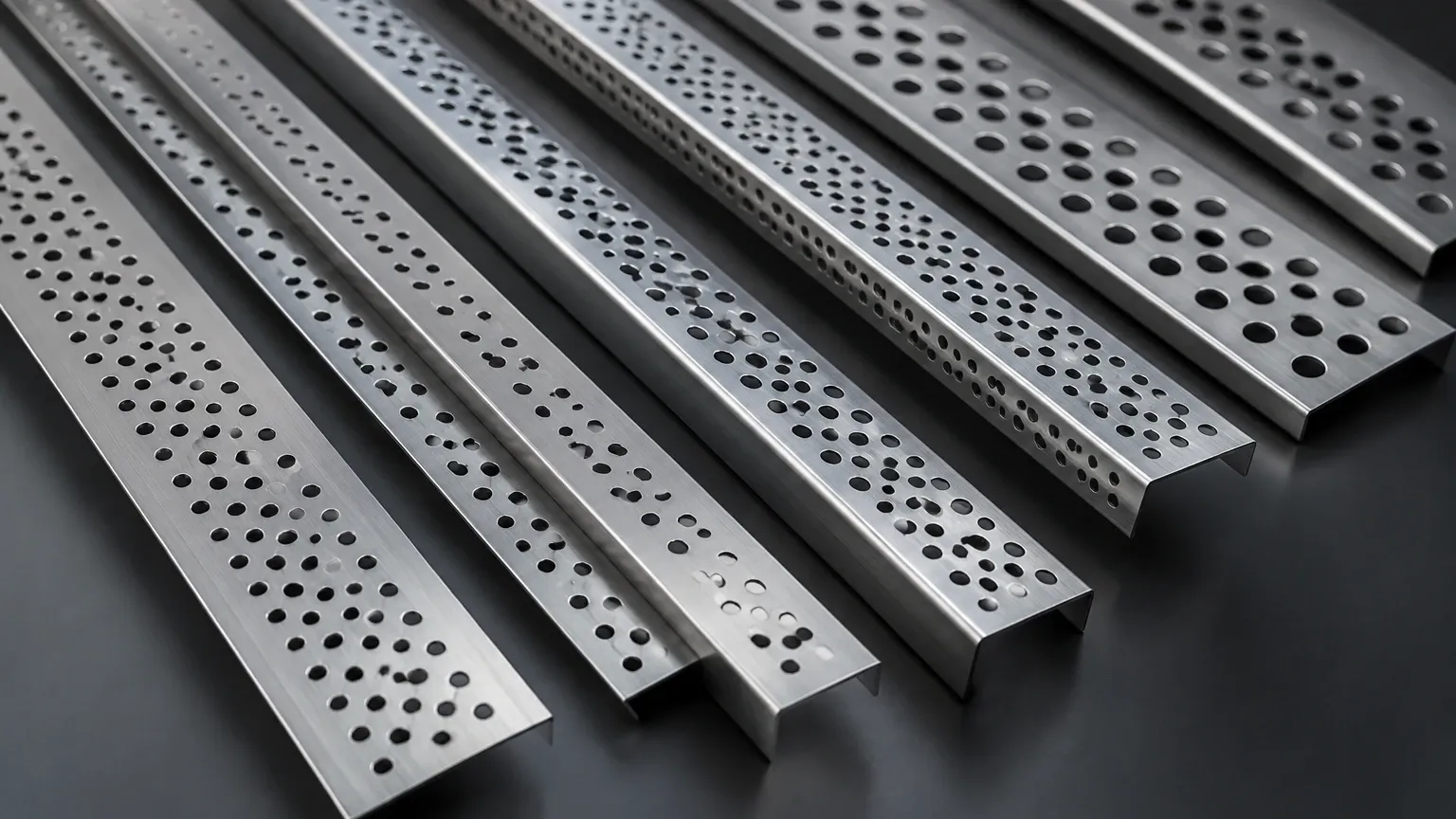
In the landscape of industrial filtration and structural engineering, the perforated metal bar represents a critical component that bridges the gap between high-strength structural support and functional permeability. Unlike standard perforated sheets, which are typically thinner and used for enclosures or light screening, a perforated metal bar is characterized by its thickness, rigidity, and ability to withstand significant mechanical loads while maintaining precise flow characteristics. For engineers and procurement specialists, understanding the nuances of material selection, hole geometry, and manufacturing tolerances is essential for ensuring the longevity and efficiency of industrial systems.
As a specialized manufacturer, Kaifil provides high-performance Perforated & Expanded Metal solutions tailored to the rigorous demands of chemical processing, hydraulic systems, and heavy-duty filtration. This guide explores the technical specifications and engineering considerations necessary for integrating perforated metal bars into complex industrial environments.
Technical Characteristics of Perforated Metal Bars
A perforated metal bar is essentially a thick metal strip or plate that has been systematically processed to include a pattern of holes. While the term "perforated metal" often brings to mind thin-gauge screens, the "bar" designation implies a higher thickness-to-width ratio, often exceeding 3mm (1/8 inch) and reaching up to 12mm or more depending on the application.
Material Composition and Selection
The choice of material is the most significant factor determining the performance of a perforated metal bar. In industrial filtration and structural applications, stainless steel is the preferred medium due to its mechanical properties and resistance to environmental degradation.
* Grade 304 Stainless Steel: This is the standard industrial grade, offering excellent formability and weldability. It provides sufficient corrosion resistance for most food and beverage or general industrial applications.
* Grade 316/316L Stainless Steel: For more aggressive environments, such as chemical processing or marine applications, Grade 316 is utilized. The addition of molybdenum enhances resistance to pitting and crevice corrosion, particularly in chloride-rich environments.
* Duplex and Super Alloys: In extreme high-pressure or high-temperature scenarios, such as deep-sea oil extraction or high-heat chemical reactors, specialized alloys may be required to prevent stress corrosion cracking.
Hole Geometry and Patterns
The arrangement of holes in a perforated metal bar determines both its filtration efficiency and its structural integrity. The most common patterns include:
1. Staggered Pattern (60-degree): This is the most popular configuration because it offers the highest open area and uniform strength across the bar. It is ideal for high-flow filtration supports.
2. Straight Row Pattern: Holes are aligned both horizontally and vertically. While easier to manufacture, this pattern generally results in lower structural strength compared to staggered arrangements.
3. Slot and Square Holes: These are used for specific mechanical separation tasks where the shape of the particulate requires a non-circular aperture.
Engineering the Open Area and Flow Dynamics
For engineers, the "Open Area" is a critical calculation. It represents the percentage of the bar that is comprised of holes versus solid metal. This figure directly influences the pressure drop across the component and the velocity of the fluid passing through it.
Calculating Open Area
To calculate the open area percentage for a standard 60-degree staggered round hole pattern, the following formula is typically used:
OA = (D² × 90.69) / P²
* D: Hole Diameter
* P: Pitch (the distance from the center of one hole to the center of the adjacent hole)
In a perforated metal bar, the relationship between hole diameter and material thickness is vital. As a general rule of thumb in metal perforation, the hole diameter should not be smaller than the material thickness (1:1 ratio). Attempting to punch holes smaller than the thickness of the bar increases the risk of tool breakage and results in irregular hole shapes and excessive internal stress.
Structural Integrity vs. Permeability
There is a constant trade-off between the open area and the mechanical strength of the perforated metal bar. In applications where the bar serves as a support core for a wire mesh filter, it must resist collapsing under high differential pressures. Engineers must ensure that the "ligament" (the solid metal remaining between the holes) is wide enough to maintain the required tensile and yield strength of the bar.
Manufacturing Processes and Precision
The method used to create a perforated metal bar significantly impacts its final quality, surface finish, and cost. At Kaifil, advanced manufacturing techniques ensure that every component meets strict industrial tolerances.
CNC Punching
For most standard applications, high-speed CNC punching is the most cost-effective method. It allows for high repeatability and precise hole placement. However, punching thick bars can create a "breakout" on the exit side of the hole, which may require secondary deburring processes to ensure a smooth finish.
Laser and Plasma Cutting
When dealing with exceptionally thick bars or complex hole geometries that exceed the capabilities of traditional punching, laser cutting is employed. Laser cutting provides high precision and eliminates the mechanical stress associated with punching. This is particularly useful for low-volume, highly customized perforated metal bar orders where tooling costs for punching would be prohibitive.
Secondary Finishing
In B2B industrial sectors, the surface finish of a perforated metal bar is rarely just aesthetic; it is functional.
* Deburring: Essential for removing sharp edges that could damage filter media or injure personnel.
* Electropolishing: Often required in the pharmaceutical and food industries to remove surface impurities and create a microscopically smooth surface that prevents bacterial growth.
* Pickling and Passivation: A chemical process that removes free iron from the surface of stainless steel, enhancing its natural corrosion resistance.
Industrial Applications of Perforated Metal Bars
The versatility of the perforated metal bar makes it a staple in various heavy-duty industrial sectors. Its primary role is often as a structural backbone for more delicate filtration media.
Filtration Support Cores
In high-pressure hydraulic or chemical filtration, fine wire mesh is often wrapped around a perforated metal bar or tube. The bar provides the necessary rigidity to prevent the mesh from deforming or bursting under the force of the fluid flow. Because the bar is perforated, it allows the fluid to pass through into the collection system with minimal resistance.
Industrial Drainage and Grating
In food processing plants and chemical facilities, perforated metal bars are used as heavy-duty drainage grates. They must be strong enough to support the weight of forklifts and personnel while providing enough open area to handle high volumes of liquid waste without clogging.
Heat Exchangers and Diffusers
Perforated bars are often used in heat exchange systems to create turbulence or to distribute gas and liquid flow evenly across a surface. The precision of the perforation ensures that the flow is predictable, which is essential for maintaining thermal efficiency.
Architectural and Protective Elements
Beyond filtration, these bars are used in the construction of industrial machinery guards and security screens. The thickness of the bar provides a physical barrier that is significantly more difficult to penetrate than standard expanded metal or thin perforated sheets.
Selection Criteria: What Engineers Should Confirm
When specifying a perforated metal bar for a project, several technical parameters must be confirmed to ensure the component is fit for purpose. Engineers should provide the following information during the procurement phase:
1. Material Grade: Specify exactly which alloy is required (e.g., 304, 316L, 430).
2. Dimensions: Include the length, width, and exact thickness of the bar.
3. Hole Specification: Define the hole diameter, the shape (round, square, slotted), and the pattern (staggered or straight).
4. Pitch and Margins: The distance between holes is crucial for calculating the open area. Additionally, specify the "margins"—the solid areas at the edges of the bar. Unfinished margins (where the pattern runs off the edge) are common, but finished margins (a solid border) are often required for welding or mounting.
5. Flatness Requirements: Punching thick metal can cause the bar to bow. If the bar must be perfectly flat for automated assembly, this must be specified so that leveling processes can be applied.
6. Tolerances: Standard industrial tolerances are usually sufficient, but high-precision applications may require tighter controls on hole diameter and spacing.
Common Risks and Mitigation in Perforated Metal Bar Usage
Using the wrong specification for a perforated metal bar can lead to system failures, increased maintenance costs, and safety hazards.
Stress Concentrations
In structural applications, the holes in a bar act as stress concentrators. If the ligament between holes is too thin, the bar may develop fatigue cracks over time, especially in environments with high vibration or fluctuating pressures. Finite Element Analysis (FEA) is often recommended for critical structural components to ensure the design can handle the intended load.
Corrosion in Crevices
In chemical environments, the interior surfaces of the perforations can become sites for crevice corrosion if the material is not properly passivated. Ensuring that the perforated metal bar has undergone a thorough cleaning and passivation process after manufacturing is vital for longevity.
Pressure Drop Overload
If the open area is underestimated, the resulting pressure drop can strain pumps and reduce the overall efficiency of the filtration system. It is always better to slightly over-specify the open area if structural constraints allow.
Why Customization Matters
Off-the-shelf perforated products rarely meet the specific needs of complex industrial machinery. Customization allows for the optimization of every variable—from the exact alloy to the specific hole pattern—to match the operational environment. Kaifil specializes in these customized solutions, working closely with engineering teams to develop perforated metal bars that meet the exact demands of their applications.
By focusing on precision manufacturing and material integrity, Kaifil ensures that every perforated metal bar contributes to a more reliable and efficient industrial process. Whether you are designing a new filtration system or replacing components in an existing chemical reactor, selecting the right perforated support is a fundamental step in engineering success.
For more detailed technical data or to discuss specific project requirements, engineers and purchasing teams are encouraged to review product options and application support regarding our range of Perforated & Expanded Metal solutions. Confirming material certifications, manufacturing tolerances, and surface finish requirements early in the design phase will ensure the final component performs reliably in even the most demanding industrial environments.
