


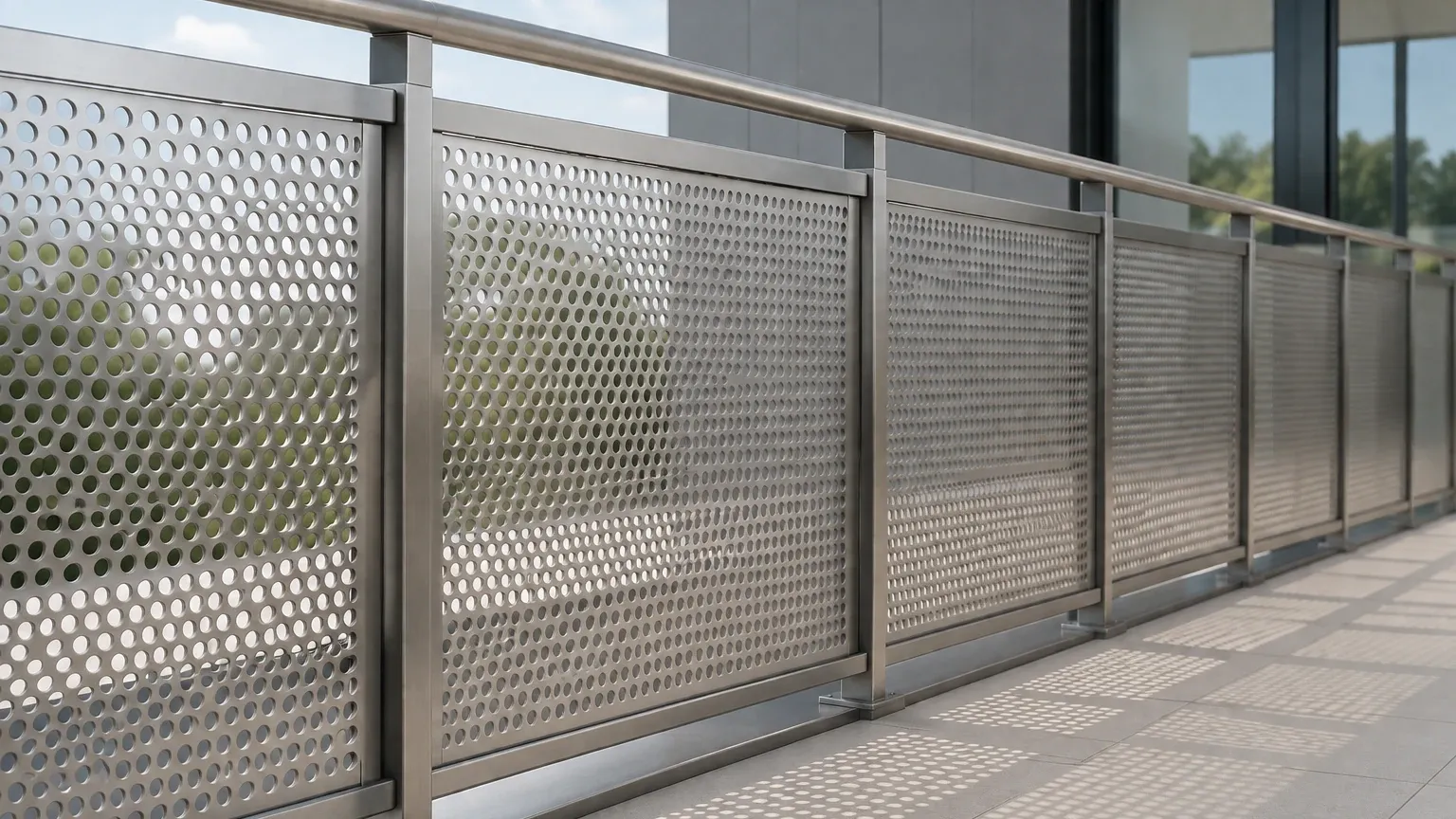
Perforated Metal Balustrade
In industrial and commercial architecture, the selection of infill materials for safety barriers requires a balance between structural integrity, environmental resistance, and functional transparency. A perforated metal balustrade serves as a versatile solution that meets these rigorous engineering demands while offering distinct advantages over solid panels or traditional wire railings. By utilizing Perforated & Expanded Metal, engineers can specify precise open areas that manage airflow, light transmission, and visibility without compromising the safety of the installation.
From a technical perspective, the performance of a perforated metal balustrade is determined by the interaction of material grade, hole geometry, and the manufacturing process. For facilities such as chemical processing plants, food and beverage production areas, or pharmaceutical laboratories, these components must withstand corrosive cleaning agents or harsh atmospheric conditions while providing a durable physical barrier.
Engineering Considerations for Perforated Metal Balustrades
When designing or specifying a perforated metal balustrade, engineers must look beyond the aesthetic appeal and focus on the mechanical properties of the panel. The primary function of a balustrade is safety—preventing falls and providing a secure handhold or barrier. The introduction of perforations into a metal sheet changes its structural behavior compared to a solid plate.
Structural Integrity and Load Bearing
The strength of a perforated panel is influenced by the "equivalent solid material" properties. As the open area percentage increases, the stiffness and load-bearing capacity of the panel decrease. Engineers must calculate the required thickness (gauge) to ensure the panel can resist point loads and distributed loads as specified by local building codes and industrial safety standards. In many industrial applications, a thicker gauge of stainless steel is preferred to prevent oil-canning or excessive deflection under pressure.
Open Area and Safety Compliance
The ratio of holes to solid metal, known as the open area, is a critical specification. For a perforated metal balustrade, the open area typically ranges from 30% to 60%. However, safety regulations often dictate the maximum size of an opening to prevent objects from falling through or to ensure children cannot climb the barrier (the "sphere test"). Selecting the right pattern in Perforated & Expanded Metal ensures that the barrier remains functional while meeting these specific safety criteria.
Material Selection: The Role of Stainless Steel
Material selection is the most significant factor in determining the lifecycle cost and maintenance requirements of a balustrade system. Given the demanding environments of industrial sectors, stainless steel is the industry standard for high-performance applications.
Grade 304 vs. Grade 316
* Grade 304 Stainless Steel: This is the most common grade used for indoor industrial balustrades. It offers excellent corrosion resistance and formability. It is suitable for environments where exposure to moisture is present but chemical or salt exposure is limited.
* Grade 316 Stainless Steel: For outdoor applications, coastal environments, or chemical processing facilities, Grade 316 is the preferred choice. The addition of molybdenum provides superior resistance to pitting and crevice corrosion, especially in chloride-rich environments.
Durability in Harsh Environments
Unlike glass, which can shatter, or wood, which can rot, stainless steel perforated panels offer exceptional impact resistance. In high-traffic industrial zones where equipment or carts might strike the balustrade, metal panels retain their structural shape. Furthermore, the inherent fire resistance of stainless steel makes it a safer choice for egress routes and stairwells in industrial facilities.
Understanding Hole Patterns and Their Impact
The geometry of the perforations affects more than just the look of the balustrade; it influences acoustics, light diffusion, and wind loading.
Round vs. Square vs. Slotted Holes
* Round Holes: These are the most popular and cost-effective patterns. They provide a balanced distribution of stress across the panel and are easier to manufacture with high precision. Round holes are also less likely to accumulate debris, making them ideal for hygienic environments like food processing.
* Square Holes: Offering a higher open area percentage, square holes provide a more modern aesthetic and better visibility. However, they can introduce stress concentrations at the corners, which must be accounted for in the structural design.
* Slotted Holes: Often used for specific directional airflow or drainage requirements, slotted patterns can be oriented vertically or horizontally to achieve different visual and functional effects.
Acoustic and Thermal Management
In large industrial halls, noise control is a major concern. A perforated metal balustrade can act as a component of an acoustic management system. When combined with sound-absorbent materials behind the panels, they help reduce reverberation. Additionally, the transparency of the mesh allows for natural ventilation, reducing the energy load on HVAC systems by permitting free airflow through the barrier.
Manufacturing and Customization of Balustrade Panels
Achieving a high-quality finish on a perforated metal balustrade requires advanced manufacturing capabilities. Precision is necessary not only in the perforation process but also in the secondary fabrication steps.
Precision Cutting and Framing
Panels must be cut to exact dimensions to fit within the balustrade's support posts. CNC laser or plasma cutting is often used to ensure clean edges. Framing is another critical aspect; the perforated sheet is typically welded into a U-profile or angle frame to hide sharp edges and provide additional rigidity. This framing also facilitates easier installation onto the primary structure.
Surface Finishes and Treatments
For stainless steel, the finish is vital for both aesthetics and corrosion resistance. Common finishes include:
* Brushed/Satin Finish (No. 4): Hides fingerprints and minor scratches, making it ideal for high-traffic areas.
* Mirror Polish: Provides a highly reflective surface, often used in architectural applications where a premium look is required.
* Electropolishing: A chemical process that removes a fine layer of material, resulting in an ultra-smooth, hygienic surface that is highly resistant to bacterial growth and corrosion.
Installation and Maintenance Best Practices
The longevity of a perforated metal balustrade depends heavily on proper installation and a consistent maintenance schedule. Even the highest quality stainless steel requires some care to maintain its properties over decades.
Secure Mounting Systems
Balustrade panels can be mounted using various methods, including glass clips (modified for metal), spider fittings, or direct welding to posts. The mounting system must be compatible with the metal type to prevent galvanic corrosion. For instance, using carbon steel fasteners with stainless steel panels in a moist environment will lead to rapid degradation of the connection points.
Cleaning and Inspection
In industrial settings, dust and chemical residues can accumulate in the perforations. Regular cleaning with mild detergents and water is usually sufficient to maintain the surface. Periodic inspections should focus on the integrity of the welds and the tightness of the fasteners, especially in environments subject to vibration from machinery.
Common Risks and How to Mitigate Them
When specifying perforated metal for balustrades, several risks can impact the success of the project if not addressed early in the design phase.
1. Oil-Canning: This refers to the visible waviness in the flat areas of metal panels. It is often caused by using a gauge that is too thin for the panel's span. Mitigate this by selecting an appropriate thickness and ensuring the framing provides adequate support.
2. Burrs and Sharp Edges: The perforation process can leave sharp edges. It is essential to specify deburring or to use a manufacturing process that ensures the holes are smooth to the touch, preventing injury to personnel.
3. Vibration and Noise: If panels are not securely fastened, they can rattle due to wind or nearby machinery. Using gaskets or specialized washers can dampen these vibrations.
Conclusion: Selecting the Right Solution
A perforated metal balustrade is a sophisticated engineering component that provides safety, durability, and functional transparency. By carefully considering material grades, hole patterns, and structural requirements, engineers can implement a solution that enhances the safety and efficiency of industrial and commercial spaces.
Before proceeding with a project, it is essential to confirm the specific load requirements of the site, the environmental conditions the metal will face, and the necessary compliance standards for the region. Working with a manufacturer that understands the nuances of Perforated & Expanded Metal ensures that the final product will meet the precise technical specifications required for demanding industrial applications. Whether for a pharmaceutical cleanroom or a heavy-duty chemical plant, the right perforated metal choice provides a reliable, long-term barrier solution.
