


Diamond Perforated Metal
In industrial filtration and structural engineering, the selection of a media pattern is rarely a matter of aesthetics alone. While round-hole patterns are the industry standard for general-purpose sieving, diamond perforated metal offers specific mechanical advantages and flow characteristics that make it indispensable for specialized applications. Understanding the technical nuances of this material—from its geometric properties to its structural performance under pressure—is essential for engineers and procurement teams seeking to optimize filtration systems or industrial enclosures.
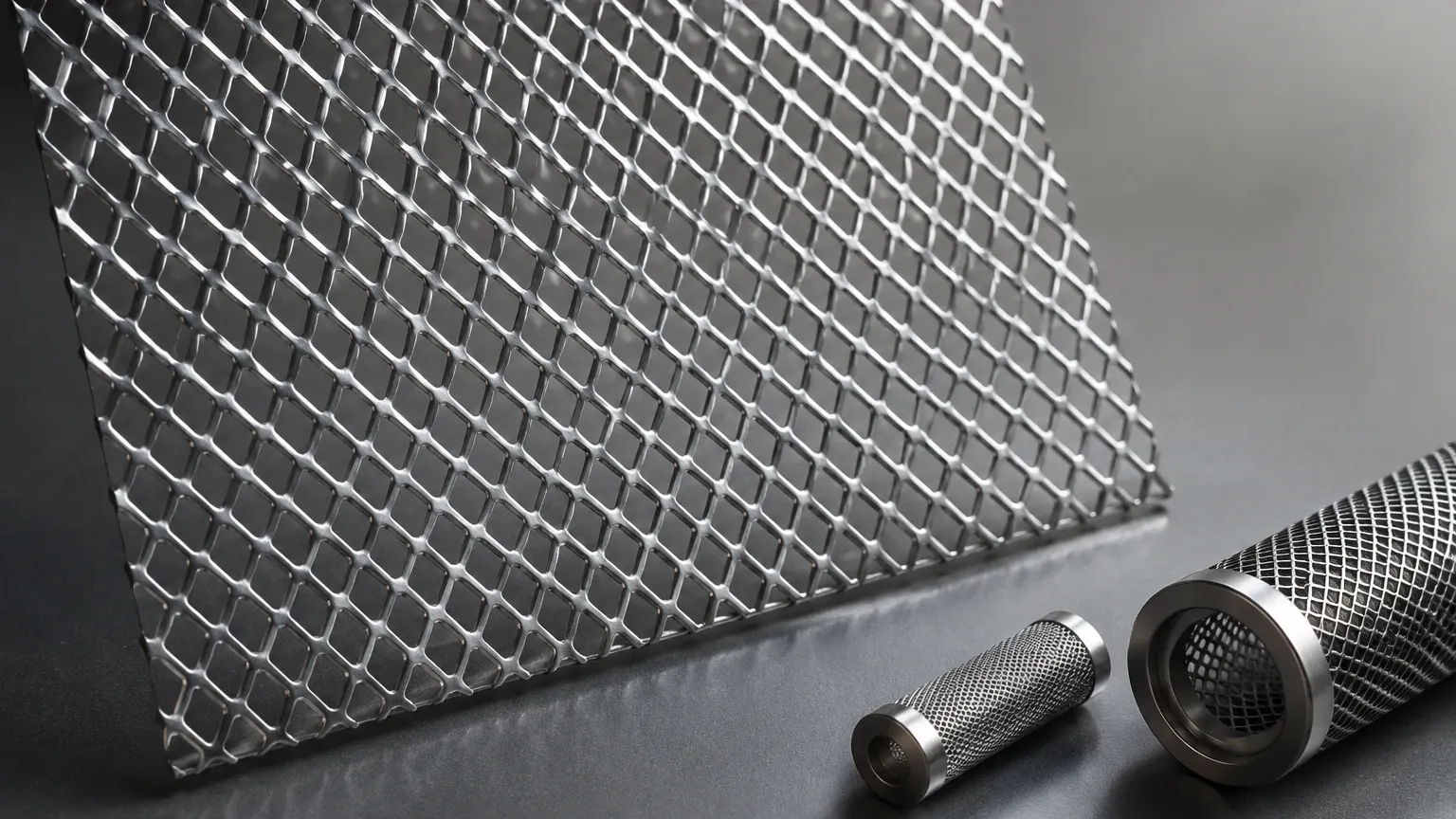
Diamond perforated metal is a sheet product that has been mechanically punched with a series of diamond-shaped (rhombic) holes. This distinguishes it from expanded metal, which is slit and stretched. In the context of Perforated & Expanded Metal, perforated diamond patterns provide a flat, uniform surface with precise hole dimensions and margins, offering a level of dimensional accuracy that expanded metal often cannot match.
Technical Geometry: LWD and SWD
When specifying diamond perforated metal, engineers must define the pattern using two primary axes: the Long Way of Diamond (LWD) and the Short Way of Diamond (SWD).
* LWD (Long Way of Diamond): This is the distance from the center of one bridge to the center of the next bridge measured across the long diagonal of the diamond.
* SWD (Short Way of Diamond): This is the distance measured across the short diagonal of the diamond.
These dimensions, combined with the bridge width (the amount of metal left between the holes), determine the "Open Area Percentage." For filtration applications, the open area is a critical metric because it directly correlates to the flow rate and the pressure drop across the media. A diamond pattern often allows for a higher strength-to-weight ratio compared to round holes with the same open area, as the diagonal bridges act as structural trusses across the sheet.
Material Selection and Industrial Durability
The performance of diamond perforated metal is heavily dependent on the alloy selected. Because these components are frequently used in demanding environments—such as chemical processing, marine applications, or food production—material science plays a pivotal role in the selection process.
Stainless Steel (304, 316, and 316L)
Stainless steel is the preferred material for most industrial filtration components. Grade 304 offers excellent general-purpose corrosion resistance, while Grade 316 and 316L (low carbon) provide superior resistance to chlorides and acidic environments. In pharmaceutical and food processing, 316L is often required to prevent intergranular corrosion during high-temperature sterilization cycles.
Carbon Steel and Galvanized Steel
For structural applications where corrosion is less of a concern or where the environment is controlled, carbon steel provides a cost-effective solution with high tensile strength. Galvanized steel offers a middle ground, providing a protective zinc coating that prevents oxidation in outdoor or humid settings.
Specialized Alloys
In high-temperature or highly corrosive chemical environments, alloys such as Monel, Inconel, or Hastelloy may be required. These materials maintain their structural integrity and perforation geometry even under extreme thermal stress.
Engineering Considerations for Filtration
In the design of filtration systems, diamond perforated metal often serves as the "support core" or "outer cage" for finer filter media, such as stainless steel wire mesh or sintered metal fibers. Its role is to provide the mechanical strength necessary to withstand high differential pressures while allowing the fluid or gas to pass through with minimal resistance.
Flow Dynamics and Turbulence
The rhombic shape of the openings can influence the flow profile of the filtrate. Unlike round holes, which tend to create uniform laminar flow at low velocities, the sharp angles of a diamond pattern can induce controlled turbulence. In some chemical mixing applications, this turbulence is beneficial for ensuring the homogeneity of the fluid as it passes through the filter stages.
Structural Integrity and Load Bearing
One of the primary reasons engineers select diamond perforated metal over other patterns is its directional strength. The orientation of the diamonds can be aligned with the direction of the mechanical load. This makes it an ideal choice for vibrating screens, heavy-duty strainers, and architectural floorings where the material must resist deformation under constant or cyclical stress.
Manufacturing Precision and Customization
Producing high-quality diamond perforated metal requires advanced CNC punching technology and precision tooling. Unlike standard round holes, diamond punches are more susceptible to wear and require careful maintenance to ensure clean edges and consistent dimensions.
Edge Configurations and Margins
A critical specification that is often overlooked is the "margin." Margins are the unperforated areas along the edges of the sheet. In industrial applications, precise margins are necessary for welding the perforated sheet into a cylinder or a frame. Designers must specify:
* Safe Side Margins: The pattern is centered, leaving solid metal on both long edges.
* No Margins: The pattern is punched to the very edge of the sheet.
* Custom Margins: Specific widths of solid metal are left to accommodate mounting brackets or specialized welding seams.
Surface Finishing
Post-perforation processing is essential for removing burrs and ensuring the longevity of the part. Common finishes include:
* Degreasing: Removing lubricants used during the punching process.
* Deburring: Mechanical or chemical removal of sharp edges, which is vital for safety and to prevent the entrapment of contaminants in filtration applications.
* Pickling and Passivation: A chemical treatment for stainless steel that removes surface iron and enhances the protective chromium oxide layer.
* Electropolishing: Provides a mirror-like finish and the highest level of cleanliness, often required in the pharmaceutical and biotech industries.
Common Risks and Quality Evaluation
When sourcing diamond perforated metal, technical professionals should be aware of several risks that can impact the performance of the final product:
1. Burr Accumulation: Excessive burrs on the exit side of the punch can restrict flow, cause injury during handling, and lead to "media migration" if the perforated sheet is used to support a finer mesh.
2. Oil Contamination: Residual punching oils can contaminate sensitive fluids in food and beverage or pharmaceutical processes. Ensuring a thorough degreasing process is critical.
3. Flatness Issues: The punching process introduces internal stresses into the metal, which can cause the sheet to curl or bow. For precision assemblies, specifies should require "leveling" after perforation to ensure the sheet remains flat within tight tolerances.
4. Inconsistent Pitch: If the CNC equipment is not properly calibrated, the distance between holes (the pitch) can vary, leading to uneven open areas and weak points in the material.
Evaluation Criteria for Purchasing Teams
To ensure the selected material meets the application requirements, purchasing teams should confirm the following details with the manufacturer:
* Material Certification: Request Mill Test Reports (MTRs) to verify the chemical composition and mechanical properties of the alloy.
* Dimensional Tolerance: Confirm the allowable variance in hole size, pitch, and sheet dimensions.
* Open Area Verification: Ensure the calculated open area matches the flow requirements of the system.
* Sample Testing: For complex or high-volume projects, requesting a prototype or sample section allows for the verification of the pattern's performance and finish quality.
The Role of Customization in Total Cost of Ownership
While standard diamond perforated sheets are available, custom-engineered solutions often provide a lower total cost of ownership (TCO). By tailoring the hole size, bridge width, and material thickness to the specific pressure and flow requirements of an application, engineers can extend the service life of the filter and reduce the frequency of replacement.
For example, in a hydraulic system, a custom-designed diamond perforated support tube can prevent the collapse of a delicate filter element during high-pressure surges, thereby protecting downstream components from catastrophic failure. The initial investment in a customized component is often offset by the reduction in downtime and maintenance costs.
Conclusion: Selecting the Right Partner
Diamond perforated metal is a versatile and robust material, but its effectiveness depends entirely on the precision of its manufacture and the appropriateness of its specifications. Whether used as a protective screen, a structural component, or a critical part of a multi-stage filtration system, the material must be produced to exacting standards.
For engineers and technical buyers, the key to success lies in detailed communication regarding the application environment, mechanical loads, and flow requirements. By focusing on factual performance data and technical specifications, organizations can ensure they receive filtration components that deliver reliable, long-term performance in the most demanding industrial settings.
