


Designer Perforated Metal Sheet
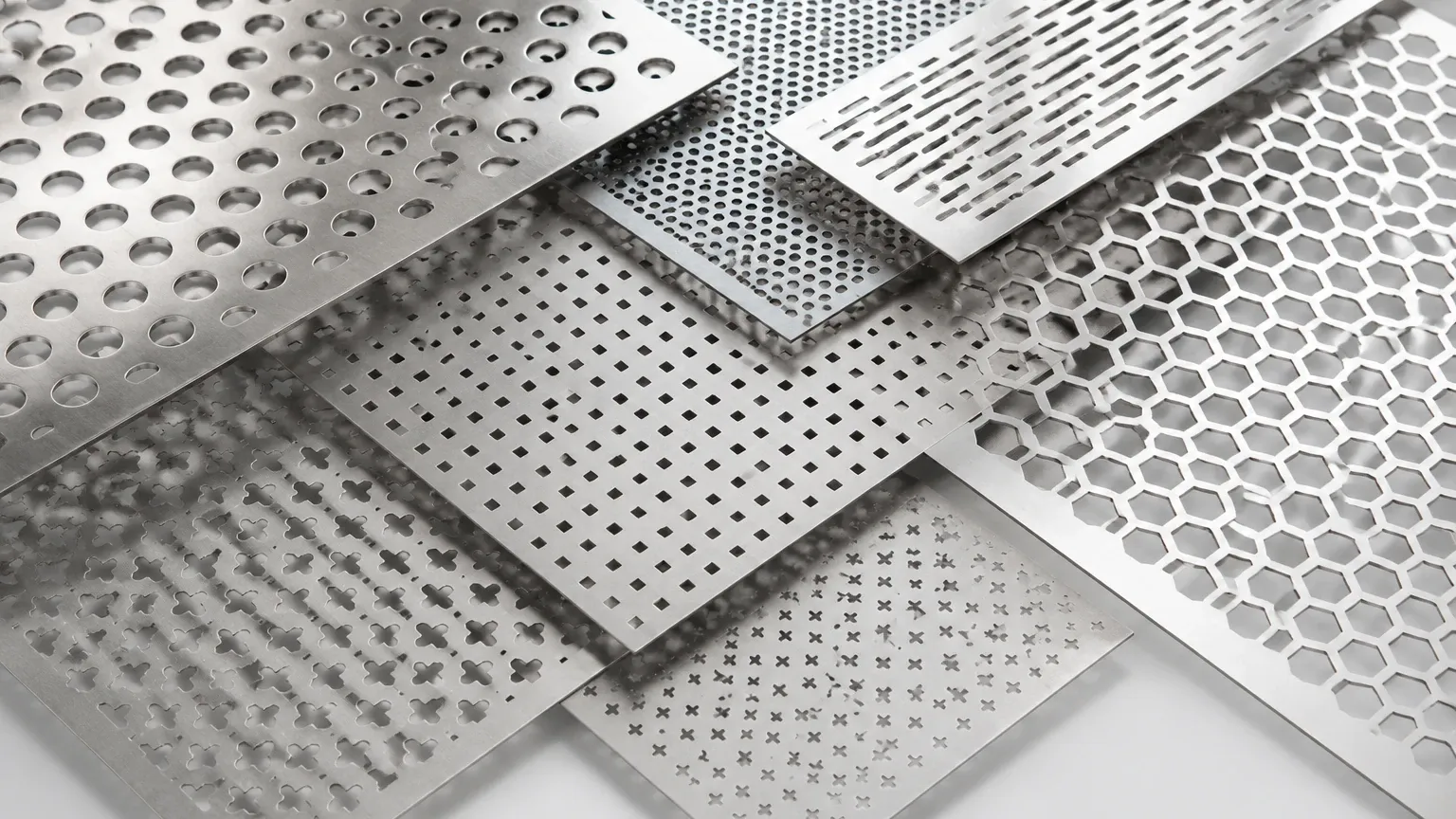
In industrial engineering and filtration design, the selection of structural components often requires a balance between mechanical performance and specific geometric configurations. A designer perforated metal sheet represents a specialized category of perforated materials where the hole patterns, open area percentages, and material finishes are engineered to meet precise functional requirements while often adhering to specific aesthetic or architectural standards. Unlike standard stock perforated sheets, these components are frequently customized to integrate into complex filtration systems, protective enclosures, or acoustic dampening assemblies.
For engineers and procurement professionals, understanding the technical nuances of Perforated & Expanded Metal is essential for ensuring long-term durability and system efficiency. This guide examines the engineering considerations, material selection criteria, and manufacturing complexities associated with high-performance perforated solutions.
Technical Specifications and Material Selection
The performance of a designer perforated metal sheet is fundamentally dictated by its base material. In demanding industrial environments, such as chemical processing, marine applications, or food production, the choice of alloy determines the component's resistance to corrosion, heat, and mechanical stress.
Stainless Steel Alloys
Stainless steel is the industry standard for most filtration and structural applications due to its inherent oxide layer which provides corrosion resistance.
* Grade 304: Suitable for general-purpose applications where moisture exposure is present but chemical aggression is low. It offers excellent formability and welding characteristics.
* Grade 316/316L: The preferred choice for pharmaceutical and chemical processing. The addition of molybdenum enhances resistance to chlorides and pitting, making it ideal for saline environments or acidic filtration processes.
* Duplex and Specialty Alloys: For high-pressure or high-temperature environments, duplex stainless steels provide higher yield strength and superior stress corrosion cracking resistance.
Gauge and Thickness Considerations
The thickness of the sheet must be calibrated against the hole diameter. A common engineering rule of thumb is that the hole diameter should not be smaller than the material thickness to avoid excessive tool wear or material deformation during the punching process. For designer patterns involving intricate geometries, maintaining a specific ligament width (the distance between holes) is critical to preserving the structural integrity of the sheet.
Engineering the Hole Pattern: Functional vs. Aesthetic Balance
While the term "designer" implies a focus on visual appeal, in a B2B and industrial context, the pattern is often driven by specific flow dynamics or particle retention requirements. The geometry of the perforation affects the pressure drop across the medium and the mechanical load-bearing capacity of the panel.
Open Area Calculations
The open area is the percentage of the sheet that is comprised of holes. This is the most critical variable for filtration and ventilation. For a standard staggered round hole pattern, the calculation is:
Open Area % = (D² × 90.69) / R²
*(Where D = Hole Diameter and R = Center-to-Center Pitch)*
For a designer perforated metal sheet with non-standard geometries—such as hexagonal, slotted, or complex decorative patterns—the calculation becomes more complex. Engineers must ensure that the open area provides sufficient throughput for fluids or air while leaving enough metal (the ligament) to prevent the sheet from sagging or failing under pressure.
Pattern Orientations
* Staggered (60-degree): The most common industrial orientation, providing the highest open area and uniform strength across the sheet.
* Straight Line: Holes are aligned in both horizontal and vertical rows. This is often chosen for specific aesthetic alignments or when the sheet needs to be folded along specific axes without interfering with the holes.
* Custom/Designer Patterns: These may include varying hole sizes within a single sheet to create gradients, or geometric shapes that align with specific brand identities or architectural themes in industrial facilities.
Manufacturing Processes for Precision Perforation
The production of high-quality perforated metal requires advanced machinery to ensure dimensional accuracy and the absence of defects that could compromise a filtration system.
CNC All-Across Punching
This is the most efficient method for large-scale production. A wide-array press punches the entire width of the sheet in a single stroke. For designer patterns, CNC programming allows for precise control over the starting and ending margins, ensuring that the pattern is perfectly centered on the panel.
Laser and Plasma Cutting
For extremely thick materials or highly complex designer patterns that cannot be achieved with traditional dies, laser cutting offers unmatched precision. While slower than punching, it eliminates the need for expensive custom tooling and allows for "burr-free" edges, which is critical in pharmaceutical and food-grade applications where bacterial growth in crevices must be prevented.
Post-Perforation Processing
After the holes are created, the metal often undergoes secondary processes:
* Leveling: The punching process can introduce internal stresses that cause the sheet to curl. Precision leveling rollers are used to restore flatness.
* Degreasing: Removal of lubricants used during punching, essential for components intended for cleanroom or food-contact use.
* Deburring: Ensuring that the edges of the perforations are smooth to prevent flow turbulence or injury during handling.
Evaluation Criteria for Industrial Applications
When specifying a designer perforated metal sheet for a project, engineers should evaluate the component based on several performance-based metrics rather than just visual specifications.
1. Dimensional Tolerances: Confirm that the manufacturer can meet tight tolerances on sheet size, hole diameter, and pitch. In filtration housings, a variance of even 0.5mm can lead to bypass issues.
2. Flatness Requirements: For large architectural or structural panels, flatness is essential for proper installation. Specify the maximum allowable deviation over a set distance (e.g., 2mm per meter).
3. Edge Margins: Determine if the sheet requires "safe margins" (unperforated borders). Margins facilitate welding and framing but can affect the total open area if not accounted for in the initial design.
4. Surface Finish: Options range from 2B (mill finish) to #4 (brushed) or electropolished. Electropolishing is particularly valuable for stainless steel filters as it enhances corrosion resistance and creates a microscopically smooth surface that is easier to clean.
Common Risks and Mitigation in Procurement
Procuring specialized metal components involves risks that can lead to project delays or premature equipment failure. Identifying these early in the design phase is vital.
* Material Substitution: Ensure that the material provided matches the mill test report (MTR). Lower-grade alloys may look identical to SS316 but will fail rapidly in corrosive environments.
* Work Hardening: The process of punching can harden the metal around the holes, making it brittle. If the sheet requires subsequent forming or bending, the manufacturer must account for this to prevent cracking.
* Ligament Failure: If the designer pattern places holes too close together, the "ligaments" may be too weak to support the weight of the sheet or the pressure of the fluid flow. Always request a structural analysis or a sample for high-stress applications.
* Burrs and Sharp Edges: In filtration, burrs can catch fibers or particles, leading to premature clogging. In air handling, they can cause acoustic whistling. Specify "commercial-grade" vs. "precision-grade" deburring based on the application.
Total Cost of Ownership and Maintenance
While the initial cost of a designer perforated metal sheet may be higher than standard mesh or expanded metal, the total cost of ownership (TCO) is often lower due to durability and ease of maintenance.
Unlike wire mesh, which can fray or suffer from wire displacement, perforated metal is a monolithic structure. This makes it significantly easier to clean via backwashing or ultrasonic cleaning. In industrial settings, the ability to reuse a filter component multiple times significantly reduces the operational expenditure (OPEX) compared to disposable media.
Furthermore, the structural rigidity of perforated metal often eliminates the need for additional support frames, simplifying the overall equipment design and reducing assembly labor costs.
Confirming Project Requirements Before Purchase
Before finalizing an order for custom perforated solutions, technical teams should confirm the following data points with their manufacturing partner:
* Media Compatibility: Does the alloy react with the process fluid?
* Pressure Drop Requirements: Is the open area sufficient to maintain the required flow rate?
* Environmental Factors: Will the sheet be exposed to vibration, extreme temperatures, or mechanical impact?
* Compliance Standards: Does the material need to meet FDA, 3A, or ISO standards for specific industries?
By focusing on these technical boundaries, engineers can ensure that the selected Perforated & Expanded Metal solution provides the necessary performance characteristics for their specific industrial application. Whether used as a decorative facade that provides ventilation or a high-precision pre-filter in a chemical reactor, the designer perforated metal sheet remains a versatile and robust engineering choice.
