


Perforated Metal Elevation
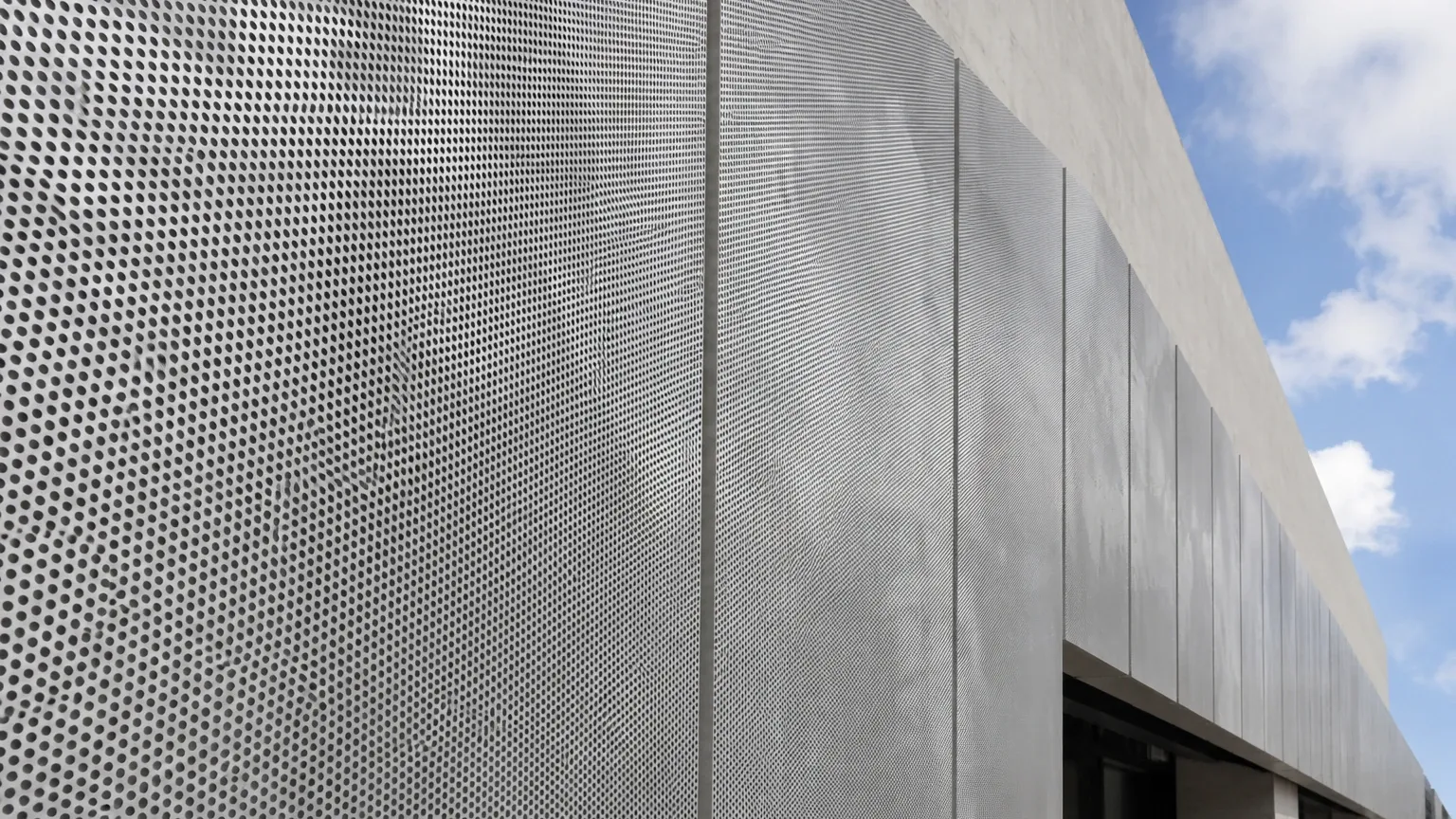
In industrial engineering and architectural design, the concept of perforated metal elevation refers to the vertical application and technical drawing specifications of perforated or expanded metal sheets used in structural, filtration, and protective systems. Whether used as a facade for an industrial facility, a protective screen for heavy machinery, or a support structure within a high-pressure filtration system, the technical parameters of the metal must be precisely calculated to ensure both functional performance and structural integrity.
For engineers and procurement teams, selecting the right Perforated & Expanded Metal involves more than choosing a pattern. It requires a deep understanding of material properties, open area percentages, and the environmental stresses the material will face in its elevated position. This guide explores the technical considerations necessary for specifying perforated metal in industrial applications, focusing on durability, filtration efficiency, and engineering precision.
Understanding the Role of Perforated Metal Elevation in Industrial Design
In a technical context, "elevation" describes the vertical face of a structure or the vertical arrangement of components within a system. When perforated metal is integrated into these elevations, it serves multiple roles. In industrial filtration, it may act as the outer cage for a filter cartridge, providing the necessary rigidity to withstand differential pressure while allowing for maximum flow. In facility management, it serves as a ventilation screen or a safety barrier that maintains airflow while preventing the ingress of debris.
From an engineering perspective, the elevation of perforated metal must account for gravity, wind loads (in outdoor applications), and the mechanical stresses of the system. For instance, a perforated metal screen used in a cooling tower must be rigid enough to resist vibration and corrosion while maintaining a specific open area to ensure the thermal exchange process is not compromised.
Technical Specifications: Patterns and Open Area Calculations
The performance of a perforated metal sheet is primarily dictated by its hole pattern and the resulting open area. These factors directly influence the pressure drop, filtration accuracy, and mechanical strength of the elevation.
Hole Patterns and Geometries
Common patterns include round, square, and slotted holes.
- Round Holes: These are the most versatile and cost-effective. They provide a high degree of structural strength and are ideal for most filtration and protective applications.
- Square Holes: Often used when a higher open area is required for maximum airflow or visibility. However, they may offer less structural resistance to multi-directional stress compared to round holes.
- Slotted Holes: Frequently utilized in sorting and sifting applications. In a vertical elevation, slotted holes can be oriented to facilitate the drainage of liquids or the shedding of solid particles.
Calculating Open Area
The open area is the percentage of the sheet that is occupied by holes. This is a critical metric for engineers calculating flow rates. For a standard 60-degree staggered round hole pattern, the formula is:
Open Area % = (D² × 90.69) / P²
Where *D* is the hole diameter and *P* is the center-to-center pitch. Achieving the balance between a high open area for flow and a sufficient solid area for structural stability is the primary challenge in perforated metal elevation design.
Material Selection for Demanding Environments
Industrial environments often expose perforated metal to corrosive chemicals, extreme temperatures, and mechanical wear. Material selection is therefore the most significant factor in the longevity of the component. At Kaifil, we specialize in high-performance alloys designed to meet these challenges.
Stainless Steel (304 and 316L)
Stainless steel is the industry standard for most industrial elevations.
- Grade 304: Offers excellent strength and basic corrosion resistance, suitable for indoor machinery guards and general-purpose filtration.
- Grade 316L: Contains molybdenum, providing superior resistance to chlorides and acidic environments. This is the preferred choice for chemical processing, marine applications, and pharmaceutical filtration where hygiene and corrosion resistance are paramount.
Specialized Alloys
For high-temperature applications, such as exhaust systems or furnace screens, heat-resistant alloys like Inconel or Monel may be required. These materials maintain their structural integrity at temperatures where standard carbon steel or basic stainless steel would oxidize or lose tensile strength.
Comparing Perforated and Expanded Metal for Vertical Applications
While often grouped together, perforated and expanded metals are manufactured differently and offer distinct mechanical advantages for vertical elevations.
Perforated Metal
Perforated metal is created by punching holes into a solid sheet. This process allows for extreme precision in hole size and placement. It is the better choice for applications requiring specific filtration ratings or complex hole geometries. Because the perimeter of the sheet can be left with a solid "margin," it is easier to weld into frames or bolt into structural elevations.
Expanded Metal
Expanded metal is produced by slitting and stretching the sheet simultaneously, creating a diamond-shaped mesh. This process involves no waste, making it a cost-effective alternative. Expanded metal has an inherent three-dimensional texture that provides excellent grip and strength. In an elevation, the "struts" of the expanded metal are angled, which can be used to deflect light or liquid, or to provide a higher strength-to-weight ratio than perforated sheets of the same thickness.
Engineering Considerations for Structural Integrity
When designing a perforated metal elevation, engineers must evaluate how the removal of material (the holes) affects the sheet's ability to bear loads.
1. Yield Strength: The perforated area has a lower yield strength than a solid sheet. Engineers must use "equivalent solid material" calculations to determine the deflection and stress limits of the panel.
2. Vibration and Fatigue: In industrial settings, machinery vibration can lead to fatigue cracking, particularly around the edges of the perforations. Proper mounting and the selection of a thicker gauge material can mitigate this risk.
3. Edge Conditions: Leaving a solid margin around the perforated area significantly increases the stiffness of the panel. This is crucial for panels that will be under tension or subjected to wind loads in an exterior elevation.
Applications in Industrial Filtration and Protection
Perforated metal is a foundational component in many complex filtration systems. Its role in these systems is often structural, serving as the backbone for finer wire mesh layers.
Filter Element Support
In high-pressure hydraulic or chemical filters, a perforated metal tube acts as the inner core or outer shroud. This elevation of metal protects the delicate filter media from collapsing under the force of the fluid flow. The precision of the perforation ensures that the support structure does not introduce excessive turbulence or pressure drop.
Acoustic Dampening and Ventilation
In power generation and heavy manufacturing, perforated metal elevations are used in silencers and acoustic enclosures. The hole pattern is engineered to trap sound waves while allowing heat to escape. This dual functionality is essential for maintaining safe operating temperatures for equipment while protecting workers from noise pollution.
Procurement and Customization: The OEM Advantage
Selecting a standard off-the-shelf perforated sheet often leads to compromises in performance or longevity. Working with a specialized manufacturer like Kaifil allows for the customization of every parameter to suit the specific needs of an industrial project.
Custom Hole Configurations
Beyond standard patterns, OEM capabilities allow for variable hole sizes across a single sheet or specific hole placements that align with internal structural ribs. This level of customization is vital for optimizing flow dynamics in specialized chemical reactors or food processing equipment.
Secondary Processing
An industrial perforated metal elevation often requires more than just punching. To be ready for installation, sheets may need:
- Leveling: Ensuring the sheet is perfectly flat after the perforating process has introduced internal stresses.
- Forming: Bending or rolling the sheet into cylinders or complex shapes.
- Surface Finishing: Electropolishing for pharmaceutical applications or powder coating for environmental protection.
Maintenance and Total Cost of Ownership
While the initial cost of a high-grade stainless steel perforated elevation may be higher than galvanized or plastic alternatives, the total cost of ownership is significantly lower due to reduced maintenance and replacement cycles.
In filtration applications, the ability to clean and reuse stainless steel perforated components provides a major advantage. Unlike disposable plastic screens, stainless steel can withstand aggressive chemical cleaning and high-pressure backwashing. Regular inspection of the elevation for signs of pitting corrosion or mechanical deformation is recommended to ensure the continued safety and efficiency of the system.
Conclusion
Designing and specifying a perforated metal elevation requires a balance of metallurgical knowledge, mechanical engineering, and an understanding of fluid dynamics. By focusing on the specific requirements of the application—whether it be the chemical resistance of SS316L, the high open area required for ventilation, or the structural support needed for a filter element—engineers can ensure long-term reliability.
For those seeking high-performance solutions, Kaifil provides the technical expertise and manufacturing precision necessary to deliver custom Perforated & Expanded Metal products that meet the most demanding industrial standards. From initial design consultation to final production, our focus remains on providing durable, efficient filtration and structural components for the global industrial market.
