


Perforated Metal Flooring
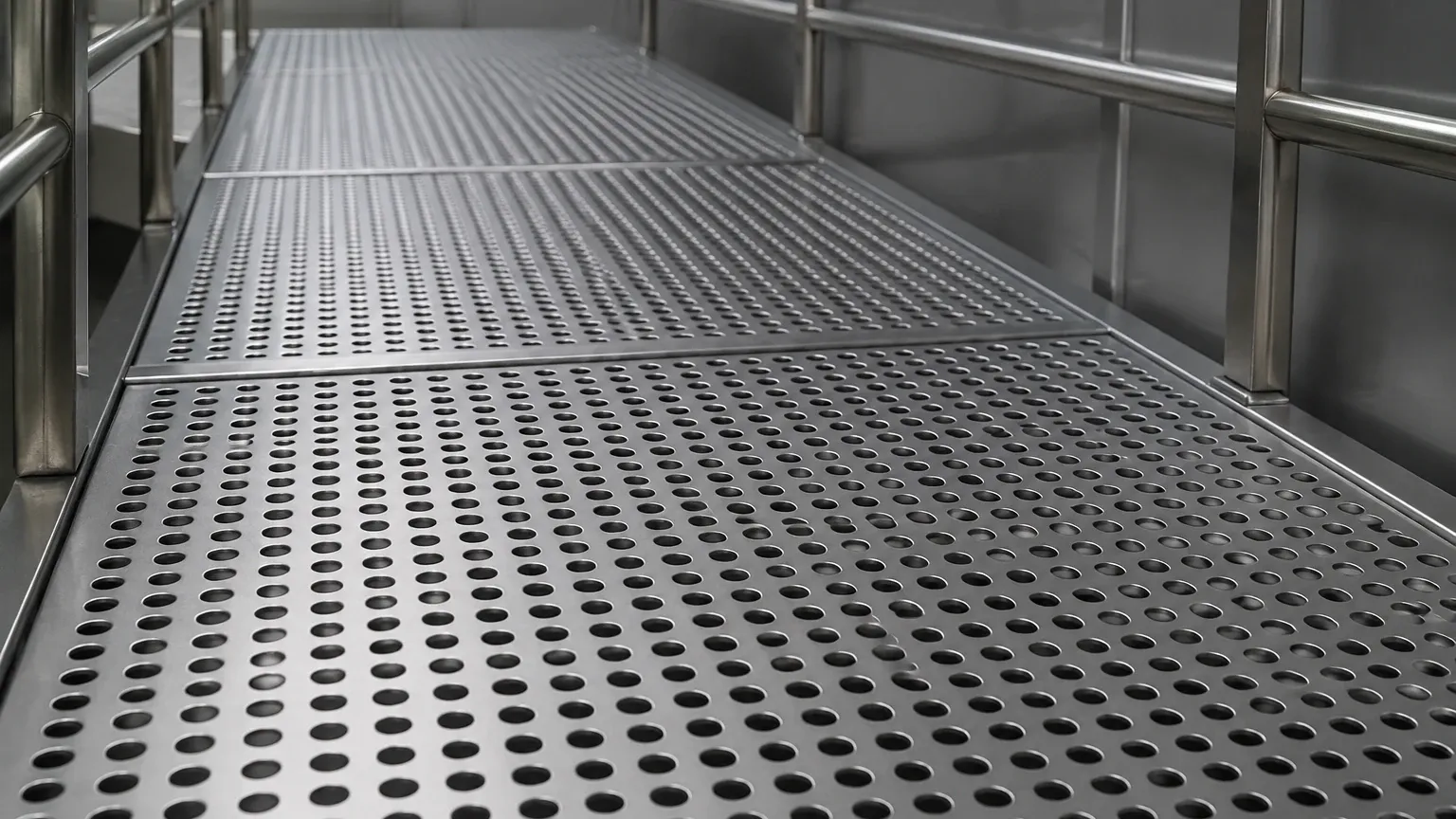
In industrial environments, flooring is more than just a surface to walk on; it is a critical engineering component that must facilitate safety, drainage, ventilation, and structural integrity. Perforated metal flooring has become a standard specification for engineers and facility managers who require a balance between high load-bearing capacity and functional transparency. Unlike solid plate flooring, perforated options allow for the passage of air, light, and liquids, making them indispensable in chemical processing, food production, and water treatment facilities.
Selecting the right flooring involves a deep understanding of material science, hole geometry, and the mechanical stresses of the specific application. As a professional manufacturer of precision metal components, Kaifil provides customized Perforated & Expanded Metal solutions designed to meet the rigorous demands of industrial infrastructure.
Engineering Characteristics of Perforated Metal Flooring
Perforated metal flooring is manufactured through a high-precision punching process where CNC-controlled machinery removes specific portions of a metal sheet to create a pattern of holes. This process allows for exact control over the "open area" percentage, which is the ratio of the total area of the holes to the total area of the sheet.
Hole Patterns and Geometry
The geometry of the perforations significantly impacts the floor's performance. Common patterns include:
* Round Holes: The most popular choice due to their structural stability and ease of cleaning. Staggered round holes provide the highest strength-to-weight ratio.
* Square Holes: Often selected for high open-area requirements, providing excellent visibility and ventilation, though they may have lower structural rigidity compared to round patterns.
* Slotted Holes: Frequently used in drainage applications where liquid flow must be directed or where specific filtration of debris is required.
The Importance of the "Bridge"
The solid metal remaining between the holes is known as the bridge. In flooring applications, the width of the bridge must be carefully calculated to ensure the material does not buckle under point loads or rolling loads. Engineers must balance the need for a high open area (for drainage or airflow) with the necessity of a wide enough bridge to maintain the plate's structural integrity.
Material Selection and Environmental Resistance
The choice of material is perhaps the most critical factor in determining the lifespan and safety of perforated metal flooring. Industrial environments often expose flooring to corrosive chemicals, high humidity, or extreme temperatures.
Stainless Steel (304 and 316)
For industries such as pharmaceutical and food processing, stainless steel is the gold standard.
* Grade 304: Offers excellent corrosion resistance and is suitable for most indoor industrial applications.
* Grade 316: Contains molybdenum, which provides superior resistance to chlorides and acetic acids. This is the preferred choice for marine environments and chemical processing plants where aggressive cleaning agents or corrosive byproducts are present.
Carbon Steel and Galvanization
In heavy industrial settings like warehouses or manufacturing plants where corrosion is less of a concern, carbon steel is often used due to its high tensile strength and cost-effectiveness. To prevent oxidation, these panels are typically hot-dip galvanized, providing a thick layer of zinc that protects the underlying steel from rust.
Aluminum
Aluminum perforated flooring is utilized in applications where weight reduction is a priority, such as in aerospace facilities or mobile industrial platforms. While it offers natural corrosion resistance, its load-bearing capacity is lower than steel, requiring thicker gauges or more frequent support structures.
Structural Performance and Load-Bearing Considerations
When specifying perforated metal flooring, engineers must move beyond simple thickness measurements and consider the mechanical properties of the perforated sheet. The perforation process alters the original material's physical characteristics, reducing its overall stiffness.
Deflection and Stress Analysis
Engineers use the concept of "Equivalent Solid Plate" properties to calculate how a perforated sheet will behave under load. This involves determining the effective elastic modulus and Poisson's ratio for the specific hole pattern. It is essential to ensure that the maximum deflection under a specified load (often L/240 or L/360 of the span) does not exceed safety limits to prevent tripping hazards or structural fatigue.
Slip Resistance and Safety
Safety is a primary driver for choosing perforated metal flooring. The edges of the punched holes provide inherent traction. However, in environments prone to oil spills or moisture, additional surface treatments may be necessary. Some perforated flooring features "dimpled" or raised-edge perforations that significantly increase the coefficient of friction, ensuring worker safety even in slippery conditions.
Comparing Perforated and Expanded Metal for Flooring Applications
While both perforated and expanded metals are used for industrial surfaces, they are manufactured differently and offer distinct performance profiles. Understanding these differences is key to making an informed procurement decision.
Manufacturing Differences
Perforated metal is created by punching material out of a sheet, which results in a flat, consistent surface. Expanded metal is produced by slitting and stretching the metal simultaneously. This process creates a diamond-shaped mesh that is integral to the sheet, meaning there is no material waste.
Performance Trade-offs
* Perforated Metal: Offers a smoother surface, which is easier to clean and more comfortable for foot traffic. It allows for more precise control over hole size and placement, making it ideal for applications requiring specific filtration or airflow rates.
* Expanded Metal: Generally provides better grip due to the angled strands of the mesh. It is often more cost-effective because no material is lost during production. However, it can be more difficult to clean and may not be suitable for environments where small items might fall through the larger openings.
For projects requiring high-precision specifications, Perforated & Expanded Metal components from a specialized manufacturer ensure that the material meets the exact tolerances required for industrial safety and longevity.
Key Selection Criteria for Industrial Engineers
Before finalizing a purchase order for perforated metal flooring, technical teams should confirm several critical parameters to ensure the product is fit for purpose.
1. Span and Support: What is the distance between the structural supports? The span will dictate the required thickness (gauge) of the metal and the necessary hole pattern to prevent excessive deflection.
2. Open Area Requirements: Does the facility require a specific airflow for HVAC efficiency, or a specific drainage rate to prevent liquid pooling? High open areas (above 50%) may require heavier gauges to maintain strength.
3. Loading Types: Will the floor be subjected to static loads (equipment), dynamic loads (pedestrian traffic), or rolling loads (forklifts and carts)? Rolling loads require much more robust specifications to prevent "washboarding" or permanent deformation.
4. Environmental Exposure: Will the flooring be exposed to salt spray, caustic chemicals, or high-pressure steam cleaning? This will determine whether 304 or 316 stainless steel is required.
5. Edge Margins: Custom perforated sheets can be manufactured with solid margins (unperforated edges). This simplifies the welding or bolting process to the support frame and increases the overall structural integrity of the panel.
Installation and Maintenance Protocols
The longevity of perforated metal flooring depends as much on proper installation and maintenance as it does on material quality.
Installation Best Practices
Flooring panels must be securely fastened to the sub-frame using appropriate clips, bolts, or tack welds. If using galvanized steel, any field cuts or welds must be treated with a cold-galvanizing spray to restore corrosion protection. For stainless steel applications, it is vital to use stainless steel fasteners to prevent galvanic corrosion, which occurs when dissimilar metals come into contact in the presence of an electrolyte.
Maintenance and Replacement Cycles
One of the primary benefits of stainless steel perforated flooring is its low maintenance requirement. However, regular inspections are necessary to check for:
* Debris Accumulation: While the perforations allow for drainage, small particles can sometimes become trapped in the holes, potentially reducing airflow or creating hygiene issues in food-grade environments.
* Fastener Integrity: Vibration in industrial plants can loosen floor clips over time. Regular torque checks ensure the panels remain stable.
* Structural Wear: In high-traffic areas, engineers should look for signs of stress cracking near the hole edges, which may indicate that the material is reaching the end of its fatigue life.
Conclusion
Perforated metal flooring is a sophisticated engineering solution that addresses the complex needs of modern industrial facilities. By carefully considering material grades, hole patterns, and load-bearing requirements, engineers can specify flooring that enhances safety, facilitates efficient operations, and withstands the harshest environments. Working with a dedicated manufacturer like Kaifil ensures that these precision components are produced to the highest standards, providing reliable performance for years to come.
