


Perforated Metal Forever
In the landscape of industrial filtration and structural engineering, the concept of "perforated metal forever" refers to the exceptional longevity, recyclability, and enduring performance of stainless steel filtration components. For engineers and procurement specialists, selecting the right medium is not merely about immediate filtration efficiency; it is about the total cost of ownership and the ability of a material to withstand corrosive environments, high pressures, and repeated cleaning cycles over decades of service.
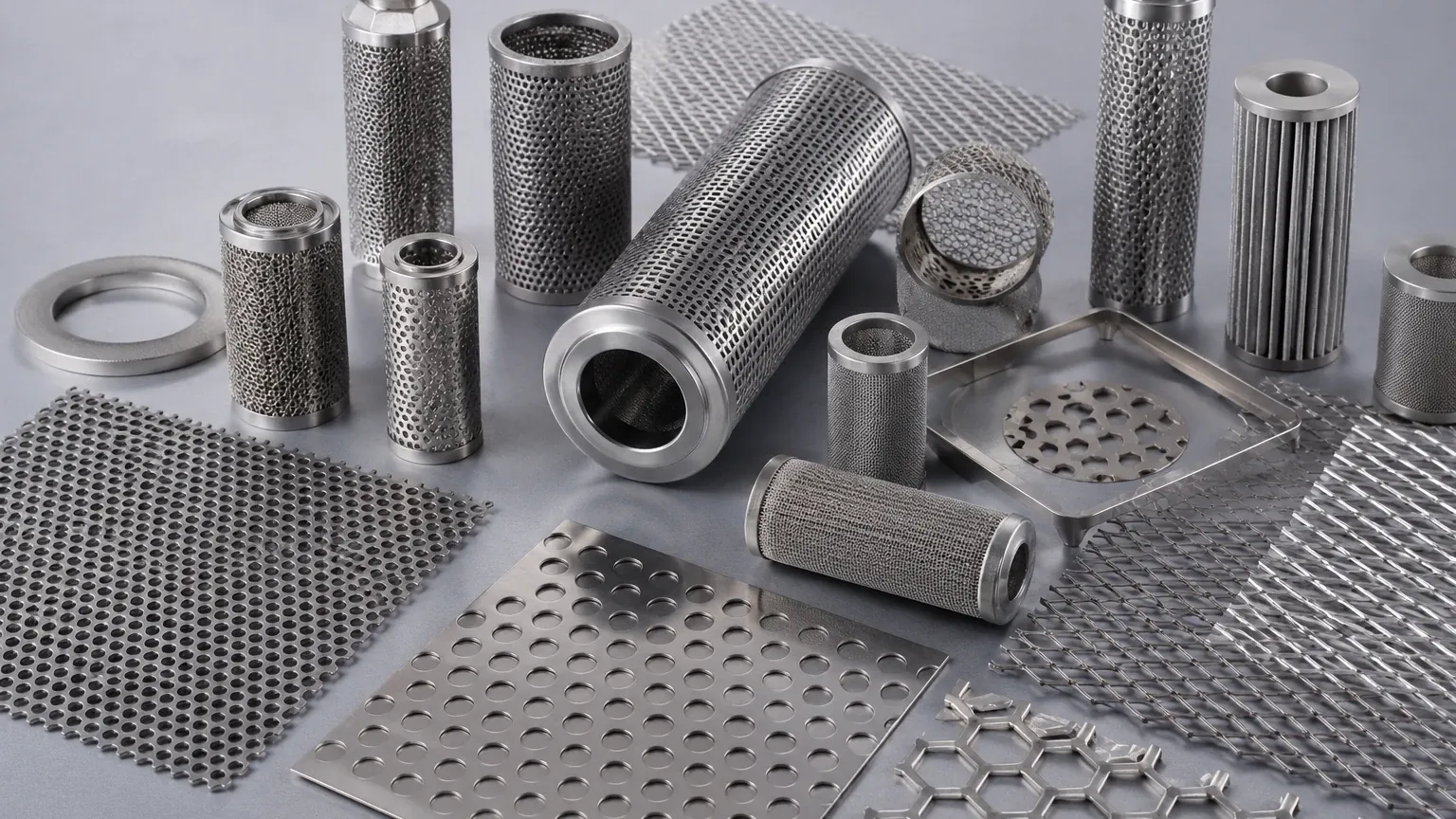
Perforated & Expanded Metal serves as the backbone for many complex filtration systems, providing the mechanical rigidity necessary to support finer mesh layers while offering its own primary filtration capabilities. Understanding the technical nuances of these materials is essential for optimizing industrial processes in chemical, pharmaceutical, and food processing sectors.
The Engineering Fundamentals of Perforated and Expanded Metal
To achieve the goal of a "perforated metal forever" installation, one must first distinguish between the two primary manufacturing methods: perforation and expansion. While both result in a porous metal sheet, their mechanical properties and applications differ significantly.
Perforated Metal Manufacturing
Perforated metal is produced through a punching process where a series of holes are mechanically or laser-cut into a solid metal sheet. This process allows for extreme precision in hole size, shape, and spacing. Engineers can specify exact open area percentages, which are critical for calculating flow rates and pressure drops. Because the base material remains a flat sheet with clean-cut apertures, it is often preferred for applications requiring a smooth surface and high structural integrity.
Expanded Metal Manufacturing
Expanded metal is created by simultaneously slitting and stretching a metal sheet. This process creates diamond-shaped openings without any material waste, making it a highly cost-effective and sustainable option. The resulting 3D structure provides a high strength-to-weight ratio and a unique surface area that can aid in certain types of depth filtration or as a high-grip structural support. In the context of "perforated metal forever," expanded metal is valued for its rigidity and the fact that it is a single piece of material with no joins or welds to fail under stress.
Material Selection: The Key to Longevity
The durability of a filter component is dictated primarily by its metallurgy. To ensure a perforated metal component lasts "forever" in an industrial sense, the selection of stainless steel grades is paramount.
1. Grade 304 Stainless Steel: The standard for general industrial use, offering excellent corrosion resistance to most oxidizing acids and ease of fabrication. It is suitable for water treatment and general food and beverage applications where chloride exposure is minimal.
2. Grade 316L Stainless Steel: For more demanding environments, 316L includes molybdenum, which significantly enhances resistance to pitting and crevice corrosion in chloride-rich environments. This is the preferred choice for chemical processing and marine applications.
3. Specialty Alloys: In extreme cases involving high temperatures or highly aggressive chemicals, alloys such as Duplex stainless steel or Monel may be utilized to ensure the component does not require premature replacement.
By matching the alloy to the specific chemical profile of the process fluid, engineers can prevent the oxidative stress and localized corrosion that typically lead to the failure of inferior materials.
Technical Specifications and Performance Evaluation
Designing for a "perforated metal forever" lifecycle requires precise calculation of performance metrics. When evaluating Perforated & Expanded Metal for a specific application, the following technical factors must be confirmed:
Open Area Percentage
The open area is the ratio of the total area of the holes to the total area of the sheet. It is expressed as a percentage and directly influences the flow capacity and pressure drop across the filter. A higher open area reduces resistance but may compromise the structural strength of the sheet.
Formula for Round Holes (60° Staggered):
`Percent Open Area = (D² × 90.69) / P²`
*Where D is the hole diameter and P is the pitch (distance between centers).*
Hole Patterns and Pitch
The arrangement of holes—whether staggered or straight—impacts the directionality of the flow and the overall stiffness of the component. Staggered patterns (usually at 60 degrees) are the industrial standard because they provide the highest open area while maintaining the most uniform mechanical strength across the sheet.
Gauge and Thickness
The thickness of the material must be sufficient to withstand the maximum differential pressure (ΔP) expected during the process, including surges. For support cores in high-pressure hydraulic filters, a thicker gauge perforated tube is often required to prevent collapsing under the weight of the outer filtration media.
The Role of Perforated Metal in Multi-Stage Filtration
In many high-performance systems, perforated metal is not the final filtration stage but the critical support structure. This is where the concept of "perforated metal forever" becomes vital. In a pleated stainless steel filter cartridge, the inner core is typically a perforated tube.
If this core fails due to corrosion or mechanical fatigue, the entire filter assembly is compromised. Therefore, the perforated core is designed to outlast the outer mesh layers. While the outer wire mesh might be cleaned or eventually replaced, the perforated support structure remains intact, serving as a permanent or semi-permanent component of the housing assembly. This modular approach reduces waste and long-term maintenance costs.
Customization and OEM Solutions
Industrial applications rarely fit a "one size fits all" model. Achieving a permanent solution often requires custom engineering. Kaifil specializes in providing tailored Perforated & Expanded Metal solutions that meet specific technical requirements.
Customization options include:
* Variable Hole Sizes: Ranging from sub-millimeter apertures for fine straining to large openings for coarse debris removal.
* Custom Margins: Leaving solid unperforated borders on the edges of the sheet to facilitate welding or mechanical fastening into a frame.
* Forming and Fabrication: Rolling perforated sheets into cylinders, cones, or baskets with precision-welded seams (TIG or Plasma) to ensure structural integrity.
* Surface Treatments: Electropolishing or passivating the metal to further enhance its corrosion resistance and ensure it meets the sanitary standards required in pharmaceutical and food processing.
Maintenance and Cleaning for Extended Service Life
To ensure that perforated metal components truly last "forever," a proper maintenance regimen must be established. Unlike disposable synthetic filters, stainless steel perforated metal is highly cleanable.
Cleaning Methods
* Backwashing: Reversing the flow of fluid to dislodge particles trapped in the apertures.
* Ultrasonic Cleaning: Using high-frequency sound waves in a cleaning solution to remove microscopic contaminants from the metal surface.
* Chemical Cleaning (CIP): Utilizing caustic or acidic solutions to dissolve organic or mineral scaling, provided the chemical is compatible with the stainless steel grade.
Inspection Protocols
Regular inspection for signs of mechanical wear, such as hole elongation or stress cracking near the welds, is essential. In high-vibration environments, the attachment points of the perforated metal should be checked for fatigue. By identifying these issues early, minor repairs can be made to extend the component's life indefinitely.
Common Risks and Mitigation in Selection
When procurement teams look for perforated metal solutions, several risks can compromise the "forever" goal:
1. Burrs and Surface Defects: Inadequately finished perforated sheets may have burrs that can trap contaminants or damage sensitive outer mesh layers. Specifying "burr-free" or "deburred" material is critical for filtration applications.
2. Inaccurate Open Area Calculations: If the open area is miscalculated, the resulting pressure drop may exceed the system's pump capacity, leading to inefficient operation or equipment failure.
3. Material Substitution: Using a lower grade of stainless steel (e.g., 201 instead of 304) to save costs will lead to rapid corrosion and system downtime. Always verify material certifications (MTRs).
Conclusion: Why Engineers Choose Perforated Metal
The decision to use Perforated & Expanded Metal in industrial filtration is a decision for durability and reliability. Whether it is used as a primary strainer, a support core for pleated media, or a protective screen for sensitive equipment, its ability to maintain structural integrity under harsh conditions is unmatched.
By focusing on the technical specifications—material grade, open area, and fabrication quality—engineers can ensure that their filtration components provide a "perforated metal forever" service life. This approach not only optimizes process efficiency but also aligns with modern industrial goals of sustainability and reduced material waste. For those seeking precision-engineered solutions, partnering with an experienced manufacturer like Kaifil ensures that every perforated or expanded component is designed to meet the rigorous demands of the modern industrial environment.
