


Flexible Perforated Metal Sheet
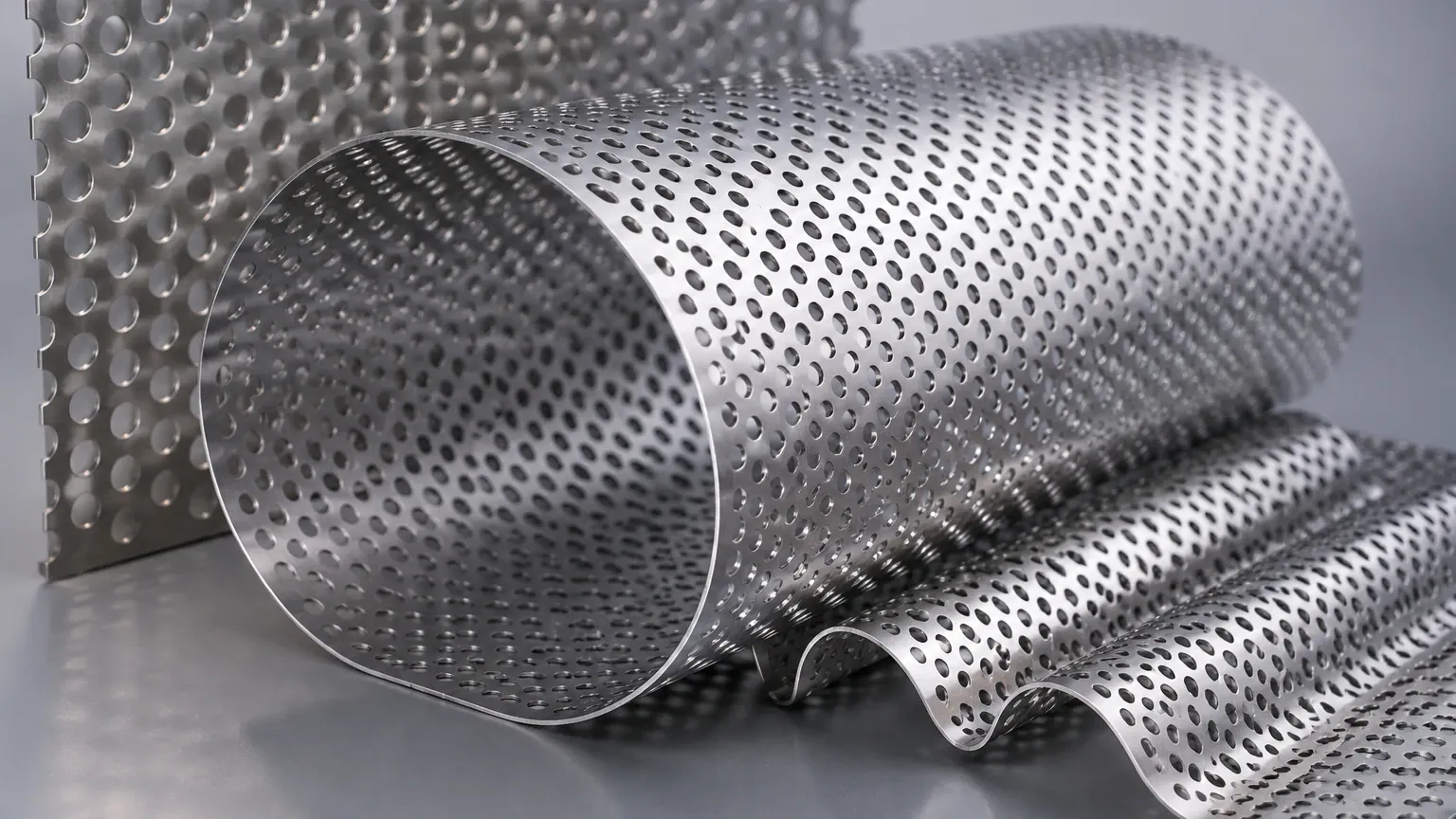
In industrial filtration and structural engineering, the requirement for materials that combine mechanical strength with geometric adaptability is paramount. A flexible perforated metal sheet represents a specialized category of fabricated metal products designed to meet these dual needs. Unlike rigid plates, these sheets are engineered with specific thickness-to-hole-area ratios that allow them to be formed, bent, or wrapped around cylindrical cores without compromising the integrity of the perforation pattern.
As a professional manufacturer, Kaifil specializes in providing high-precision Perforated & Expanded Metal solutions tailored for demanding industrial environments. Understanding the technical nuances of these materials—from material ductility to open area calculations—is essential for engineers and purchasing teams tasked with optimizing filtration performance and equipment longevity.
Engineering Characteristics of Flexible Perforated Metal
The flexibility of a perforated metal sheet is not merely a result of its thickness; it is a calculated balance between the base material properties and the geometric configuration of the holes. In industrial applications, flexibility is often required for the production of filter cartridges, protective sleeves, and curved acoustic panels.
Material Selection and Ductility
Material choice is the primary determinant of flexibility. Stainless steel (grades 304, 316, and 316L) is the industry standard due to its excellent balance of corrosion resistance and formability. For applications requiring extreme flexibility, annealed stainless steel is often used. The annealing process relieves internal stresses caused by the cold-rolling of the metal, restoring ductility and allowing the flexible perforated metal sheet to undergo significant deformation—such as being rolled into small-diameter tubes—without cracking.
Gauge and Thickness Considerations
In the context of industrial filtration, "flexible" usually refers to sheets ranging from 0.5mm to 2.0mm in thickness. Thinner gauges offer higher flexibility but may require internal support structures, such as a heavier inner core, when used in high-pressure hydraulic or chemical processing systems. Engineers must evaluate the pressure drop across the filter media to ensure the selected gauge can withstand the mechanical load while maintaining its formed shape.
Hole Patterns and Pitch
The arrangement of holes—whether staggered or straight—significantly impacts the sheet's directional flexibility. A 60-degree staggered pattern is the most common for industrial use because it provides the highest open area and uniform strength across the sheet. This uniformity is critical when the sheet must be bent along multiple axes or formed into complex shapes.
Key Performance Metrics in Industrial Filtration
When integrating a flexible perforated metal sheet into a filtration system, performance is measured by its ability to facilitate flow while providing structural support for finer mesh layers.
Open Area and Flow Dynamics
The open area percentage is the ratio of the total area of the holes to the total area of the sheet. For flexible sheets used as filter supports, an open area of 40% to 60% is typically targeted. This range ensures sufficient flow rates and minimal pressure drop. However, increasing the open area reduces the structural rigidity of the sheet. Engineers must calculate the "ligament width"—the distance between the holes—to ensure the remaining metal can support the intended load.
Filtration Accuracy vs. Structural Support
While a perforated sheet can act as a primary filter for coarse particles, its most common role in B2B industrial settings is as a support structure for wire mesh or sintered metal fiber. In these multi-layer configurations, the flexible perforated metal sheet provides the mechanical backbone, allowing the finer, more delicate media to withstand high flow velocities. The precision of the perforation ensures that there are no burrs or sharp edges that could damage the secondary filtration layers.
Manufacturing Processes and Customization
The production of high-quality Perforated & Expanded Metal involves advanced CNC punching or laser cutting technologies. For flexible applications, the manufacturing process must be tightly controlled to prevent warping and ensure dimensional stability.
Precision Punching
For large-scale industrial orders, high-speed punching presses are used to create consistent hole patterns across large sheets. The key to maintaining flexibility during this process is the management of the "heat-affected zone" and the mechanical stress applied to the sheet. Precision tooling ensures that the holes are clean and the margins (the unperforated areas along the edges) are consistent, which is vital for subsequent welding or assembly processes.
Custom Margins and Blank Areas
One of the primary advantages of custom-manufactured flexible perforated metal sheets is the ability to define specific margins. In many OEM applications, a sheet requires solid (unperforated) edges to facilitate seam welding or to provide a mounting surface. Kaifil works with engineering teams to design sheets with custom blank areas that align with the final product's structural requirements, reducing the need for secondary trimming and material waste.
Surface Finishing
After perforation, sheets often undergo de-burring and leveling. For pharmaceutical and food-grade applications, electropolishing or passivating the stainless steel is necessary to remove surface impurities and enhance corrosion resistance. These finishes ensure that the flexible perforated metal sheet meets the stringent hygiene standards required in sensitive processing environments.
Applications Across Industrial Sectors
The versatility of flexible perforated metal makes it a staple in various heavy industries. Its ability to be formed into custom shapes allows it to solve unique engineering challenges.
Chemical and Petrochemical Processing
In chemical reactors and distillation columns, flexible perforated sheets are used as catalyst support grids and internal components for mist eliminators. The material must resist aggressive chemical environments while maintaining its shape under thermal expansion. SS316L is frequently specified here for its superior resistance to pitting and crevice corrosion.
Food and Beverage Industry
From rotary vacuum filters used in juice processing to grain drying screens, the flexible perforated metal sheet provides a durable, easy-to-clean surface. The ability to form the metal into large-diameter drums or curved troughs is essential for these continuous processing systems. Compliance with food safety standards is maintained through precise material sourcing and high-quality surface finishing.
Hydraulic and Water Treatment Systems
In hydraulic filtration, perforated sheets serve as the outer protective wrap for filter elements, shielding the inner pleats from turbulent flow and mechanical impact. In water treatment, they are used in intake screens and strainers where they must withstand constant immersion and potential biofouling.
Selection Criteria for Engineering and Procurement
Selecting the right flexible perforated metal sheet requires a comprehensive evaluation of the application's environmental and mechanical demands. Engineers should confirm the following parameters before finalizing a specification:
1. Chemical Compatibility: Does the metal grade (e.g., 304 vs. 316) match the acidity, alkalinity, and temperature of the process fluid?
2. Mechanical Load: What is the maximum differential pressure the sheet will encounter? This determines the required thickness and the maximum allowable open area.
3. Forming Requirements: What is the minimum bend radius? If the sheet is to be rolled into a cylinder, the hole pattern and material temper must allow for this without deformation of the holes.
4. Tolerance Levels: What are the acceptable variances in hole diameter and pitch? High-precision applications, such as those in the pharmaceutical sector, require much tighter tolerances than general industrial screening.
5. Total Cost of Ownership: Beyond the initial purchase price, consider the longevity of the material. Choosing a higher-grade stainless steel or a custom-engineered pattern can reduce maintenance intervals and replacement costs over the equipment's lifecycle.
Maintenance and Durability Considerations
The durability of a flexible perforated metal sheet is largely dependent on its resistance to fatigue and corrosion. In applications involving vibrating machinery or pulsating flows, the metal is subject to cyclic loading. If the sheet is too thin or the open area is too high, stress concentrations around the holes can lead to premature cracking.
Regular inspection cycles should focus on identifying signs of stress corrosion cracking or localized pitting. In filtration systems, cleaning protocols—such as backwashing or ultrasonic cleaning—must be compatible with the metal grade. Because stainless steel relies on a passive chromium oxide layer for protection, ensuring that this layer is not mechanically abraded or chemically stripped is vital for maintaining the sheet's integrity over years of service.
By partnering with a manufacturer that understands these technical variables, B2B buyers can ensure they receive a flexible perforated metal sheet that is not only fit for purpose but optimized for the specific rigors of their industrial application. Whether the goal is to improve filtration efficiency in a chemical plant or to enhance the structural durability of a food processing line, the correct application of Perforated & Expanded Metal technology is a critical factor in operational success.
