


Facade Perforated Metal
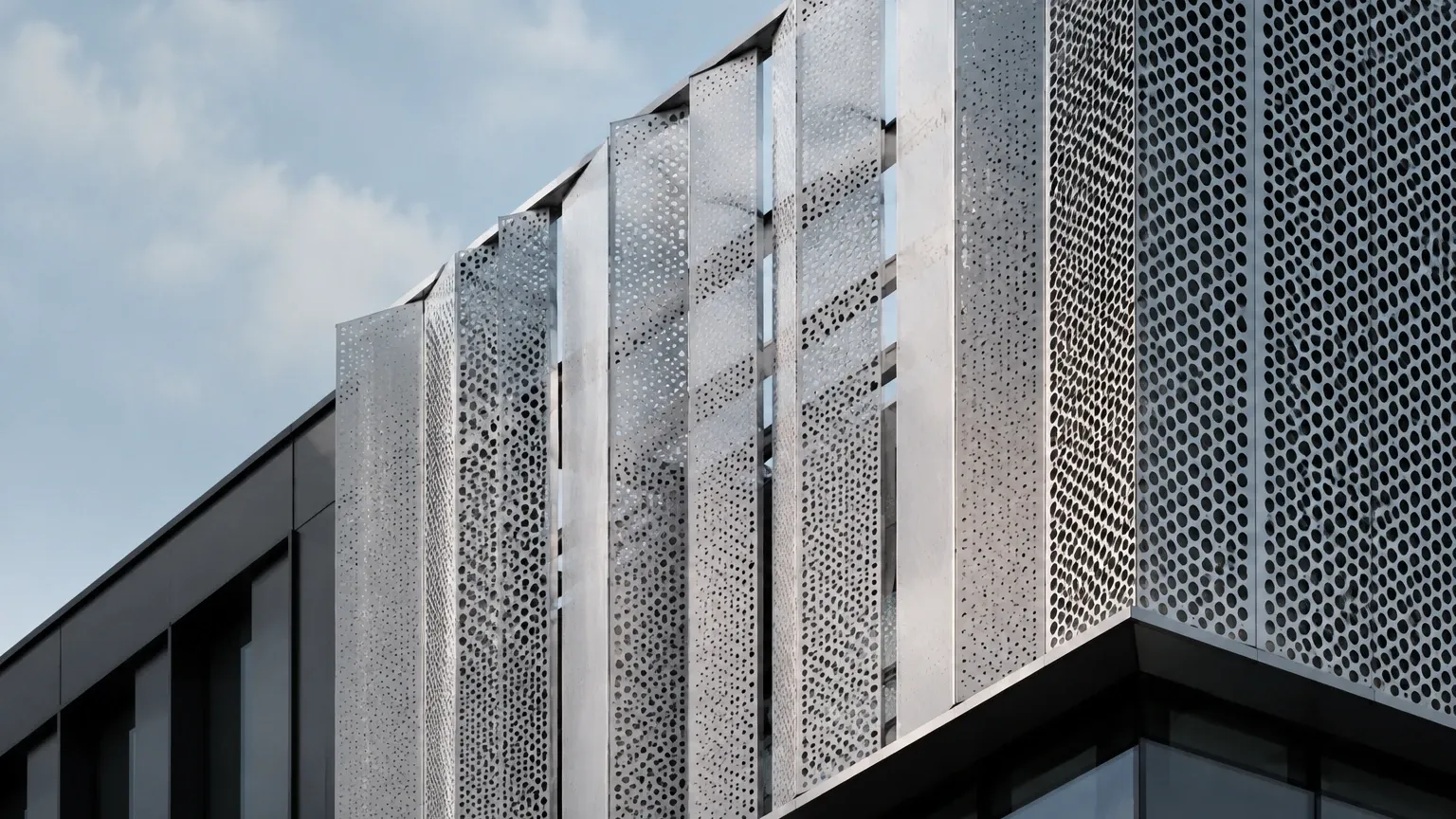
In modern industrial and architectural engineering, the selection of exterior cladding materials requires a balance between structural integrity, environmental control, and aesthetic precision. Facade perforated metal has emerged as a primary solution for building envelopes, offering a versatile medium that serves both functional and design purposes. As a specialized manufacturer of precision metal components, Kaifil provides high-performance Perforated & Expanded Metal solutions tailored to meet the rigorous demands of industrial, commercial, and pharmaceutical infrastructure.
Understanding the technical nuances of perforated metal is essential for engineers and procurement teams. This guide examines the engineering considerations, material properties, and selection criteria necessary to optimize the performance of metal facades in diverse environments.
The Engineering Logic of Perforated and Expanded Metal
At its core, facade perforated metal is a sheet or plate that has been mechanically or laser-stamped to create a specific pattern of holes, slots, or decorative shapes. Expanded metal, while often grouped in the same category, is produced by simultaneously slitting and stretching the material, resulting in a diamond-shaped mesh without any scrap loss. Both forms are integral to contemporary facade engineering.
From a technical perspective, these materials are not merely decorative screens. They function as high-performance filters for light, air, and sound. In industrial settings, a perforated facade may act as a primary shield for HVAC systems, protecting sensitive equipment from debris while maintaining necessary airflow. In architectural applications, the "open area"—the percentage of the sheet occupied by holes—dictates the building's thermal performance and the amount of natural light that penetrates the interior.
Choosing between perforated and expanded metal depends largely on the required rigidity and the desired visual transparency. Perforated sheets offer greater precision in hole placement and shape, which is critical for projects requiring specific filtration levels or complex geometric patterns. Expanded metal, conversely, provides a high strength-to-weight ratio and a three-dimensional texture that can effectively deflect sunlight at specific angles.
Material Selection: Durability and Corrosion Resistance
The longevity of a facade is dictated by the chemical and physical properties of the base metal. For industrial facades, especially those in coastal or chemically aggressive environments, material selection is the most critical decision in the procurement process.
Stainless Steel (Grades 304 and 316)
Stainless steel is the industry standard for high-durability applications. Grade 304 offers excellent corrosion resistance for most standard environments. However, for facades exposed to marine air or industrial pollutants, Grade 316 is preferred due to its molybdenum content, which provides superior resistance to pitting and crevice corrosion. Kaifil specializes in processing these alloys to ensure that the perforation process does not compromise the material's structural integrity or its passive oxide layer.
Aluminum Alloys
Aluminum is favored for its lightweight properties and natural resistance to atmospheric corrosion. It is often used in large-scale facades where reducing the dead load on the building's primary structure is a priority. Aluminum can be anodized or powder-coated to enhance its durability and provide specific color profiles, making it a versatile choice for both industrial and commercial projects.
Galvanized and Carbon Steel
While more cost-effective initially, carbon steel requires robust galvanization or high-performance coatings to prevent oxidation. In heavy industrial zones, the total cost of ownership for carbon steel may eventually exceed that of stainless steel when maintenance and recoating cycles are factored into the lifecycle analysis.
Technical Parameters: Open Area and Airflow Dynamics
For engineers, the most critical specification of facade perforated metal is the "Open Area Percentage." This figure determines how much air and light can pass through the panel. It is calculated based on the hole diameter (or width) and the pitch (the distance between the centers of adjacent holes).
Calculating Open Area
A typical staggered hole pattern (60-degree orientation) provides the highest strength and most uniform distribution of open space. The formula for calculating the open area in a staggered pattern is:
* Percent Open Area = (D² x 90.69) / P²
*(Where D is the hole diameter and P is the pitch)*
In HVAC and filtration applications, the open area must be sufficient to prevent excessive pressure drops. If the open area is too low, the facade may act as a wind sail, increasing the structural load on the mounting brackets and the building frame. Conversely, if the open area is too high, the material may lose the rigidity required to span large distances between supports.
Acoustic and Thermal Performance
Perforated metal is an effective tool for acoustic attenuation. When used as a facade element for industrial plants or data centers, it can help dissipate noise from large machinery. Thermally, the facade acts as a "solar chimney" or a sunshade. By blocking direct solar radiation while allowing convective airflow, perforated metal panels significantly reduce the cooling load on a building’s interior, leading to substantial energy savings.
Customization and Manufacturing Precision
One of the primary advantages of working with an experienced manufacturer like Kaifil is the ability to move beyond standard catalog patterns. Customization in facade perforated metal involves more than just choosing a hole shape; it involves engineering the panel to meet specific site conditions.
Precision Perforation and Tolerances
In large-scale facades, the alignment of patterns across multiple panels is vital. This requires tight manufacturing tolerances. Precision CNC punching and laser cutting ensure that the holes align perfectly from one panel to the next, preventing visual "ghosting" or structural misalignment during installation. For filtration-heavy applications, such as facades for pharmaceutical cleanrooms or food processing facilities, the precision of the perforation ensures that the screen effectively blocks specific particulate sizes while maintaining hygiene standards.
OEM and Tailored Designs
OEM capabilities allow for the integration of mounting holes, margins (unperforated borders), and specific panel shapes directly into the manufacturing process. This reduces the need for on-site cutting and welding, which can damage protective coatings and introduce points of potential corrosion. Engineering teams should confirm that the manufacturer can provide detailed CAD drawings and prototypes to verify the fit and function of custom designs before full-scale production begins.
Structural Integrity and Load Considerations
A facade is a structural component that must withstand wind loads, seismic activity, and thermal expansion. The perforation process inherently reduces the cross-sectional area of the metal sheet, which affects its load-bearing capacity.
Wind Load Analysis
Because perforated metal allows air to pass through, it experiences lower wind pressure than a solid sheet. However, the exact reduction in wind load depends on the open area and the shape of the perforations. Engineers must perform a wind load analysis to determine the required thickness (gauge) of the metal and the spacing of the support structure. Thicker gauges are typically required for panels with high open area percentages to prevent oil-canning (visible waviness) or structural failure under high-velocity winds.
Thermal Expansion
Metal expands and contracts with temperature fluctuations. In long facade runs, the mounting system must allow for this movement. Slotted mounting holes and flexible gaskets are common engineering solutions to prevent the panels from buckling or shearing their fasteners over time. Stainless steel has a lower thermal expansion coefficient than aluminum, which may influence the choice of material for projects in regions with extreme temperature swings.
Installation and Long-Term Maintenance
The performance of facade perforated metal is heavily dependent on the quality of installation and the consistency of the maintenance schedule. Even the highest grade of stainless steel requires periodic cleaning to remove accumulated salts, dust, and pollutants that can lead to localized corrosion.
Best Practices for Installation
1. Isolation of Dissimilar Metals: To prevent galvanic corrosion, stainless steel panels should be isolated from aluminum or carbon steel supports using non-conductive washers or gaskets.
2. Edge Protection: The edges of perforated sheets are often the most vulnerable to corrosion. Specifying polished or coated edges can extend the life of the facade.
3. Alignment Checks: Ensuring that the "grain" of the perforation (the direction of the punch) is consistent across all panels prevents variations in light reflection that can make the facade look uneven.
Maintenance Cycles
In industrial environments, a bi-annual inspection is recommended. This includes checking the integrity of fasteners, ensuring that drainage paths behind the facade remain clear, and washing the panels with deionized water or mild detergents. For filtration-focused facades, the inspection should also confirm that the perforations are not clogged with debris, which would impede airflow and increase structural stress.
Conclusion: Selecting the Right Filtration and Facade Partner
Selecting facade perforated metal involves a complex set of engineering trade-offs between transparency, strength, and environmental resistance. By focusing on material science, precise open area calculations, and high-quality manufacturing standards, engineers can ensure that their building envelopes provide reliable service for decades.
Kaifil remains committed to delivering technical excellence in the production of Perforated & Expanded Metal. Whether the application requires a high-precision filter for industrial equipment or a durable architectural screen for a commercial facility, our expertise in stainless steel and precision metal components ensures that every project meets the highest standards of performance and durability. When evaluating options for your next project, prioritize manufacturers who offer comprehensive technical support, from material selection to custom OEM fabrication.
