


Free Perforated Metal Texture
In the preliminary stages of industrial design and architectural planning, digital assets such as a free perforated metal texture serve as essential tools for visualization. Engineers, architects, and product designers often utilize these textures in CAD (Computer-Aided Design) and BIM (Building Information Modeling) software to simulate the aesthetic and functional properties of metal components before moving into the prototyping or procurement phases. However, while a digital texture provides a visual approximation, transitioning from a screen-based model to a physical industrial component requires a deep understanding of material science, manufacturing tolerances, and filtration physics.
At the industrial level, perforated and expanded metals are much more than visual patterns; they are engineered solutions designed to manage airflow, filter particulates, provide structural reinforcement, or facilitate heat dissipation. This guide examines the technical parameters behind perforated metal designs, the limitations of digital textures, and the critical factors professionals must consider when specifying Perforated & Expanded Metal for demanding applications.
The Role of Digital Textures in Industrial Design
A digital texture is a two-dimensional image mapped onto a three-dimensional model to simulate surface detail. For perforated metal, these textures typically represent a series of holes or slits punched into a sheet. In B2B environments, these assets are used for:
1. Airflow and Light Simulation: Designers use textures with transparency maps (alpha channels) to calculate how much light or air will pass through a screen.
2. Aesthetic Approval: In architectural applications, textures help stakeholders visualize how a building facade or interior partition will look under different lighting conditions.
3. Weight Estimation: By simulating the "open area" of a metal sheet, engineers can approximate the weight reduction achieved compared to a solid plate.
While a free perforated metal texture is a convenient starting point for a mockup, it lacks the physical data necessary for manufacturing. A digital image does not account for material thickness, the deformation caused by the punching process, or the structural integrity of the "bridges" between the holes.
Technical Parameters: Beyond the Visual Pattern
When moving from a digital representation to a physical specification, several technical parameters must be defined. These factors dictate the performance of the metal in industrial environments, such as chemical processing or hydraulic filtration.
Hole Patterns and Geometry
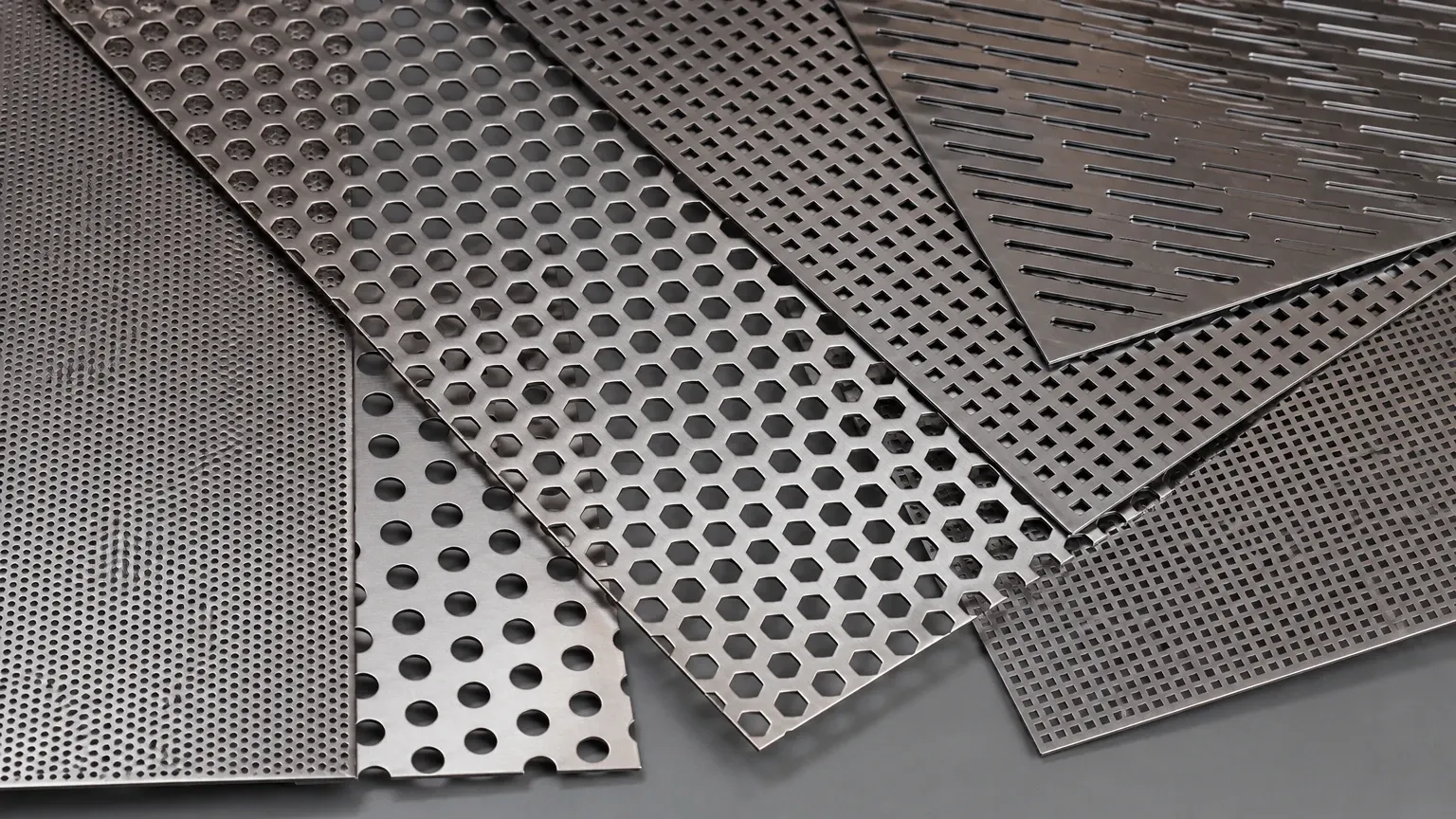
The geometry of the perforation significantly impacts both the "texture" and the mechanical performance. Common patterns include:
* Round Holes: The most versatile and cost-effective pattern, offering high structural strength and a wide range of open area percentages. These are frequently used in filtration and acoustic dampening.
* Square Holes: Often selected for high visibility and high open area requirements. They provide a modern aesthetic but may offer less structural rigidity than round holes under high pressure.
* Slotted Holes: Ideal for sorting and grading materials in food processing or agricultural applications. The orientation of the slots (staggered or straight) affects the flow characteristics.
* Hexagonal (Honeycomb): Known for providing the highest possible open area (up to 80%) while maintaining significant strength, often used in high-end architectural and ventilation applications.
Pitch and Staggering
The arrangement of the holes is defined by the "pitch"—the distance from the center of one hole to the center of the adjacent hole.
* 60-Degree Staggered: The industry standard for round holes, providing maximum strength and a uniform open area.
* Straight Line: Holes are aligned in rows and columns. This pattern is often chosen for aesthetic reasons but may result in lower structural integrity compared to staggered patterns.
Open Area Percentage
The open area is the ratio of the total area of the holes to the total area of the sheet, expressed as a percentage. This is perhaps the most critical calculation for engineers. It determines the pressure drop in filtration systems and the transparency in architectural screens. A digital texture might look correct, but if the calculated open area does not match the physical requirements, the system may fail due to restricted flow or insufficient structural support.
Material Selection and Surface Texture Realities
A digital texture often fails to convey the tactile and chemical realities of different metals. In industrial filtration and structural applications, the choice of material is paramount.
Stainless Steel (304 and 316)
Stainless steel is the preferred material for Kaifil’s custom filtration solutions due to its exceptional corrosion resistance and durability.
* Grade 304: Suitable for general industrial use, providing good resistance to atmospheric corrosion.
* Grade 316: Contains molybdenum, making it resistant to chlorides and suitable for marine or chemical processing environments.
Expanded Metal vs. Perforated Metal
While often grouped together, the "texture" of expanded metal is fundamentally different from perforated metal. Expanded metal is created by slitting and stretching a single sheet, resulting in a diamond-shaped pattern with raised edges. This process involves no waste, making it a cost-effective alternative for walkways, grates, and coarse filtration. Unlike a flat perforated sheet, expanded metal has a three-dimensional profile that affects fluid dynamics and grip.
From Digital Mockup to Industrial Reality
When an engineer transitions from using a free perforated metal texture in a design to ordering a physical component, several "real-world" factors must be addressed with the manufacturer.
1. Material Thickness and Gauge
Digital textures are infinitely thin. Physical sheets have a gauge (thickness) that affects the punching process. As a rule of industrial manufacturing, the hole diameter should generally not be smaller than the material thickness to prevent tool breakage and ensure clean perforations.
2. Margins and Unfinished Edges
In a digital model, the pattern usually covers the entire surface. In reality, perforated sheets often require "margins"—solid metal borders around the edges to facilitate welding, mounting, or structural stability. Specifying these margins is essential for the final assembly.
3. Flatness and Stress Relief
The process of punching thousands of holes into a metal sheet introduces internal stresses, which can cause the material to curl or bow. Industrial manufacturers like Kaifil utilize leveling processes to ensure the final product meets flatness tolerances required for precision filtration housings.
4. Burrs and Surface Finish
A digital texture is always perfectly smooth. Physical perforation can leave "burrs" or sharp edges on the underside of the sheet. Depending on the application—such as food processing or pharmaceutical filtration—these burrs must be removed through deburring or polishing to prevent contamination and ensure safety.
Critical Evaluation Criteria for Purchasing
For procurement teams and engineers, selecting the right supplier for Perforated & Expanded Metal involves evaluating more than just the price per square foot. The following criteria should be confirmed before finalizing an order:
* Dimensional Accuracy: Ensure the manufacturer can maintain tight tolerances on hole diameter and pitch, especially for high-precision filtration components.
* Customization Capabilities: Can the supplier provide custom hole shapes or non-standard margins? Kaifil specializes in OEM and customized filtration solutions, allowing for designs that a standard off-the-shelf texture cannot represent.
* Material Certification: For industries like chemical processing or aerospace, material traceability is vital. Ensure the supplier provides mill test reports (MTRs) for the stainless steel or alloys used.
* Total Cost of Ownership: Consider the longevity of the material. While a lower-grade carbon steel might match the "visual texture" of stainless steel in a digital model, the long-term cost of corrosion and replacement makes stainless steel a more economical choice for harsh environments.
Common Risks in Relying Solely on Digital Assets
Using a free perforated metal texture without technical verification can lead to several engineering pitfalls:
1. Scale Mismatch: A texture might look appropriate in a rendering, but when scaled to the actual dimensions of a 2-meter panel, the holes may be dangerously large or inefficiently small.
2. Ignoring Pressure Drop: In filtration, the "texture" (hole size and density) directly impacts the resistance to flow. A design based purely on aesthetics may result in a system that requires excessive pump power to move fluid through the screen.
3. Structural Failure: If the "bridges" between holes are too narrow in the digital model, the physical sheet may tear or deform under load.
Why Engineering Expertise Matters
At Kaifil, we understand that industrial filtration and structural components require a balance of form and function. While digital textures help start the conversation, our engineering team works closely with global customers to translate those visual concepts into high-performance hardware.
Whether you are designing a stainless steel filter cartridge for a pharmaceutical plant or a protective screen for hydraulic equipment, the physical properties of the metal—its tensile strength, corrosion resistance, and filtration accuracy—are what determine the success of the project. By moving beyond the "texture" and focusing on the engineering specifications, purchasing teams can ensure they receive a product that is durable, reliable, and optimized for their specific application.
Conclusion
A free perforated metal texture is a valuable asset for the initial stages of the design process, providing a visual bridge between an idea and a model. However, the complexities of industrial manufacturing require a transition from these digital representations to rigorous technical specifications. By understanding the nuances of hole geometry, open area calculations, and material properties, engineers can specify perforated and expanded metal products that meet the highest standards of performance and reliability.
For those ready to move from design to production, consulting with a professional manufacturer like Kaifil ensures that the final product aligns with both the visual intent and the functional requirements of the industrial environment. Review product options and application support to find the precise filtration or structural solution for your next project.
