


Graepel Perforated Metal
In the landscape of industrial filtration and structural engineering, the choice of materials dictates the efficiency, safety, and longevity of a system. Among the various options available, graepel perforated metal stands out as a specialized category of perforated material often characterized by its unique hole patterns, high slip resistance, and structural integrity. For engineers and procurement specialists, understanding the technical nuances of this material—and how it integrates into broader Perforated & Expanded Metal solutions—is essential for optimizing industrial performance.
Industrial filtration requires more than just a barrier; it requires a precision-engineered component capable of withstanding mechanical stress, chemical exposure, and high-pressure differentials. Graepel-style perforations are frequently utilized in environments where drainage, airflow, and safety are paramount. This article explores the technical specifications, engineering considerations, and application-specific advantages of utilizing these high-performance metal solutions.
Technical Characteristics of Graepel Perforated Metal
Graepel perforated metal is distinguished by its manufacturing process and the resulting geometry of the perforations. Unlike standard round-hole perforations, these patterns often involve embossed or debossed edges that provide additional mechanical properties.
Material Composition and Grade Selection
For most industrial applications, the choice of material is the first critical decision. Stainless steel remains the industry standard due to its inherent resistance to oxidation and corrosion.
* AISI 304 Stainless Steel: Suitable for general industrial use, providing excellent formability and resistance to common corrosive agents.
* AISI 316L Stainless Steel: The preferred choice for marine, pharmaceutical, and chemical processing environments. The addition of molybdenum enhances resistance to pitting and crevice corrosion in chloride-rich environments.
* Specialty Alloys: In high-temperature or extreme chemical environments, alloys such as Monel or Hastelloy may be used, though stainless steel covers the majority of B2B filtration needs.
Geometry and Open Area Calculations
The performance of graepel perforated metal is largely defined by its "open area" percentage. This is the ratio of the total area of the holes to the total area of the sheet. For engineers, calculating this is vital for determining flow rates and pressure drops across a filter or screen.
Graepel patterns often feature a high degree of customization in terms of hole diameter, pitch (the distance between the centers of adjacent holes), and bridge width. A larger open area facilitates higher flow rates but may compromise the structural rigidity of the sheet. Conversely, a smaller open area increases the mechanical strength and filtration precision but requires higher pump pressure to maintain flow.
Engineering Considerations for Industrial Filtration
When specifying perforated & expanded metal for filtration systems, engineers must look beyond simple hole sizes. The interaction between the fluid (gas or liquid) and the metal surface involves several complex variables.
Structural Rigidity and Load-Bearing Capacity
One of the primary reasons for selecting graepel-style perforations is their structural performance. The embossing process used in many Graepel patterns creates a three-dimensional profile that significantly increases the moment of inertia of the metal sheet. This allows the material to support heavier loads or withstand higher backwash pressures without deforming, compared to flat perforated sheets of the same thickness.
Filtration Precision vs. Durability
In many industrial processes, perforated metal serves as a primary filter or as a support structure for finer wire mesh. When used as a primary filter, the precision of the perforation is critical. Graepel perforated metal can be manufactured with tight tolerances to ensure consistent particle retention. However, if the application requires filtration in the micron range, the perforated metal typically acts as a "back-up" or support cage for a stainless steel wire mesh or a sintered metal cartridge.
Surface Finish and Maintenance
For the food and beverage or pharmaceutical industries, the surface finish of the perforated metal is a regulatory requirement. Electropolishing or mechanical polishing is often applied to ensure that the surfaces are smooth and free of microscopic burrs where bacteria could proliferate. Furthermore, the design of the perforations must allow for effective Clean-in-Place (CIP) procedures, ensuring that no residues are trapped in the "shadows" of the hole edges.
Comparing Perforated and Expanded Metal
In the procurement process, a common question arises: should the application use perforated metal or expanded metal? While both fall under the broader umbrella of industrial metal solutions, their manufacturing processes and physical properties differ significantly.
Manufacturing Differences
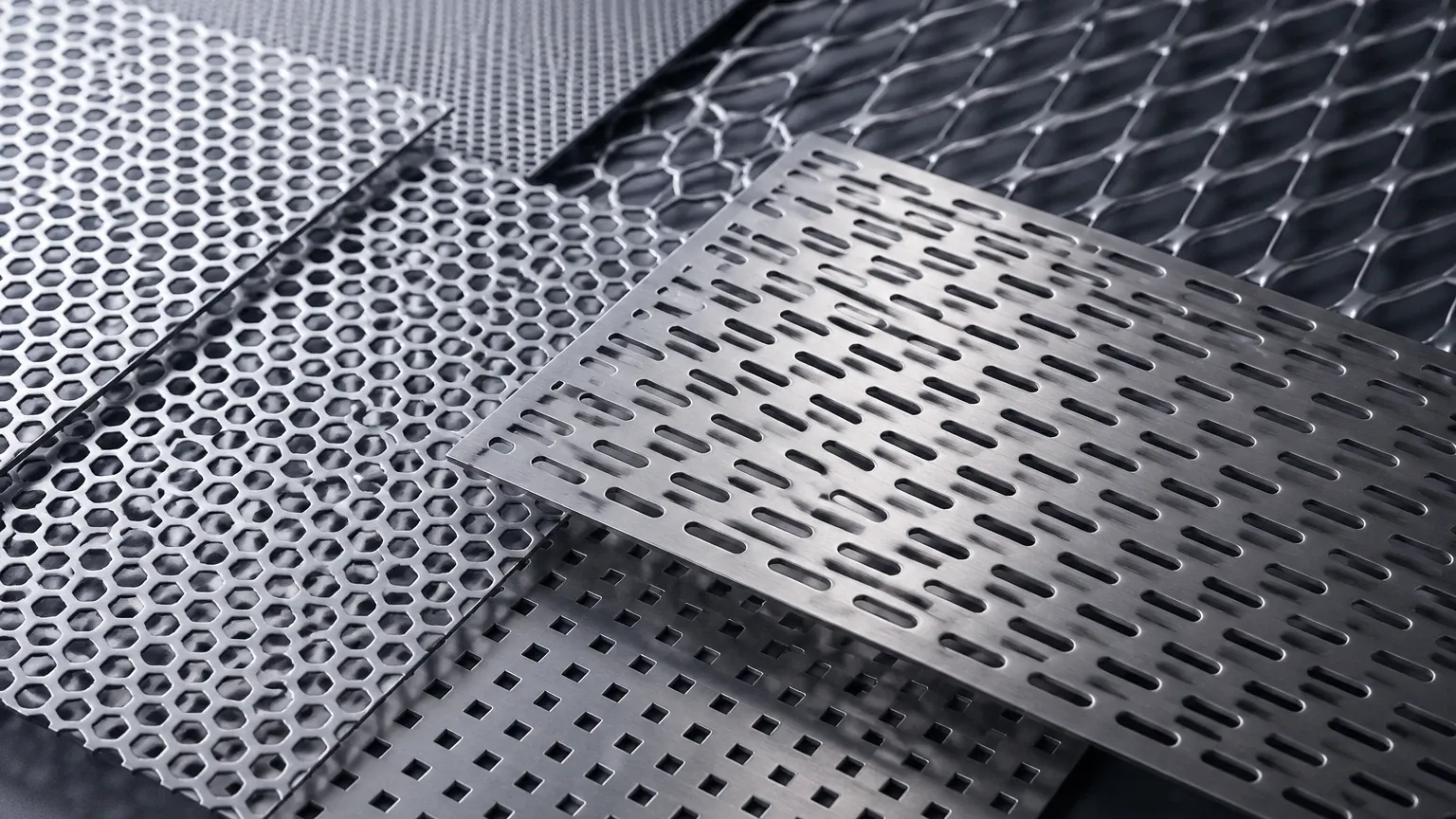
* Perforated Metal: Created by punching holes into a solid sheet. This process allows for a vast variety of hole shapes (round, square, slotted, or custom Graepel patterns) and leaves a solid border around the edges, which simplifies welding and installation.
* Expanded Metal: Created by slitting and stretching the metal simultaneously. This process results in a diamond-shaped mesh. There is no material waste in this process, making it a cost-effective alternative for certain applications.
Performance Trade-offs
Expanded metal is generally lighter and provides a higher strength-to-weight ratio in specific directions. However, graepel perforated metal offers superior precision in hole sizing and a flatter surface, which is often required for high-accuracy filtration and mechanical components. For heavy-duty industrial screens where specific flow characteristics are required, perforated solutions are typically preferred due to the predictability of the hole geometry.
Applications Across Key Industries
Graepel perforated metal is not limited to a single sector; its versatility makes it a staple in various demanding environments.
Chemical and Petrochemical Processing
In these industries, perforated components are used in catalyst support grids, reactor internals, and drainage systems. The ability of 316L stainless steel to resist corrosive chemicals while maintaining structural integrity under high temperatures is a primary reason for its specification.
Food and Beverage Production
Perforated screens are used in grain drying, fruit juice extraction, and brewing processes. The ease of cleaning and the non-reactive nature of stainless steel ensure that the final product remains uncontaminated. Graepel patterns are particularly useful in vibrating screens where both drainage and material movement are required.
Hydraulic and Water Treatment
In hydraulic systems, perforated metal serves as a protective sleeve for filter elements, preventing the collapse of the finer mesh under high-pressure surges. In water treatment, large-scale perforated screens are used for primary filtration to remove large debris before the water enters more sensitive treatment stages.
Customization and OEM Solutions
For many B2B buyers, standard off-the-shelf products do not meet the specific requirements of a proprietary machine or a unique industrial process. This is where the capability for custom manufacturing becomes critical.
Technical Consultation
Manufacturers like Kaifil work closely with engineering teams to determine the optimal perforation pattern for a specific application. This involves analyzing the viscosity of the fluid, the nature of the solids being filtered, and the environmental conditions (temperature, pressure, and chemical exposure).
Precision Manufacturing
Advanced CNC punching and laser cutting technologies allow for the production of graepel perforated metal with extreme accuracy. Customization options include:
* Variable Hole Patterns: Mixing different hole sizes or shapes on a single sheet to control flow distribution.
* Custom Margins: Leaving specific areas of the sheet unperforated for mounting holes or welding zones.
* Forming and Fabrication: Rolling, bending, or welding the perforated sheets into cylinders, cones, or complex cartridges to fit specific filter housings.
Procurement Strategy: Total Cost of Ownership
When evaluating graepel perforated metal, it is a mistake to focus solely on the initial purchase price. Purchasing teams should consider the Total Cost of Ownership (TCO), which includes:
1. Service Life: High-quality stainless steel may have a higher upfront cost but lasts significantly longer in corrosive environments, reducing the frequency of replacements.
2. Maintenance Costs: Materials that are easier to clean (due to superior surface finish) reduce downtime and labor costs.
3. Operational Efficiency: A well-engineered perforation pattern minimizes pressure drop, which in turn reduces the energy consumption of pumps and compressors.
4. Risk Mitigation: Using precision-manufactured components reduces the risk of bypass or structural failure, which could lead to costly downstream damage or product contamination.
Information to Confirm Before Ordering
To ensure a successful procurement cycle, engineers should have the following data points ready when contacting a manufacturer for Perforated & Expanded Metal products:
* Material Grade: Specify exactly which alloy is required (e.g., 304, 316L).
* Thickness: The gauge of the metal sheet, which impacts both weight and strength.
* Hole Specifications: Diameter, shape, and pitch.
* Open Area Percentage: The required flow capacity.
* Sheet Dimensions and Margins: The overall size and the width of the unperforated borders.
* Secondary Operations: Requirements for degreasing, deburring, polishing, or forming.
Conclusion
Graepel perforated metal represents a critical intersection of safety, filtration efficiency, and structural engineering. Whether utilized as a slip-resistant walkway in a chemical plant or a high-precision filter support in a pharmaceutical laboratory, its performance is dependent on the quality of the material and the precision of the manufacturing process. By understanding the technical variables—from material grades to open area calculations—engineers and purchasing professionals can select solutions that optimize their industrial processes while ensuring long-term reliability.
For those seeking reliable OEM and customized filtration solutions, partnering with a manufacturer that understands these engineering boundaries is the key to achieving efficient and cost-effective filtration performance. Through careful selection and customized design, perforated metal components continue to be an indispensable asset in the modern industrial landscape.
