


Perforated Metal Harga
In the landscape of industrial filtration and structural engineering, the procurement of high-quality components requires a deep understanding of both technical specifications and market dynamics. For procurement officers and engineers, evaluating perforated metal harga—the price or cost of perforated materials—is not merely about finding the lowest quote. It involves a comprehensive analysis of material science, manufacturing precision, and the long-term performance of the filtration system.
As a specialized manufacturer, Kaifil provides precision-engineered solutions that balance these variables. Whether you are designing a filtration system for chemical processing or a protective screen for industrial machinery, understanding the factors that influence the cost of Perforated & Expanded Metal is essential for optimizing both performance and budget.
Understanding Material Selection and Its Impact on Perforated Metal Harga
The primary driver of cost in any metal fabrication project is the raw material. In industrial filtration, where durability and corrosion resistance are paramount, stainless steel is the industry standard. However, the specific grade of stainless steel chosen will significantly impact the initial investment.
Stainless Steel Grades
* Grade 304: This is the most common grade used in general industrial applications. It offers good corrosion resistance and excellent formability. For many water treatment or decorative applications, Grade 304 provides a cost-effective balance between performance and price.
* Grade 316 and 316L: These grades contain molybdenum, which provides superior resistance to chlorides and acids. In chemical processing, pharmaceutical manufacturing, and marine environments, Grade 316 is often a non-negotiable requirement. While the [perforated metal harga] for Grade 316 is higher than Grade 304, the increased lifespan in corrosive environments reduces the total cost of ownership.
* Specialty Alloys: For extreme environments involving high temperatures or highly aggressive chemicals, alloys like Duplex stainless steel or Monel may be required. These materials carry a significant price premium due to their specialized properties and the complexity of processing them.
Thickness and Gauge
The thickness of the sheet or plate directly affects the volume of material used and the energy required for the perforation process. Thicker materials (heavier gauges) require more robust machinery and more frequent tool maintenance, which is reflected in the final pricing. Engineers must balance the need for structural integrity with the weight and cost implications of choosing a thicker gauge than necessary.
Technical Specifications That Drive Manufacturing Costs
Beyond the material itself, the geometric specifications of the perforation or expansion process play a critical role in determining the price. Precision is the hallmark of industrial-grade filtration, and tighter tolerances often require specialized handling.
Hole Pattern and Open Area
The "open area" refers to the percentage of the sheet that is removed during perforation. A higher open area allows for greater flow rates but can compromise the structural strength of the sheet.
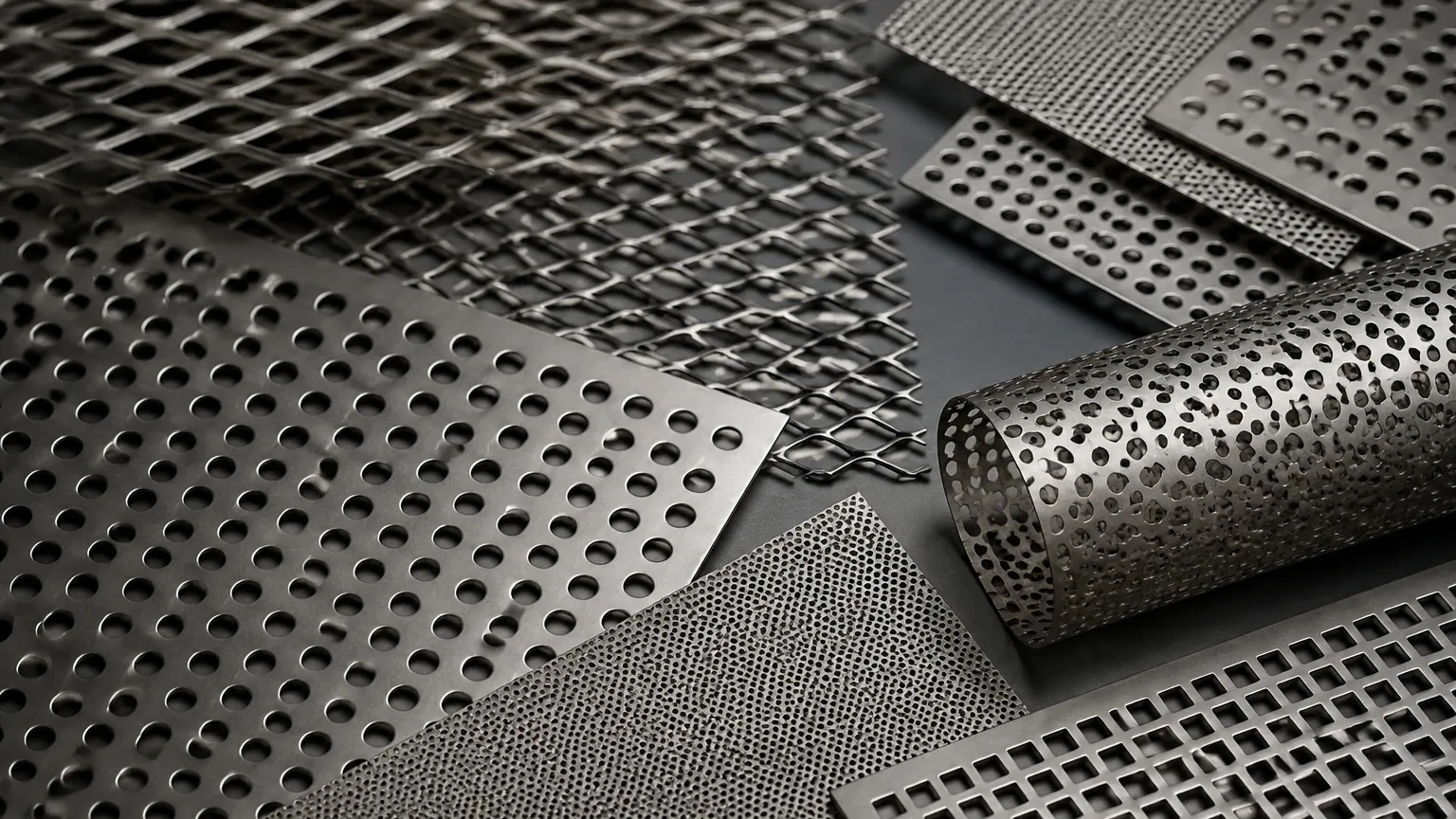
* Standard Patterns: Round holes in a 60-degree staggered pattern are the most common and generally the most economical. Tooling for these patterns is readily available and production speeds are high.
* Custom Patterns: Square, slotted, or decorative patterns may require custom tooling. If a manufacturer like Kaifil needs to develop a specific die for a unique application, the initial setup cost will influence the unit price. However, for large-scale OEM production, these costs are often amortized over the total volume.
Hole Size and Pitch
The relationship between the hole diameter and the "pitch" (the distance between the centers of adjacent holes) determines the filtration accuracy. Smaller holes require finer pins in the perforating press, which are more susceptible to breakage and require slower production speeds. When looking at perforated metal harga, it is important to recognize that ultra-fine filtration (micron-level) typically involves more complex manufacturing steps than coarse screening.
The Engineering Trade-offs Between Perforated and Expanded Metal
While often grouped together, perforated metal and expanded metal are manufactured through different processes, leading to different cost structures and physical properties. Choosing the right one depends on the specific application requirements.
Perforated Metal Characteristics
Perforated metal is created by punching holes into a solid sheet. This process allows for extreme precision in hole size and placement. It is ideal for applications requiring specific flow rates, precise particle retention, and a smooth surface finish. The "slugs" (the material punched out) are typically recycled, but the loss of material during production is a factor in the pricing.
Expanded Metal Characteristics
Expanded metal is produced by simultaneously slitting and stretching the material. This process creates a diamond-shaped mesh without any material waste. Because the process is highly efficient and utilizes the full area of the raw material, the cost per square meter is often lower than perforated metal of a similar thickness.
However, expanded metal has a three-dimensional texture and different mechanical properties. It is excellent for walkways, security screens, and coarse filtration, but may not be suitable for high-precision pharmaceutical or food-grade filtration where a smooth, easy-to-clean surface is required. You can Review product options and application support to determine which manufacturing method aligns with your technical needs.
Customization and OEM Capabilities in Industrial Filtration
For many B2B buyers, standard off-the-shelf products do not meet the rigorous demands of specialized industrial equipment. Customization is where manufacturers like Kaifil provide the most value, though it introduces variables into the pricing model.
Secondary Operations
The raw perforated sheet is often just the beginning. To be integrated into a filtration system, the material may require:
* Leveling and Flattening: The perforation process can introduce internal stresses that cause the metal to curl. Precision leveling ensures the sheet is perfectly flat for subsequent assembly.
* Degreasing and Cleaning: Especially in food and pharmaceutical applications, removing residual lubricants from the manufacturing process is critical.
* Forming and Welding: Many industrial filters require the perforated metal to be rolled into cylinders or formed into specific shapes. High-quality welding (such as TIG or plasma welding) ensures that the seams are as strong and corrosion-resistant as the base material.
* Surface Finishes: Electropolishing, powder coating, or galvanizing can be applied to enhance corrosion resistance or aesthetics. Each of these steps adds to the labor and material costs but significantly improves the component's performance in the field.
Prototyping vs. Mass Production
When evaluating perforated metal harga, volume is a major factor. For OEM partners, high-volume production runs allow for significant economies of scale. Conversely, small-batch prototyping for R&D purposes involves higher per-unit costs due to the setup time required for the machinery. A reliable manufacturer will work with engineers to transition from prototype to full-scale production efficiently.
Evaluating Total Cost of Ownership (TCO) in Filter Components
In a B2B context, the purchase price is only one part of the financial equation. Engineers must consider the Total Cost of Ownership (TCO), which includes maintenance, replacement frequency, and the impact on the overall system's efficiency.
Durability and Replacement Cycles
A lower-priced perforated screen made from an inferior alloy may save money upfront but could fail prematurely due to pitting or stress corrosion cracking. In a chemical plant, the cost of a single hour of unplanned downtime often exceeds the entire cost of the filtration component. Investing in high-grade Perforated & Expanded Metal from a reputable manufacturer ensures longer service intervals and more predictable maintenance schedules.
Operational Efficiency
The precision of the perforation affects the pressure drop across the filter. A poorly engineered screen with inconsistent hole sizes or burrs can lead to increased energy consumption by pumps and compressors. By ensuring precise open areas and clean edges, high-quality perforated metal helps maintain optimal flow rates, reducing energy costs over the life of the system.
Procurement Checklist for Industrial Perforated Metal
To receive an accurate and competitive quote for perforated or expanded metal, purchasing teams should confirm the following technical details with their engineering departments before contacting a supplier:
1. Material Grade: Specify the exact alloy (e.g., SS304, SS316L, Carbon Steel).
2. Dimensions: Provide the thickness, width, and length of the sheets, or the specific dimensions of the finished component.
3. Hole Specification: Define the hole shape, diameter, and pitch (center-to-center distance).
4. Margins: Specify if the sheet requires "plain margins" (unperforated edges) for welding or mounting.
5. Quantity: Determine the total volume, as this heavily influences the manufacturing approach and pricing.
6. Compliance Standards: Note any industry-specific certifications required (e.g., FDA compliance for food contact, ISO quality standards).
By providing clear specifications, you enable manufacturers to provide a precise [perforated metal harga] that reflects the true requirements of the project, avoiding costly revisions or performance failures.
Conclusion
Navigating the complexities of Perforated & Expanded Metal procurement requires a balance of technical knowledge and commercial insight. While price is always a consideration, the focus for industrial applications should remain on material integrity, manufacturing precision, and application-specific design.
Kaifil specializes in delivering custom stainless steel filtration solutions that meet the demanding standards of the global industrial sector. By understanding the engineering factors that drive costs—from material grades to secondary finishing—purchasing teams can make informed decisions that enhance the reliability and efficiency of their operations. For detailed technical specifications and to explore how customized metal components can support your specific application, visit the official product page for Perforated & Expanded Metal.
