


Perforated Metal Hobart
In the industrial landscape of Tasmania, particularly within the heavy industry, maritime, and food processing sectors surrounding Hobart, the demand for high-precision components is constant. Perforated metal serves as a foundational material for filtration, separation, and structural support. For engineers and procurement specialists sourcing perforated metal Hobart, understanding the technical nuances of material selection, hole geometry, and manufacturing tolerances is essential to ensuring long-term performance in demanding environments.
As a specialized manufacturer, Kaifil provides Perforated & Expanded Metal solutions designed to meet rigorous industrial standards. This guide examines the engineering considerations and application-specific requirements that define high-quality perforated metal components used across Hobart’s diverse industrial sectors.
Understanding the Role of Perforated Metal in Industrial Applications
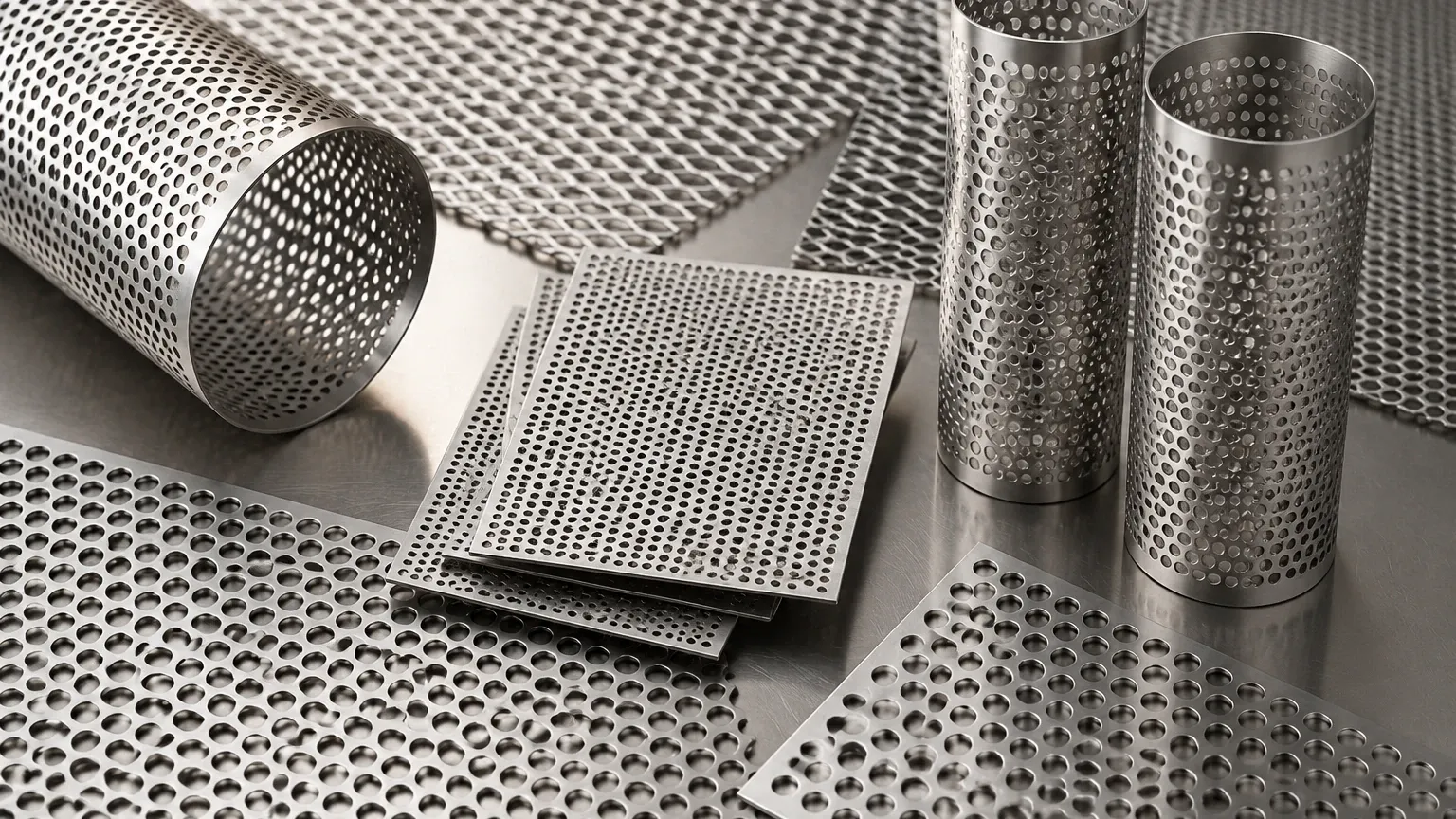
Perforated metal is produced through a mechanical punching process that creates a pattern of holes, slots, or decorative shapes in metal sheets or coils. Unlike expanded metal, which is slit and stretched, perforated metal maintains a higher degree of structural integrity and dimensional stability because the surrounding material remains intact.
In Hobart’s industrial sectors—ranging from aquaculture and maritime engineering to mineral processing—perforated metal is rarely just a screen. It is an engineered component that must manage pressure drops, resist mechanical stress, and provide precise filtration or sorting capabilities. The choice between perforated and expanded metal often depends on the specific requirement for "open area" versus the need for a lightweight, cost-effective mesh. For high-pressure filtration and heavy-duty sorting, perforated stainless steel is typically the preferred choice due to its rigidity and predictable flow characteristics.
Technical Specifications and Material Selection
When specifying perforated metal Hobart projects, the choice of alloy is the most critical factor in determining the component's lifespan. Given the coastal and often harsh environmental conditions in Tasmania, material selection must account for both chemical exposure and atmospheric corrosion.
Stainless Steel 304 vs. 316
For most food and beverage or general industrial applications, Stainless Steel 304 offers excellent formability and cost-efficiency. However, for Hobart’s significant maritime and aquaculture industries, Stainless Steel 316 is the industry standard. The addition of molybdenum in 316 stainless steel provides superior resistance to chloride-induced pitting, which is essential for equipment exposed to seawater or saline environments.
Specialized Alloys
In chemical processing or high-heat environments, engineers may require duplex stainless steels or nickel alloys. These materials offer higher tensile strength and resistance to stress corrosion cracking, ensuring that the perforation pattern remains dimensionally stable even under extreme thermal cycling.
Engineering Considerations: Open Area and Hole Patterns
The performance of a perforated sheet is defined by its geometry. Engineers must balance the requirement for fluid or air flow with the mechanical strength of the sheet.
Calculating Open Area
The "open area" is the percentage of the sheet that is occupied by holes. This determines the flow rate and pressure drop across the filter or screen. For a standard 60-degree staggered round hole pattern, the formula is:
Open Area % = (D² × 90.69) / P²
*(Where D = Hole Diameter and P = Pitch/Center-to-Center distance)*
A higher open area allows for greater throughput but reduces the structural load-bearing capacity of the sheet. In Hobart’s grain processing or mineral sorting facilities, selecting the correct pitch is vital to prevent the "blinding" or clogging of the screen while maintaining enough "bridge" (the metal between the holes) to prevent the sheet from sagging or tearing under load.
Pattern Orientations
* Staggered Patterns: The most common orientation, providing high strength and a uniform distribution of holes. It is ideal for filtration and sorting.
* Straight Patterns: Holes are aligned in both directions. While aesthetically pleasing, this pattern is generally weaker than staggered configurations and is typically reserved for architectural or low-stress ventilation applications.
* Slotted Perforations: Often used in the separation of elongated materials (like seeds or minerals) or in drainage systems where specific flow directions are required.
Industry-Specific Applications in the Hobart Region
The unique economic profile of Southern Tasmania dictates specific requirements for perforated metal Hobart. Kaifil’s manufacturing expertise supports these localized needs through precision-engineered components.
Aquaculture and Maritime Engineering
Tasmania’s aquaculture sector requires robust filtration systems for hatcheries and sea cages. Perforated metal is used in intake screens, waste management systems, and protective barriers. These components must withstand constant immersion in saltwater and resist biofouling. Precision-punched SS316 sheets ensure that flow rates are maintained while preventing the ingress of debris or the escape of stock.
Food and Beverage Processing
From the world-class distilleries to large-scale dairy and fruit processing plants, perforated metal is used in mashing tuns, drying trays, and sorting screens. In these applications, the "cleanability" of the surface is paramount. Perforated sheets must be free of burrs and sharp edges (deburred) to prevent bacterial growth and ensure compliance with food safety standards.
Mining and Mineral Processing
Hobart serves as a logistical hub for various mining operations. Perforated metal is utilized in vibrating screens and centrifugal liners. These parts are subjected to extreme abrasion; therefore, the hardness of the base material and the precision of the hole edges are critical to prevent premature wear and ensure accurate particle sizing.
Evaluating Quality: Precision and Manufacturing Standards
Not all perforated metal is created equal. For technical professionals, evaluating a supplier involves looking beyond the basic dimensions.
1. Flatness and Leveling: The punching process naturally introduces internal stresses into the metal, which can cause the sheet to curl or bow. High-quality perforated metal Hobart suppliers utilize precision leveling equipment to ensure the final product is perfectly flat, which is essential for subsequent welding or framing.
2. Deburring: Punching creates a "die side" and a "punch side." The punch side can often have small burrs. In filtration applications, these burrs can trap particles or cause turbulence. Mechanical deburring or electropolishing is often necessary to achieve a smooth, industrial-grade finish.
3. Tolerances: For OEM applications where the perforated sheet must fit into a pre-existing housing, tolerances on hole diameter, pitch, and margin (the unperforated area around the edges) must be strictly controlled. Standard industrial tolerances are usually +/- 0.1mm to 0.5mm depending on the thickness of the material.
Procurement and Customization for Local Projects
Standard off-the-shelf perforated sheets often fail to meet the specific needs of complex engineering projects. This is where custom manufacturing becomes a necessity. When sourcing perforated metal Hobart, engineers should confirm the following with their manufacturer:
* Custom Margin Requirements: Do you need specific unperforated borders for bolting or welding?
* Secondary Operations: Does the component require forming (rolling into a cylinder), welding, or specialized coatings?
* Material Certification: Can the supplier provide mill test reports (MTRs) to verify the grade and chemistry of the stainless steel?
Kaifil specializes in these custom requirements, offering OEM solutions that integrate seamlessly into existing industrial systems. By controlling the process from material selection to final finishing, we ensure that each component meets the specific filtration or structural needs of the application.
Maintenance and Lifecycle Management
The total cost of ownership for perforated metal is determined by its durability and the ease of maintenance. In Hobart’s industrial environments, regular inspection is required to identify signs of erosion, corrosion, or mechanical fatigue.
* Cleaning Protocols: For filtration screens, backwashing or ultrasonic cleaning is often employed. The smooth surface of precision-punched metal makes it easier to clean than woven wire mesh in certain high-viscosity applications.
* Replacement Cycles: Monitoring the pressure drop across a perforated screen is the most effective way to determine when a component is reaching the end of its functional life. A significant increase in pressure drop, despite cleaning, usually indicates that the holes have been deformed or partially occluded by permanent fouling.
By selecting the correct alloy and hole geometry at the outset, Hobart-based industries can significantly extend the replacement interval of their filtration and separation equipment, reducing downtime and operational costs.
Conclusion
For engineers and purchasing managers, Perforated & Expanded Metal represents a critical investment in process efficiency. Whether the application is a maritime intake screen in the Derwent River or a sorting tray in a local food processing facility, the quality of the perforation determines the success of the operation. By focusing on technical specifications, material integrity, and precision manufacturing, Hobart’s industries can ensure they utilize components that are built for performance and longevity. Kaifil remains committed to providing the technical expertise and customized manufacturing capabilities required to support these demanding industrial applications.
