


Hexagon Perforated Metal
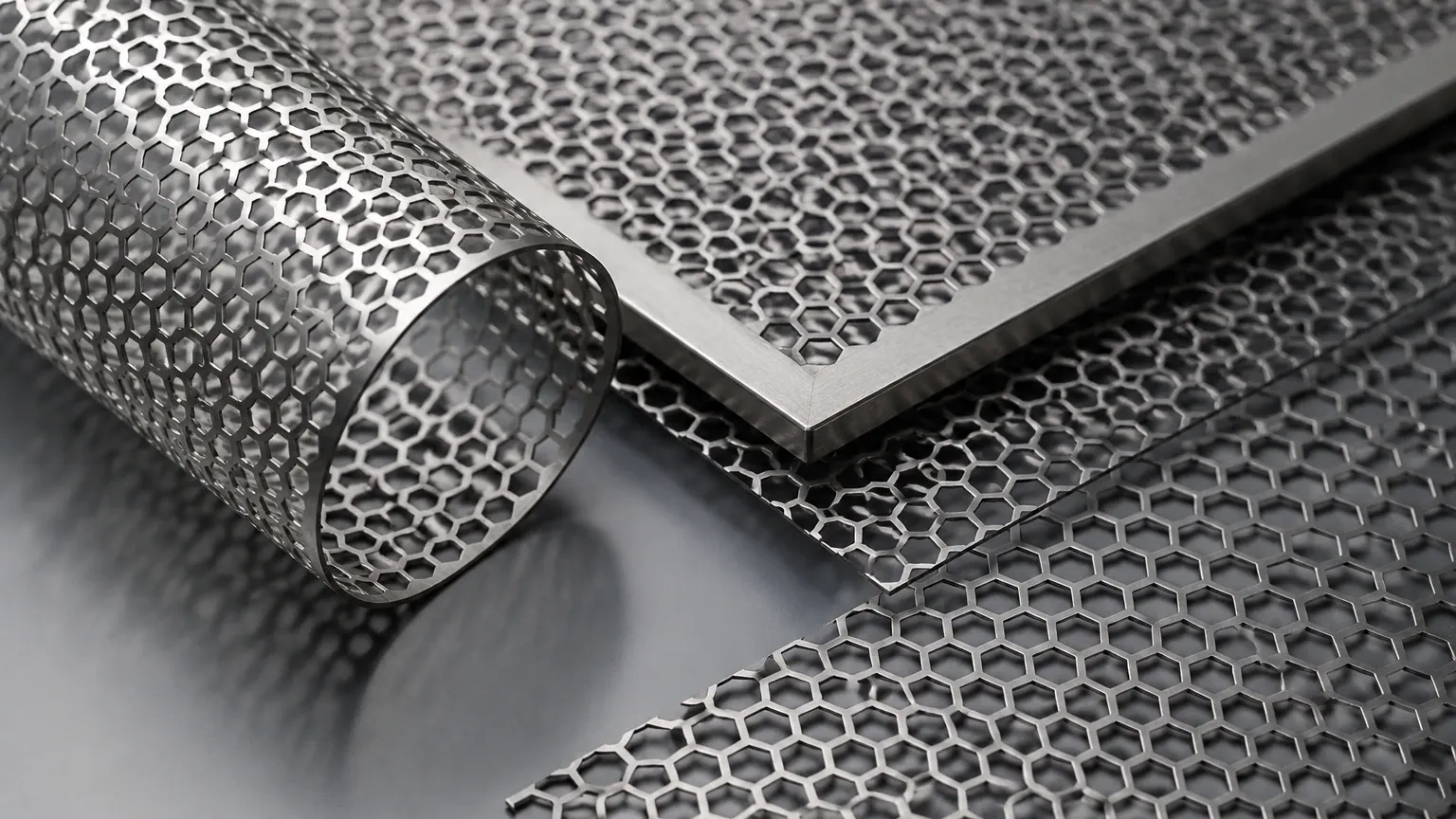
In industrial engineering and filtration design, selecting the appropriate hole pattern is a critical decision that impacts flow rates, structural integrity, and the overall efficiency of a system. Hexagon perforated metal, often referred to as honeycomb perforated metal, is a specialized variant of Perforated & Expanded Metal that offers unique mechanical and fluid-dynamic advantages. Characterized by its high open-area ratio, this pattern is frequently utilized in applications where maximum airflow or liquid throughput is required without sacrificing the structural rigidity of the component.
For engineers and procurement professionals, understanding the technical nuances of hexagon perforated metal is essential for optimizing performance in chemical processing, hydraulic systems, and industrial filtration. This guide examines the engineering characteristics, material considerations, and selection criteria necessary for integrating hexagonal patterns into industrial designs.
The Engineering Advantages of Hexagonal Hole Patterns
The primary reason engineers specify hexagon perforated metal over traditional round or square patterns is the superior open-area ratio. In many configurations, hexagonal patterns can achieve an open area of up to 80% or higher. This high transparency to fluids and gases makes it an ideal choice for high-flow environments.
High Strength-to-Weight Ratio
Despite the high percentage of removed material, the hexagonal geometry provides a robust structural framework. The "bridges"—the metal remaining between the holes—form a truss-like structure that distributes stress more evenly than square patterns. This allows for the use of thinner gauges in some applications, reducing the overall weight of the assembly without a proportional loss in tensile strength.
Optimized Flow Dynamics
In filtration and ventilation, the shape of the aperture influences turbulence and pressure drop. Hexagonal holes allow for a more compact nesting of openings. This minimizes the "dead zones" where fluids might stagnate, leading to a more uniform flow profile across the surface of the metal. For cooling systems and heat exchangers, this uniformity is vital for maintaining consistent thermal gradients.
Material Compatibility and Selection for Industrial Filtration
The performance of hexagon perforated metal is heavily dependent on the substrate material. Because these components are often exposed to corrosive chemicals, high temperatures, or high-pressure differentials, material selection must be aligned with the specific environmental demands of the application.
Stainless Steel (304 and 316L)
Stainless steel is the industry standard for most industrial filtration components manufactured by Kaifil. Grade 304 offers excellent formability and corrosion resistance for general industrial use. However, in environments involving chlorides or high acidity—such as marine applications or chemical processing—Grade 316L is preferred due to its molybdenum content, which enhances resistance to pitting and crevice corrosion.
Carbon Steel and Galvanized Steel
For applications where corrosion is not a primary concern or where the component is protected by a coating, carbon steel provides a cost-effective solution with high structural strength. Galvanized steel offers a middle ground, providing a protective zinc layer that prevents oxidation in humid or outdoor environments.
Aluminum and Specialized Alloys
Aluminum is selected for its lightweight properties and natural resistance to atmospheric corrosion, making it common in aerospace and architectural ventilation. For extreme environments, such as those found in petrochemical refining, specialized alloys like Monel or Inconel may be used to withstand extreme temperatures and aggressive chemical attacks.
Key Technical Specifications: Pitch, Open Area, and Bridge Width
When specifying hexagon perforated metal, engineers must define several geometric parameters to ensure the finished product meets the application's requirements. These specifications directly dictate the mechanical performance and filtration accuracy of the material.
1. Hole Size (Flat-to-Flat): In hexagonal patterns, the hole size is typically measured as the distance between two parallel flat sides. This dimension determines the maximum size of particles that can pass through the medium.
2. Pitch (Center-to-Center): The pitch is the distance from the center of one hexagon to the center of the adjacent hexagon. This measurement is crucial for calculating the open area.
3. Bridge Width: The bridge is the solid metal remaining between the holes. A wider bridge increases the strength and load-bearing capacity of the sheet but decreases the open area. Finding the balance between bridge width and open area is the core challenge of filtration engineering.
4. Sheet Thickness (Gauge): The thickness of the metal affects the durability and the difficulty of the perforation process. For high-pressure hydraulic applications, a thicker gauge is required to prevent deformation under load.
Calculating Open Area
The formula for calculating the open area of a hexagonal pattern is more complex than that of a square pattern due to the staggered arrangement. Generally, the open area percentage is calculated by comparing the area of the hexagonal voids to the total surface area of the sheet. For a standard staggered hexagonal pattern, the open area (OA%) can be estimated as:
*OA% = (Hole Size² / Pitch²) × 100*
(Note: This is a simplified estimation; precise engineering calculations must account for the specific geometry of the stagger.)
Common Industrial Applications for Hexagon Perforated Metal
Due to its versatility, hexagon perforated metal is used across a wide spectrum of industries. Its role often alternates between a primary filtration medium and a secondary support structure.
Support Cores for Filter Cartridges
In high-pressure filtration, the primary filter media (such as fine wire mesh or pleated fabric) often lacks the structural strength to withstand the pressure of the fluid flow. Hexagon perforated metal is frequently rolled into cylinders to serve as an internal support core or an external guard. The high open area ensures that the support structure does not contribute significantly to the system's pressure drop.
Industrial Ventilation and Cooling
Server rooms, power plants, and heavy machinery require constant airflow to dissipate heat. Hexagonal patterns are the preferred choice for protective grilles and vent covers because they provide the maximum possible airflow while preventing the ingress of large debris or unauthorized access.
Chemical and Food Processing
In the food and beverage industry, perforated metals are used for sorting, sifting, and draining. Hexagonal holes are often preferred in sifting applications because the geometry helps prevent "blinding" (clogging) more effectively than round holes for certain particle shapes. When used in these sectors, the metal must be processed to meet strict hygiene standards, including burr-free edges and smooth surface finishes.
Manufacturing Challenges and Quality Control Standards
Producing high-quality hexagon perforated metal requires precision machinery and rigorous quality control. The perforation process involves high-speed punching, which can introduce stresses into the metal sheet.
Managing Material Distortion
The removal of a large percentage of material can cause the metal sheet to warp or curl. Advanced leveling equipment is required to ensure the final product is flat and meets the dimensional tolerances required for further fabrication, such as welding or rolling into cartridges.
Burr Removal and Finishing
During the punching process, small metal burrs can form on the exit side of the hole. In filtration applications, these burrs can break off and contaminate the fluid stream, or they can damage the delicate wire mesh layers of a composite filter. Kaifil employs various deburring techniques, including mechanical sanding and electropolishing, to ensure a clean, safe finish.
Tolerance Standards
Engineers must specify acceptable tolerances for hole diameter, pitch, and margin (the unperforated area around the edges of the sheet). In precision industrial applications, even minor deviations in the pitch can lead to misalignment during the assembly of multi-layered filter components.
Procurement Guide: Essential Factors for Engineers to Confirm
Before placing an order for hexagon perforated metal or components incorporating Perforated & Expanded Metal, purchasing teams and engineers should confirm the following technical details with the manufacturer:
* Load Requirements: What is the maximum pressure or mechanical load the metal must withstand? This will dictate the minimum bridge width and sheet thickness.
* Flow Rate Targets: What is the required volume of fluid or gas that must pass through the surface per unit of time? This determines the minimum necessary open area.
* Environmental Exposure: Will the material be exposed to acids, bases, high temperatures, or abrasive particles? This confirms the necessity of specific stainless steel grades or surface treatments.
* Secondary Fabrication Needs: Does the perforated sheet need to be formed into a cylinder, welded, or framed? Ensuring the margins are correctly specified is critical for successful welding and assembly.
* Compliance and Certification: Are there specific industry standards (such as FDA for food contact or ISO standards for industrial manufacturing) that the material and manufacturing process must adhere to?
Conclusion
Hexagon perforated metal represents a sophisticated solution for industrial challenges that demand a balance between high flow efficiency and structural durability. By leveraging the unique geometric properties of the hexagonal pattern, engineers can design filtration and ventilation systems that operate with lower energy consumption and longer service lives. Whether used as a robust support core for a stainless steel filter cartridge or as a high-performance ventilation grille, the success of the component depends on precise specification, appropriate material selection, and high-quality manufacturing standards. For technical teams, partnering with a manufacturer that understands these engineering boundaries is the most effective way to ensure long-term operational reliability.
