


Perforated Metal Sheet Ireland
In the landscape of Irish industrial manufacturing, the demand for high-precision components has evolved alongside the growth of the pharmaceutical, food processing, and chemical sectors. Selecting a perforated metal sheet Ireland project managers and engineers can rely on requires a deep understanding of material science, mechanical tolerances, and filtration efficiency. As a specialized manufacturer of stainless steel filtration solutions, Kaifil provides the technical expertise necessary to navigate the complexities of Perforated & Expanded Metal applications in demanding environments.
This guide examines the engineering considerations, material standards, and application-specific requirements that define the procurement of perforated metal components for the Irish market.
Understanding the Role of Perforated Metal in Industrial Filtration
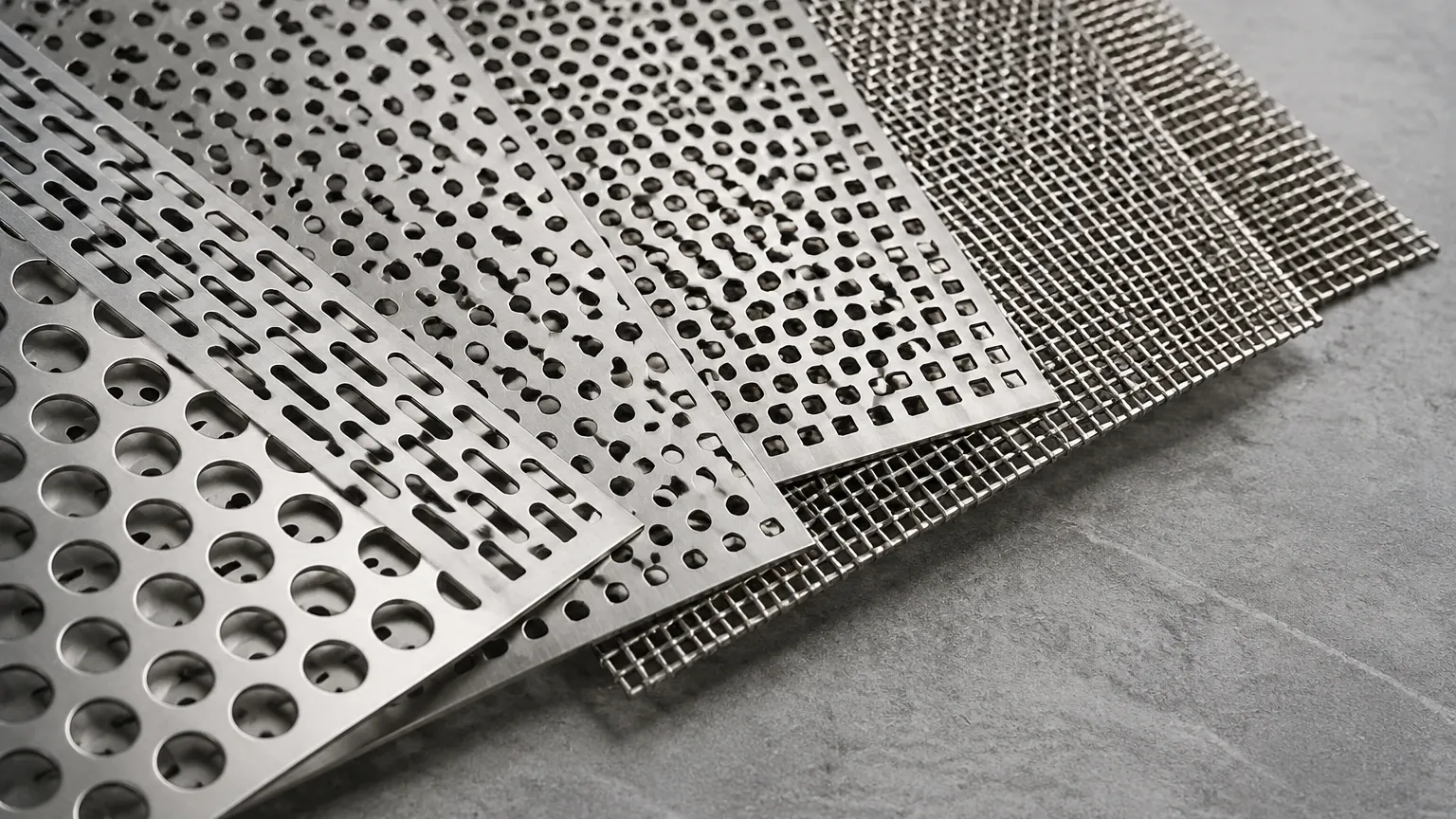
Perforated metal is a functional material produced by punching a series of holes into a solid metal sheet. Unlike woven wire mesh, which is formed by interlacing wires, perforated metal offers superior structural rigidity and a flat surface that is easier to clean and maintain. In industrial filtration, these sheets often serve as the primary filter medium for coarse particles or as a robust support structure (a "core" or "cage") for finer filter media like sintered mesh or pleated fabrics.
For engineers in Ireland, the choice between perforated and expanded metal is often dictated by the specific mechanical loads and flow requirements of the system. While perforated metal provides predictable flow patterns and high precision in hole sizing, expanded metal—created by slitting and stretching the sheet—offers a high strength-to-weight ratio and a three-dimensional surface that can be advantageous in certain architectural or heavy-duty screening applications.
Material Selection for the Irish Industrial Market
Ireland’s industrial sector is characterized by high standards in hygiene and corrosion resistance, particularly within the pharmaceutical clusters in Cork and Dublin and the nationwide dairy processing industry. Selecting the correct alloy is the first step in ensuring the longevity of a perforated metal sheet.
Stainless Steel 304/304L
Grade 304 is the standard "18/8" stainless steel used in many general industrial applications. It offers excellent formability and weldability. In Irish water treatment or general machinery fabrication, 304 provides sufficient corrosion resistance at a cost-effective price point.
Stainless Steel 316/316L
For the pharmaceutical and chemical processing industries, Grade 316 is the preferred choice. The addition of molybdenum enhances resistance to pitting and crevice corrosion, especially in environments containing chlorides. Given Ireland’s maritime climate and the prevalence of CIP (Clean-In-Place) cycles involving harsh chemicals, 316L (the low-carbon version) is often specified to prevent carbide precipitation during welding.
Specialty Alloys
In high-temperature or highly corrosive chemical environments, specialty alloys such as Duplex stainless steel or Hastelloy may be required. These materials provide the mechanical strength and chemical stability necessary for specialized filtration in offshore or heavy chemical synthesis applications.
Engineering Parameters: Hole Patterns and Open Area
The performance of a perforated metal sheet is defined by its geometry. Engineers must balance the need for high flow rates (high open area) with the requirement for structural integrity (sufficient bridge width).
Hole Shapes
* Round Holes: The most common and efficient pattern for filtration. They offer the best combination of strength and variety in open area percentages.
* Square Holes: Often used when a larger open area is required, though they may have lower structural stability compared to round holes.
* Slotted Holes: Ideal for sorting and grading applications, particularly in the agricultural or food processing sectors where elongated particles must be separated.
Open Area Calculation
The "Open Area" is the percentage of the total sheet area that is occupied by holes. This determines the pressure drop across the filter. For a standard 60-degree staggered round hole pattern, the formula for open area (OA) is:
OA% = (d² × 90.69) / p²
Where:
* d = Hole diameter
* p = Pitch (center-to-center distance between holes)
An Irish engineer designing a filtration system for a high-viscosity fluid must carefully calculate this to ensure the pump system can handle the resulting resistance without compromising the structural limits of the metal sheet.
Key Applications Across Ireland’s Leading Sectors
Pharmaceutical and Biotech
In Ireland’s world-class pharmaceutical sector, perforated metal is used in fluid bed dryers, centrifuge baskets, and as support cores for high-purity filter cartridges. The requirement here is for ultra-smooth surfaces (often electropolished) to prevent bacterial growth and ensure complete drainage during cleaning cycles.
Food and Beverage Processing
From dairy filtration in Munster to brewing in Dublin, perforated stainless steel sheets are essential for mashing, straining, and grading. These components must comply with food safety standards, requiring burr-free holes and materials that do not leach contaminants into the product stream.
Water and Wastewater Treatment
Perforated metal screens are used in the primary treatment phase to remove large debris from municipal and industrial wastewater. In these applications, the durability of the sheet and its resistance to abrasion are paramount.
Architectural and Acoustic Applications
Beyond filtration, perforated metal is increasingly used in Irish architecture for facade cladding, sunshades, and acoustic panels. These applications require a focus on aesthetic uniformity and precise margins (the unperforated areas around the edges of the sheet).
Critical Evaluation Criteria for Purchasing
When sourcing a perforated metal sheet Ireland-based procurement teams should evaluate suppliers based on several technical benchmarks:
1. Precision and Tolerance: Industrial filters require tight tolerances on hole diameter and pitch to ensure consistent filtration accuracy. Verify if the manufacturer can meet ISO or industry-specific standards.
2. Flatness and Stress Relief: The punching process introduces internal stresses into the metal. High-quality sheets should be leveled to ensure they remain flat during subsequent fabrication or installation.
3. Edge Quality: Burrs on the exit side of the hole can trap contaminants or damage delicate filter membranes. Ensure the supplier offers deburring and finishing services.
4. Customization Capabilities: Standard off-the-shelf sheets rarely meet the exact needs of a custom industrial filter. Look for OEM capabilities that allow for specific margins, bolt hole circles, and formed shapes (such as cylinders or cones).
Overcoming Common Filtration Challenges
Engineers often face challenges such as "blinding" (clogging of the holes) or structural failure due to pressure surges. To mitigate these risks, consider the following:
* Varying the Pitch: Increasing the pitch increases the "bridge" width, which strengthens the sheet but reduces flow. This is a critical trade-off in high-pressure hydraulic applications.
* Surface Coatings: In some cases, specialized coatings or surface treatments like passivating can further enhance the corrosion resistance of stainless steel components.
* Reinforcement: For large-diameter perforated cylinders used in water intake, internal or external reinforcement rings may be necessary to prevent collapse under vacuum or external pressure.
Total Cost of Ownership and Procurement Strategies
While the initial purchase price of a perforated metal sheet is a factor, the total cost of ownership (TCO) is determined by the component's lifespan and maintenance requirements. A lower-grade material may save costs upfront but lead to frequent replacements and costly downtime in a 24/7 Irish manufacturing facility.
Working directly with a manufacturer like Kaifil allows for technical consultation at the design stage. By optimizing the material grade, hole pattern, and finishing process, engineers can achieve a solution that balances performance with durability. Furthermore, custom OEM manufacturing reduces the need for secondary processing on-site, lowering labor costs and reducing waste.
Conclusion
For Irish industries, the perforated metal sheet is more than just a piece of hardware; it is a critical component of efficient production and environmental protection. Whether it is used in a pharmaceutical cleanroom, a dairy processing plant, or a municipal water facility, the quality of the perforation and the integrity of the material are non-negotiable. By focusing on technical specifications—such as alloy composition, open area calculations, and precision manufacturing—engineers can ensure their systems operate at peak efficiency with minimal maintenance overhead.
As you evaluate your requirements for Perforated & Expanded Metal, prioritize suppliers who understand the rigorous demands of industrial filtration and can provide the documentation and quality assurance necessary for modern Irish industry.
