


Is Perforated Metal Expensive
When engineers and procurement professionals evaluate materials for industrial filtration, acoustic dampening, or structural support, the question of cost is inevitably a primary concern. Specifically, many ask: is perforated metal expensive? The answer is rarely a simple yes or no, as the price of perforated metal is determined by a complex interplay of material grade, manufacturing complexity, and volume.
In the context of industrial filtration, perforated metal serves as a robust support structure for finer mesh or as a primary filter medium itself. Understanding the variables that drive the cost of Perforated & Expanded Metal is essential for optimizing project budgets without compromising on performance or durability.
Understanding the Core Cost Drivers
To determine if perforated metal is expensive for a specific application, one must first look at the primary factors that influence the final invoice. Unlike standard sheet metal, perforated products undergo additional mechanical processing that adds value and cost.
1. Material Type and Grade
The most significant contributor to the cost is the raw material. In industrial environments, stainless steel is the standard due to its corrosion resistance and mechanical strength. However, the specific grade chosen will drastically alter the price point:
* Carbon Steel: Generally the most economical option, but requires secondary finishing (like galvanizing or painting) to prevent rust, which adds to the total cost.
* Stainless Steel 304: A versatile, mid-range option suitable for many food and beverage or general industrial applications.
* Stainless Steel 316/316L: Higher cost due to the addition of molybdenum, which provides superior resistance to chlorides and acids, making it a requirement for chemical processing and marine environments.
* Specialty Alloys: Materials like Monel, Inconel, or Titanium are significantly more expensive and are reserved for highly specialized aerospace or chemical applications.
2. Manufacturing Process: Perforating vs. Expanding
When comparing costs, it is important to distinguish between perforated metal and expanded metal.
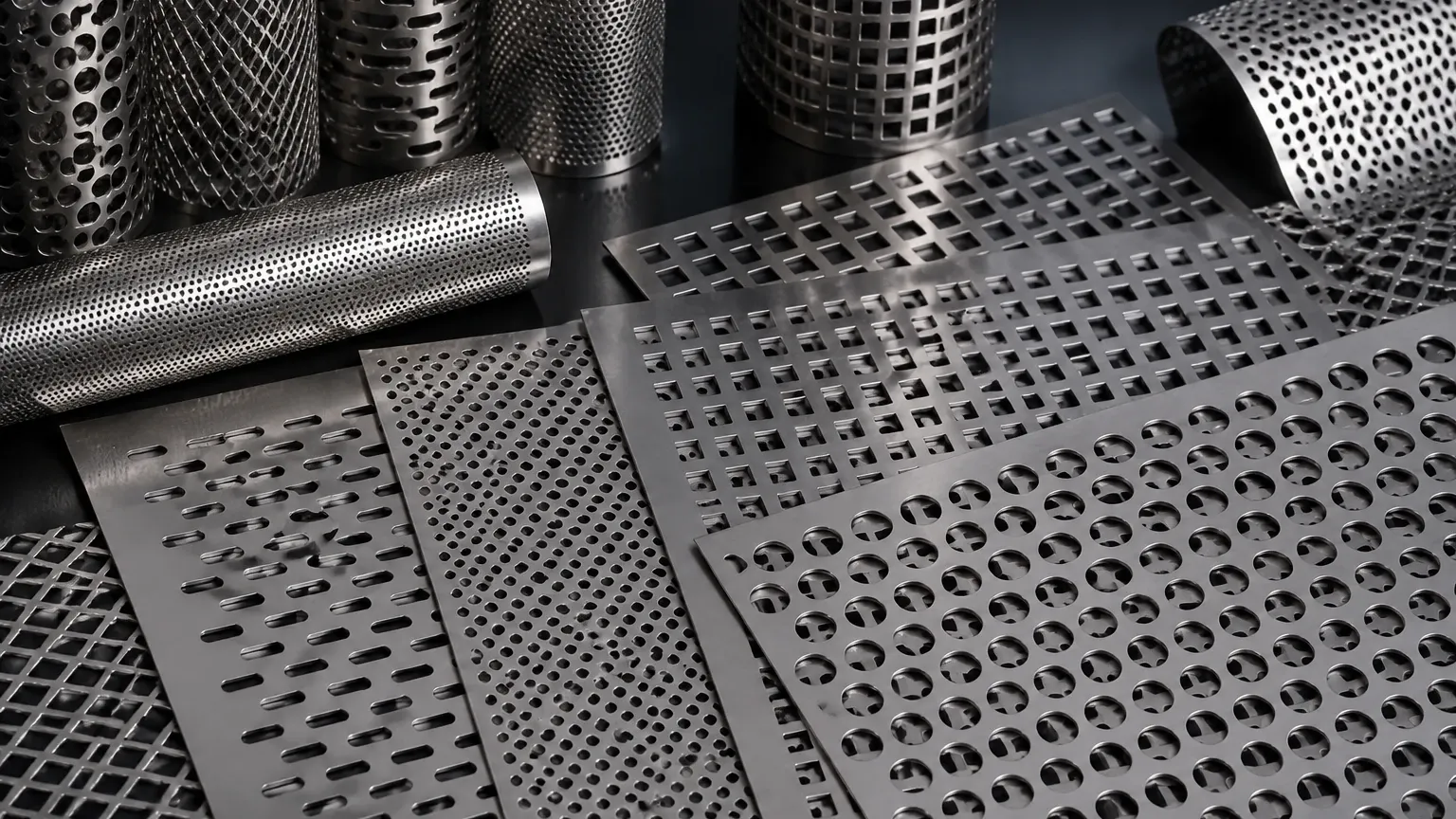
* Perforated Metal: This is produced by punching holes into a solid sheet. The material that is punched out, known as the "slug," becomes scrap. While this scrap is recycled, the loss of material volume and the energy required for high-speed punching contribute to the price.
* Expanded Metal: This is created by slitting and stretching the metal simultaneously. There is virtually no waste in this process, as the original sheet is "expanded" to a much larger area. Consequently, expanded metal is often a more cost-effective alternative when high precision or specific hole shapes are not strictly required.
The Impact of Technical Specifications on Price
Engineering requirements often dictate the complexity of the perforation process. The more specialized the design, the higher the manufacturing overhead.
Hole Pattern and Open Area
Standard round holes in a staggered pattern are typically the most economical because the tooling is readily available and the punching process is highly efficient. When designs move toward square holes, slotted holes, or decorative patterns, the cost increases.
Furthermore, the "open area" percentage (the ratio of holes to solid metal) affects the structural integrity of the sheet. High open-area percentages require more hits per square foot, increasing machine wear and processing time. Conversely, very small holes in thick plate (where the hole diameter is less than the material thickness) are difficult to punch and may require specialized drilling or laser cutting, which significantly raises the price.
Thickness and Gauge
The thickness of the material (gauge) directly impacts the force required to perforate it. Thicker materials require heavy-duty presses and more frequent tool maintenance. While a thicker plate provides more durability for high-pressure hydraulic filters, it also increases the weight and the raw material cost per square foot.
Tolerances and Precision
Standard commercial tolerances are usually sufficient for architectural or general industrial use. However, for precision metal filter components used in pharmaceutical or aerospace applications, tighter tolerances on hole diameter, pitch, and margins are required. Achieving this level of precision requires slower production speeds and more frequent quality inspections, adding to the labor and overhead costs.
Is Perforated Metal Expensive Compared to Alternatives?
To accurately assess value, perforated metal should be compared to other filtration and structural media like woven wire mesh or wedge wire.
* Perforated Metal vs. Woven Wire Mesh: Woven mesh is often cheaper for very fine filtration (micronic levels), but it lacks the structural rigidity of perforated metal. In many systems, a perforated metal cylinder is used as a "basket" to support a fine mesh liner. While the perforated component adds an initial cost, it prevents the mesh from collapsing under pressure, reducing long-term replacement costs.
* Perforated Metal vs. Wedge Wire: Wedge wire (v-wire) is exceptionally durable and easy to clean but is generally much more expensive to manufacture than perforated metal. For applications where standard perforated metal can meet the flow and filtration requirements, it is the more economical choice.
Hidden Costs: Secondary Operations and Logistics
When asking "is perforated metal expensive," one must look beyond the base price of the sheet. Secondary operations often account for a significant portion of the final cost.
Leveling and Degreasing
The punching process can introduce internal stresses that cause the metal sheet to curl or warp. Precision leveling is required to ensure the sheet is flat for further fabrication. Additionally, the lubricants used during punching must be removed through degreasing, especially for food-grade or pharmaceutical applications. These steps add to the processing time.
Custom Fabrication
Most industrial filters are not flat sheets; they are cylinders, cones, or baskets. The cost of rolling, welding, and adding end caps or flanges must be factored in. Choosing a manufacturer like Kaifil that offers end-to-end Perforated & Expanded Metal fabrication can reduce costs by eliminating the need to ship parts between multiple vendors.
Shipping and Handling
Perforated metal is heavy and can be bulky once fabricated into shapes. Shipping costs, especially for international orders, can be substantial. Working with a supplier that optimizes packaging and has established logistics networks is vital for keeping the total landed cost low.
Total Cost of Ownership (TCO) in Industrial Applications
For a purchasing manager, the initial purchase price is only one part of the equation. In B2B industrial sectors, the Total Cost of Ownership (TCO) is a more accurate metric for determining if a material is "expensive."
Durability and Replacement Cycles
A cheaper material that fails every six months due to corrosion or pressure fatigue is ultimately more expensive than a high-quality stainless steel perforated filter that lasts five years. Perforated metal is known for its high strength-to-weight ratio and resistance to mechanical damage, which often results in a lower TCO compared to plastic or lower-grade metal alternatives.
Cleaning and Maintenance
In industries like food processing or wastewater treatment, the ability to clean and reuse a filter is a major cost-saving factor. Perforated metal surfaces are relatively smooth and can be backwashed or chemically cleaned effectively. This reduces the downtime associated with filter changes and the recurring cost of purchasing disposable filter elements.
Strategies to Reduce the Cost of Perforated Metal
If your project budget is tight, there are several engineering decisions you can make to minimize expenses without sacrificing quality:
1. Stick to Standard Sizes: Whenever possible, design your components around standard sheet sizes (e.g., 4'x8' or 1m x 2m) and standard hole patterns. Custom tooling for unique hole shapes is a major upfront expense.
2. Optimize the Margins: Specifying "no margins" (perforation to the very edge of the sheet) is usually cheaper than requiring specific solid borders, which requires more precise machine programming and setup.
3. Material Substitution: If the environment is not highly corrosive, consider if Stainless Steel 304 can replace 316L. Similarly, evaluate if a slightly thinner gauge can meet the pressure requirements.
4. Order in Bulk: Like most manufacturing processes, the setup time for a perforating press is a fixed cost. Spreading that cost over a larger quantity of parts significantly reduces the price per unit.
5. Consult with the Manufacturer Early: Engaging with a manufacturer like Kaifil during the design phase allows engineers to identify "cost drivers" in the specifications. Often, a minor change in hole pitch or diameter can lead to significant savings in production time.
Conclusion
So, is perforated metal expensive? While it carries a higher price tag than plain sheet metal due to the specialized machinery and labor involved, it is often the most cost-effective solution for industrial filtration and structural applications when considering its lifespan and performance. By understanding the factors of material grade, pattern complexity, and secondary processing, procurement teams can make informed decisions that balance upfront costs with long-term reliability.
For those requiring high-performance filtration components, selecting a partner with extensive OEM experience and advanced manufacturing capabilities is key. Kaifil provides customized Perforated & Expanded Metal solutions tailored to the specific needs of the chemical, pharmaceutical, and food industries, ensuring that every dollar spent contributes to a durable and efficient filtration system.
