


Perforated Metal Liner Panel
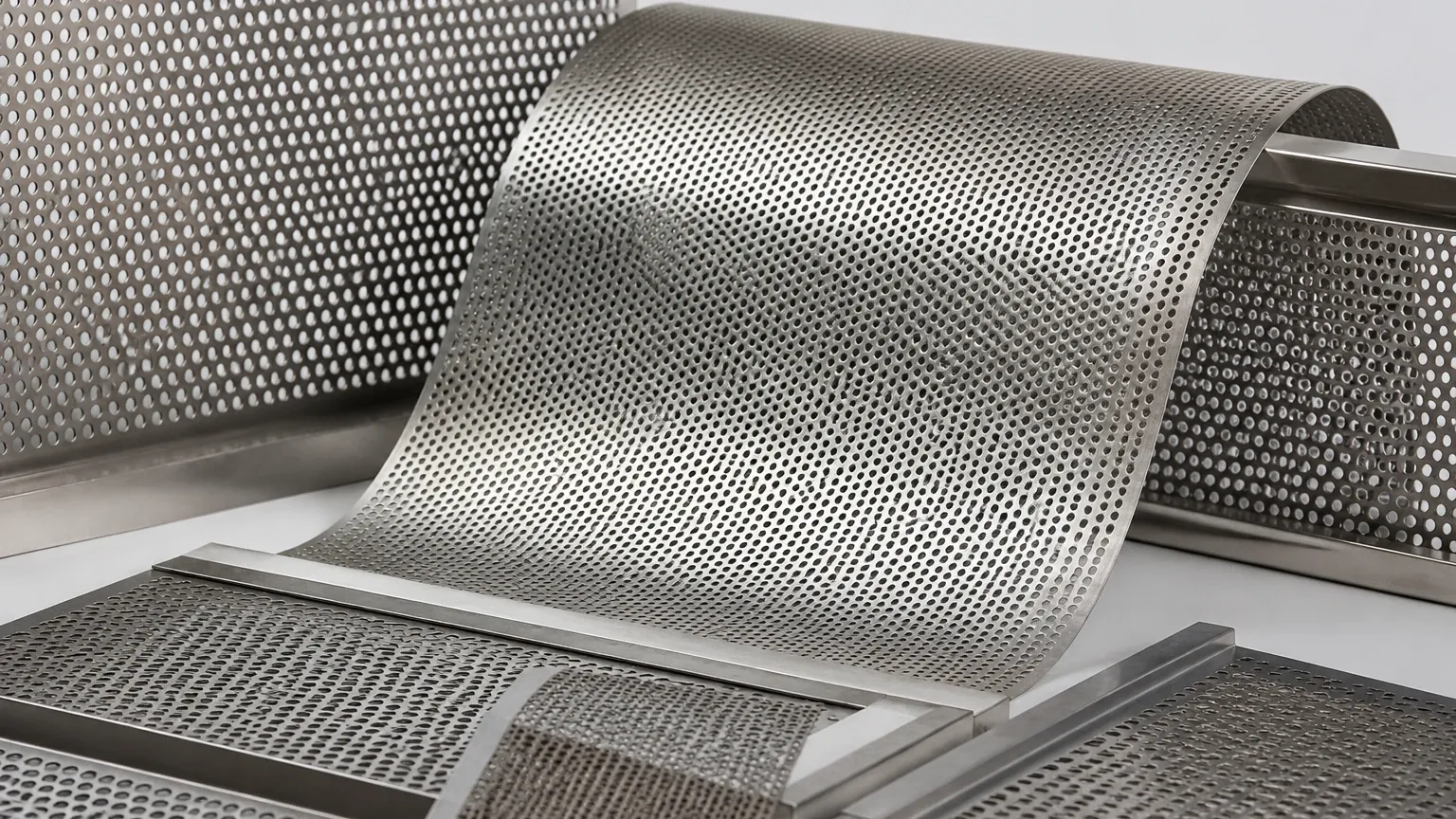
In industrial engineering and manufacturing, the selection of internal structural components often dictates the overall efficiency and longevity of a system. A perforated metal liner panel is one such critical component, serving as a versatile solution for filtration support, acoustic damping, and mechanical protection. These panels are engineered sheets of metal—most commonly stainless steel—featuring a series of punched or laser-cut holes designed to allow the passage of air, liquid, or sound while maintaining a robust physical barrier.
For engineers and procurement teams, understanding the technical nuances of Perforated & Expanded Metal is essential for optimizing industrial processes. Whether used as a protective sleeve in a high-pressure hydraulic system or as a support structure in a chemical reactor, the specific configuration of a perforated metal liner panel must be precisely matched to the application's mechanical and environmental demands.
Engineering Fundamentals of Perforated Metal Liner Panels
The performance of a perforated metal liner panel is defined by its geometric configuration and material properties. When specifying these components, engineers must evaluate several key parameters to ensure the final product meets the required performance benchmarks.
Open Area Calculations
The "Open Area" is perhaps the most vital metric. It represents the percentage of the sheet that is occupied by holes versus solid metal. This ratio determines the flow rate of fluids or gases and the degree of pressure drop across the panel. A higher open area allows for greater throughput but may compromise the structural integrity of the panel. Conversely, a lower open area provides more strength but increases resistance to flow.
Hole Patterns and Geometry
Hole geometry significantly impacts the panel's functionality. The most common patterns include:
* Round Holes: The industry standard due to their structural stability and ease of manufacturing. They are typically arranged in a 60-degree staggered pattern, which provides the highest strength-to-weight ratio.
* Square Holes: Often used when a higher open area is required for maximum visibility or airflow, though they lack the multi-directional strength of round holes.
* Slotted Holes: Preferred for applications involving the filtration of elongated particles or where specific directional flow is required.
Material Selection
In industrial filtration and lining applications, material choice is non-negotiable. Stainless steel (specifically grades 304, 316, and 316L) is the preferred choice for a perforated metal liner panel due to its exceptional resistance to corrosion, oxidation, and mechanical wear. In chemical processing or marine environments, SS316 is often mandated to prevent pitting and stress corrosion cracking.
Industrial Applications and Use Cases
Perforated liner panels are utilized across a broad spectrum of industries, each with unique requirements for filtration accuracy and durability.
Filtration and Separation Systems
In the filtration sector, these panels often serve as the "backbone" for finer filter media. For example, in a multi-stage stainless steel filter cartridge, a perforated metal liner panel provides the necessary rigidity to prevent the collapse of a delicate wire mesh layer under high differential pressure. This is particularly critical in hydraulic systems and water treatment facilities where pressure spikes are common.
Material Handling and Silos
In the food and beverage and agricultural industries, perforated liners are used in silos and chutes to facilitate aeration or drainage. The smooth surface of a stainless steel perforated panel ensures that materials do not snag or accumulate, which is vital for maintaining hygiene standards and preventing cross-contamination.
Acoustic Insulation and Noise Control
For power generation and heavy machinery sectors, perforated metal liner panels are used to house acoustic insulation materials. The perforations allow sound waves to pass through the metal and be absorbed by the underlying media, effectively reducing noise pollution in industrial environments without exposing the insulation to mechanical damage.
Customization and Manufacturing Precision
One of the primary advantages of working with specialized manufacturers like Kaifil is the ability to customize every aspect of the perforated metal liner panel. Industrial applications rarely follow a "one size fits all" approach, and precision manufacturing is required to meet tight tolerances.
Dimensional Accuracy
Custom panels can be manufactured to exact lengths, widths, and thicknesses. For cylindrical liners used in filter housings, the panels must be rolled and welded with extreme precision to ensure a perfect fit. Advanced CNC punching and laser cutting technologies allow for tolerances as tight as +/- 0.1mm, ensuring that the liners integrate seamlessly into existing machinery.
Edge and Margin Configuration
Engineers must also consider "margins"—the solid areas along the edges of the panel. Custom margins are often necessary to facilitate welding or mechanical fastening. A well-designed margin prevents the deformation of the hole pattern during the installation process and provides a clean surface for structural integration.
Surface Finishes
Depending on the application, panels may undergo secondary processes such as electropolishing, degreasing, or deburring. In pharmaceutical and food-grade applications, a smooth, burr-free surface is essential to prevent the buildup of bacteria and to ensure the panel can be cleaned effectively via CIP (Clean-in-Place) systems.
Performance Evaluation and Selection Criteria
Selecting the right perforated metal liner panel involves a rigorous evaluation of the operating environment. Failure to account for specific variables can lead to premature component failure or system inefficiency.
Mechanical Strength and Pressure Limits
The panel must withstand the maximum expected differential pressure. This is a function of the material thickness, the hole size, and the bridge (the distance between holes). Engineers use structural modeling to ensure the liner will not buckle or deform under the weight of the media or the force of the fluid flow.
Corrosion and Chemical Compatibility
In the chemical processing industry, the liner is often exposed to aggressive solvents, acids, or bases. Confirming the chemical compatibility of the metal grade is the first step in the procurement process. For instance, while SS304 is suitable for many water-based applications, SS316L is required for environments containing chlorides to prevent localized corrosion.
Filtration Efficiency
When used as a primary filter, the hole size must be smaller than the smallest particle intended to be captured. However, for most B2B industrial applications, the perforated metal liner panel acts as a coarse strainer or a support for finer mesh. In these cases, the selection focuses on maximizing flow while providing adequate support for the primary filtration layer.
Installation and Maintenance Best Practices
The longevity of a perforated metal liner panel is heavily dependent on correct installation and a proactive maintenance schedule.
Secure Mounting and Sealing
Liners must be securely fastened to prevent vibration, which can lead to fatigue failure. In filtration cartridges, the longitudinal seams of the rolled perforated metal should be TIG welded to ensure a high-strength bond that can withstand thermal expansion and contraction.
Cleaning Protocols
Over time, perforations can become blinded or clogged by debris. In many industrial settings, backwashing or ultrasonic cleaning is used to restore the panel's open area. Stainless steel liners are particularly well-suited for these methods because they can withstand high-temperature steam and aggressive cleaning agents without degrading.
Inspection and Replacement Cycles
Regular inspections should focus on identifying signs of erosion, corrosion, or mechanical deformation. In high-wear applications, such as mining or abrasive fluid handling, the liner should be treated as a wear part with a scheduled replacement cycle to prevent catastrophic failure of the downstream equipment.
Total Cost of Ownership (TCO) in Procurement
When purchasing a perforated metal liner panel, the initial unit price is only one part of the financial equation. Procurement teams should focus on the Total Cost of Ownership (TCO), which includes:
1. Durability: A higher-quality stainless steel liner may have a higher upfront cost but will last significantly longer than a lower-grade alternative, reducing downtime and replacement frequency.
2. Operational Efficiency: A precisely engineered hole pattern minimizes pressure drop, which reduces the energy requirements of pumps and compressors within the system.
3. Maintenance Costs: Liners that are easy to clean and resistant to fouling lower the labor costs associated with system maintenance.
By partnering with a manufacturer that understands the complexities of industrial filtration, businesses can ensure they receive components that are not only built to specification but also optimized for long-term performance. For detailed specifications on available patterns and materials, technical teams should Review product options and application support to align their requirements with manufacturing capabilities.
Conclusion
The perforated metal liner panel is a foundational element in modern industrial design. From providing the structural integrity needed for high-pressure filtration to ensuring the efficient flow of materials in a processing plant, its role cannot be overstated. By focusing on technical parameters such as open area, material grade, and manufacturing tolerances, engineers can select a solution that enhances the reliability and efficiency of their operations. As industrial demands continue to evolve toward higher pressures and more corrosive environments, the precision and quality of these metal components remain a top priority for successful project execution.
