


Perforated Metal Lowes
In the realm of industrial maintenance and engineering design, sourcing the right materials often begins with a search for accessibility and speed. For many professionals, the initial inquiry into "perforated metal lowes" stems from the need for immediate, small-scale solutions or prototype materials. While retail hardware stores provide a valuable service for general consumer needs and minor home repairs, the requirements of industrial filtration, chemical processing, and heavy-duty manufacturing demand a higher level of precision and material integrity.
Understanding the distinction between retail-grade metal products and industrial-grade Perforated & Expanded Metal is essential for engineers and purchasing teams. This guide examines the technical parameters, material specifications, and performance expectations that differentiate professional filtration components from off-the-shelf retail options.
Understanding the Limitations of Retail-Grade Perforated Metal
When searching for "perforated metal lowes," buyers typically find a limited selection of thin-gauge sheets, often made from aluminum or galvanized steel. These products are designed for aesthetic applications, such as cabinet inserts, radiator covers, or basic ventilation. However, industrial environments present challenges that retail products are not engineered to withstand.
Material Grade and Corrosion Resistance
Retail outlets usually stock general-purpose alloys. In contrast, industrial applications in food processing, pharmaceuticals, or marine environments require specific grades such as 304, 316, or 316L stainless steel. These materials offer superior resistance to pitting and crevice corrosion, which is critical when the metal is exposed to caustic cleaning agents or high-salinity fluids.
Gauge and Structural Integrity
The thickness (gauge) of perforated metal found in big-box stores is often insufficient for high-pressure hydraulic systems or large-scale industrial strainers. Industrial-grade perforated metal is available in a much wider range of thicknesses, ensuring that the component can maintain its structural shape under the mechanical stress of fluid flow and pressure differentials.
Precision of Hole Patterns
For filtration purposes, the accuracy of the hole size and the consistency of the pitch (the distance between the centers of the holes) are paramount. Retail products often have wider tolerances, which can lead to inconsistent flow rates and bypass of particulate matter. Professional manufacturing ensures that every perforation meets exact micron or millimeter specifications.
Technical Specifications for Industrial Perforated & Expanded Metal
Selecting the right metal component requires a deep dive into technical specifications that go far beyond what is available in a standard retail description. When moving from a consumer search like "perforated metal lowes" to an industrial procurement strategy, engineers must evaluate several key factors.
Hole Patterns and Geometry
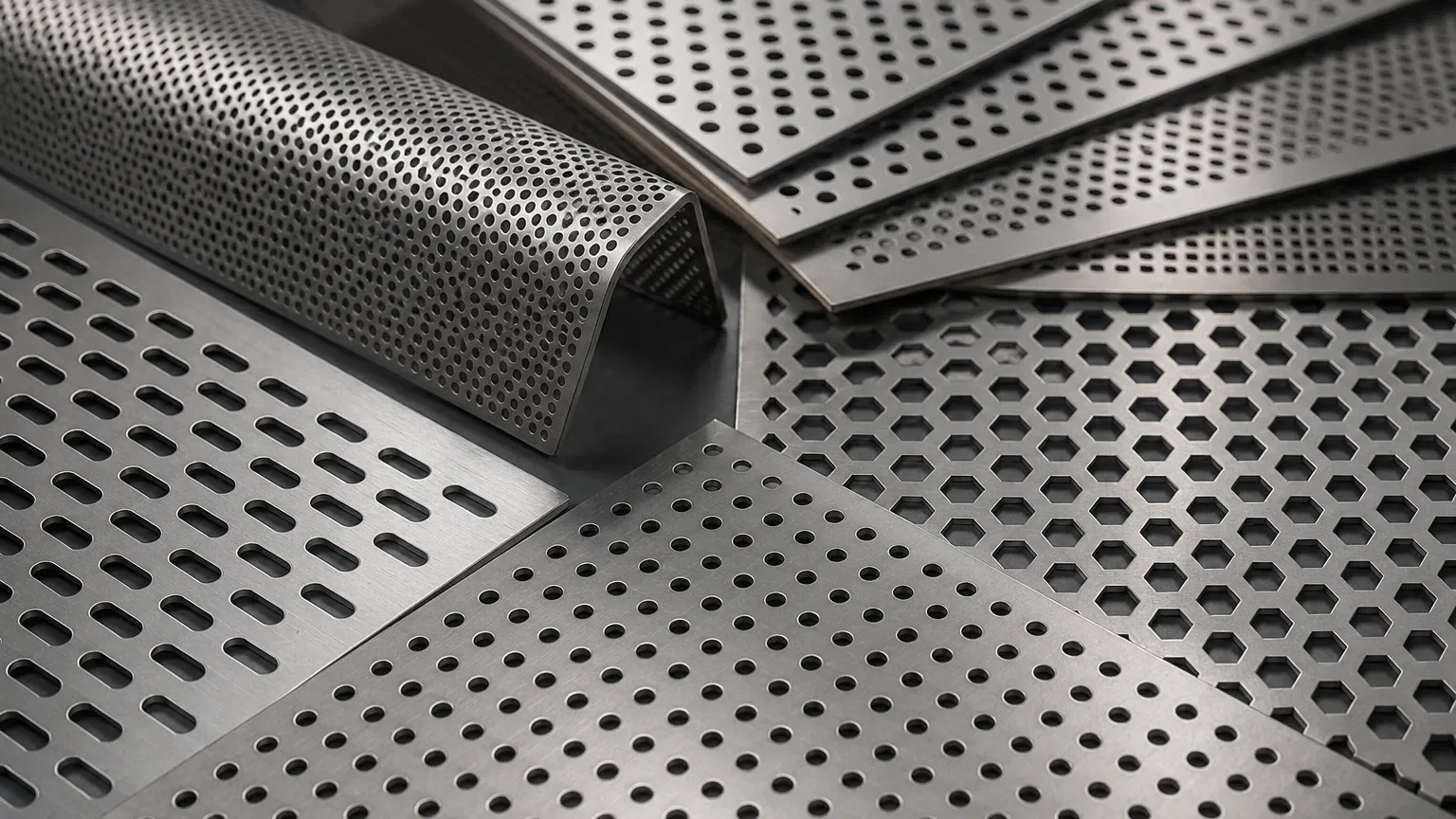
Industrial perforated metal is available in various patterns, each serving a specific mechanical purpose:
* Round Holes: The most common and versatile pattern, offering a balance of strength and open area. They are typically arranged in a 60-degree staggered orientation to maximize strength and provide uniform flow.
* Square Holes: Often used when a higher open area is required, though they may offer less structural rigidity than round holes.
* Slotted Holes: Ideal for sorting and grading applications where elongated particles must be filtered or retained.
Expanded Metal Characteristics
Unlike perforated metal, which is created by punching holes out of a sheet, expanded metal is produced by slitting and stretching the material. This process creates a diamond-shaped opening and results in a product that is stronger and lighter than the original sheet. It is an excellent choice for support structures in filter cartridges or for safety grates where slip resistance and high airflow are required.
Calculating Open Area
The open area percentage is a critical calculation for any filtration system. It determines the flow capacity and the pressure drop across the filter. For example, a 60-degree staggered round hole pattern's open area is calculated using the formula:
* OA = (0.9069 × D²) / P²
Where D is the hole diameter and P is the pitch. Professional manufacturers provide precise calculations to ensure the filter does not become a bottleneck in the production line.
Engineering Considerations for Filtration and Support
In B2B industrial applications, perforated and expanded metals are rarely used in isolation. They often serve as the "skeleton" or support structure for finer wire mesh layers in complex filtration assemblies.
Pressure Drop and Flow Dynamics
Engineers must consider the Total Open Area (TOA) to minimize energy consumption. A low TOA increases the velocity of the fluid passing through the holes, which can lead to turbulence and increased wear on the filter media. By customizing the perforation pattern, manufacturers can optimize the flow dynamics for specific viscosities and flow rates.
Mechanical Support for Mesh Media
In a stainless steel filter cartridge, the perforated metal core provides the necessary collapse strength to support fine wire mesh. If the support core is too weak—a common risk with thin-gauge retail materials—the pressure of the fluid can cause the mesh to deform or the core to buckle, leading to system failure and potential downstream contamination.
Thermal Stability
Many industrial processes operate at extreme temperatures. Unlike the light-duty materials found when searching "perforated metal lowes," industrial stainless steel alloys maintain their mechanical properties and oxidation resistance at high temperatures, ensuring a long service life in steam filtration or high-heat chemical reactors.
When to Move Beyond Consumer Retail Sourcing
While a retail store might be sufficient for a quick fix on a non-critical component, certain triggers indicate it is time to engage with a professional manufacturer like Kaifil.
1. Requirement for Certification: If your application requires FDA compliance for food contact, 3.1 material certificates for traceability, or ISO quality standards, retail products will not suffice.
2. Custom Dimensions: Industrial machinery often requires non-standard sheet sizes, specific margins (unperforated areas), or circular blanks that are ready for assembly. Professional manufacturers can provide precision-cut components that reduce waste and assembly time.
3. High Volume Production: For OEM applications, sourcing through retail channels is economically unfeasible. Direct manufacturing provides the scale and cost-efficiency needed for ongoing production runs.
4. Specialized Alloys: When the application involves highly corrosive acids or specialized chemicals, materials like Monel, Inconel, or 316L stainless steel are required—options rarely found in general hardware aisles.
Selection Guide: Choosing the Right Metal Filter Component
To move from a general search to an informed purchase, engineers should follow a structured selection process. This ensures the Perforated & Expanded Metal chosen will perform reliably in the intended environment.
* Step 1: Define the Environment. Will the metal be submerged? Exposed to high heat? Subjected to high-pressure pulses? This dictates the material grade and thickness.
* Step 2: Determine Filtration Goals. What is the target particle size? This determines whether the perforated metal acts as the primary filter or as a support for a finer mesh.
* Step 3: Calculate Mechanical Requirements. Determine the required collapse strength and burst pressure. This influences the gauge of the metal and the choice between perforated or expanded structures.
* Step 4: Specify Finishing Requirements. Does the metal need to be deburred, degreased, or electropolished? In pharmaceutical and food industries, a smooth, burr-free surface is essential to prevent bacterial growth and ensure easy cleaning.
Custom Manufacturing Capabilities at Kaifil
Kaifil specializes in bridging the gap between standard metal sheets and high-performance industrial components. By focusing on the specific needs of the B2B sector, Kaifil provides engineering support that goes far beyond the simple transaction of a retail purchase.
Our capabilities include precision punching of various hole shapes, specialized expanding techniques for unique diamond patterns, and advanced forming processes like rolling, welding, and flanging. This allows us to deliver complete filter components—such as perforated inner cores or expanded metal outer guards—that are ready for immediate integration into your filtration systems.
By choosing a professional manufacturer, you gain access to technical expertise regarding material compatibility, filtration efficiency, and long-term durability. This approach not only ensures the safety and reliability of your industrial processes but also reduces the total cost of ownership by extending the replacement cycles of your filtration equipment.
Conclusion
While the convenience of searching for "perforated metal lowes" is undeniable for simple tasks, industrial success relies on precision, material science, and specialized manufacturing. For engineers and purchasing managers in demanding sectors like chemical processing or water treatment, the transition to professional-grade perforated and expanded metal is a critical step in optimizing system performance. By focusing on technical specifications and application-specific designs, you can ensure that your filtration components provide the durability and accuracy required for modern industrial operations.
