


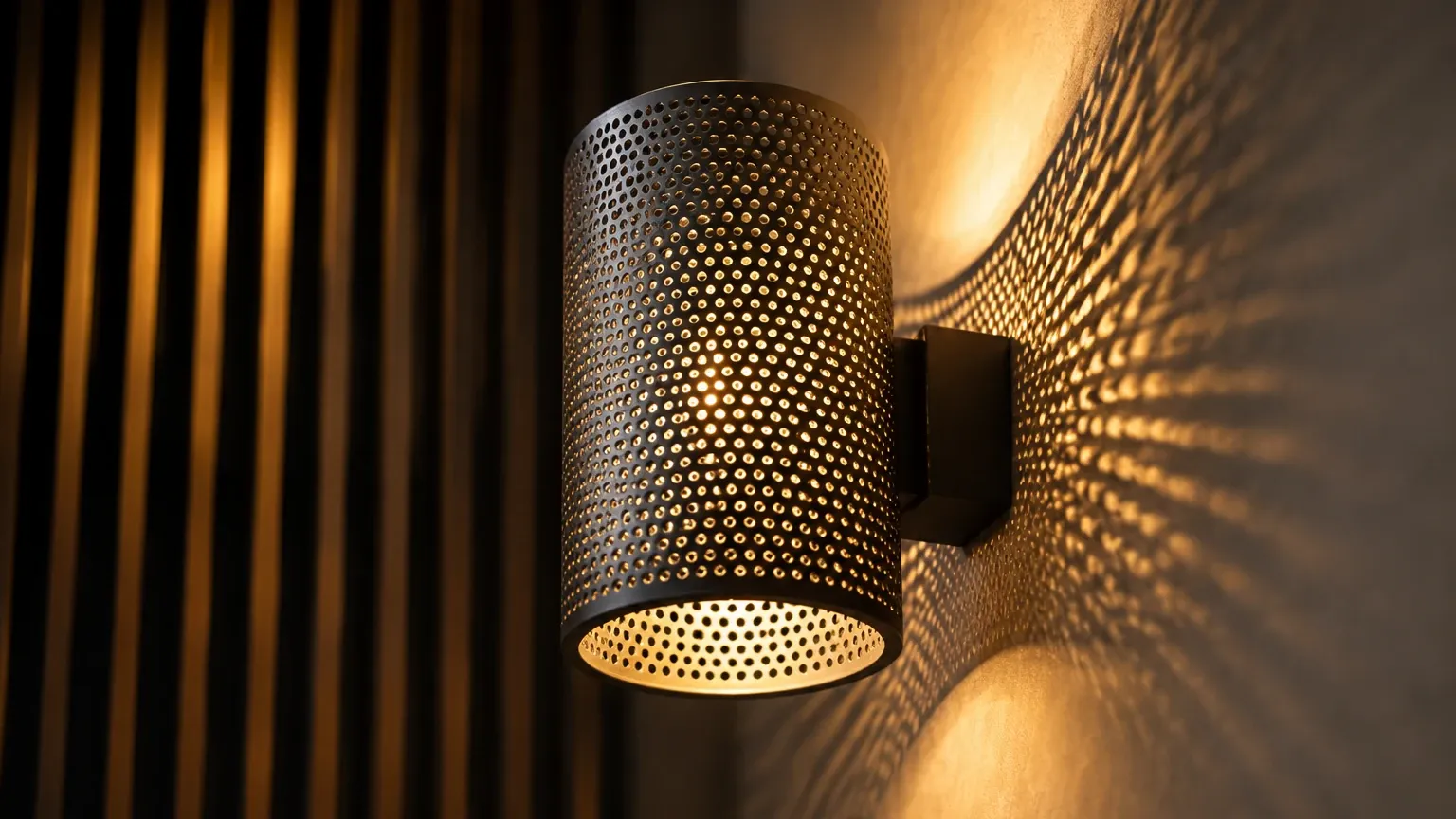
Perforated Metal Light
In industrial engineering and architectural design, the term "perforated metal light" refers to the strategic use of perforated metal sheets to control, diffuse, or shield light while maintaining structural integrity and, in many cases, providing filtration or ventilation. While perforated metal is a staple in heavy-duty filtration, its role in light management is equally critical for engineers designing machinery enclosures, safety guards, and architectural elements where visibility and illumination must be balanced with protection.
Selecting the right Perforated & Expanded Metal for light-related applications requires a deep understanding of material properties, hole patterns, and the physics of light transmission. This guide examines the technical considerations essential for specifying perforated metal components that meet both functional filtration needs and specific lighting requirements.
Engineering Principles of Light Transmission through Perforated Metal
The primary function of perforated metal in lighting applications is to act as a diffuser or a directional shield. The amount of light that passes through a metal sheet is directly proportional to its "open area percentage." This is a mathematical calculation based on the hole diameter and the pitch (the distance between the centers of adjacent holes).
From an engineering perspective, light transmission is not merely about the holes; it is about the interaction between the light source and the metal surface. When light hits a perforated sheet, a portion passes through the apertures (direct transmission), while another portion is reflected or absorbed by the metal bridges (the solid areas between holes).
For industrial applications requiring high visibility, such as protective screens for high-intensity lamps or observation ports in chemical reactors, a high open area is necessary. Conversely, for glare reduction or aesthetic light diffusion in architectural panels, a lower open area with staggered hole patterns may be preferred to break up the light path and create a softer illumination profile.
Material Selection for Durability and Reflectivity
The choice of material significantly impacts how a perforated metal light component performs over time, especially in demanding industrial environments. Kaifil specializes in stainless steel solutions, which are preferred for their superior mechanical properties and resistance to environmental degradation.
1. Stainless Steel 304: The standard grade for most industrial applications. It offers excellent corrosion resistance and can be polished to increase light reflectivity, making it ideal for internal light housings or reflectors.
2. Stainless Steel 316/316L: Recommended for marine environments, chemical processing plants, or pharmaceutical facilities. The addition of molybdenum provides enhanced resistance to pitting and crevice corrosion, ensuring that the perforated apertures remain clear and the surface does not dull over time, which would otherwise diminish light output.
3. Aluminum: Often used when weight is a primary concern. While lighter than steel, it lacks the same level of structural rigidity and high-temperature resistance required in many industrial filtration and lighting setups.
Surface finish also plays a role. A 2B mill finish provides a matte appearance that diffuses light, whereas an electropolished finish creates a mirror-like surface that maximizes light reflection. In filtration systems where light is used for monitoring (such as sight glasses), the finish must be consistent to avoid optical distortions.
Key Design Parameters: Open Area and Hole Patterns
When specifying perforated metal for light management, engineers must evaluate several geometric factors. These factors determine the balance between the "lightness" of the material (its weight and transparency) and its physical strength.
Round Hole Patterns
Round holes are the most common and cost-effective pattern. They provide the most uniform distribution of stress across the sheet and allow for predictable light diffusion. A 60-degree staggered pattern is the industry standard, offering the highest possible open area while maintaining the structural strength of the bridges.
Square and Hexagonal Patterns
Square holes offer a higher open area than round holes, which is beneficial for maximum light transmission. However, they are more prone to structural deformation under mechanical stress. Hexagonal (honeycomb) patterns provide an even higher open area—often exceeding 80%—and are frequently used in high-end lighting fixtures and ventilation grilles where maximum airflow and light passage are required.
Calculating Open Area
To determine the light transmission of a perforated sheet, engineers use the following formula for a 60-degree staggered round hole pattern:
Open Area % = (D² × 90.69) / P²
Where:
* D = Hole Diameter
* P = Pitch (Center-to-center distance)
Understanding this ratio is vital when the perforated metal must serve a dual purpose, such as a filter media that also allows for visual inspection of the fluid or gas being processed.
Applications in Industrial Filtration and Protection
Perforated metal light solutions are not limited to aesthetics; they are functional components in complex industrial systems.
Machinery Safety Guards
In manufacturing environments, safety guards must protect operators from moving parts while allowing them to see the machinery's operation. Perforated metal provides a robust barrier that does not block ambient light or line-of-sight, ensuring that safety and productivity are maintained simultaneously.
Acoustic and Light Diffusion in HVAC
In large-scale HVAC systems, perforated metal sheets are used to line ducts. These sheets serve to diffuse light (preventing glare in office or laboratory settings) while also acting as acoustic baffles to reduce noise pollution. The perforation size must be engineered to prevent the whistling effect often caused by high-velocity airflow.
Electronic Shielding (EMI/RFI)
Perforated metal is used in electronic enclosures to provide ventilation and light visibility for status indicators while shielding internal components from electromagnetic interference (EMI). The hole size must be smaller than the wavelength of the radiation being blocked, a critical consideration in telecommunications and medical imaging equipment.
Evaluating Structural Integrity vs. Light Transmission
A common challenge in specifying perforated metal is the trade-off between the gauge (thickness) of the metal and the desired open area. As the open area increases to allow more light through, the structural integrity of the sheet decreases.
For industrial filters or light covers subjected to vibration or pressure, the "bridge" width must be sufficient to prevent the metal from tearing or sagging. Engineers must consider the yield strength of the material. For instance, a 316 stainless steel sheet with a 50% open area will be significantly stronger than an aluminum sheet with the same pattern.
If a high open area is required but structural strength is at a premium, expanded metal may be an alternative. However, expanded metal creates a directional light effect due to the angled strands, whereas perforated metal provides a more uniform, flat surface for light diffusion.
Customization and Manufacturing Capabilities
Industrial applications often require bespoke solutions that standard off-the-shelf perforated sheets cannot provide. Customization involves more than just choosing a hole size; it involves engineering the component for a specific lifecycle and environment.
Kaifil provides comprehensive OEM services for Perforated & Expanded Metal, focusing on precision and material purity. Customization options include:
* Varying Margins: Solid edges around the perforated area to facilitate welding or mounting without compromising the hole pattern.
* Complex Geometries: Laser-cutting or punching perforated patterns into non-rectangular shapes for specific machine housings.
* Multi-Stage Filtration: Combining perforated metal with fine wire mesh layers to create a composite filter that manages light, airflow, and particulate matter simultaneously.
* Precision Tolerances: Ensuring hole diameters and pitches are consistent across large production runs, which is critical for uniform light diffusion in sensitive optical applications.
When working with a manufacturer, it is essential to provide detailed specifications regarding the operating temperature, exposure to corrosive agents, and the specific light source (LED, UV, or high-intensity discharge) that will interact with the metal.
Maintenance and Long-term Performance
To ensure the longevity of a perforated metal light component, regular maintenance and proper initial selection are required. In filtration environments, the buildup of debris (blinding) can not only reduce filtration efficiency but also block light transmission, making visual monitoring difficult.
Cleaning Protocols
Stainless steel perforated components are generally easy to clean using high-pressure water, steam, or chemical solvents, depending on the grade of steel. For light-diffusing panels, it is important to avoid abrasive cleaners that could scratch the surface and alter the light diffusion properties.
Corrosion Monitoring
In chemical processing, even 316L stainless steel can experience stress corrosion cracking if exposed to high concentrations of chlorides at elevated temperatures. Regular inspections should focus on the bridges between holes, as these are the areas where stress is concentrated and where corrosion is most likely to initiate.
By selecting high-quality materials and precisely engineered patterns, industrial facilities can achieve a balance between light management, safety, and filtration efficiency. Whether the goal is to protect a high-value light source in a hazardous environment or to provide a durable, transparent barrier for machinery, perforated metal remains one of the most versatile materials available to the modern engineer.
