


Locker Perforated Metal
In industrial, commercial, and institutional environments, the choice of material for storage systems is a critical engineering decision that impacts security, ventilation, and structural longevity. Locker perforated metal is a specialized application of Perforated & Expanded Metal designed to balance the need for physical protection with the requirement for airflow and visibility. As a manufacturer specializing in precision metal components, Kaifil provides high-performance perforated solutions that meet the rigorous demands of industrial storage and equipment enclosures.
Selecting the correct perforated metal for locker systems requires a deep understanding of material properties, hole patterns, and the specific environmental factors of the installation site. This guide explores the technical considerations necessary for engineers and purchasing teams to specify the right components for their projects.
Understanding the Role of Perforated Metal in Locker Systems
Locker perforated metal serves three primary functions: ventilation, visibility, and security. Unlike solid sheet metal, perforated panels allow for continuous air circulation, which is essential in environments where moisture, odors, or heat may accumulate. This is particularly relevant in industrial changing rooms, chemical storage facilities, and electronic equipment lockers where passive cooling is required.
From an engineering perspective, the perforation process involves punching a specific pattern of holes into a metal sheet. This process must be controlled to ensure that the structural integrity of the panel is maintained. The resulting "open area"—the percentage of the sheet that is comprised of holes—determines the efficiency of the airflow. However, increasing the open area often decreases the overall strength of the panel, requiring a calculated trade-off between ventilation and impact resistance.
Technical Specifications: Hole Patterns and Open Area
The performance of locker perforated metal is largely dictated by the geometry of the perforations. Engineers must specify the hole shape, size, and pitch (the distance between the centers of adjacent holes) to achieve the desired functional outcome.
Round vs. Square Perforations
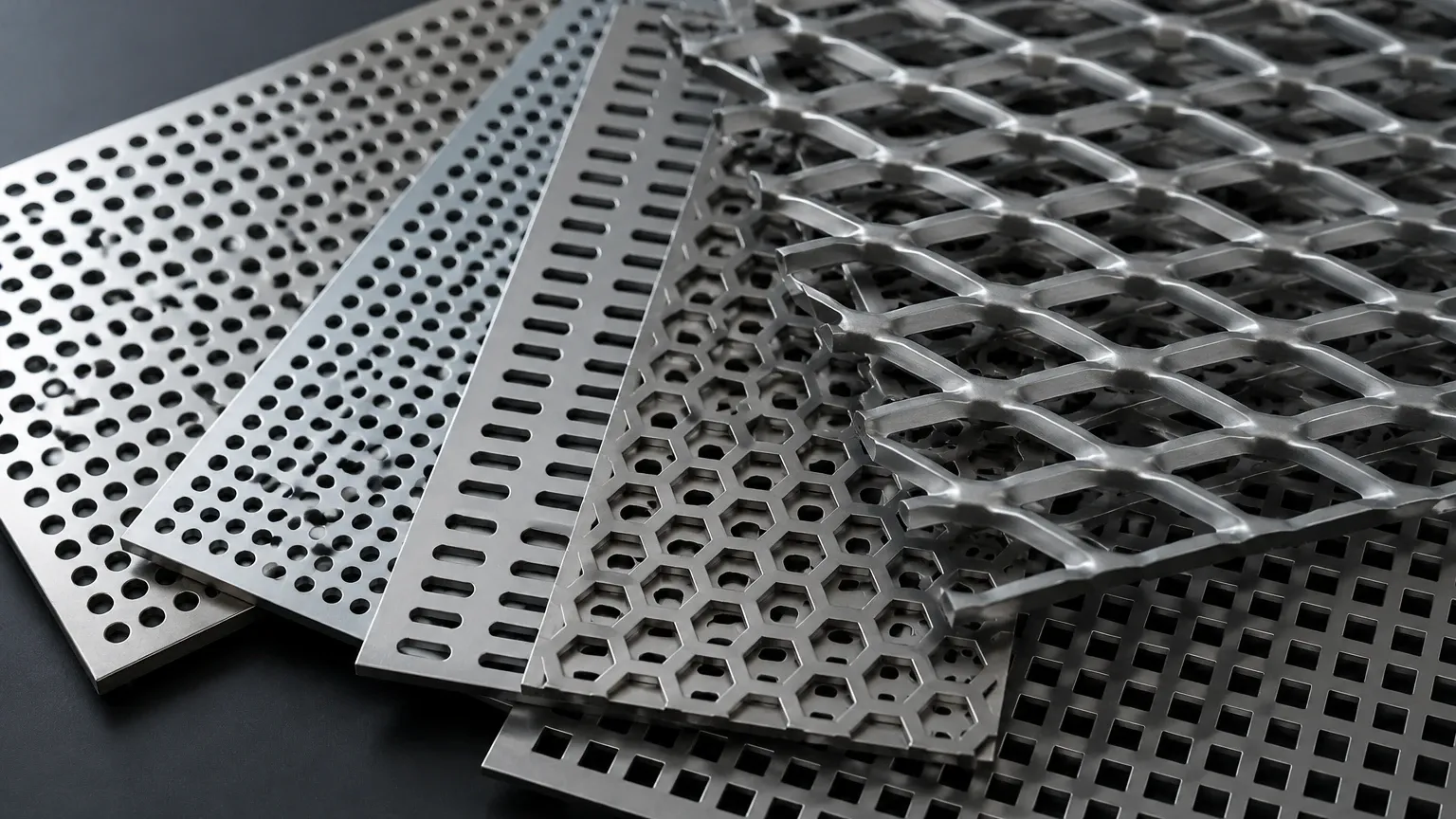
Round holes are the most common choice for industrial lockers due to their structural stability and ease of manufacturing. They provide a high strength-to-weight ratio and are less prone to stress cracking at the corners compared to square holes. Square holes, however, offer a higher percentage of open area for the same hole width, making them ideal for applications where maximum ventilation is the priority, such as in server racks or high-heat industrial equipment enclosures.
Calculating Open Area
The open area is a critical metric for airflow management. For a standard 60-degree staggered round hole pattern, the open area (OA) percentage is calculated using the formula:
*OA = (D² × 90.69) / R²*
Where *D* is the hole diameter and *R* is the center-to-center pitch. For locker applications, an open area between 15% and 40% is typically sufficient to provide adequate ventilation while maintaining enough solid metal to prevent unauthorized access or tampering with the contents.
Material Selection for Durability and Environment
The environment in which the locker will be placed dictates the material and finish of the perforated metal. Using the wrong material can lead to premature corrosion, structural failure, and increased total cost of ownership.
Stainless Steel (304 and 316)
For pharmaceutical, food processing, or marine environments, stainless steel is the preferred choice. Grade 304 provides excellent corrosion resistance for most indoor and mild outdoor applications. In more aggressive environments, such as chemical processing plants or coastal areas, Grade 316 stainless steel—which includes molybdenum—offers superior resistance to pitting and chloride-induced corrosion. Kaifil’s expertise in stainless steel filtration components translates directly into the production of high-durability perforated panels that withstand frequent cleaning and harsh chemical exposure.
Galvanized and Carbon Steel
In standard industrial or office environments where corrosion risk is lower, galvanized steel or powder-coated carbon steel provides a cost-effective alternative. Galvanization provides a sacrificial zinc layer that protects the base metal from oxidation. However, for long-term durability in high-traffic areas, the mechanical properties and inherent corrosion resistance of stainless steel often justify the higher initial investment.
Aluminum
Aluminum perforated metal is used when weight reduction is a primary concern. While it offers good corrosion resistance, it lacks the impact strength of steel or stainless steel, which may be a consideration in high-security locker applications.
Engineering Advantages of Perforated & Expanded Metal
When designing storage solutions, engineers often compare perforated metal with expanded metal. While both fall under the category of Perforated & Expanded Metal, they offer different mechanical advantages.
Perforated metal is produced by punching holes into a solid sheet, which leaves a flat, smooth surface. This is ideal for lockers where users may come into frequent contact with the surface, as it minimizes the risk of snagging clothing or causing injury. The precision of the punching process also allows for "margins"—solid borders around the perforated area—which simplify the welding and assembly process into locker frames.
Expanded metal, on the other hand, is made by slitting and stretching the metal sheet simultaneously. This creates a diamond-shaped mesh that is incredibly strong and rigid because it is made from a single piece of metal without any waste. While expanded metal is excellent for heavy-duty security cages, perforated metal remains the standard for lockers due to its cleaner aesthetic and the ability to control hole sizes more precisely to prevent small items from falling through or being extracted.
Customization and OEM Manufacturing Capabilities
Industrial projects often require customized locker perforated metal to fit specific dimensions or unique ventilation requirements. As an OEM-capable manufacturer, Kaifil supports engineers by providing tailored solutions that go beyond standard catalog items.
Precision Punching and Deburring
In the manufacturing of locker panels, precision is paramount. Automated CNC punching machines ensure that the hole patterns are consistent across thousands of units. After punching, the panels undergo a deburring process to remove sharp edges. This is a critical safety step in locker manufacturing, ensuring that the final product is safe for human interaction.
Leveling and Flatness
The perforation process can introduce internal stresses into the metal sheet, causing it to curl or bow. High-quality locker perforated metal must undergo a leveling process to ensure the panels are perfectly flat. Flat panels are easier to align during the assembly of the locker carcass and result in a more professional finished product with tighter tolerances.
Custom Margins and Mounting Holes
Engineers can specify custom solid margins around the perforated pattern to facilitate easier attachment to the locker frame. Additionally, integrated mounting holes can be punched during the same production cycle, reducing the need for secondary drilling operations and lowering the overall assembly cost.
Key Evaluation Criteria for Procurement and Engineering Teams
Before finalizing a purchase order for locker perforated metal, technical professionals should confirm several key factors to ensure the product meets the application's performance expectations:
1. Gauge Thickness: Is the metal gauge sufficient to withstand the expected mechanical loads and potential impact? For industrial lockers, 16 to 20-gauge steel is common.
2. Filtration and Airflow Requirements: Does the open area percentage provide enough ventilation for the specific contents (e.g., damp gear vs. dry tools)?
3. Hole Size vs. Security: Are the holes small enough to prevent fingers or tools from reaching through to the locking mechanism or the stored items?
4. Edge Finish: Are the panels deburred and safe for touch? Are the margins consistent for easy welding?
5. Environmental Compatibility: Does the material choice (e.g., SS316 vs. Galvanized) align with the humidity and chemical exposure of the installation site?
Installation and Maintenance Considerations
The longevity of locker perforated metal is not only dependent on the manufacturing quality but also on proper installation and maintenance. When installing perforated panels into a frame, it is essential to use compatible fasteners or welding techniques that do not introduce points of corrosion. For instance, using carbon steel screws on a stainless steel panel can lead to galvanic corrosion.
Maintenance cycles should be established based on the environment. In food and beverage or pharmaceutical settings, the perforated panels should be inspected for any buildup of contaminants within the holes. Because stainless steel perforated metal is resistant to most cleaning agents, it can be sanitized frequently without degrading the material. In industrial settings, periodic inspections should check for any signs of mechanical fatigue or damage to the protective coating (if using powder-coated or galvanized steel).
Conclusion: Selecting a Reliable Filtration and Metal Partner
Choosing the right locker perforated metal involves more than just selecting a hole pattern. It requires an integrated approach that considers material science, mechanical engineering, and manufacturing precision. By focusing on high-quality Perforated & Expanded Metal, organizations can ensure their storage solutions are durable, secure, and functionally optimized for their specific industrial environment.
Kaifil’s extensive experience in producing precision metal filter components and industrial filtration solutions ensures that every perforated panel meets strict quality standards. Whether you are designing a new locker system for a chemical plant or upgrading storage in a high-traffic commercial facility, understanding these technical boundaries is the first step toward a successful implementation. For engineers looking to optimize their designs, focusing on the balance of open area, material grade, and manufacturing finish will result in a superior product that delivers long-term value.
