


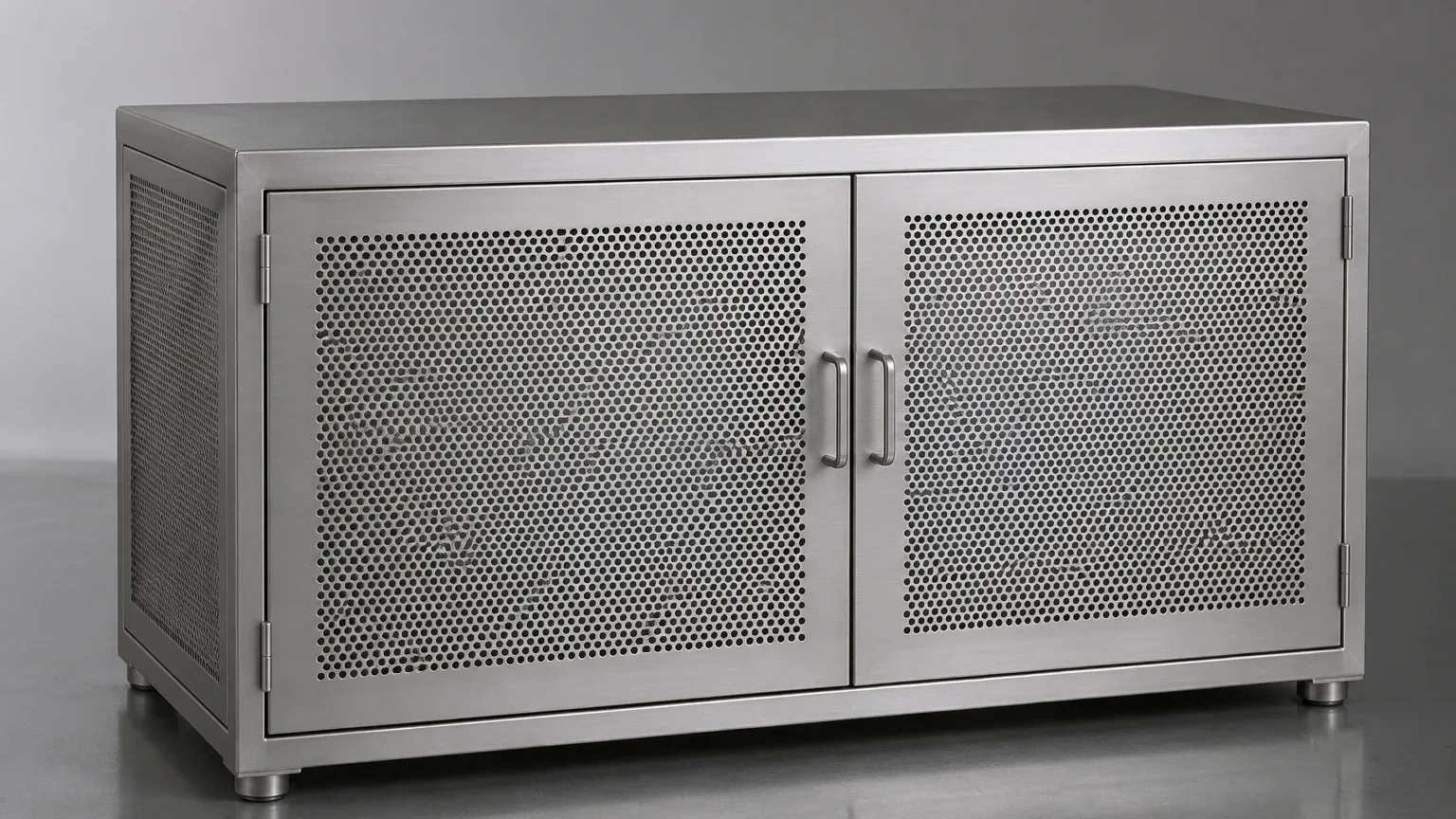
Locke Perforated Metal Cabinet
In industrial environments, the selection of storage and enclosure solutions often requires a balance between structural integrity and functional performance. The Locke perforated metal cabinet represents a specialized category of industrial furniture where the integration of precision-engineered metal panels is critical. For engineers and facility managers, understanding the technical nuances of the perforated and expanded metal components used in these cabinets is essential for ensuring long-term durability, proper ventilation, and equipment protection.
As a professional manufacturer of custom stainless steel filtration and metal components, Kaifil provides the technical expertise required to evaluate the materials and manufacturing processes that define high-quality industrial enclosures. This guide explores the engineering considerations behind the Perforated & Expanded Metal used in Locke-style cabinets and similar industrial applications.
Understanding the Role of Perforated Metal in Industrial Cabinets
The primary reason for utilizing perforated metal in cabinet construction, such as the Locke perforated metal cabinet, is to achieve specific functional goals that solid sheet metal cannot provide. These goals typically include airflow management, visibility of contents, and weight reduction without compromising the structural frame.
In chemical processing, pharmaceutical, and food and beverage sectors, cabinets often house sensitive equipment or materials that require constant air circulation to prevent heat buildup or the accumulation of volatile fumes. Perforated panels allow for passive ventilation, which is often more reliable and cost-effective than active cooling systems in non-critical zones. Furthermore, the use of perforated metal allows for visual inspections of inventory or equipment status without opening the cabinet, supporting safety protocols in high-risk environments.
Material Selection: Stainless Steel vs. Alternative Alloys
When specifying a Locke perforated metal cabinet for industrial use, the choice of material is the most significant factor affecting the total cost of ownership and service life. While carbon steel with powder coating is common for general office use, industrial applications demand higher performance materials.
Stainless Steel 304 and 316
For most industrial filtration and storage needs, Stainless Steel 304 is the standard due to its excellent balance of corrosion resistance and formability. However, in environments involving marine exposure, high humidity, or aggressive chemical cleaning agents—common in food processing and pharmaceutical plants—Stainless Steel 316 is the preferred choice. The addition of molybdenum in SS316 provides superior resistance to pitting and crevice corrosion in chloride-rich environments.
Aluminum and Specialized Alloys
In applications where weight is a critical constraint, such as mobile industrial units, aluminum perforated panels may be used. While lighter, aluminum lacks the structural rigidity and high-temperature resistance of stainless steel. For highly specialized chemical environments, exotic alloys may be considered, though stainless steel remains the industry benchmark for the majority of custom filtration and enclosure projects.
Technical Parameters: Hole Patterns and Open Area
The performance of a perforated metal panel is defined by its geometry. Engineers must specify three primary variables: the hole shape, the hole size (diameter), and the pitch (the distance between the centers of the holes).
Open Area Calculation
The "Open Area" is the percentage of the total sheet area that consists of holes. This is a critical metric for ventilation and filtration. For a standard 60-degree staggered round hole pattern, the formula for calculating the open area percentage is:
% Open Area = (D² × 90.69) / P²
Where:
* D = Hole Diameter
* P = Pitch (Center-to-center distance)
For a Locke perforated metal cabinet intended for high-airflow applications, an open area of 40% to 60% is typical. However, increasing the open area reduces the structural stiffness of the panel. Engineers must find the "sweet spot" where airflow requirements are met while maintaining the panel’s ability to resist impact and support the weight of the cabinet frame.
Hole Geometry
* Round Holes: The most common and cost-effective pattern, providing the best structural strength-to-weight ratio.
* Square Holes: Offer a higher open area for maximum visibility and airflow but are more prone to stress concentrations at the corners.
* Hexagonal (Honeycomb): Provide the highest possible open area and are often used in high-end electronic enclosures for RFI/EMI shielding and maximum cooling.
Comparing Perforated and Expanded Metal for Structural Applications
While the Locke perforated metal cabinet often utilizes punched perforated sheets, expanded metal is a viable and often more economical alternative for certain industrial enclosures. Understanding the manufacturing difference is key to selection.
Perforated Metal
Perforated metal is produced by punching holes into a solid sheet. This process allows for high precision, clean margins (unperforated edges), and a wide variety of hole shapes. It is ideal for applications where filtration accuracy or a specific aesthetic/functional pattern is required. The flat surface of perforated metal is also easier to clean, making it preferable for pharmaceutical and food-grade environments.
Expanded Metal
Expanded metal is manufactured by simultaneously slitting and stretching the metal sheet. This process creates a diamond-shaped mesh without any material waste, making it a cost-effective solution. Expanded metal can be "raised" (providing a slip-resistant, high-grip surface) or "flattened" (passed through a cold-rolling mill to create a smooth surface). For heavy-duty industrial cabinets where maximum rigidity and cost-efficiency are prioritized over precise filtration, expanded metal is an excellent choice.
Engineering Considerations for Airflow and Filtration
In many industrial contexts, a Locke perforated metal cabinet does more than just store items; it acts as a primary barrier or pre-filter. If the cabinet is integrated into a cleanroom or a facility with high particulate counts, the perforation size must be engineered to prevent the ingress of large debris while allowing air to pass.
Pressure Drop
When air passes through a perforated panel, a pressure drop occurs. If the cabinet houses equipment with internal fans, an insufficient open area will cause the fans to work harder, leading to premature failure and increased energy consumption. Kaifil’s engineering team recommends evaluating the CFM (Cubic Feet per Minute) requirements of the internal components before finalizing the perforation pattern.
Edge Margins and Mounting
A critical but often overlooked detail is the margin—the unperforated area around the edges of the sheet. For a Locke perforated metal cabinet, having solid margins is essential for welding or bolting the panels to the cabinet frame. Without proper margins, the structural integrity of the joints is compromised, and the sharp edges of the cut perforations can pose safety risks.
Customization and OEM Manufacturing Capabilities
Standard off-the-shelf cabinets often fail to meet the specific requirements of demanding industrial sectors. This is where custom manufacturing and OEM support become invaluable. When sourcing components for a Locke perforated metal cabinet or similar industrial enclosure, engineers should look for manufacturers capable of providing:
1. Precision Leveling: Ensuring the perforated sheets are perfectly flat after the punching process, which is vital for seamless assembly.
2. Secondary Operations: Capabilities such as CNC bending, laser cutting, and TIG/MIG welding to transform perforated sheets into finished components.
3. Surface Finishing: Options such as electropolishing for stainless steel (to improve corrosion resistance and cleanability) or specialized coatings for chemical resistance.
4. Custom Tooling: The ability to create unique hole patterns or sizes that are not available in standard catalogs to meet specific filtration or airflow specifications.
Procurement and Quality Verification
To ensure the longevity of a Locke perforated metal cabinet in an industrial setting, purchasing teams and engineers should verify the following before procurement:
* Material Certification: Request Mill Test Reports (MTRs) to confirm the chemical composition of the stainless steel or alloy used.
* Tolerance Standards: Define acceptable tolerances for hole diameter, pitch, and sheet dimensions. Standard industrial tolerances are typically +/- 0.005 inches for hole sizes, but tighter tolerances may be required for precision applications.
* Burr Removal: Ensure the manufacturing process includes a deburring stage. Burrs on the inside of perforations can trap contaminants and make the cabinet difficult to sanitize, especially in food and pharmaceutical applications.
* Load-Bearing Capacity: If the perforated panels are used as shelves within the cabinet, calculate the deflection under load to ensure they can support the intended weight without permanent deformation.
Conclusion
The Locke perforated metal cabinet is a prime example of how basic industrial storage can be elevated through precise engineering and material selection. By focusing on the technical specifications of the Perforated & Expanded Metal—including material grade, open area, and manufacturing method—engineers can ensure that their enclosure solutions provide the necessary protection, ventilation, and durability required for modern industrial operations. Kaifil remains committed to supporting these technical requirements through high-quality manufacturing and expert consultation for all custom filtration and metal component needs.
