


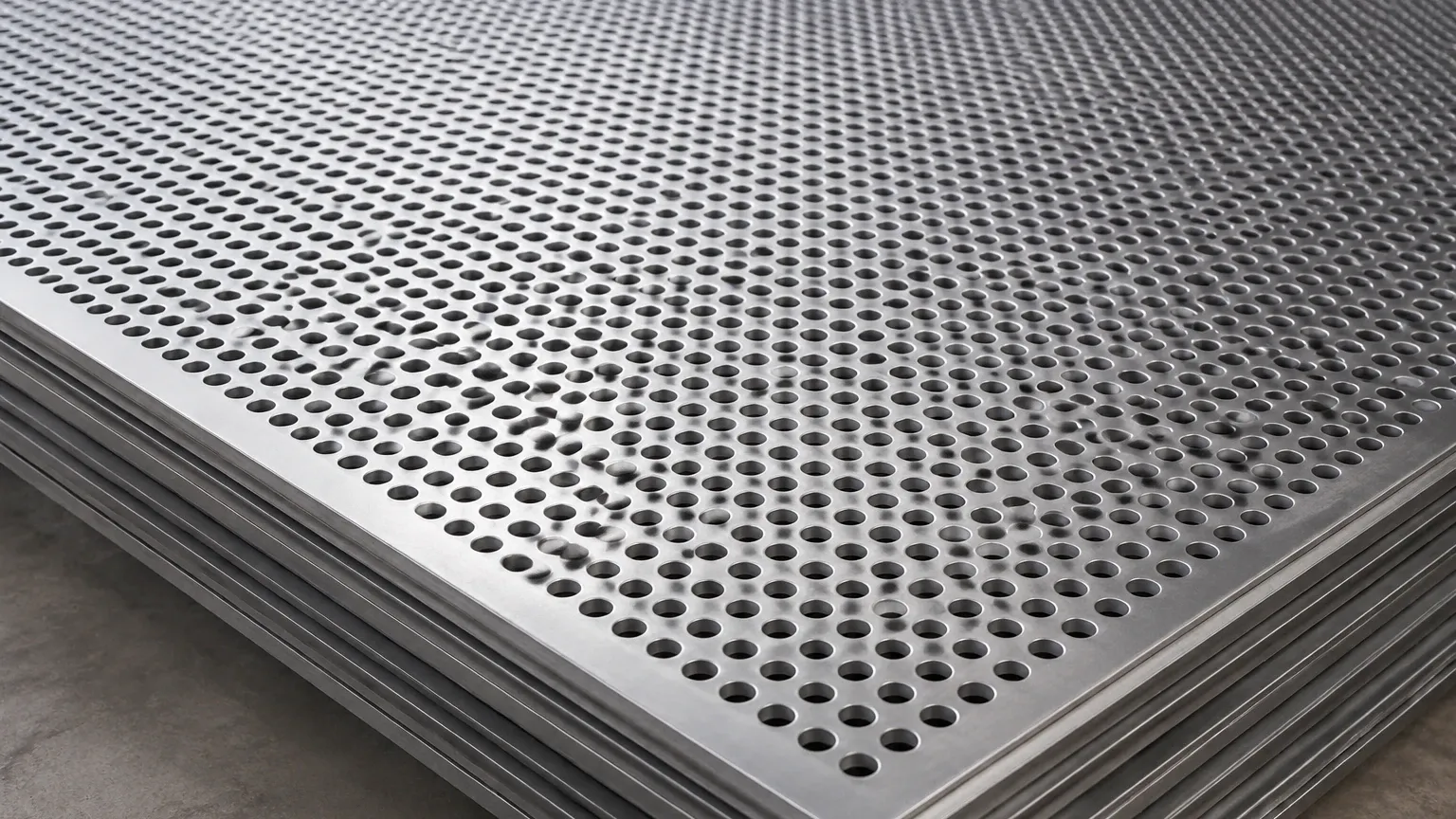
Large Perforated Metal Sheet
In industrial engineering and filtration design, the selection of structural and functional components requires a rigorous evaluation of mechanical properties and environmental compatibility. A large perforated metal sheet serves as a foundational element in numerous heavy-duty applications, providing the necessary balance between structural rigidity and controlled permeability. For engineers and procurement specialists, understanding the nuances of perforation patterns, material grades, and manufacturing tolerances is essential to ensuring long-term performance in demanding environments.
As a specialized manufacturer, Kaifil focuses on high-precision Perforated & Expanded Metal solutions, particularly those involving stainless steel alloys. These components are frequently utilized as primary filtration media, support structures for fine wire mesh, or as protective screens in chemical, pharmaceutical, and water treatment facilities.
Understanding the Engineering of Large Perforated Metal Sheets
The performance of a large perforated metal sheet is defined by its geometric configuration. Unlike standard stock sizes, large-format sheets must maintain dimensional stability over a greater surface area, which introduces specific engineering challenges regarding flatness and internal stress.
Open Area Calculations
The "Open Area" is the percentage of the sheet that is occupied by holes. This figure is critical for determining flow rates, pressure drops, and filtration efficiency. For a standard 60-degree staggered round hole pattern—the most common configuration due to its inherent strength—the open area is calculated using the formula:
Open Area % = (D² × 90.69) / P²
Where *D* represents the hole diameter and *P* represents the pitch (the distance from the center of one hole to the center of the adjacent hole). When specifying a large perforated metal sheet for high-volume fluid processing, engineers must ensure the open area provides sufficient throughput without compromising the mechanical integrity of the metal "bridge" (the material remaining between the holes).
Hole Patterns and Orientation
While round holes are the industry standard for their structural uniformity, square, slotted, and hexagonal patterns are also utilized for specific industrial requirements. In large-scale applications, the orientation of the pattern relative to the sheet's length can affect the sheet's load-bearing capacity. Staggered patterns generally offer higher strength-to-weight ratios compared to straight-row configurations.
Material Selection for Industrial Environments
The longevity of a large perforated metal sheet is heavily dependent on its metallurgical composition. In the sectors Kaifil serves—such as chemical processing and food production—corrosion resistance and hygienic properties are non-negotiable.
* Stainless Steel 304/304L: The most common grade for general industrial use. It provides excellent forming characteristics and reliable corrosion resistance in mildly corrosive environments.
* Stainless Steel 316/316L: Containing molybdenum, this grade is essential for applications involving chlorides, acids, or marine environments. It is the preferred choice for pharmaceutical and high-end chemical filtration systems.
* Duplex Stainless Steels: For extreme industrial environments where both high mechanical strength and superior stress-corrosion cracking resistance are required, duplex grades may be specified for large-scale structural screens.
Selecting the correct alloy prevents premature failure due to pitting or intergranular corrosion, which can be particularly problematic in large sheets where replacement costs and downtime are significant.
Structural Integrity and Manufacturing Tolerances
Manufacturing a large perforated metal sheet requires advanced equipment to manage the physical stresses induced during the punching or drilling process. When a sheet is perforated, the removal of material and the impact of the dies can introduce internal stresses, often resulting in "oil canning" (buckling) or curling.
Leveling and Flatness
To ensure a large sheet remains flat, it must undergo a precision leveling process. Roller levelers apply controlled pressure to neutralize internal stresses, ensuring the sheet meets flatness tolerances required for subsequent fabrication, such as welding into large-diameter filter housings or installation into architectural frames.
Margins and Blank Areas
Engineers must define the required "margins"—the unperforated areas along the edges of the sheet. In large-format sheets, wide margins are often necessary to provide a solid surface for welding or mechanical fastening. Specifying "perforated to edge" (no margins) can lead to edge distortion and may require additional trimming, increasing the total cost of the component.
Role in Advanced Filtration Systems
Within the scope of Kaifil’s expertise, the large perforated metal sheet often acts as the "skeleton" for complex filtration assemblies. Its primary role in these systems is to provide mechanical support for finer filtration layers, such as stainless steel wire mesh or non-woven media.
Support for Multi-Layer Filter Cartridges
In high-pressure hydraulic or chemical filtration, the fine mesh that performs the actual particle separation lacks the structural strength to withstand high differential pressures. A heavy-gauge large perforated metal sheet is rolled and welded into a core or outer shroud to prevent the fine mesh from collapsing or bursting. The alignment of the perforations must be precise to ensure uniform flow distribution across the entire surface of the filter.
Primary Coarse Filtration
In water treatment and intake systems, large sheets with larger hole diameters serve as primary strainers. These components remove large debris before the fluid reaches more sensitive downstream equipment. The durability of stainless steel ensures that these screens can withstand the abrasive force of particulates and the chemical cleaning cycles required to remove biofouling.
Evaluation Criteria for Procurement and Quality Control
When sourcing a large perforated metal sheet, technical professionals should evaluate suppliers based on their ability to meet stringent quality standards. Key criteria include:
1. Burr Height and Surface Finish: Excessive burrs on the exit side of the hole can trap contaminants or damage adjacent filter media. For food and pharmaceutical applications, sheets may require electropolishing or mechanical de-burring to achieve a sanitary finish.
2. Dimensional Accuracy: This includes not only the overall length and width but also the hole diameter tolerance and pitch consistency. Variations in pitch can lead to "drift" in the pattern, complicating the alignment during assembly.
3. Hole Concentricity: In thick-gauge sheets, ensuring the hole remains perpendicular to the surface is vital for maintaining the calculated open area and flow characteristics.
4. Material Certification: Reliable manufacturers provide Mill Test Reports (MTRs) to verify the chemical composition and mechanical properties of the stainless steel used, ensuring compliance with industry standards like ASTM or ISO.
Customization and OEM Capabilities
Standard stock sizes rarely meet the specific needs of complex industrial projects. Customization of a large perforated metal sheet involves more than just cutting to size; it includes the engineering of specific hole geometries, variable pitch patterns (where the open area changes across the sheet), and the integration of mounting holes or notches.
Kaifil works closely with engineering teams to develop customized filtration components that integrate seamlessly into existing systems. By controlling the manufacturing process from material selection to final leveling, it is possible to produce large-scale components that meet the exact pressure drop and structural requirements of a specific application.
Maintenance, Cleaning, and Service Life
The total cost of ownership for industrial components is heavily influenced by their maintenance requirements. Stainless steel perforated sheets are favored for their ease of cleaning. In many filtration applications, these sheets can be cleaned via backwashing, ultrasonic cleaning, or chemical CIP (Clean-in-Place) cycles.
Monitoring Wear and Fatigue
While stainless steel is highly durable, large sheets subjected to cyclic loading (such as in vibrating screens or high-pressure pulse systems) can eventually suffer from fatigue. Regular inspections should focus on the bridges between holes, as these are the primary points of stress concentration. Detecting micro-cracks early can prevent catastrophic failure of the filtration system.
Replacement Cycles
The service life of a large perforated metal sheet depends on the abrasiveness of the media and the frequency of cleaning. By selecting a higher-grade alloy or a thicker gauge initially, engineers can significantly extend the replacement cycle, reducing long-term operational costs and environmental impact.
Conclusion
Selecting a large perforated metal sheet is a critical decision that impacts the efficiency and reliability of industrial filtration and structural systems. By focusing on technical specifications—such as open area precision, material grade integrity, and manufacturing flatness—engineers can ensure that these components perform under the most rigorous conditions.
For those seeking specialized support in developing custom metal filtration solutions, Kaifil provides the technical expertise and manufacturing precision required to deliver high-performance Perforated & Expanded Metal products tailored to specific industrial needs. Whether the application requires a heavy-duty support core for a filter cartridge or a large-scale screen for water treatment, understanding these fundamental engineering principles is the first step toward optimized performance.
